REVIEW · ANNE FRANK & WWII HISTORY TOURS
Anne Frank and Amsterdam Jewish History Walking Tour
Book on Viator →Operated by Breeze Guided Tours · Bookable on Viator
History in Amsterdam isn’t only in museums. This Anne Frank Jewish history walking tour uses real streets and side alleys to connect the city to WWII—and it ends right where your self-guided visit can start. You’ll learn through stories that make the names on plaques feel human.
What I like most is the small group size (max 15), which keeps questions from getting lost and makes the pacing feel calmer. I also love the way the stops go beyond the usual postcard spots: you’ll hear about places like Der silveren spiegel in Kattengat and the resistance story tied to Willem Arondeus in Singelgracht. It’s the kind of tour where the city suddenly has context.
One thing to consider: you’re walking Amsterdam streets for about 2 hours, and the route includes uneven ground and bike-heavy areas. If you have mobility issues or very young kids, you might find it harder to keep up than a flat canal cruise.
In This Review
- Key points to know before you go
- Why this Anne Frank walking tour feels different in Amsterdam
- Meeting at Beursplein and finishing at Westermarkt
- Dam Square: WWII losses, not just a big city square
- Kattengat and Der silveren spiegel: a bar tied to hiding under Nazi rule
- Singelgracht and Willem Arondeus: stumbling stones and resistance courage
- Anne Frank House, minus the ticket: what you gain before you enter
- Guides turn facts into street-level stories
- Price and value: what $29.02 buys you (and what it doesn’t)
- Pacing, walking reality, and weather plans
- Who should book this tour (and who might skip it)
- Should you book it? My decision checklist
- FAQ
- How long is the Anne Frank and Amsterdam Jewish History Walking Tour?
- Is the tour offered in English?
- How many people are on the tour?
- Where does the tour start and end?
- Is admission to the Anne Frank House included?
- What’s included in the tour price?
- Do I get a mobile ticket?
- What is the cancellation policy?
Key points to know before you go
- Max 15 people for a more personal, question-friendly walk
- Local licensed guide who tells the Anne Frank story with Amsterdam context
- Street-level history at stops like Dam Square, Kattengat, and Singelgracht
- Der silveren spiegel link to Nazi occupation hiding stories
- End outside Anne Frank House so you can continue without backtracking
- Anne Frank House admission not included (you’ll want a plan for tickets)
Why this Anne Frank walking tour feels different in Amsterdam
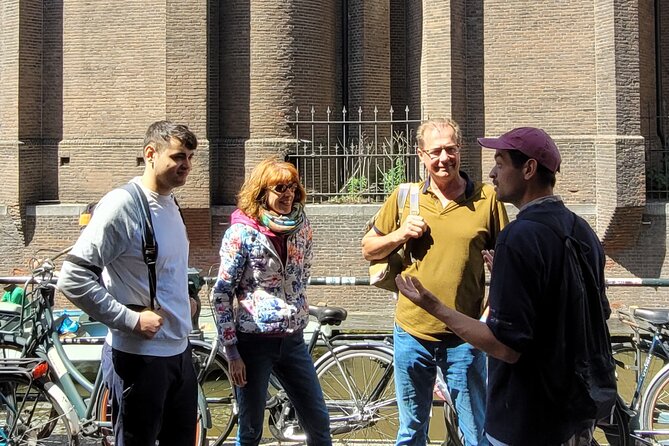
Amsterdam has a way of making history look casual. A quiet street can hold a whole chapter of WWII, and a bar can become part of a hiding story. This tour leans into that reality, so you’re not just walking to another landmark—you’re learning how the city worked and who took risks inside it.
The small group matters more than you might think. With up to 15 people, your guide can slow down when someone asks a question. Guides on this route also tend to be active storytellers; names you may hear from past groups include Iris, Tristan, Leo, and Stein/Shtein, and the common thread is clear, story-driven explanation.
And yes, you’ll still reach the Anne Frank House area. But you’ll arrive with background you can actually use, which makes the visit feel less like checking boxes and more like understanding what you’re seeing.
You can also read our reviews of more walking tours in Amsterdam



Meeting at Beursplein and finishing at Westermarkt
This is an English-language walking tour about 2 hours long. It starts at Beursplein 5, 1012 JW Amsterdam, and it ends outside the Anne Frank House area (Westermarkt 20, 1016 GV Amsterdam). You’ll get a mobile ticket, and the meeting point is close to public transportation, so you’re not stuck cross-town just to start.
Timing is part of the design. The tour breaks the story into short, focused segments—roughly 10 minutes per stop—so you don’t feel trapped in one lecture. That pacing also helps if you’re visiting Anne Frank House later that day, since you can transition from history lesson to self-guided time.
You should also plan to bring sensible footwear. Amsterdam’s streets are not always forgiving—cobblestones happen, and bikes happen more.
Dam Square: WWII losses, not just a big city square
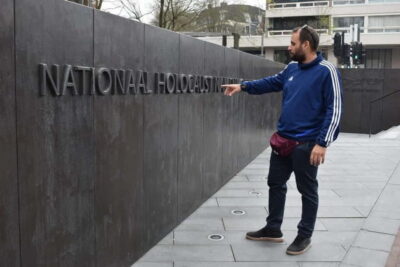
The tour begins at Dam Square, where you’ll see the memorial for fallen soldiers of World War II. It’s a strong opening because it sets the frame: this story isn’t only about one family or one building. It’s about a broader occupation and the human cost that rippled across Europe.
This first stop is brief, but it works as a mood setter. You’re reminded that the Holocaust era didn’t arrive out of nowhere—it grew inside a war that affected everyone, including Amsterdam.
If you’ve been to Dam Square before, this is still worth doing. The square can feel generic at first glance. With the right context, it becomes more specific and emotionally clearer.
Kattengat and Der silveren spiegel: a bar tied to hiding under Nazi rule
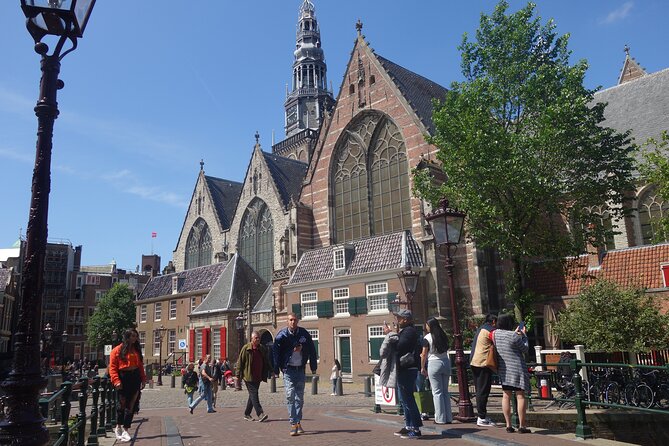
Next comes Kattengat, where the tour connects you to Der silveren spiegel, a bar linked to Nazi-occupation hiding—specifically, a story about 16 people who hid inside. This stop is one of those “how does a place like this fit into that era?” moments.
What makes it powerful isn’t just the shock value. It’s the way the guide ties the building’s purpose to the choices people had to make. In an occupied city, hiding wasn’t a movie idea. It was a daily survival decision, and it happened in ordinary settings.
You’ll also get a better sense of how Amsterdam neighborhoods functioned under pressure. Even when you don’t recognize the historical details at street level, your brain starts noticing what’s practical: access, concealment, and the constant risk.
Singelgracht and Willem Arondeus: stumbling stones and resistance courage
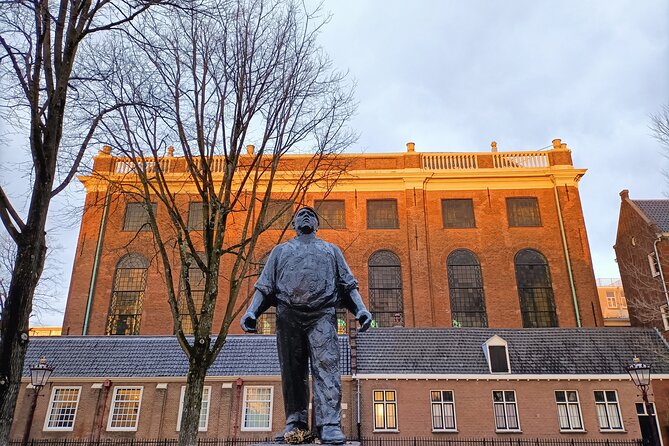
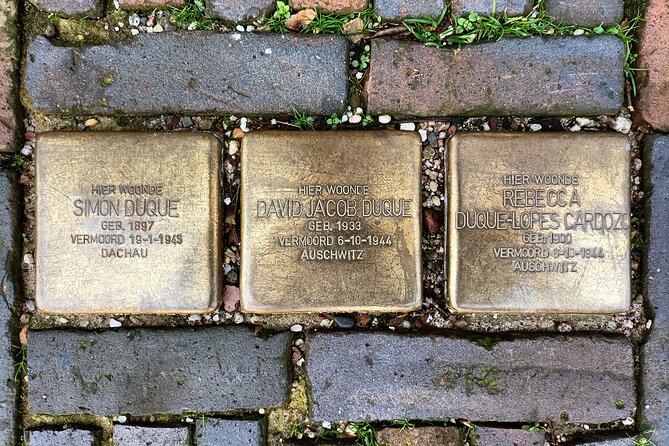
At Singelgracht, the tour spotlights Willem Arondeus, a resistance fighter. You’ll also hear about a stumbling stone connected to him. This is the kind of stop that turns a street name into a personal reminder—because it’s not just “resistance happened,” it’s “resistance had names.”
Stumbling stones have a simple but effective impact: they force you to slow down and read what’s there. You don’t have to be a history buff to feel the weight of it, and the guide helps you understand why those tributes matter in a city that keeps moving.
This stop pairs well with the Anne Frank thread. It shows that not everyone responded the same way under Nazi occupation. Some hid, some resisted, and many people lived with fear while trying to protect others.
You can also read our reviews of more historical tours in Amsterdam






Anne Frank House, minus the ticket: what you gain before you enter

The tour ends outside the Anne Frank House at Westermarkt 20. Importantly, admission is not included, so you’ll need to handle your entry separately.
That detail actually increases the value of doing this walk first. If you go straight from another attraction with zero context, the House can feel like a hard-to-follow set of facts. With a guided introduction, you’re more prepared to connect the story to the wider Amsterdam setting you’ve just walked through.
Think of this tour as your front porch. It helps you understand what to look for and what questions to keep in mind when you step inside.
Guides turn facts into street-level stories

The best part of this kind of tour is the guide’s voice. And in the past groups, several guides have left a clear impression. Iris is repeatedly described as an engaging storyteller, including using photos to help the group follow the timeline. Tristan is noted for making history lessons feel interesting, not just heavy. Leo and Stein/Shtein also come up as strong storytellers who keep the group moving while answering questions.
You’ll likely notice a pattern: guides don’t just recite. They shape the story in a logical order and link the Anne Frank family to the realities around them—WWII, occupation, and what life looked like in Amsterdam before and during hiding.
That matters because Anne Frank’s story is emotionally difficult. A good guide helps you hold it without getting lost. And a good guide also keeps space for questions, so the walk doesn’t become one-way communication.
Price and value: what $29.02 buys you (and what it doesn’t)
At $29.02 per person for about 2 hours, you’re paying for more than walking. You’re paying for a local licensed guide and a plan that connects multiple street-level sites into one coherent Anne Frank and Jewish history narrative.
What you should budget for separately is Anne Frank House admission. The tour gets you to the door, but it doesn’t include entry. That can be a dealbreaker if you’re trying to do everything in one click, so plan ahead for the House visit if you want to go inside.
Still, the math often works out. When Anne Frank House tickets are hard to line up, having a guided route that improves your understanding makes your day feel fuller. You’re not waiting in line with a blank mind—you’re arriving with context.
Pacing, walking reality, and weather plans
This is a walking tour with short stops and a steady rhythm. You’ll spend time at each location, then move on. The upside is it’s not exhausting in a “long hike” way. The downside is you’re still on city streets—uneven ground and bike traffic are part of Amsterdam life, and you’ll be moving through it as a group.
If you’re traveling with older knees or you’re planning around limited mobility, consider doing a quick reality check. You might find the walking and street surfaces harder than you expect, especially if you need frequent breaks.
Weather is also part of the deal in Amsterdam. The experience is designed for the city, so bring something rain-ready if the forecast looks moody. One practical tip: pack for comfort, not for fashion—this is a sit-down-and-dry kind of day if it rains.
Who should book this tour (and who might skip it)
This tour is a strong fit if you want:
- A Jewish history and WWII-focused Amsterdam walk that goes beyond the standard sights
- A small-group experience with time for questions
- A guided setup for your Anne Frank House visit
It may be less ideal if you want a mostly indoor, fully accessible experience. You’re on streets, and you’ll be dealing with crowds of bikes and uneven pavement. Also, if you’re traveling with very young kids, the history-heavy content may not hold their attention for the full duration.
But for teens, adults, and anyone who enjoys learning through real places, it’s a smart use of time—especially if you’re already planning to see the House.
Should you book it? My decision checklist
Book this tour if you want your Anne Frank day to feel structured and meaningful. You’ll get a guided thread connecting Dam Square, Kattengat, Singelgracht, and then the Anne Frank House area—so your visit feels connected instead of fragmented.
Skip it only if you’re looking for a short, casual “see the sights” stroll with minimal context. This is a history and remembrance walk. It’s also a good choice if you prefer small groups and want a guide who can explain the story clearly in English.
If you do book, my best advice is simple: plan your Anne Frank House entry separately and wear shoes that can handle Amsterdam streets. Then show up ready to pay attention—because the city has clues you don’t notice until someone points them out.
FAQ
How long is the Anne Frank and Amsterdam Jewish History Walking Tour?
It runs for about 2 hours.
Is the tour offered in English?
Yes, the tour is offered in English.
How many people are on the tour?
The group size is limited to a maximum of 15 travelers.
Where does the tour start and end?
The tour starts at Beursplein 5, 1012 JW Amsterdam, and ends outside the Anne Frank House area at Westermarkt 20, 1016 GV Amsterdam.
Is admission to the Anne Frank House included?
No. Anne Frank House admission is not included, though the tour ends outside so you can continue.
What’s included in the tour price?
The price includes a local licensed guide and the walking tour.
Do I get a mobile ticket?
Yes, the tour uses a mobile ticket.
What is the cancellation policy?
You can cancel for a full refund up to 24 hours in advance of the experience start time.