REVIEW · ANNE FRANK & WWII HISTORY TOURS
Anne Frank and the Jewish History of Amsterdam Private Tour
Book on Viator →Operated by Bespoke Amsterdam Experiences · Bookable on Viator
Anne Frank is only the first stop. This private tour strings together Amsterdam’s Jewish landmarks, WWII events, and memorials into one practical walking route. You also get help with the Anne Frank House timing, plus an easygoing break with apple pie.
I love the balance of city and story. You don’t just jump between plaques. Stops like the Portuguese Synagogue, the Jewish Historical Museum area, and the Westerkerk connect what you see in Amsterdam today to what happened during the Nazi occupation. I also love the included apple pie with coffee or tea, a small comfort break that keeps the day human when the subject matter gets heavy. Guides like Chris, Kayleigh, Inbal, and Guido are repeatedly praised for pacing and tailoring questions.
One drawback to plan for: you’ll do a good chunk of standing and walking in a fairly compact route (about 2 kilometers total). Also, some sights on the route require extra tickets on your end, like entry at the Portuguese Synagogue and the Jewish Historical Museum.
In This Review
- Key highlights that make this tour work
- From Portuguese Synagogue to the Jewish quarter: where the story starts
- Dokwerker and the 1941 February strike: WWII told with street-level anchors
- Hortus Botanicus and Plantage: Amsterdam’s calm side while the lessons stay close
- Wertheimpark Auschwitz Memorial walk: a short segment with big weight
- Artis Zoo and hiding stories: the war inside the city’s everyday life
- Holocaust Namenmonument: reading names is part of the experience
- Dam Square and Westerkerk: the city center shortcut with Anne Frank connections
- Anne Frank House: tickets, your visit flow, and the VR fallback
- Price and what you actually get in 3 hours
- Which kind of traveler will love this tour
- Should you book the Anne Frank and Jewish History of Amsterdam private tour?
- FAQ
- Is this tour private?
- How long is the tour?
- Where does the tour start and end?
- What language is the tour offered in?
- Is the Anne Frank House visit included?
- Are tickets for other sights included?
- How much walking is involved?
- Is there an included food or drink stop?
- Can kids join?
- What is the cancellation policy?
Key highlights that make this tour work
- Anne Frank House tickets handled for you: If you book far enough ahead, you get the real-entry option, not just an overview.
- A VR backup when tickets are sold out: You’re still included, so your tour doesn’t fall apart.
- Memorial stops with time to read: Wertheimpark and the Holocaust Namenmonument give you a quiet, structured moment.
- WWII context tied to specific places: From the 1941 February strike story at Dokwerker to hiding stories connected to Artis Zoo.
- A guide who steers the pace: People like Chris and Kayleigh are singled out for taking their time and answering questions.
- Optional tram ride: A small transport tweak if your legs need a breather.
From Portuguese Synagogue to the Jewish quarter: where the story starts
You begin at the Portuguese Synagogue, a striking Amsterdam landmark that still matters to the Jewish community today. This is a strong opener because it sets tone: Amsterdam’s Jewish history isn’t just museums and monuments. It’s also living culture and architecture you can actually stand in front of.
From there, the tour moves toward the Jewish Historical Museum zone. You’ll see four synagogues housed inside the museum complex, a detail that helps you understand that “Jewish history” in Amsterdam is not one single chapter. It’s layers—different congregations, different spaces, and different eras. Just note the practical side: you’ll be viewing this area as part of the walk, but entry to the Jewish Historical Museum is not included in what you pay.
Why this matters: starting with a place that’s still in use makes the later memorial stops feel less like a random checklist. You’ll be able to see how the neighborhood functioned before the war, and how quickly that normal life was disrupted.
You can also read our reviews of more private tours in Amsterdam

Dokwerker and the 1941 February strike: WWII told with street-level anchors
Next you’ll hear the story connected to Dokwerker—about the February strike against the Nazi occupation in 1941. Even if WWII history is already familiar to you, this kind of stop is different. It turns a headline into a specific Amsterdam moment you can picture.
This is also one of the “small time” stops on the route (you’re there briefly), but it tends to land because it’s anchored to a place, not just an abstract timeline. You’ll hear enough context to understand why this matters in Amsterdam’s WWII story, and you’ll move on without feeling lectured for the sake of lecturing.
Practical tip: wear shoes that handle standing. You’ll be outside for multiple segments, and the emotional content can make you forget to shift your weight.
Hortus Botanicus and Plantage: Amsterdam’s calm side while the lessons stay close

You’ll pass Hortus Botanicus, Amsterdam’s botanical garden. This stop isn’t about tickets or long wandering. It’s a visual palate cleanser—another reminder that the city is more than wartime memory.
Then the tour heads into Plantage and the East. This area is famous for its canals, and the pacing here is comfortable: you get a longer walk through a part of town that feels like Amsterdam should. You’re moving through the city fabric while the guide keeps the historical thread alive.
The value of this section is simple: it prevents the day from becoming one nonstop “heavy” moment. A well-run tour keeps you thinking without burning you out. The inclusion of free time at several photo-friendly stretches helps you absorb the setting instead of rushing past it.
Wertheimpark Auschwitz Memorial walk: a short segment with big weight
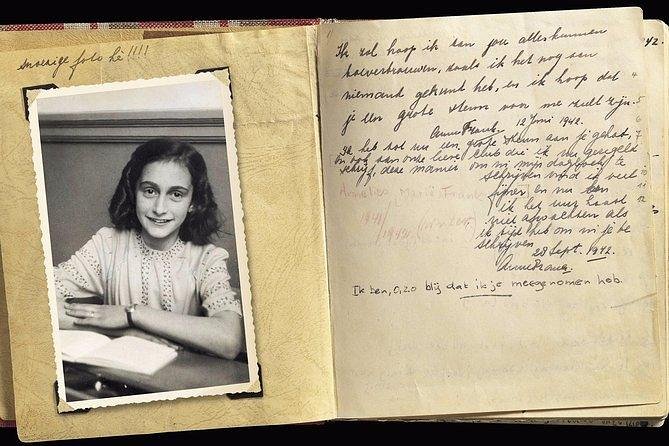
One of the hardest sections is the Holocaust Memorial walk in Wertheimpark. You’ll be near the Auschwitz Memorial, and the intent here is not tourism-as-spectacle. It’s time to take in the meaning of the place, with a guide helping you connect it back to Amsterdam’s WWII reality.
You’ll likely feel a shift in your body language here, and that’s normal. This isn’t meant to be “fast.” It’s one of those moments where the guide’s narration matters, because you need context to read the memorial properly.
Consideration: if you’re sensitive to heavy topics, mentally plan for this stop. It comes before the tour moves into other emotionally charged memorial sites, so pace yourself and use water breaks if you need them.
Artis Zoo and hiding stories: the war inside the city’s everyday life
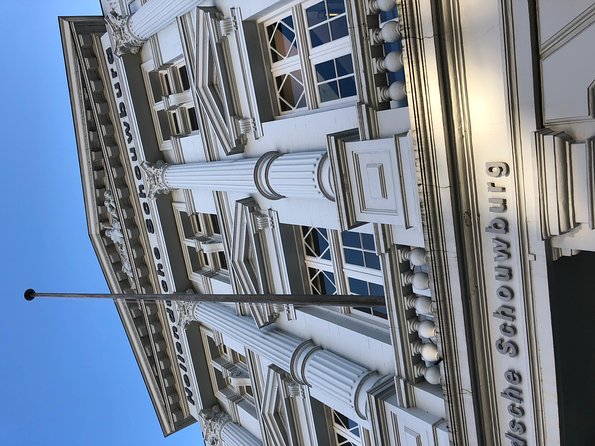
The tour moves toward Artis Amsterdam Royal Zoo, but the point isn’t zoo time. It’s a story connection—people hiding in the Amsterdam Zoo during the Nazi occupation. That’s a uniquely Amsterdam kind of detail: the war didn’t only happen in offices and camps. It happened inside daily life, in places that still exist now.
This stop tends to work well because it turns “history” into “how did people survive right here?” You get to connect the idea of concealment to a real neighborhood feature, which helps it feel tangible rather than distant.
If you love city walks, you’ll appreciate how the guide uses these places to explain why Amsterdam mattered during the war. People like Chris and Guido are praised for adding context beyond Anne Frank, and this section is part of why that feedback repeats.
You can also read our reviews of more historical tours in Amsterdam






Holocaust Namenmonument: reading names is part of the experience
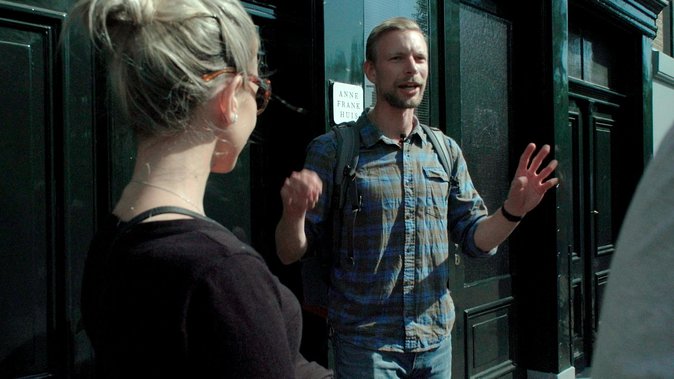
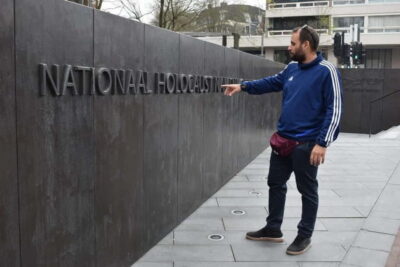
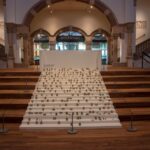
Another solemn stop is the Holocaust Namenmonument. You’ll enter the memorial where over 100,000 names of Jews who did not survive the Holocaust are written on the walls.
This is the kind of stop where you don’t need extra “what am I looking at” explanation. You just need permission to slow down and read. The guide’s job is to frame why the names are there and how to approach the space respectfully.
Practical note: bring your patience. The most meaningful parts of memorials often take longer than a standard walking-tour rhythm. This stop is built into the tour timing to give you that breathing room.
Dam Square and Westerkerk: the city center shortcut with Anne Frank connections
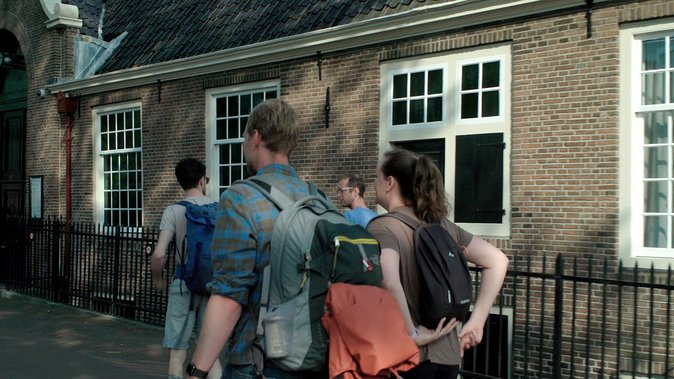
After the memorial stops, the tour shifts to central Amsterdam. You’ll walk over Dam Square, then you’ll see major anchors like the Royal Palace and the Nieuwe Kerk from the outside.
Dam Square is busy by nature, so the tour’s value here is orientation. You’ll learn how the city’s layout and landmarks connect to the Anne Frank story without feeling like you’re lost in crowds. It also makes the rest of the day easier to understand visually.
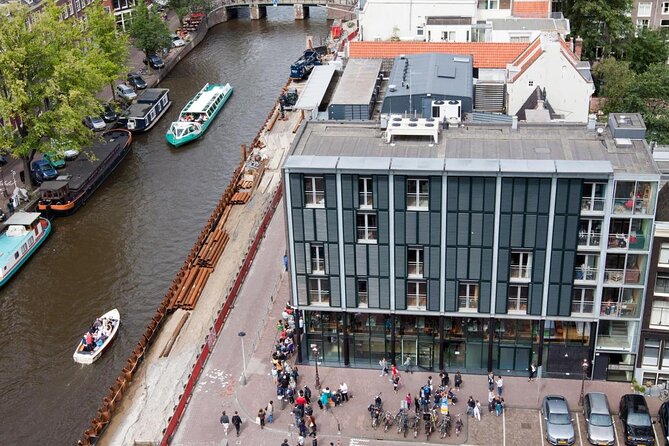
Then comes the Westerkerk area. You’ll walk around the Westerkerk, an inspiring church and tower that Anne saw from her hiding place. The guide will also point out the carillon playing every 15 minutes, which turns a sound cue into a memory marker for the story you’re about to see.
If you’re the type who likes sensory details, this stop is a winner. It’s a reminder that Anne Frank’s life in hiding wasn’t just rooms and walls. It was also the sounds of the city outside.
Anne Frank House: tickets, your visit flow, and the VR fallback
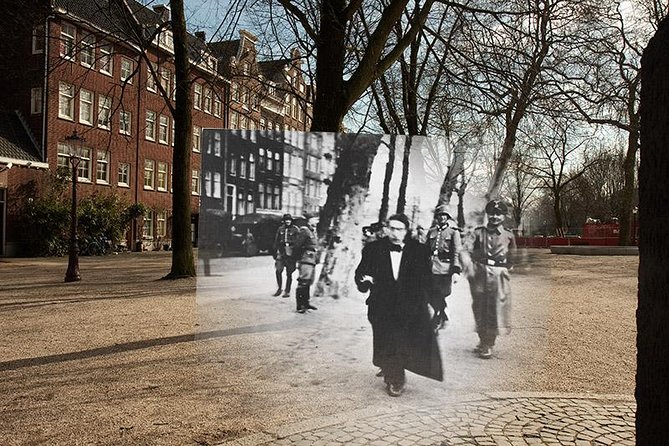
The tour ends at the Anne Frank House at the Westermarkt area. You’ll arrive with a clear plan for what happens next.
Here’s the most important practical detail: if you book 7 weeks or more in advance, the tour includes tickets to visit the Anne Frank House. If tickets are no longer available, you’ll get an included virtual reality simulation option instead.
Either way, your Anne Frank House experience is handled as part of the tour. The structure also means you’ll tour the house afterward on your own for the museum visit. Your guide’s job is to set you up with the relationship between the secret annex, the surrounding neighborhood, and the nearby Westerkerk so the museum makes sense once you step inside.
What I like about this approach is that it respects the museum experience. You get the emotional gravity without losing all the city context you’ve built during the walk.
One consideration: the house is emotionally heavy. Give yourself time to process when you’re done. If you’re hoping to fit a major dinner reservation right afterward, I’d leave some buffer.
Price and what you actually get in 3 hours
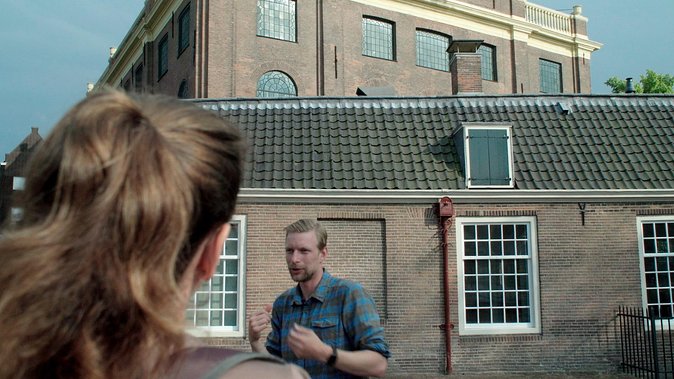
At $95.58 per person for about 3 hours, this is not a “cheap shortcut.” It’s priced like a guided history experience that tries to solve two real problems in Amsterdam: finding context on the street, and securing Anne Frank House entry.
Your included items are the big value levers:
- A private walking tour with a guide
- An apple pie with coffee or tea
- An optional tram ride
- Anne Frank House tickets or the included VR alternative
- A mobile ticket for the tour itself
Also watch what’s not included. Entry tickets are not included for some museum stops on the walk, like the Portuguese Synagogue and the Jewish Historical Museum. That’s not a deal-breaker, but it helps to know before you arrive so you’re not surprised by additional costs.
The walk distance is modest (about 2 kilometers), but the “real” effort comes from staying attentive at multiple outdoor memorial stops. If you’re in good walking shape, you’ll be fine.
Which kind of traveler will love this tour
This is ideal if you want:
- A meaningful Jewish history overview of Amsterdam, not just one museum stop
- A route that includes city landmarks and WWII memory sites in one flow
- A guide who can answer questions and keep the pacing steady
It’s especially good for couples and small groups who want the day to feel personal. People repeatedly praise guides such as Kayleigh, Inbal, Martina, and Kaleigh for story clarity and for tailoring their narration to interests. It’s also a solid option if you want more than Anne Frank: the tour builds in other Amsterdam Jewish history anchors and wartime details.
If you’re traveling with kids, the tour allows children from 10 years and older. Since there are memorials and emotionally intense content, you’ll want to judge based on your child’s maturity.
Should you book the Anne Frank and Jewish History of Amsterdam private tour?
Yes, you should book it if you want a route that connects Amsterdam’s Jewish landmarks to WWII events with enough context to make the memorials land. The included Anne Frank House ticket handling (or VR fallback) is a major practical win, because that museum is often hard to line up.
Book it early if Anne Frank House entry matters to you. If you’re okay with the VR alternative, you’ll still get a full guided experience that sets up the story in a way that feels coherent.
Skip it only if you want a light, casual city stroll with minimal heavy content. This tour is designed to make you stop, read, listen, and think. It does it respectfully, but it does not pretend the subject is easy.
FAQ
Is this tour private?
Yes. It’s a private walking tour, meaning only your group participates.
How long is the tour?
The duration is about 3 hours.
Where does the tour start and end?
It starts at Portuguese Synagogue of Amsterdam (Mr. Visserplein 3, 1011 RD Amsterdam) and ends at Anne Frank House (Westermarkt 20, 1016 GV Amsterdam).
What language is the tour offered in?
The tour is offered in English.
Is the Anne Frank House visit included?
Tickets to Anne Frank House are included if available, with assistance for ticket purchase. If tickets are sold out, a virtual reality simulation alternative is included in the price.
Are tickets for other sights included?
Entry tickets are not included for the Portuguese Synagogue and the Jewish Historical Museum. Some other memorials and stops on the route are listed as free.
How much walking is involved?
You’ll walk about 2 kilometers (1.5 miles).
Is there an included food or drink stop?
Yes. You get one of Amsterdam’s best apple pies with coffee or tea.
Can kids join?
Kids can join from 10 years and older.
What is the cancellation policy?
This experience is non-refundable and cannot be changed for any reason.