REVIEW · CITY TOURS
Amsterdam Must-See Historical City Walk with Local Expert
Book on Viator →Operated by Friendly Local Guides · Bookable on Viator
Amsterdam makes sense on foot. This 1 hour 45 minute small-group city walk helps you get your bearings fast with a local guide, hitting the core sights in a tight route. It’s a practical way to learn the why behind the where, with plenty of stops made for photos and quick stories you can actually remember.
I like two things most. First, the pacing fits a short visit—you cover a lot without feeling rushed—and the guide keeps the group moving. Second, the tour ends with expert advice on what to do after, so you don’t leave the center and suddenly feel lost.
One consideration: there’s a big difference between an average day and a great one, based on guide reliability. Some past bookings reported a no-show problem, so I’d arrive early, keep the contact info handy, and be ready with a backup plan if communication fails.
In This Review
- Key highlights you’ll notice right away
- Why this Amsterdam walk works when time is tight
- Meeting point, timing, and the pacing you should expect
- Dam Square to Oude Kerk: the city’s center in one breath
- Damrak and Beursplein: architecture, old traces, and the public square mindset
- Royal Palace and Nieuwe Kerk: power and ceremony in walking distance
- The Amsterdam Canal Ring and UNESCO context you can actually use
- Westerkerk: the church you’ll remember long after the tour
- Homomonument and the story of visible remembrance
- Keizersgracht (Emperor’s Canal): hidden corners and winter skating vibes
- Anne Frank area context: names, persecution, and what you see from the street
- Cafe Papeneiland: old-school Amsterdam comforts
- Noorderkerk, The Bulldog, and how the guide frames modern Amsterdam
- Off-the-beaten-path Red Light District: liberal culture in context
- What’s included (and what’s not), so you don’t get surprised
- Small group dynamics: why max 10 can change your experience
- The main risk: guide no-show reports and how I’d protect your day
- Who this tour suits best
- Should you book this Amsterdam historical city walk?
- FAQ
- How long is the walking tour?
- Is the tour offered in English?
- Where do I meet, and where does the tour end?
- Is admission included for churches and the Royal Palace?
- What group size should I expect?
- What’s the cancellation timing for a full refund?
Key highlights you’ll notice right away
- Small group (max 10): easier questions, less waiting, and more personal attention
- Photo-friendly route: iconic exteriors plus canals and church fronts you’ll want to capture
- Canal Ring context: you’ll get numbers and UNESCO context for what you’re seeing
- Story stops, not museum stops: most entrances are not part of the ticket, so expect outside views
- Guide-led culture moments: LGBT history, Anne Frank area context, and modern Amsterdam topics
- Local “what next” guidance: useful suggestions after the walk, not just facts during it
Why this Amsterdam walk works when time is tight

Amsterdam can overwhelm you. Streets curve, canals multiply, and the city looks like a postcard from every angle. This tour helps you read the city instead of just looking at it. In under two hours, you’ll connect famous places—Dam Square, churches, the canal ring—to the human stories that shaped them.
The format is also travel-smart. You get a compact loop of central sights with short stops, which means you’re not spending half the day in transit or standing in long lines. With a maximum of 10 people, you’re not hiding behind a big group, and questions feel normal.
Also, this is a walk-first experience. Most of what you’ll do is see, listen, and take a few photos. That’s valuable if you want a grounding overview before deciding what to explore deeper on your own.
You can also read our reviews of more city tours in Amsterdam



Meeting point, timing, and the pacing you should expect
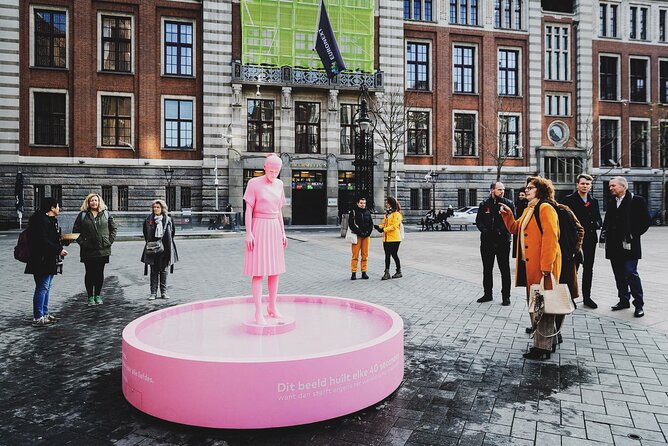
You start at City Game Amsterdam, Beursplein 5 (near public transportation), at 10:00 am, and you finish at Dam Square. The overall time is about 1 hour 45 minutes, which lines up well with a morning sightseeing block.
Because the itinerary is built around quick stops, wear shoes you can walk in for a steady stretch. The physical requirement is listed as moderate fitness, so expect cobbles, bridges, and normal Amsterdam walking pace—not a relaxed stroll with long museum-style breaks.
The tour also uses a mobile ticket, so plan to have your phone charged. And because it’s offered in English and capped at 10, you should feel comfortable that the guide can keep attention on the whole group.
Dam Square to Oude Kerk: the city’s center in one breath
You begin at Dam Square, Amsterdam’s gravitational center. It’s where the Royal Palace faces the square, where trams and tourists mix, and where musicians and shops pull you in different directions at once. The guide’s job here is to make sense of it all—why the square matters, what surrounds it, and what to notice as you move.
Then you head to Oude Kerk (Old Church). Outside, it’s a medieval-looking building with a shape that people describe as unusual—almost like a gingerbread-house feel. Even if you never step inside, the guide’s framing can help you spot the building’s age and how churches like this fit into the city’s earlier world.
What you’ll love here: this is the start of your “Amsterdam map in your head.”
What to watch: the square is busy, so hang on to the group and don’t let photos swallow the time.
Damrak and Beursplein: architecture, old traces, and the public square mindset
Next comes Damrak. This area is known as a popular tourist corridor, but the point of the stop is learning to see “old times” still visible in the layout and architecture. You’ll also hear about the dancing house (a striking design feature that stands out fast once you know what to look for).
From there you move to Beursplein, a square used for different kinds of events—cultural, political, and entertainment. What makes this stop worthwhile is the guide angle: you’re not just getting a quick photo spot. You’re getting “how locals think about this place” style context, including details that even regular visitors can miss.
My advice: at Damrak and Beursplein, don’t just aim your camera. Pause long enough to hear what the guide points out. The quick explanation is what turns “pretty buildings” into “I understand this.”
Royal Palace and Nieuwe Kerk: power and ceremony in walking distance
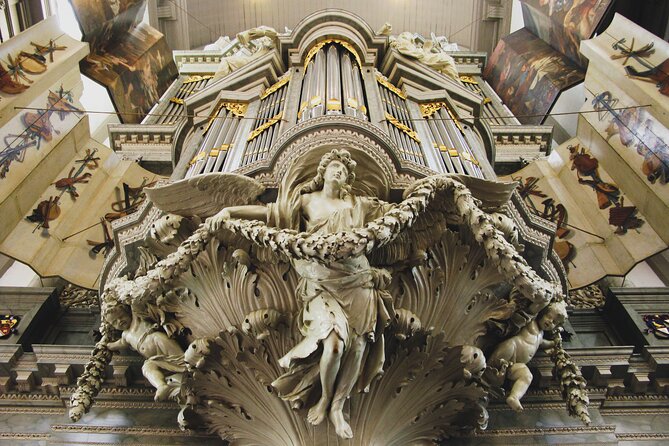
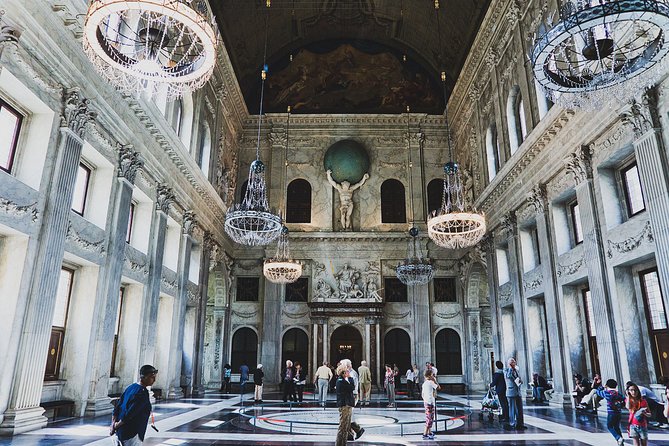
You’ll pass by the Royal Palace Amsterdam (the building facing the square). The facade can feel dramatic—rich decoration and lots of architectural detail. This is one of those exteriors where the guide can help you slow down for a minute and notice patterns you’d normally blow past while walking.
Right next to it is Nieuwe Kerk (New Church). It’s used for ceremonial events like investiture ceremonies and royal weddings. Even if you’re not entering, this stop helps you connect the palace area to ongoing public life—how major state symbols and church spaces sit side by side in central Amsterdam.
The tradeoff: both of these stops are time-limited and admission is not included. So expect “look and learn” rather than “go inside and spend an hour.”
You can also read our reviews of more historical tours in Amsterdam





The Amsterdam Canal Ring and UNESCO context you can actually use
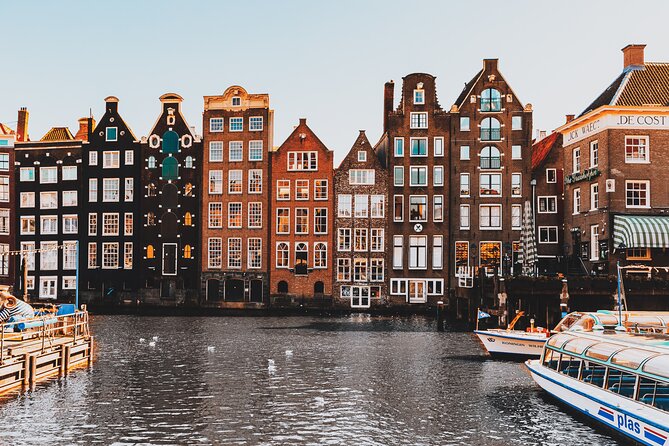
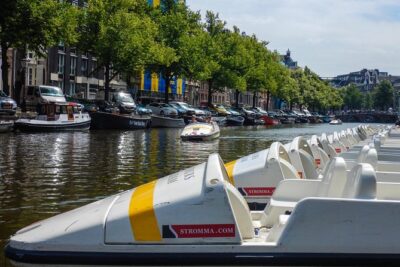
One of the best “wow, I get it now” sections is the walk along the Amsterdam Canal Ring. You’ll hear some big-picture facts that make the canals feel less like random pretty water and more like a planned system. There are over 100 kilometers of canals, about 90 islands, and roughly 1,500 bridges. The main canals—Herengracht, Prinsengracht, and Keizersgracht—were built in the 17th century. And the Canal Ring is recognized as a UNESCO World Heritage Site.
This part is also made for photos. With canal reflections, bridge angles, and the city’s building lines, it’s hard not to get a satisfying shot.
Practical tip: keep your camera ready, but don’t trip. Canal-side walking often means narrow edges and bike traffic.
Westerkerk: the church you’ll remember long after the tour
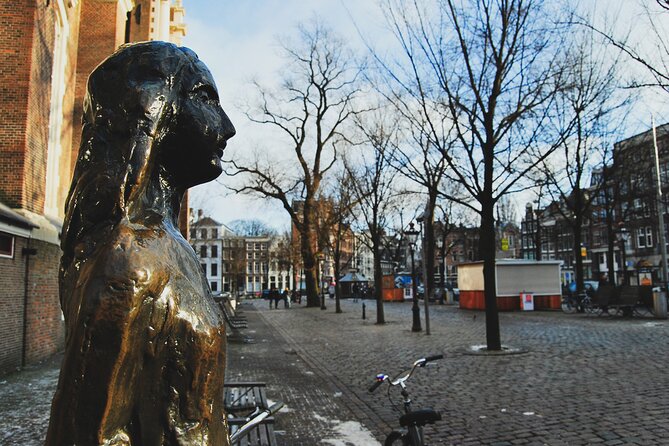
You then reach Westerkerk—described as the tallest church in Amsterdam. It’s an elegant landmark with lots of story gravity attached. You’ll also hear about Rembrandt, who was buried here, though the exact grave location isn’t known. Another layer comes from literature and proximity: Westerkerk is mentioned in Anne Frank’s diary, with the note that the nearby area was her childhood world.
Even if you don’t know Dutch history well, this stop works because it connects the building to names you already recognize.
A small caution: Westerkerk is an “anchor moment” visually, but it’s still a brief stop. If you want to go deeper later, mark it mentally now so you can plan a return.
Homomonument and the story of visible remembrance

Next is the Gay Monument (Homomonument). This memorial commemorates gay men and lesbians who were victims, and today it’s part of the Dutch LGBT movement’s public life. It can also appear in public events like flashmobs, meetings, and photo exhibitions.
This stop is important because it doesn’t treat Amsterdam as only old buildings and canals. It shows how modern values and public memory live in the open.
What to notice: the monument is unique and recognizable, but it can also be easy to miss if you’re scanning for the bigger tourist icons. The guide keeps your eyes on it.
Keizersgracht (Emperor’s Canal): hidden corners and winter skating vibes
You’ll walk along Keizersgracht, sometimes called the Emperor’s Canal. The focus here is on the smaller details—hidden corners, historic houses, and monuments lined along the water. In winter, the canal becomes a skating scene, which is a fun contrast to the everyday bike-and-bridge Amsterdam look.
You’ll also be pointed to the human side: little boutiques and offices along the banks, and parked bicycles on the bridges.
If you want one “this is why Amsterdam is Amsterdam” moment, this is it—because Keizersgracht gives you the city’s rhythm: commerce, history, and daily life all in the same frame.
Anne Frank area context: names, persecution, and what you see from the street
The tour includes Anne Frank House context as you pass by. You’ll hear about Anne Frank and Jewish persecution, and how her Diary of a Young Girl became a written document denouncing Nazism.
This stop is framed for street-level viewing. Since admission isn’t part of the tour, you won’t be going inside on this particular walk. But the guide’s explanation helps you recognize what you’re standing near and why it matters.
My recommendation: if this subject hits you emotionally—and it often does—plan to return on another day with time to go at your own pace.
Cafe Papeneiland: old-school Amsterdam comforts
After the solemn context, you get a lighter, local-feeling pause at Cafe Papeneiland. It’s described as one of the oldest Amsterdam cafes, still going strong. People compare its vibe to a cozy pub, where locals meet over beer, and it’s also known for apple pie.
Even though the tour stop is short, this is a valuable change of tempo. It reminds you Amsterdam isn’t only museums and monuments. It’s also habit and comfort—where people actually spend time.
Practical note: the tour doesn’t include this as a guaranteed tasting stop, but it’s an excellent place to plan a snack or rest after the walk.
Noorderkerk, The Bulldog, and how the guide frames modern Amsterdam
Next comes Noorderkerk. You’ll learn it’s connected to Amsterdam residents who rebelled against Dutch Jewish persecution. Like the other story-driven stops, it’s a reminder that “historic city walk” doesn’t mean “only medieval stuff.” It means learning how people acted, protested, and endured.
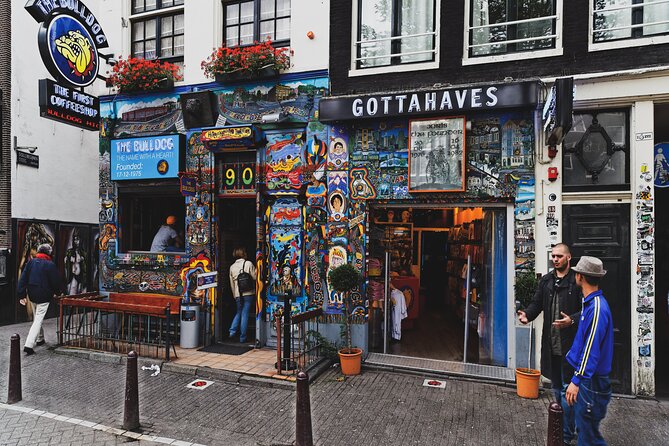
Then you’ll pass The Bulldog Rock Shop Coffeeshop. This is tied to modern Amsterdam policy and the legal environment around cannabis in small quantities. The guide will explain legalization and decriminalization—information that helps you understand why certain places are there, and how Amsterdam discusses these issues publicly.
A thoughtful point: this is the kind of stop where your personal comfort matters. If you’re traveling with kids or you dislike anything related to cannabis culture, you might treat this as a photo-and-facts moment and move on quickly.
Off-the-beaten-path Red Light District: liberal culture in context
The tour ends with the Red Light District, described as a second area that’s off the main beaten route. The guide frames it as part of Dutch liberal culture, with the idea that the off-center location gives a different feel—less “main attraction theater,” more lived-in street atmosphere.
This stop can be sensitive depending on your values and travel style. Even if you’re curious, keep it respectful and understand that Amsterdam can be more direct than you expect.
If you prefer romance and canals only: you may feel this segment is too much. But if you want the full picture of modern Amsterdam, it’s part of the story.
What’s included (and what’s not), so you don’t get surprised
The tour includes all fees and taxes, and you’ll have a friendly local guide. You’ll also get iconic photo spots and expert advice on what to do after.
What’s not included is admission. Many stops are marked as not including admission tickets. So expect mostly outside viewing with guided storytelling rather than paid entry into the Royal Palace, churches, or other interiors.
That structure is often the right choice for a 1 hour 45 minute walk. You can learn key context quickly, then decide later whether you want to pay for specific sites.
Small group dynamics: why max 10 can change your experience
A group of up to 10 is big enough to make the walk fun, small enough to keep attention on what matters. You can ask short questions without the guide having to shout. You also get more flexibility when the group hits a busy spot and needs a bit of re-grouping.
This is especially useful in central Amsterdam, where the crowd at Dam Square and along major streets can swallow attention if you’re alone.
The main risk: guide no-show reports and how I’d protect your day
I’m going to be blunt here: the lowest ratings are tied to a guide not showing up and difficulty contacting the local operator. That’s the kind of failure that ruins your schedule.
So here’s what you can do to lower your odds:
- Arrive early and check you’re at the right meetup location and time (10:00 am).
- Keep your phone ready with your mobile ticket and any contact number you were given.
- If you don’t hear from anyone after a reasonable wait, use the support route listed in your booking info right away.
- Have a Plan B for the morning—coffee near Dam Square or a short canal walk you can do without a guide.
The flip side is also true: one highly positive note praised a guide described as sounding like Stacy, with a standout skill—she was easy to spot in a crowd and kept things moving with energy. That’s the level of experience you should hope for.
Who this tour suits best
This walk is a strong fit if you:
- Have a short Amsterdam stay and want a high-coverage orientation.
- Prefer guides who talk through what you’re seeing, not just standing at one monument forever.
- Want a mix of old landmarks, canal context, and modern cultural stops in one route.
It’s less ideal if you:
- Want mostly interior visits and ticketed museum time (admission isn’t included for key stops).
- Dislike any connection to the Red Light District or cannabis culture and want to avoid those themes entirely.
- Rely on an exact, guaranteed start time with no backup plan.
Should you book this Amsterdam historical city walk?
I’d book it if you want a smart, compact route that gives you structure: Dam Square to canals to key story monuments, with a local guide and an end that sets you up for what to do next. The UNESCO Canal Ring context and the street-level Anne Frank area framing make it more than just a checklist.
But I would also go in with a small amount of caution because of the reported no-show issues. If you can’t risk a morning derailment, consider booking something that has an easy backup option that doesn’t depend on one guide arriving.
If you do book, show up early, keep contact details accessible, and treat it as the kickoff to your Amsterdam day, not the only event on your plan.
FAQ
How long is the walking tour?
It’s approximately 1 hour 45 minutes.
Is the tour offered in English?
Yes, it’s offered in English.
Where do I meet, and where does the tour end?
You meet at City Game Amsterdam, Beursplein 5, 1012 JW Amsterdam, and the tour ends at Dam Square, Dam, 1012 RJ Amsterdam.
Is admission included for churches and the Royal Palace?
No. Many major stops are listed as Admission Ticket Not Included, so you’ll typically view from outside unless you add separate entry plans.
What group size should I expect?
The maximum group size is 10 travelers.
What’s the cancellation timing for a full refund?
You can cancel up to 24 hours in advance for a full refund.