REVIEW · ANNE FRANK & WWII HISTORY TOURS
Amsterdam: Life of Anne Frank and World War II Walking Tour
Book on GetYourGuide →Operated by 360 Amsterdam · Bookable on GetYourGuide
A walk that brings the diary to life. This is a smart, story-first way to understand Anne Frank in context, with an expert guide connecting her writing to what was happening in Amsterdam’s streets. I love how the tour starts at the Portuguese Synagogue and uses the neighborhood itself as the backdrop for the bigger WWII story.
The second thing I like is the tone: guides frame the persecution and Dutch Resistance with care, so it feels human, not like a rushed facts parade. One thing to think about up front: this tour does not include entry to the Anne Frank House, so you only see the outside façade.
If you want a guided setup before you tackle the house on your own, this works well. It’s also a flexible format, since you can book either a small-group or a private experience, and the tour runs about 2 hours on scheduled departures.
In This Review
- Key highlights at a glance
- Anne Frank in Amsterdam: what this tour does best
- Where the walk starts: Portuguese Synagogue and the Jewish Quarter’s roots
- Anne Frank’s life: family dynamics, hiding, and the diary’s rise
- Dutch Resistance and secret hiding places you’ll spot from the sidewalk
- Jewish Historical Museum and the memorial stops that demand a pause
- The Anne Frank House façade: what you get, what you don’t
- Price and value: is $37 for 2 hours a good deal?
- Pacing, languages, and who should book this
- Practical tips for a smooth 2-hour walk
- Should you book this Anne Frank and WWII walking tour?
- FAQ
- How long is the Anne Frank and WWII walking tour in Amsterdam?
- What is the price per person?
- Where does the tour start and end?
- Does the tour include entrance to the Anne Frank House?
- Can I choose a small-group or private experience?
- What languages are available for the guided tour?
- Is luggage allowed during the tour?
- What should I bring?
- Are young children allowed?
Key highlights at a glance
- Start outside the Portuguese Synagogue, a 17th-century Sephardic synagogue that still functions today
- Anne Frank, from Germany to hiding, including family dynamics and what happens after the war
- Jewish Cultural Quarter context—how the area developed over centuries
- Dutch Resistance and hiding places, explained as you walk past key spots
- Auschwitz Monument stop, with time to absorb the moment
- No Anne Frank House entry, but you’ll see the outside façade
Anne Frank in Amsterdam: what this tour does best

Anne Frank’s diary is famous. The dates are etched in history. But what’s harder to grasp from a book is the day-to-day reality: a teenager’s routines, the pressure tightening year after year, and the way a neighborhood changes when rules and fear replace freedom.
That’s where this walking tour earns its keep. You don’t just hear who, when, and where. You get the why. Your guide puts Anne Frank’s story into the Jewish Quarter’s long timeline and overlays WWII events on top of streets you can actually stand on. In about 2 hours, you walk away with mental map pins: the community, the occupation, the Resistance, the hiding, and the aftermath.
I also like that the tour stays grounded. You move from the Portuguese Synagogue to nearby sites without trying to sprint through everything. The pace is built for learning while you’re walking, not for speed-reading facts before the next stop.
Finally, it’s structured to help you make sense of the big ideas without turning them into something cold. The diary isn’t treated like a prop. It’s treated like a voice from a real life—complete with family tensions, hope, fear, and the brutal narrowing of options.
You can also read our reviews of more walking tours in Amsterdam



Where the walk starts: Portuguese Synagogue and the Jewish Quarter’s roots

The tour begins outside the Portuguese Synagogue, a 17th-century Sephardic building that still functions as a synagogue today. Even if you’ve never studied Jewish history in Amsterdam, seeing a living religious site at the very start changes the whole mood. This wasn’t a museum district before WWII. It was a neighborhood where community life continued—right up until it was forcibly disrupted.
From there, your guide walks you through how the Jewish neighborhood formed and evolved. You’ll hear about the original Jewish community and how the area developed over the centuries, which helps you understand why Anne Frank’s story matters beyond one family. This wasn’t a story floating in space. It was tied to real people living close together, building a communal world, and then having that world torn apart.
One practical benefit: this early context makes later stops easier. When you reach memorials and institutions, you already know what kind of neighborhood they belonged to, so the references land faster.
What to watch for: because you’re outside for the start, bring comfortable shoes and plan for city walking. Also, double-check the meeting point details on your booking confirmation, since the meeting point can vary depending on the option you choose.
Anne Frank’s life: family dynamics, hiding, and the diary’s rise
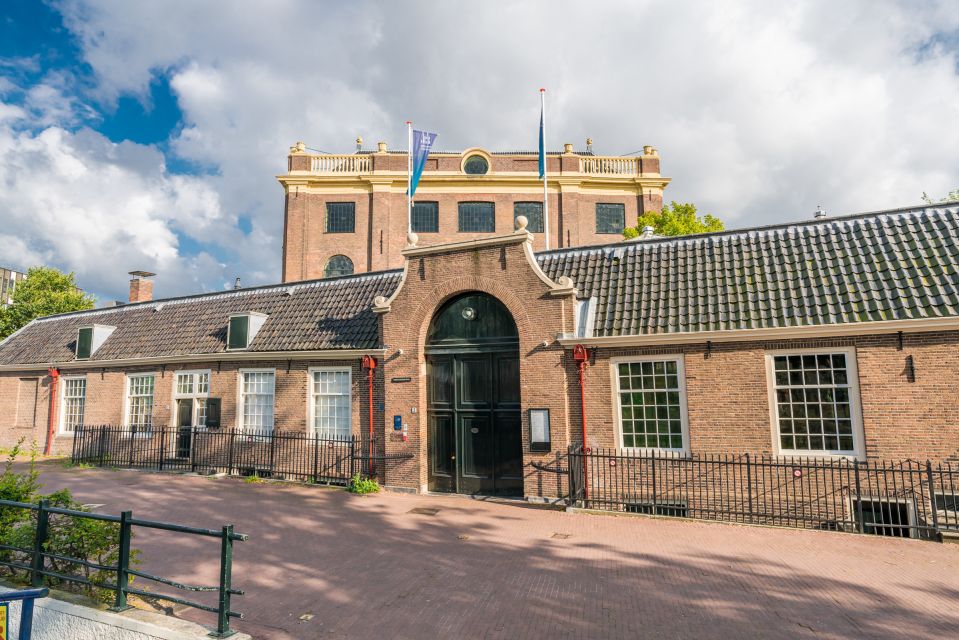
The heart of the tour is Anne Frank—how her life connected to what was happening around her, and how her diary became so well known after the fact.
You’ll hear about several specific threads:
- Her family dynamics and how life in Amsterdam shaped her perspective
- The move from Germany to the Netherlands
- Their time in hiding in the 1940s
- Her father’s life after the war
- How Anne’s love of writing connects to what she documents
This is where the guided format really matters. Reading the diary is personal. Listening to it through a guide’s framework helps you place the writing inside the larger timeline: the tightening occupation environment, the constant uncertainty, and how her thoughts reflect both teenage concerns and the larger reality they were trapped inside.
I also like the way the tour frames Anne’s diary not as a miracle of fame, but as something born from a person trying to make meaning under impossible conditions. The story gets you thinking about writing as a lifeline, not just a historical artifact.
A small reality check: this is an on-the-streets walking tour. You’ll see the outside of the Anne Frank House façade, but the tour itself does not include tickets or entry.
Dutch Resistance and secret hiding places you’ll spot from the sidewalk
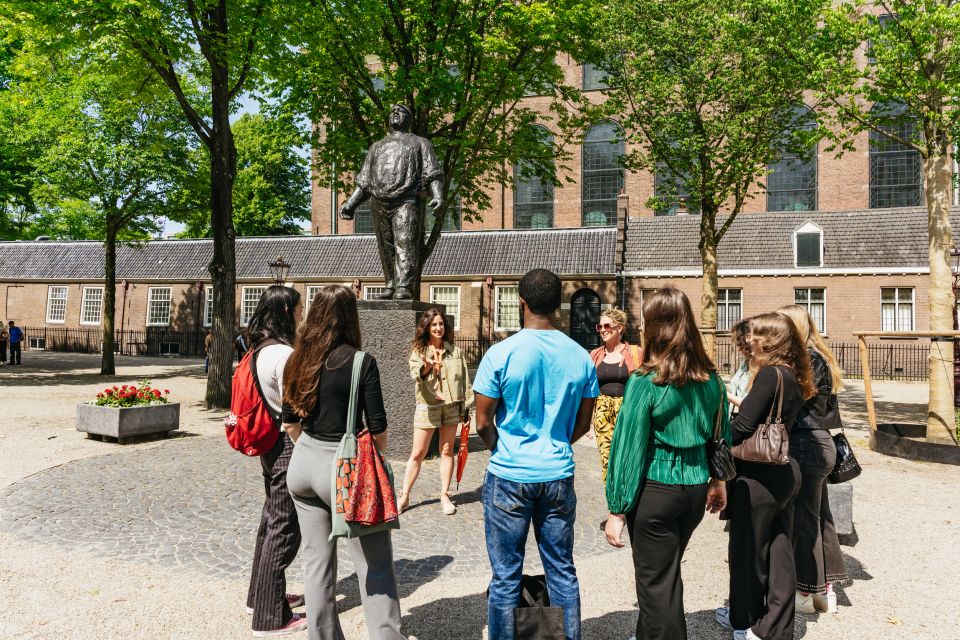
World War II in Amsterdam isn’t only about occupation. It’s also about what people did to resist.
Your guide brings in the Dutch Resistance—how resistance networks operated and what it meant for Jewish families trying to survive. As you walk, you’ll see where secret hiding places were located (as part of the tour’s storytelling). This isn’t about pretending you’re stepping into those spaces. It’s about learning the geography of survival: where people could hide, where information mattered, and how neighborhoods were connected by risk.
This section can feel heavy, but it’s also one of the most educational parts, because it answers a question you might not get from a casual visit: how could anyone survive at all?
If you’re traveling with teens or adults who want more than just a sad storyline, this is often the part that turns into actual discussion. You’ll come away with a clearer sense of what resistance looked like in real life, not just in documentaries.
Jewish Historical Museum and the memorial stops that demand a pause

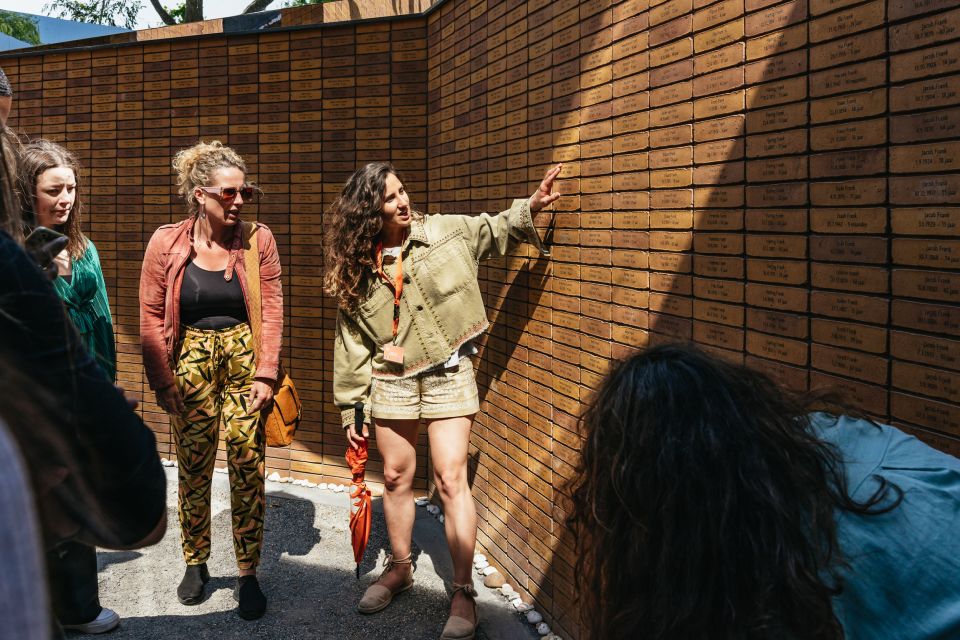
About mid-tour, you’ll pass the Jewish Historical Museum area and then stop at the Auschwitz Monument. These aren’t throwaway photo moments. They’re places that invite you to slow down and think.
The Auschwitz Monument stop is especially important because it connects Amsterdam’s story to the broader system of genocide. Your guide helps you hold onto that connection without turning the moment into a checklist. If you need a sign that the tour’s tone is respectful, this is where you’ll feel it most—clear framing, careful pacing, and space to absorb what you’re seeing.
What I find useful is that you’re not dropped into these sites without context. By the time you reach them, the tour has already reminded you what the Jewish Quarter meant before it was violently reshaped.
One consideration: because this is a walking tour, you’ll want to pace yourself. If you’re sensitive to WWII topics, take a moment when you need it. Guides typically keep moving at a human speed, but the subject matter is emotionally intense.






The Anne Frank House façade: what you get, what you don’t
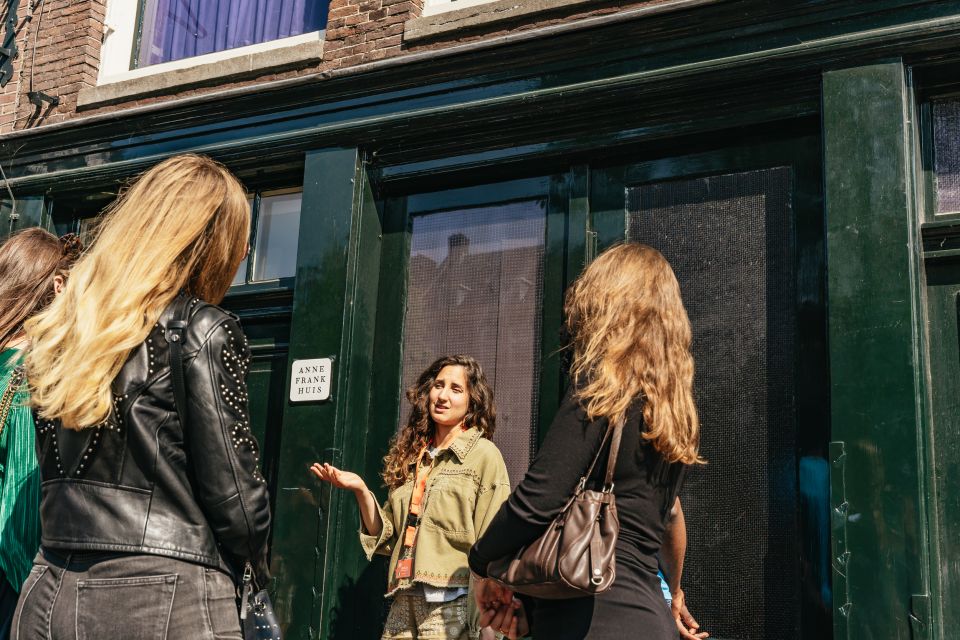
This tour helps you understand the Anne Frank House. But it doesn’t take you inside.
You’ll see the outside of the Anne Frank House façade, which is still powerful if you’ve only seen photos before. It works best as a primer. You’ll connect the building to the family’s story, their move, their hiding, and how the diary came out of that reality.
If you want the full experience inside the house, you’ll need to book tickets separately. It’s advised to plan ahead because they often sell out well in advance.
So here’s the practical choice:
- If you can get Anne Frank House tickets, do this tour first for context, then visit the house.
- If you can’t get tickets, don’t feel like you missed everything. This tour is designed to teach the story through the neighborhood, including the memorial elements.
Price and value: is $37 for 2 hours a good deal?
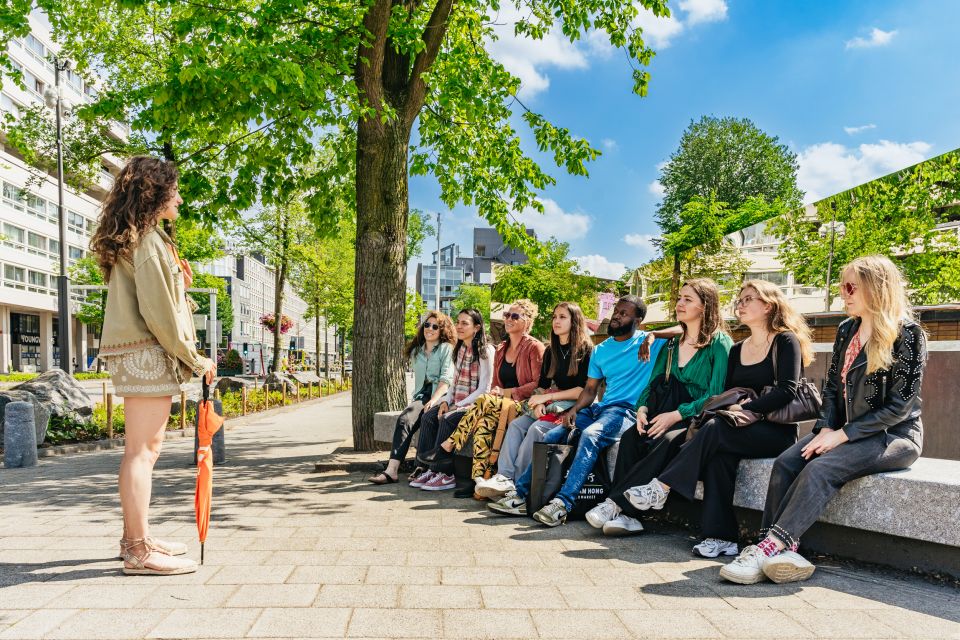
At $37 per person for about 2 hours, this tour sits in the “small cost, big understanding” category—especially if you’re new to the Jewish Quarter or you want a structured story without piecing together multiple museum visits.
Here’s what you’re paying for:
- A professional guide who explains Anne Frank, the Jewish Quarter, and WWII events
- A walking route that connects sites without requiring you to research every stop
- Clear narrative flow: Anne’s life, hiding, Resistance, and remembrance
What you aren’t paying for is the Anne Frank House entrance. That’s the one big reason the price can stay reasonable. You’re getting the guided story and the outside seeing, not the ticketed museum experience.
If you’re trying to balance your Amsterdam time, this can be a smart use of 2 hours—especially on a first day when you want a mental map fast.
Pacing, languages, and who should book this

This is a walking tour, so comfortable shoes matter more than people expect. You’ll want water because Amsterdam walking can add up, even when the duration is only 2 hours. A charged smartphone helps you follow along, take notes, and use translation if needed.
Language options are broad: Dutch, German, Portuguese, Italian, English, Spanish, French. One thing to watch: the shared group and private options do not always offer the same languages. If language matters to you, check every language option available for your chosen tour type.
There’s also a private group option, which can be great if you want quieter pacing or a more tailored Q&A. Small-group tours tend to feel best if you like hearing other people’s questions and learning along the way.
Who it suits:
- First-time visitors who want context without a full-day commitment
- People who read about Anne Frank and want the real-world geography
- Travelers who care about respectful WWII interpretation, not only landmarks
- Groups that want a guide to connect the dots between the Jewish Quarter and the war years
Practical tips for a smooth 2-hour walk
Before you go, keep it simple. You’ll be walking and standing around key points.
- Wear comfortable shoes
- Bring water and keep your smartphone charged
- Leave luggage or large bags behind; they’re not allowed
- Expect to walk city streets, not a closed historic park
- If you’re also planning Anne Frank House entry, book early since tickets can sell out
Also, plan your schedule with your energy in mind. Two hours sounds short until you’re standing in memorial spaces with heavy themes. Build in a little breathing room afterward.
Should you book this Anne Frank and WWII walking tour?
Book it if you want the best version of an in-between experience: guided context, neighborhood geography, and WWII storytelling in one compact walk. It’s especially worth it if you’re aiming to visit the Anne Frank House later, since this tour gives you the emotional and historical framing first.
Skip it (or think twice) if your main goal is going inside the Anne Frank House. Since this tour doesn’t include entry, you’d still need a separate ticket plan. In that case, you might choose a ticketed plan that centers the house itself, then add this walking tour only if you still want deeper neighborhood context.
If you’re on the fence, here’s the quick decision rule: If you want understanding, book. If you only want inside access, prioritize the house tickets first.
FAQ
How long is the Anne Frank and WWII walking tour in Amsterdam?
The tour lasts 2 hours. Starting times vary, so check availability for your departure time.
What is the price per person?
The price is $37 per person.
Where does the tour start and end?
The tour starts at the meeting point, which can vary by option, and the walk begins outside the Portuguese Synagogue. The tour ends back at the meeting point.
Does the tour include entrance to the Anne Frank House?
No. Entrance to the Anne Frank House is not included, and you will only see the outside façade.
Can I choose a small-group or private experience?
Yes. You can book either a small-group guided tour or a private guided experience.
What languages are available for the guided tour?
The tour offers live guides in Dutch, German, Portuguese, Italian, English, Spanish, and French. Shared and private options do not always offer the same languages, so check what’s available for your specific option.
Is luggage allowed during the tour?
No. Luggage or large bags are not allowed.
What should I bring?
Bring comfortable shoes, water, and a charged smartphone.
Are young children allowed?
Yes. Children up to 3 years old can participate for free.