REVIEW · WALKING TOURS
Absolutely Amsterdam – the Essential Introductory Walking Tour
Book on Viator →Operated by FreeDam Tours · Bookable on Viator
Amsterdam can feel like a puzzle at first. This walk turns it into a story you can follow. You’ll see major landmarks in the UNESCO-listed city center on foot, with a guide who connects the dots between water, trade, religion, and daily life. I also like how the tour keeps things human and funny, with guides such as Gianni and Raymond using maps and visual aids to make the history stick.
The one thing to plan for: a few stops are sights where admission isn’t included, so you may only view from the outside (or learn while you look rather than do a full interior visit).
In This Review
- Key reasons this tour works so well
- First-Time Amsterdam: a 2.5-hour walk that sets your bearings
- Stop 1–2: Beurs van Berlage and Damrak’s water-and-money origins
- Stop 3: Ons’ Lieve Heer op Solder and tolerance under strict rules
- Stop 4: Chinatown, Dutch drug policy, and how coffeeshops changed the map
- Stop 5–6: The Waag for Rembrandt, then Oostindisch Huis and Amsterdam’s trading engine
- Stop 7: Waterlooplein Market and the Jewish Quarter after WWII
- Stop 8–9: Amstel canal-house clues and Oudemanhuispoort’s bike logic
- Stop 10: Royal Palace and Dam Square’s republic-to-monarchy pivot
- Price and value: what $5.93 really buys you
- Who should book this tour, and who might skip it
- Should you book Absolutely Amsterdam: the Essential Introductory Walking Tour?
- FAQ
- How long is Absolutely Amsterdam – the Essential Introductory Walking Tour?
- How much does the tour cost?
- Is the tour offered in English?
- What is the group size?
- Where does the tour start?
- Is admission included for all stops?
- What happens at Ons’ Lieve Heer op Solder?
- Is it okay if I’m traveling with a service animal?
- Can I cancel for a full refund?
Key reasons this tour works so well

- A tight 2.5-hour loop that gives you orientation fast without killing your day
- Big themes, small streets: water and finance, tolerance, drugs, trade, WWII survival
- Clear explanations with humor from guides like Jaap, Sergio, and David
- Weekly-access detail at Oostindisch Huis: the courtyard is mentioned as weekday-only
- Optional tipping approach that still feels organized and structured
- Small group size (max 15), so you’re not lost in a crowd of strangers
First-Time Amsterdam: a 2.5-hour walk that sets your bearings
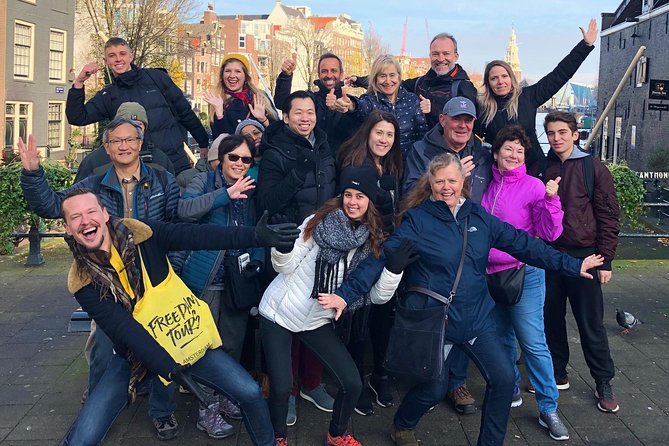
This is the kind of tour I recommend when you arrive with that confused first-day feeling. It’s long enough to cover real highlights, but the pace stays manageable, and the group is capped at 15. That matters in Amsterdam, where even a short distance can become a maze of bicycles, canal bridges, and dense pedestrian traffic.
Expect an English-speaking guide, and expect stop-and-learn moments rather than a constant march. The route is built around the old center, so you get the classic Amsterdam look quickly, including canal-house clues and the architecture style that makes this city so recognizable. It also helps that the tour’s structure is theme-based: each stop is a piece of the Amsterdam story, not random trivia.
Bring comfortable walking shoes. More than one guide-story in the feedback points to good footwear and a pace that works for most people—plus the practical reality that dodging bikes is part of doing Amsterdam.
You can also read our reviews of more walking tours in Amsterdam


Stop 1–2: Beurs van Berlage and Damrak’s water-and-money origins
You start at Beursplein 5, in front of Beurs van Berlage. The guide sets the stage by talking about Amsterdam’s beginnings where the Amtel river used to flow, and how water shaped both settlement and later finance. It’s a strong first move because Amsterdam’s identity is tied to its relationship with water. When you understand that early, later canal and trading stories make more sense.
From there you head to Damrak, the old harbor area. This stop does something I like a lot: it doesn’t treat the Red Light District like just a spectacle. You’ll hear how the neighborhood’s roots connect to the church and to the changing relationship between the holy and the profane. The tour also covers how prostitution became legal in the 20th and 21st centuries and what challenges the area faces today.
Practical note: Damrak can get crowded fast. If you’re booking near peak times, just expect a busier-feeling stretch and plan to listen closely even when you’re standing on a sidewalk full of foot traffic.
Stop 3: Ons’ Lieve Heer op Solder and tolerance under strict rules
Next up is Our Lord in the Attic Museum (Ons’ Lieve Heer op Solder). Here, the tour’s “viewing” approach is important. You do not enter the hidden church; instead, you see it from the outside and get pictures of the interior. Admission isn’t included for this stop, so treat it as a guided history-and-context moment, not a guaranteed full museum visit.
The main idea: tolerance in Amsterdam didn’t always look like freedom. In the 17th century, Catholicism became illegal, yet people still found a way to practice under unusual conditions. The guide draws parallels to tolerance today, using this contradiction—public restrictions versus private reality—to explain how societies can make room for people without giving them full equal status.
Why this stop is worth your attention: it adds moral and political texture to a city that’s often explained only through art, canals, and bicycles. It also gives you a framework for thinking about modern debates on what tolerance means in practice.
Stop 4: Chinatown, Dutch drug policy, and how coffeeshops changed the map
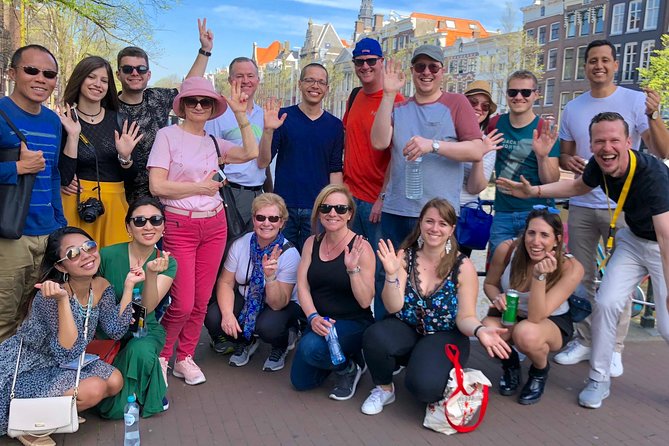
The tour moves to Chinatown with a focus on Dutch drug policy. You’ll learn how this area became a “no go” zone in the 1970s and how that shift helped spark the start of coffeeshops, places dedicated to selling marijuana. It’s not just a lesson on policy terms. You’re seeing how laws and enforcement can reshape entire neighborhoods.
This is also a stop that changes depending on how the guide tells it. Some guides keep the tone clinical; others go more story-driven. Either way, you walk away with a clearer sense of why Amsterdam’s approach is so distinctive—and why that distinctiveness created both opportunities and controversies.
Admission is free here, and that’s useful: you can spend your time listening without worrying about extra entry costs.
Stop 5–6: The Waag for Rembrandt, then Oostindisch Huis and Amsterdam’s trading engine
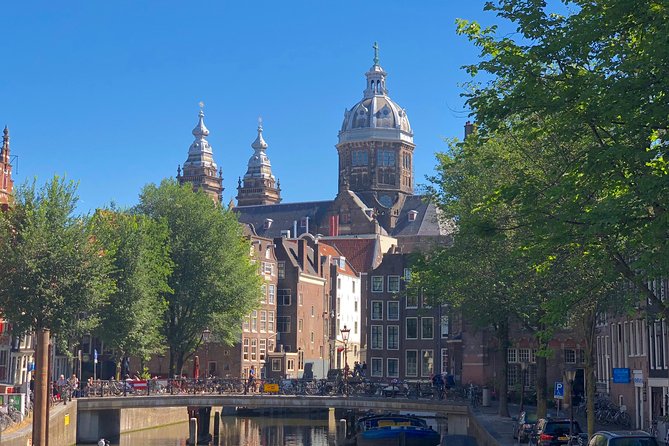
At The Waag, the guide tells you about where Rembrandt painted his first major work and how it changed portrait painting. You’ll see a copy of the painting to get the details right. Admission isn’t included, so plan on learning through explanation and viewing, not a paid interior museum moment.
Still, the Waag stop is a great bridge between art and economics. Amsterdam didn’t become important by accident. The city’s wealth and institutions shaped what artists could do and who paid for their work.
Then comes Oostindisch Huis, where you get the courtyard experience. The building is known for a hidden 17th-century courtyard, and the tour emphasizes that it’s only accessible during week-days. If your tour date falls on a weekend, you may get less of that “step into the courtyard” feel and more of the exterior story.
Inside this stop, the guide lays out Amsterdam’s Golden Age trading power and explains how this location connects to the first and biggest corporate headquarters in human history. You’ll also hear both sides: the prosperity and the darker legacy. I appreciate that balance because it keeps the story grounded. Amsterdam’s “success” came from somewhere, and you don’t leave with a postcard version only.



Stop 7: Waterlooplein Market and the Jewish Quarter after WWII
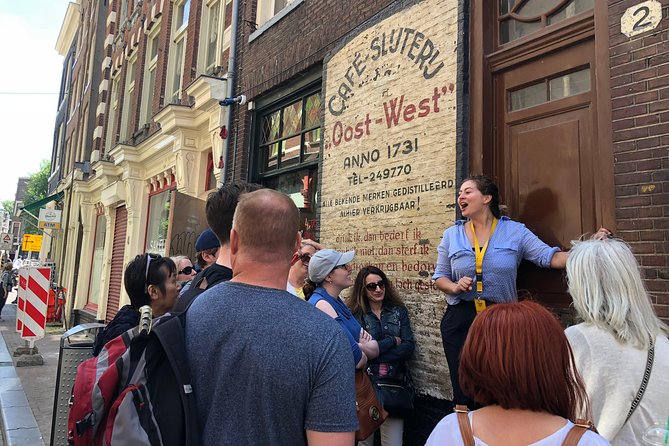
At Waterlooplein Market, you’re in the (former) Jewish Quarter area, and the guide connects the neighborhood’s survival story to WWII. The tour points out that the area was almost completely destroyed at the end of the war—but also warns that the cause isn’t as straightforward as people expect.
You’ll hear about the disastrous consequences of Nazi occupation that decimated Jewish populations across Europe, including those who had found safety in Amsterdam. The story also reaches the hunger-winter period and explains what Amsterdammers had to do to survive.
This is emotionally heavier than some other stops, so it helps that it’s timed after the trading and art themes. You get context for how a city can feel wealthy, organized, and tolerant on the surface, while still being brutalized and destabilized by history.
Admission is free here, which keeps the pace efficient and lets you focus on the story rather than tickets.
Stop 8–9: Amstel canal-house clues and Oudemanhuispoort’s bike logic
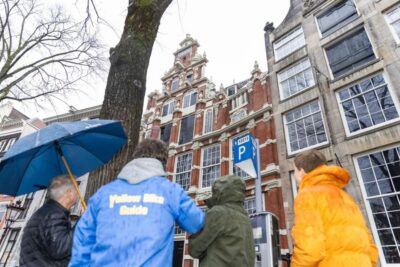
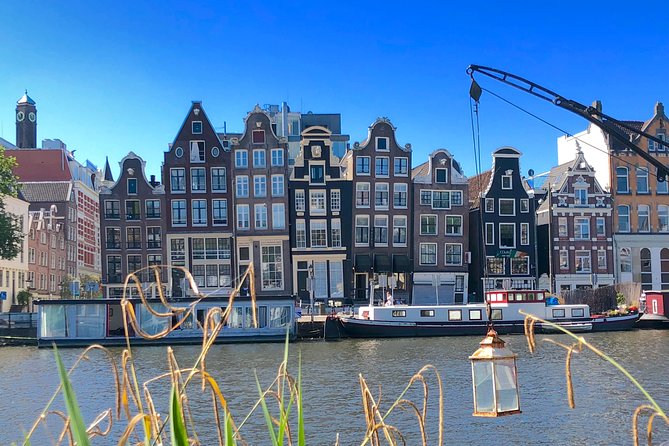
Then you get to the fun visual stuff: The Amstel. The guide explains why Amsterdam has canals and how the famous canal houses work. You’ll hear practical design questions answered—why canal houses look skinny, why they lean, why there’s often a hook, and why Dutch curtains are frequently open instead of hidden behind. Depending on weather and the guide, this stop can shift to another canal, so you’ll still get the canal-house “why” even if the exact spot changes.
This is one of the best sections for first-timers because it gives you a way to look. After this, you’ll spot the details on your own: the architecture choices aren’t random, and the city is basically a giant system of solutions to land, water, and building.
Next is Oudemanhuispoort, a hard-to-find former monastery turned hospital and now part of the University of Amsterdam. Here the theme switches to bikes: why Amsterdam has more bikes than people, and why many bikes look kind of ugly by design choices or practical priorities.
It’s a short stop, but it’s a useful one. Amsterdam’s cycling culture isn’t a style thing—it’s how the city moves. Understanding that makes everything you do later feel more obvious.
Stop 10: Royal Palace and Dam Square’s republic-to-monarchy pivot
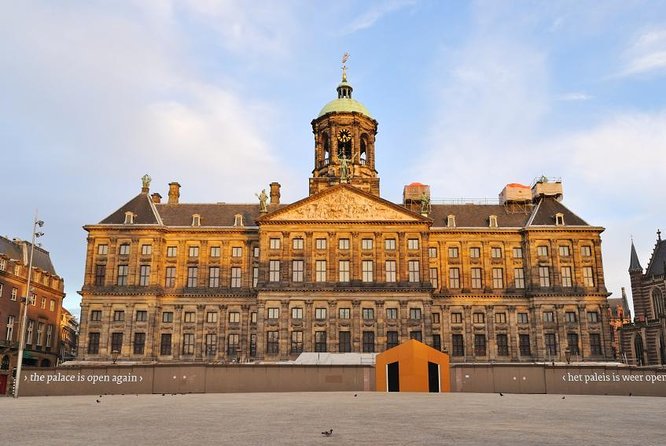
The walk ends at Royal Palace Amsterdam, with the tour noting that Dam Square is also where it finishes. Admission isn’t included for the palace, so expect the story to center on what changed and why rather than an inside visit.
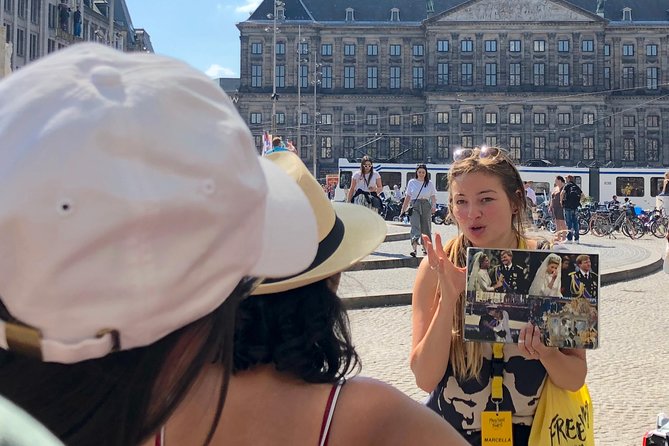
The guide explains the palace’s peculiar history and the transition from a republic to a monarchy. You’ll also get context on the current royal family through pictures and some light “juicy gossip” style commentary, which keeps the politics from turning into a lecture.
This final stop works as a wrap-up because it ties together the tour’s big question: how does Amsterdam’s system—religion, law, economics, and government—evolve over time? You end with a city that feels less like a set of random attractions and more like a living machine that keeps changing gears.
Price and value: what $5.93 really buys you
At around $5.93 per person for roughly 2 hours 30 minutes, this is one of those rare walking tours that feels priced for accessibility. The biggest value isn’t just the low cost—it’s what you get for it: multiple major districts and landmark themes in one go, plus a guide who explains the “why,” not only the “what.”
Also, the tour highlights that tipping is part of the model, so you can decide what your guide earned in the moment. Many people feel more comfortable when they can pay a base amount and then reward performance based on what they actually experienced.
The main value tradeoff is that not every stop includes admission. A few sights (Ons’ Lieve Heer op Solder, Waag, Royal Palace) explicitly state admission isn’t included. That doesn’t make the tour worse. It just means you should treat them as guided viewing and context, with optional follow-up if you want to go deeper later.
Who should book this tour, and who might skip it
I think this tour fits best if:
- You’re visiting for the first time and want a fast mental map of central Amsterdam
- You care about how history connects to today’s street life (money, tolerance, drugs, WWII)
- You like guides who tell stories with humor and use visual aids
You might consider skipping or pairing it with other plans if:
- You’re only interested in a single kind of sightseeing, like art museums or canal cruises
- You want guaranteed inside access at every stop (a few admissions are not included)
Should you book Absolutely Amsterdam: the Essential Introductory Walking Tour?
Yes, if you want an organized start that pays off during the rest of your trip. This is the kind of tour that helps you look smarter on your own—especially after the stops on canals, bikes, and the logic behind key neighborhoods. The guide style also seems consistent: many people highlight humor, clear explanation, and engaging storytelling from guides such as Jaap, Sergio, Raymond, and David.
Book it early in your stay. Do it when your questions are still fresh. Then you can return later to whatever pulls you in—whether it’s the trade-era corners, the museum you missed, or the canal details you start noticing on your own.
If you’re okay with some sights being “learn from the outside” rather than “fully enter every building,” this tour is a very strong value.
FAQ
How long is Absolutely Amsterdam – the Essential Introductory Walking Tour?
It’s about 2 hours 30 minutes.
How much does the tour cost?
The price is listed as $5.93 per person.
Is the tour offered in English?
Yes, the tour is offered in English.
What is the group size?
The tour has a maximum of 15 travelers.
Where does the tour start?
The start location is Freedam Tours, Beursplein 5, 1012 GZ Amsterdam, Netherlands.
Is admission included for all stops?
No. Some stops list admission as free, while others say admission is not included (including Our Lord in the Attic Museum Ons’ Lieve Heer op Solder, The Waag, and Royal Palace Amsterdam).
What happens at Ons’ Lieve Heer op Solder?
The tour notes that you do not enter the hidden church. You see it from the outside and view pictures of its interior.
Is it okay if I’m traveling with a service animal?
Yes, service animals are allowed.
Can I cancel for a full refund?
Free cancellation is offered up to 24 hours before the experience’s start time for a full refund. After that window, refunds aren’t available.