REVIEW · WALKING TOURS
Amsterdam Private Walking Tour
Book on Viator →Operated by Amsterdam Guías & Tours · Bookable on Viator
Amsterdam rewards slow time. This private walk strings the best squares and neighborhoods together, fast. You’ll get a professional guide and a route that hits big landmarks like Dam Square while still slipping into everyday corners such as Zeedijk and the Begijnhof gardens.
What I like most is how private it feels. You can pace yourself, ask questions, and tailor the emphasis, instead of herding along with a big group. I also like that the tour is designed around “Amsterdam in layers,” mixing architecture, markets, and social history in a way that actually helps it all make sense.
One thing to think about: you’ll spend hours on your feet, and a couple stops touch heavy World War II themes. If you prefer lighter sightseeing, plan your mood (and your shoes) accordingly.
In This Review
- Key points before you go
- A private walk that covers the Amsterdam “greatest hits”
- Price and group value for up to 10 people
- Start at Beursplein: the stock exchange square vibe
- Amsterdam Centraal to Zeedijk: rails, then temples
- Nieuwmarkt and the Chinese Quarter edge: gates and street markets
- Jodenbuurt and Zuiderkerk: Jewish Quarter + World War II memory
- Muntplein and the flower market energy
- Begijnhof gardens at Spui Square: a quiet pause
- Dam Square: royal power, churches, and monuments
- Pickup vs meeting point: how to make the start smooth
- How long it really takes to walk this route
- Who this tour is best for
- Should you book this Amsterdam Private Walking Tour?
- FAQ
- How long is the Amsterdam private walking tour?
- What is the price, and what group size does it cover?
- Is pickup available, or do I meet the guide somewhere?
- Where does the tour start and end?
- What areas and landmarks will we see?
- Are food and drinks included?
Key points before you go
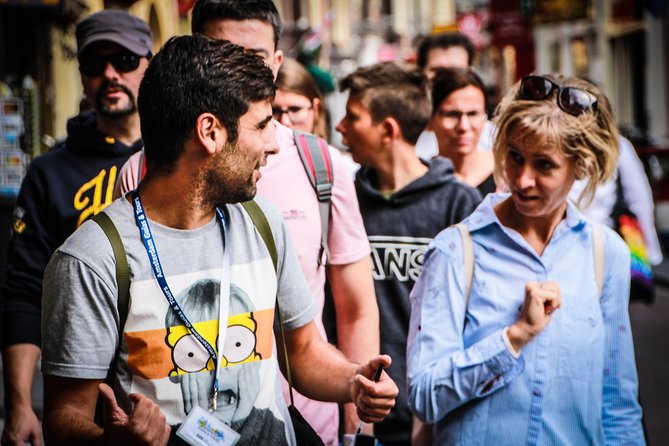
- Private guide, real backstory: You’ll connect landmarks to the people and events behind them.
- Major inner-city stops: Dam Square, Nieuwmarkt, Muntplein, and more are built into one route.
- Chinese Quarter to Jewish Quarter: The tour moves across cultures without feeling random.
- Quieter pause at Begijnhof: Gardens and courtyards give you a breather from the streets.
- Tour time stays efficient: A 2–3 hour walk that’s long enough to matter, not so long you melt.
- Group pricing can be good value: Up to 10 people share one price, so cost per person drops fast.
A private walk that covers the Amsterdam “greatest hits”
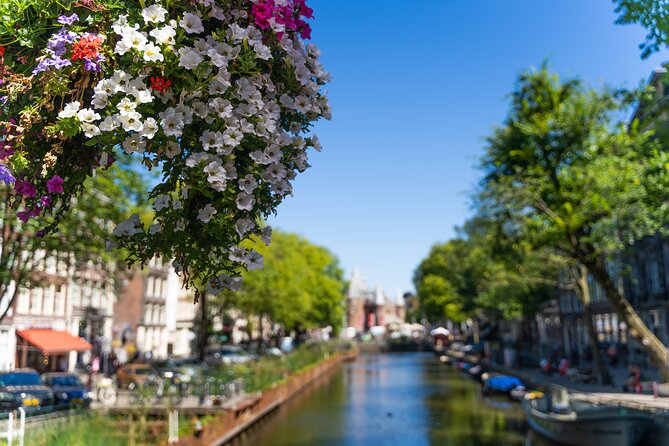
This is the kind of tour that helps you get oriented quickly. Amsterdam can feel like a maze at first. So I love that this route starts in a public, easy-to-find place (Beursplein) and then marches through recognizable hubs: Centraal Station, Nieuwmarkt, the Jewish Quarter area, Muntplein, and finally Dam Square.
Because it’s private, the guide can adjust on the fly. Maybe you want more about canal-era building styles. Maybe you care more about markets and street life. The bones of the route stay the same, but your attention can shift. That flexibility is especially handy if you’re traveling with a mix of ages or interests.
You also avoid the classic problem of “tick-box sightseeing.” You’re not just seeing sights. You’re getting context while you walk past them—so when you later return on your own, you understand what you’re looking at.
You can also read our reviews of more walking tours in Amsterdam



Price and group value for up to 10 people
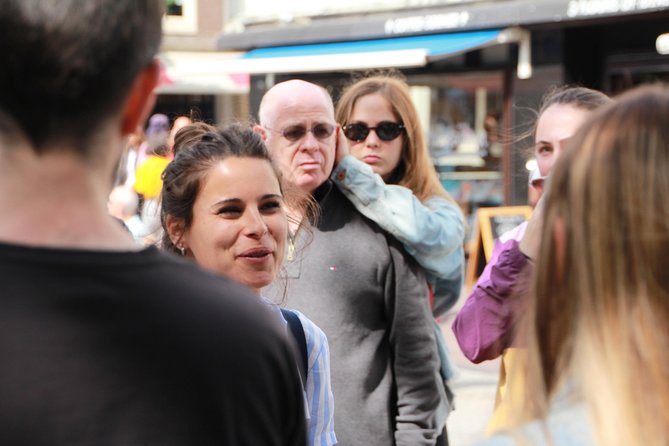
The price is $277.64 per group for up to 10 people. That sounds steep until you break it down.
- If you fill it with 10 people, you’re at about $27.76 per person.
- With 6 people, it’s about $46.27 per person.
- With 2 people, it’s about $138.82 per person.
So the real value shows up when you’re traveling as a family, a small friend group, or a few couples who want a shared experience. If you’re solo, it can still be worthwhile for the pacing and flexibility, but it won’t be the cheapest way to see the center.
One more practical note: this tour is non-refundable and can’t be changed for any reason. If your plans are fluid, keep that in mind before you lock it in.
Start at Beursplein: the stock exchange square vibe
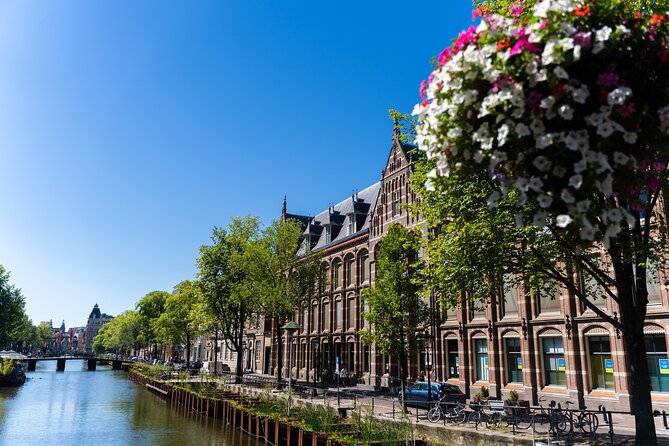
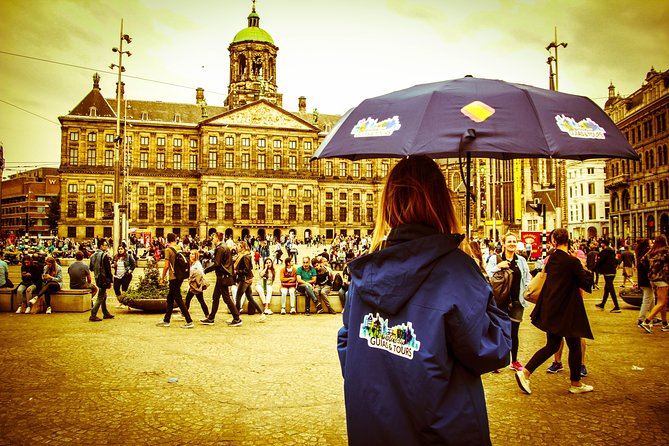
The tour begins at Beursplein 1–3 at 10:00 am, with the guide waiting under a blue umbrella with their logo. Beursplein is a smart starting point because it’s central and straightforward to locate. It also sets the tone: Amsterdam wasn’t built only on boats and canals. Money, trade, and rail-era growth mattered too.
This first stretch is basically a warm-up. You’re not staring at “one famous building.” You’re learning how to read Amsterdam’s geography—squares, streets, and the way neighborhoods connect. After that, it feels easier to follow the logic of where you’re going next.
Practical tip: arrive a few minutes early. Meeting at a busy square gets easier when you’re not racing the clock.
Amsterdam Centraal to Zeedijk: rails, then temples

From Beursplein you’ll head to Amsterdam Centraal Station. Even if you’ve only seen station photos, this one is worth context. The building was designed by Dutch architect Pierre Cuypers and opened in 1889. It’s also Amsterdam’s largest railway station and main rail hub.
Then you shift gears to Zeedijk, walking through Amsterdam’s Chinese Quarter. One of the standout stops here is the Buddhist Temple of Amsterdam. What I like about this section is the contrast: you go from the big, formal face of rail travel to a street where you can feel neighborhood identity right away.
A small consideration: if you’re expecting “only big postcard moments,” this stretch may feel more about atmosphere than monuments. But for me, that’s where Amsterdam starts to feel real.
Nieuwmarkt and the Chinese Quarter edge: gates and street markets
Next up is Nieuwmarkt, where you’ll get a mix of city life and landmarks. The area is tied to the new market concept and includes the San Antón Gate, close to the Chinese Quarter.
Nieuwmarkt is one of those places where you can understand Amsterdam’s habit of blending old and new. Markets bring people together. Gates and building fronts mark history and movement. Even when you’re just walking, it’s easy to spot how the city organizes itself around daily life.
What to expect here: more street-level sightseeing than museum-style storytelling. If you enjoy wandering and watching how people use public space, this stop will land well.
You can also read our reviews of more private tours in Amsterdam




Jodenbuurt and Zuiderkerk: Jewish Quarter + World War II memory
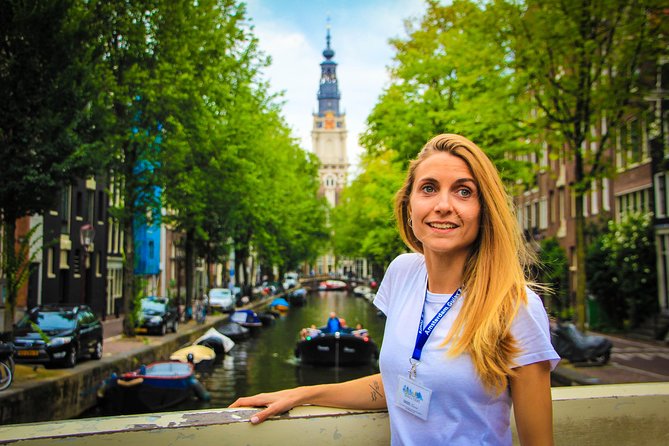
The tour continues into Jodenbuurt, a neighborhood often described as a must-see for its history and culture. This part works best if you let the guide slow you down for the story—not just the sights.
Then you reach Zuiderkerk, where the tour shifts into the difficult chapter of the Jewish Quarter and the sad history of World War II. This is the emotional center of the walk.
A consideration here: this isn’t background noise. The content is meant to be taken seriously. If you’re sensitive to heavy history, give yourself a moment to reset—carry water, and consider splitting tough topics with lighter breaks later in your day.
Muntplein and the flower market energy

After the heavier material, the route heads to Muntplein. This square is famous, and a big reason is the flower market nearby. You’ll feel the shift immediately. Instead of solemn, you get sensory: color, activity, and the daily rhythm of a city that still sells beauty as part of ordinary life.
I like this stop because it changes the tone without feeling like the guide is running away from meaning. Amsterdam can be emotional and practical in the same hour.
If you’re visiting in peak flower season, you’ll see why this area keeps drawing people in. Even outside prime bloom periods, it’s a good place to understand how the city markets itself through simple, repeatable traditions.
Begijnhof gardens at Spui Square: a quiet pause
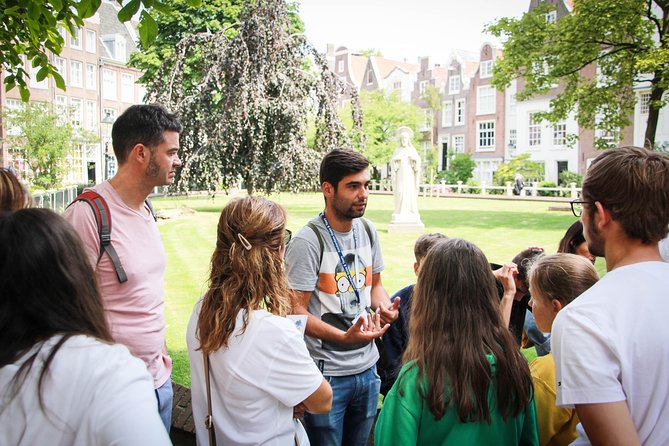
One of the best-value parts of the tour is the way it makes time for calm. You’ll visit the Begijnhof Gardens near Spui Square. The Begijnhof is essentially a pocket of quiet within busy streets, and walking in there feels like stepping into a different tempo.
The guide also connects this moment to the Flower Market area and mentions the San Francisco Church. Even if you’re not stopping at every building, this kind of linking helps you see Amsterdam as one connected system, not disconnected attractions.
If you want a mental photo in your head, make it this: noisy square → quick walk → sudden hush.
Dam Square: royal power, churches, and monuments
Finally, you end at the heart of Amsterdam: Dam Square. This is where the city becomes a stage. You’ll see the Royal Palace, the Nieuwekerk (spelled as provided in the tour info as Niuewekerk), and the National Monument.
What I like about ending here is that the tour’s whole logic comes together. You start with trade and transport (Beursplein, Centraal). You move through cultural identity (Chinese Quarter). You pass through memory and tragedy (Jewish Quarter, WWII). Then you finish with the places that symbolize state power and national remembrance.
From a practical angle, it’s also a great landing point for onward exploring. The tour ends close to Anne Frank’s House, the Homomonument, and the Westerkerk, so you can continue your day without backtracking.
Pickup vs meeting point: how to make the start smooth
The tour offers pickup if you want it, or you can meet the guide at Beursplein 1–3. For many visitors, pickup is worth it because Amsterdam’s streets can be slow to navigate, and you don’t want to burn your best sightseeing energy just finding your guide.
If you choose the meeting point, I recommend planning your route there before tour time. You’ll be waiting under a blue umbrella with the logo, which is helpful in a crowd—but arriving early still makes everything easier.
It’s also near public transportation, so you’re not stuck if your hotel is outside the center.
How long it really takes to walk this route
The duration is 2 to 3 hours, and the pace is designed for city walking rather than museum wandering. That means you’ll spend short focused periods at each stop—enough for the key story, not enough for endless detours.
In practical terms:
- Wear shoes you’d use for a full day of walking.
- Bring a light layer. Weather in Amsterdam can change faster than the canal reflections.
- If you want to extend anything, ask early—private guides can usually help you adjust, within reason.
Who this tour is best for
This tour works especially well if you:
- Want a fast, organized introduction to central Amsterdam.
- Prefer private guiding where you can ask questions and personalize the route.
- Are traveling as a group that can take advantage of the per-group price.
- Care about more than just photos and want the stories behind landmarks.
It’s less ideal if you only want brief stops with no heavy historical topics, or if you dislike walking for a couple hours straight.
Should you book this Amsterdam Private Walking Tour?
If you want an efficient, story-led way to understand Amsterdam’s center, I think this is a smart booking. The route hits the big recognizable names (Centraal, Nieuwmarkt, Dam Square) while also giving you meaningful transitions between neighborhoods like the Chinese Quarter and the Jewish Quarter. The tone shift is real, and it’s handled with a clear focus on what matters.
I’d book it if your group is 2 to 10 people, because the price is built for shared cost. I’d also book it if you enjoy guides who can connect landmarks to everyday life—squares, gates, markets, and quiet courtyards all in one line.
If you’re the type who hates walking or can’t handle WWII-related historical material, you might consider a lighter route instead. But if your goal is to leave Amsterdam feeling oriented—and moved—this one makes a strong case for your time.
FAQ
How long is the Amsterdam private walking tour?
The tour runs about 2 to 3 hours.
What is the price, and what group size does it cover?
It costs $277.64 per group, and the group size can be up to 10 people.
Is pickup available, or do I meet the guide somewhere?
You can choose pickup at your hotel or meet the guide at the meeting point (Beursplein 1–3).
Where does the tour start and end?
It starts at Beursplein 1–3, 1012 JW Amsterdam. It ends near Westerkerk, Westermarkt 64, 1016 DR Amsterdam, close to Anne Frank’s House and the Homomonument.
What areas and landmarks will we see?
You’ll pass key inner-city spots including Beursplein, Amsterdam Centraal, Zeedijk, Nieuwmarkt (including San Antón Gate), Jodenbuurt, Zuiderkerk, Muntplein, Begijnhof, and Dam Square.
Are food and drinks included?
No. Food and drinks are not included.