REVIEW · COFFEE EXPERIENCES
Private Amsterdam Red Light District and Coffee Shop Tour
Book on Viator →Operated by Trigger Tours · Bookable on Viator
Amsterdam can be awkward to talk about. This private walking tour turns the Red Light District into clear history and real rules. You’ll get an insider perspective on why Amsterdam treats prostitution and cannabis differently than many places, and you’ll move at a relaxed private pace with a local guide from English-speaking teams like Saskia, Robin, and Ben (names that show up often in the tour guide lineup).
I especially like how the tour blends big ideas (Dutch law and local tolerance) with small, walkable proof points. You’ll also pick up practical context as you go, like why the area’s reputation doesn’t tell the whole story of Old Town life. One possible drawback: if you want a long, very deep crawl of every side street or you’re hoping for nonstop photo stops, this experience is structured as a focused walking tour, not a full-day exploration.
In This Review
- Key Highlights to Expect on This Damrak-Based Tour
- Why This Red Light District Walk Feels Like History, Not a Shock Show
- Price and Value: What $41.60 Gets You (and What It Doesn’t)
- Meeting at Damrak and How the Two Hours Typically Unfold
- Damrak’s Old Foundations: City Built on Trees (Wood Piles and 11-Meter Depth)
- Old Town Meets the Red Light District: Where Tolerance Has a Backstory
- Key Stops Around the Walk: The Ape, the Waag, the Smallest House, and the Condomerie
- Pub The Ape (Int Aepjen): Wooden Buildings After a Big Fire
- The Waag: A City Gate Turned Trading and Crafts Hub
- The Smallest House of Amsterdam: From VOC Storage to Long-Time Living
- Condomerie: The World’s First Specialized Condom Shop
- Coffee Shop Culture: What You Learn and How to Stay Comfortable
- The Optional Upgrade: Erotic Museum or a Coffee Shop Visit With Your Guide
- Respectful Pace, Safety Feel, and Why Reviews Keep Mentioning the Guide
- Who Should Book This Tour (and Who Might Want Something Different)
- Should You Book This Private Amsterdam Red Light District and Coffee Shop Tour?
- FAQ
- How long is the Red Light District and coffee shop walking tour?
- Is this tour private or shared?
- Where do I meet the guide?
- Is the tour offered in English?
- Do I need to pay for admission tickets during the tour?
- What is included in the price?
- What isn’t included?
- Can I cancel and get a refund?
- Is the tour easy to reach using public transportation?
Key Highlights to Expect on This Damrak-Based Tour
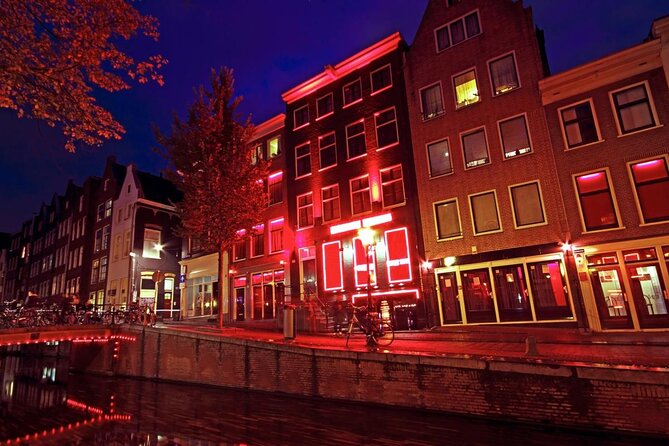
- Real talk about Dutch laws: prostitution is legal and marijuana is tolerated, explained in plain language.
- Private format, not a bus ride: only your group participates, with questions encouraged.
- Old Town anchors you can see: wooden-building history, the Waag, and landmarks around the oldest core.
- Coffee shop culture explained: including what to expect and how to navigate respectfully.
- A route with variety: history stops plus modern details like the Condomerie.
Why This Red Light District Walk Feels Like History, Not a Shock Show
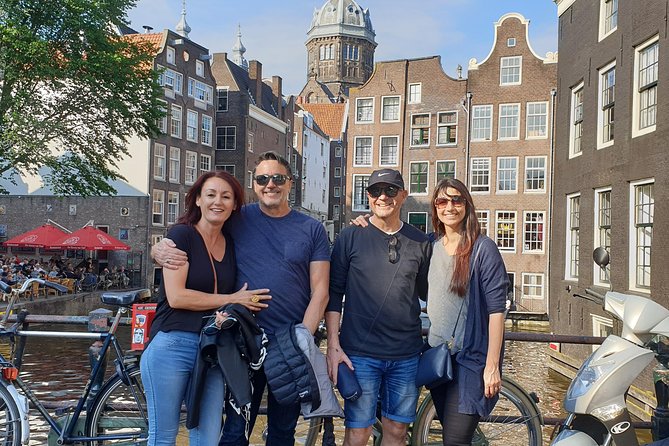
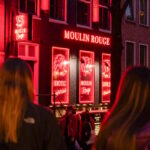
If Amsterdam’s Red Light District is on your list, you’re probably picturing something intense. What I like about this tour format is that it treats the area like a living neighborhood with rules, politics, and history behind it. Your guide frames the neighborhood’s tolerance as a system, not a dare.
You get two big benefits right away. First, you’ll understand the legal backdrop: the tour covers how Dutch law handles prostitution and how marijuana is tolerated. Second, you learn how coffee shop culture fits into everyday life there. It’s the difference between knowing rumors and understanding the local logic.
And yes, it’s still the Red Light District. The walk includes the area’s defining streets and sights, so bring your curiosity and keep your expectations respectful.
You can also read our reviews of more private tours in Amsterdam


Price and Value: What $41.60 Gets You (and What It Doesn’t)
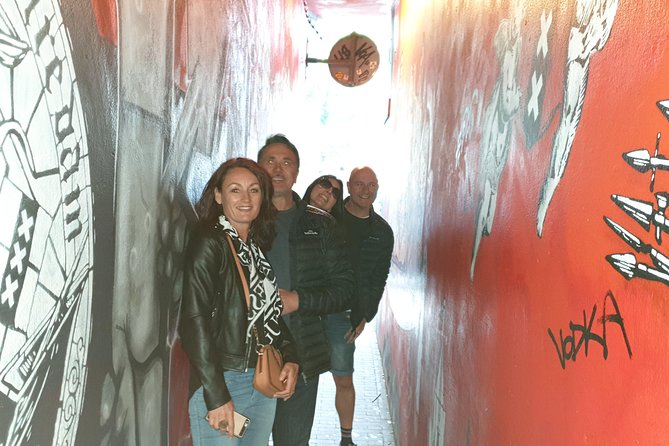
At about $41.60 per person for a roughly two-hour private walking tour, the value comes from one thing: personal attention. This isn’t a casual stroll where you’re left to figure it out. You’re paying for an explanation you can ask questions about, plus a route designed to connect history to what you see.
Also, you’re not paying for admission tickets as part of the baseline—there’s no admission cost baked into the walk itself. The tour is ticket-light, guide-heavy.
What’s not included: food, drinks, and hotel pickup/drop-off. If you want to make it a longer evening out, you’ll need to plan your own meals or snack stops.
Meeting at Damrak and How the Two Hours Typically Unfold
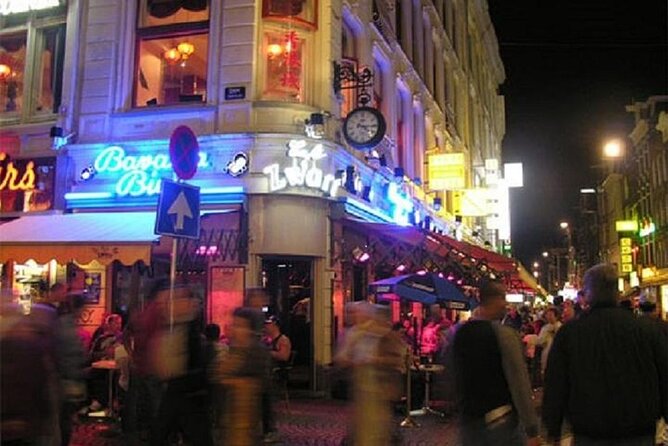
You start and end at Damrak, 1012 Amsterdam. It’s a practical choice because Damrak is one of those easy-to-find areas that keeps logistics simple. You’re near public transportation, and the tour is designed so you can show up without a complicated route-planning headache.
Expect a calm pace. The tour is private, so your guide can slow down for questions or move on if your group wants speed. This pacing is one of the most praised parts in guide-led experiences like this: people often say the walk “flies by,” but in a controlled way, not in a rush.
Damrak’s Old Foundations: City Built on Trees (Wood Piles and 11-Meter Depth)
Before you even get to the Red Light District proper, you’ll hit the kind of Amsterdam detail that makes the city feel real. The tour includes a look at why Amsterdam’s soil matters: buildings stand on wooden poles driven deep into clay, peat, and water until they reach a solid sandy layer.
That sandy layer is described as being about 11 meters down. It’s a classic Amsterdam fact, but here it’s used to ground the walk in how the city actually works. You’ll also hear how Amsterdam’s Old Town has older layers of settlement—useful context when you’re staring at streets that feel modern but sit on centuries of growth.
The practical takeaway for you: when you’re walking near the oldest core, the city’s physical history is part of the story, not just the architecture.
Old Town Meets the Red Light District: Where Tolerance Has a Backstory
The tour doesn’t treat the Red Light District like a theme park. It places it next to the city’s older identity—right down to the “oldest part of the city” idea—so you can understand why this neighborhood became the way it is.
You’ll learn how Amsterdam’s tolerant approach is tied to laws and social policy rather than just a shrug. Prostitution is explained as legal under Dutch law in the tour’s framework, and marijuana is described as tolerated. Your guide keeps the tone respectful, and that matters because this is an area that can feel overwhelming if you only know it from headlines.
One small consideration: if you arrive looking for purely sensational content, you might find the tone more “explainer” than “show.” That’s not a bad thing—it’s exactly what makes the tour useful—but it changes how you’ll experience the streets.
You can also read our reviews of more tours and experiences in Amsterdam

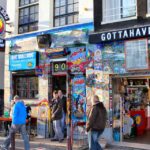

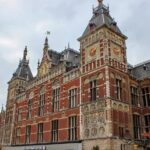
Key Stops Around the Walk: The Ape, the Waag, the Smallest House, and the Condomerie
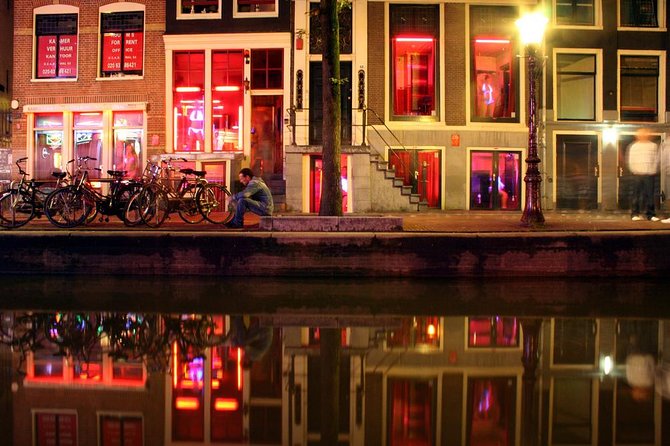
This tour is stronger when you look up as you walk. Several stops add texture beyond the headline streets.
Pub The Ape (Int Aepjen): Wooden Buildings After a Big Fire
You’ll pass Pub The Ape, also known in Dutch as Int Aepjen. The guide points out that it’s built around 1540, and it’s one of only a couple of remaining wooden buildings in Amsterdam.
That wooden survival story is tied to the city’s fire history. After a major fire in 1452, the government pushed toward brick facades. So this stop becomes a living timeline: what Amsterdam was, what it changed after disaster, and what endured.
If you like history you can actually see, this is one of the more memorable stops.
The Waag: A City Gate Turned Trading and Crafts Hub
Next comes the Waag, which used to be a city gate and part of the defensive wall system. It was built around the 1400s and is described as the second oldest building of Amsterdam.
Later, it was used by guilds—craft organizations—and related activities spread around the square. For your brain, this helps connect the Red Light District walk to the city’s trade and civic past. You’re not just learning about “now.” You’re seeing how Amsterdam organized itself.
The Smallest House of Amsterdam: From VOC Storage to Long-Time Living
You’ll also see the smallest house of Amsterdam, built around the 1700s. The tour explains it started as storage connected to the VOC trading company, then later became a place people lived for a very long time.
It’s a neat counterpoint to the big modern headlines. A tiny building like this reminds you that Amsterdam’s story isn’t only about grand canals and famous museums—there’s daily life, too.
Condomerie: The World’s First Specialized Condom Shop
One of the more unusual stops is the Condomerie, presented as the world’s first specialized condom shop, operating since 1987. The tour says you can get customized condom sizes and different types.
This stop keeps the tour grounded in practical realities. It’s also a reminder that Amsterdam’s approach to sex and health is often discussed openly—and you see that in the city’s businesses, not just in debates.
Coffee Shop Culture: What You Learn and How to Stay Comfortable
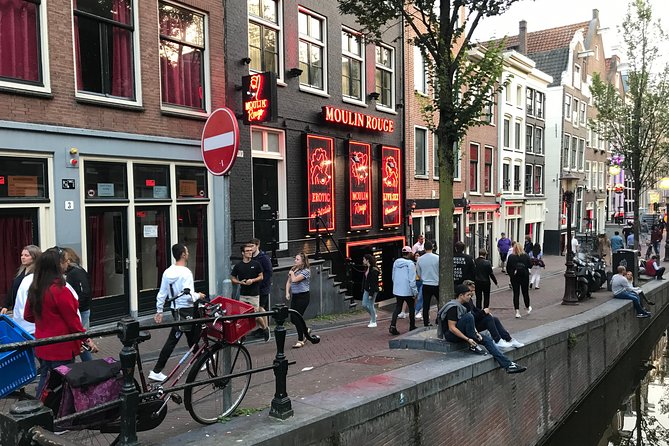
The tour includes coffee shop culture as part of the education. Depending on the option you choose, you may also be able to go into a coffee shop with your guide. That’s the difference between reading about it and understanding the etiquette, the atmosphere, and how locals talk about it.
From guide-led experiences like this, I like to think of coffee shop culture as three layers:
- the name and the expectations people bring,
- the legal/social framework,
- the actual day-to-day vibe.
The tour’s value is that it connects those layers. Guides also often share small, helpful facts that cut through the “I heard…” noise—like the kind of naming quirk people joke about when they learn how coffee shops work in practice.
Also, this tour is designed to keep things respectful. One reason families sometimes feel comfortable is that the guide’s job is to explain the system, not to push spectacle. You’ll still be walking through a real neighborhood, so keep your behavior calm and considerate.
The Optional Upgrade: Erotic Museum or a Coffee Shop Visit With Your Guide
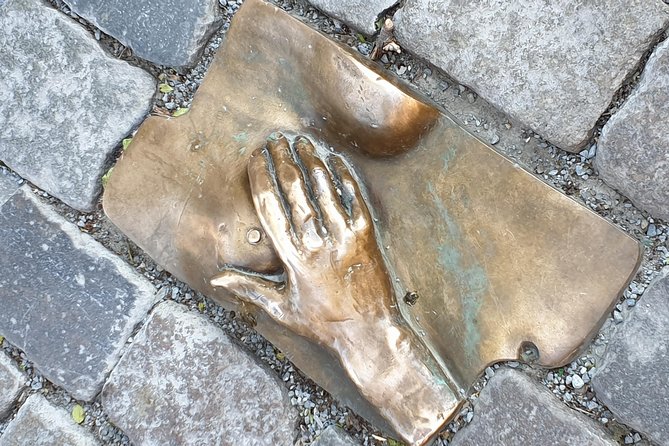
There’s an upgrade option that either adds a visit to an Erotic Museum or includes a coffee shop experience with your guide. This matters if you’re the type who wants more than just street-level history.
If you choose the museum add-on, you’ll get a more curated look at erotica and how it’s presented in Amsterdam. If you choose the coffee shop visit, you’ll likely get more practical context for how the whole culture works in real life.
Either way, the upgrade can help you turn the walk into a complete “understand the place” evening instead of just a site-and-sound impression.
Respectful Pace, Safety Feel, and Why Reviews Keep Mentioning the Guide
A recurring theme in guide-led tours like this is how the guide handles tone. You’re dealing with a subject that can make people awkward, even when they mean well. Guides like Saskia, Guido, Luis, Robin, Ben, Catherine, Esther, Fia, and Aare come up in the guide experience names, and what people praise is the same pattern: clear explanations, humor that doesn’t get mean, and a respectful pace.
That matters for you because it changes how you’ll ask questions. If your guide makes the atmosphere comfortable, you can actually learn. If the vibe is tense, you’ll keep your questions to yourself.
It also helps that the tour is described as feeling safe and tasteful. In other words: you’re not being herded, and you’re not treated like a problem.
Who Should Book This Tour (and Who Might Want Something Different)
This is a great fit if you want:
- context and law-level explanation (not just photos),
- a private walking format with time for questions,
- a tour that connects the Red Light District to Amsterdam’s older city core and architecture.
It’s also a good pick if your group includes mixed comfort levels, because a strong guide can keep the tone respectful and practical.
You might want to choose something else if:
- you want a long, ultra-detailed exploration of every side street for hours beyond the short walk,
- you’re only interested in shock-factor sights rather than understanding the rules and history.
Should You Book This Private Amsterdam Red Light District and Coffee Shop Tour?
I’d book it if you’re curious about Amsterdam’s tolerance and you want your questions answered without guessing. The best reason to do it is the guide-led mix of Dutch law, neighborhood history, and coffee shop culture, all tied to landmarks you pass on foot.
If you do it at the start of your trip, it can also act like a map for the rest of Amsterdam. You’ll see the city with more clarity after you understand how policies and culture shaped this district.
Final nudge: go in respectful, dress for walking, and treat it like an education session you happen to take in the streets of one of Europe’s most talked-about neighborhoods.
FAQ
How long is the Red Light District and coffee shop walking tour?
It lasts about 2 hours.
Is this tour private or shared?
It’s a private tour/activity, so only your group participates.
Where do I meet the guide?
The tour starts and ends at Damrak, 1012 Amsterdam, Netherlands.
Is the tour offered in English?
Yes, it is offered in English.
Do I need to pay for admission tickets during the tour?
Admission tickets are listed as free.
What is included in the price?
The tour includes a local guide and a guided walking tour.
What isn’t included?
Food and drinks are not included, and there is no hotel pickup and drop-off.
Can I cancel and get a refund?
Yes. You can cancel for a full refund up to 24 hours before the experience starts.
Is the tour easy to reach using public transportation?
Yes. It is near public transportation, and service animals are allowed.