REVIEW · RED LIGHT DISTRICT TOURS
Amsterdam: Red Light District guided tour (TOP RATED)
Book on Viator →Operated by Trigger Tours · Bookable on Viator
Two hours in De Wallen with context. I like the small-group pace, and I like that you’re led by a local guide who explains the area through laws, not just sights. One thing to consider: it’s not a gentle walk for everyone, and it’s not recommended for limited mobility.
This is the kind of tour that helps you move from curious to informed fast. You’ll see the narrow streets of De Wallen and learn what Amsterdam’s rules and attitudes look like on the ground—plus how coffeeshop culture fits into the bigger picture.
You meet at Damrak and spend about 2 hours together, which is long enough for real understanding but short enough that you won’t feel trapped. It’s also a night-leaning topic, and the evening atmosphere can make the whole area feel more alive.
In This Review
- Key highlights you’ll feel right away
- De Wallen, explained: what you’re really signing up for
- Your 2-hour route: De Wallen plus the old-town stops
- Stop 1: De Wallen (Red Light District) streets
- The Dam area: Amsterdam’s “city built on trees” foundation
- Old Town context: why this area carries so much history
- Pub The Ape (Int Aepjen): a rare surviving wooden building
- The Waag: from city gate to guild hub
- The smallest house of Amsterdam: VOC-era storage turned home
- A specialized condom shop: since 1987
- What makes the guides stand out (Ben, Robin, Andrea, Aarre, Catherine)
- Why small-group matters on this kind of tour
- Timing: why an evening slot can feel different
- Practical tips so you get more from the walk
- Value check: is $34.17 worth it?
- Who should book this Red Light District guided tour?
- Should you book it?
- FAQ
- How long is the Amsterdam Red Light District guided tour?
- How much does the tour cost?
- Where does the tour start and end?
- Is the tour in English?
- How big is the group?
- Is admission included?
- Is the tour recommended for limited mobility?
- What happens if the weather is bad?
- Is the tour suitable for service animals?
Key highlights you’ll feel right away
- Small group size (max 15) for an easier pace and better questions
- Local guide perspective on laws, boundaries, and how the Red Light District works day to day
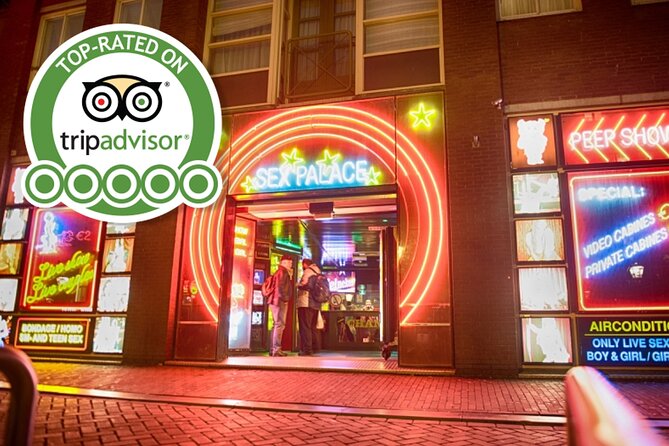
- De Wallen (De Wallen/Old Town) walk through the narrow lanes you’d miss going solo
- Bonus landmarks on the route like the Waag and old wooden buildings
- Coffeeshop and café culture context alongside the Red Light District story
- A respectful tone focused on understanding the people and the system, not spectacle
De Wallen, explained: what you’re really signing up for

An Amsterdam Red Light District tour can go two ways. One is quick photo ops and shock value. The other treats the area like what it is: a real neighborhood with a long history, strict rules, and ongoing change. This format aims for the second.
You’ll walk the De Wallen streets with a guide who can translate what you’re seeing. Instead of just pointing at windows, you get the story of how Amsterdam’s tolerance shows up in law, policy, and daily street life. That context is the difference between feeling confused or feeling clued in.
And because it’s small-group, you’re not stuck in a herd. You can ask practical questions about what’s allowed, what’s expected, and why the rules exist the way they do.
You can also read our reviews of more guided tours in Amsterdam



Your 2-hour route: De Wallen plus the old-town stops
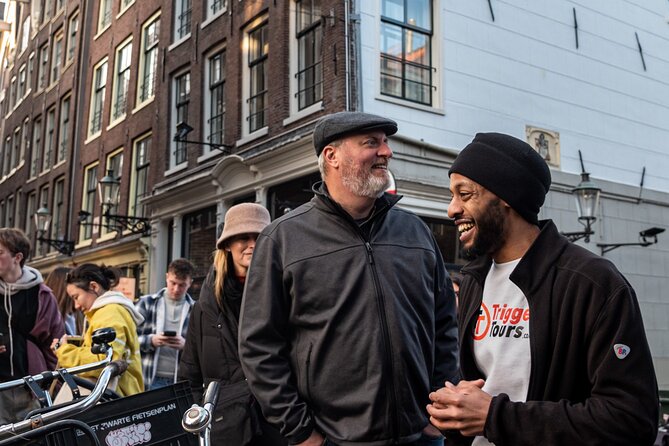
The tour is set up as a walking loop that mixes the Red Light District proper with nearby historic markers. The pacing is designed to keep you oriented without turning the whole night into a lecture.
Stop 1: De Wallen (Red Light District) streets
You start in the Red Light District itself—De Wallen. This is where the narrow lanes and dense street layout do the talking. Even if you’ve seen photos, the street scale hits differently in person.
What makes this stop valuable is the way your guide frames the area. You’ll hear about the history and the current situation of De Wallen, but also about the rules around it. You get the sense that Amsterdam doesn’t treat this as a hidden corner—it’s managed, regulated, and debated.
What you might love here: you’ll learn how to read what you’re seeing without turning it into a game.
What to watch for: it’s still a working neighborhood, so you’ll want to follow your guide’s tone and boundaries.
The Dam area: Amsterdam’s “city built on trees” foundation
From the Red Light District lanes, the tour connects you to a different layer of Amsterdam’s story: the ground beneath your feet.
You’ll learn why Amsterdam buildings were historically constructed on wooden poles driven deep into the clay/peat and down toward solid sand. The point is simple: the soil is soft, so the city needed foundations that could handle the waterlogged earth. That idea—Amsterdam built on structure, not just style—helps explain the city’s long-term planning mindset.
This stop is also a reminder that Amsterdam’s story isn’t only about the canals and culture. It’s engineering and adaptation, too.
Why it’s worth a few minutes: it gives you a concrete explanation of how the city survived and grew on tricky soil.
Old Town context: why this area carries so much history
The route then places the Red Light District within the Old Town context. You’re not just visiting an entertainment district—you’re moving through some of the oldest parts of the city where layers of development overlap.
When your guide connects De Wallen back to the surrounding historic fabric, the neighborhood starts to feel less like a standalone attraction and more like a living part of Amsterdam.



Pub The Ape (Int Aepjen): a rare surviving wooden building
Next up is Pub The Ape, known in Dutch as Int Aepjen. Your guide will point out that it’s built around 1540, and that it’s one of only a couple of remaining wooden buildings in Amsterdam.
This stop also comes with a key historical turning point: after a major fire in 1452, the government shifted rules so buildings would use more brick facades. So even if you’re not a history person, you’ll understand why this place feels different from the stone-and-brick look you often see.
Why this matters for you: it’s a tangible way to connect city policy changes to actual street architecture.
The Waag: from city gate to guild hub
You’ll also see the Waag, which used to be part of Amsterdam’s city defense—one of the city gates—built around the 1400s. Your guide will also explain how later on it became tied to guilds and craftspeople organizations, with activity around the square.
Seeing the Waag in the context of where you are on the route makes it easier to understand how this part of town evolved. Defense structures became civic and trade spaces. Then, much later, cultural and social stories took over some of the same zones.
The smallest house of Amsterdam: VOC-era storage turned home
A fun, quick stop is the smallest house of Amsterdam, built around the 1700s. Your guide will explain that it was originally used as storage for the VOC trading company, before people eventually lived there for a long time.
It’s an easy moment to remember because the idea is so human: trade moved money and goods, but you can also picture how space got tight and lives changed.
A specialized condom shop: since 1987
One of the most pointed modern stops on the walk is the world’s first condom shop dedicated to selling condoms, in place since 1987. The guide explains how you can get different sizes and specialty options.
It’s not a random detail. Within the tour’s theme, it’s a practical example of how Amsterdam handles adult life with visible, regulated commerce and public health thinking.
You’ll likely get a clearer sense of what “tolerance” means here: not just acceptance, but systems—rules, access, and standards.
What makes the guides stand out (Ben, Robin, Andrea, Aarre, Catherine)
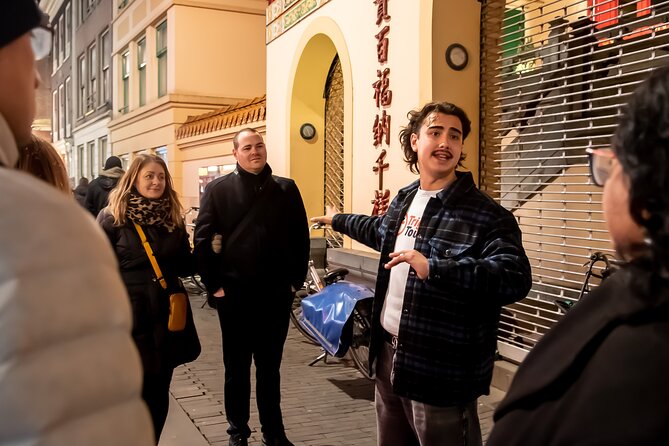
A big part of the value is who you get on the mic.
If you’re lucky enough to get a guide like Ben, the tone tends to be direct and story-driven—connecting Amsterdam’s trade wealth and modern culture. If you end up with Robin, you may get a strong focus on local history and clear connections between Amsterdam and the Red Light District today.
Other guides can make the tour feel especially smooth in conversation. Andrea and Aarre are highlighted for keeping energy up, answering questions, and making the night feel easier to handle. Catherine stands out for a very informed approach and a respectful way of talking about the working reality of the area.
A recurring theme across guides: they remind you that this is a real workplace and neighborhood, so you should behave accordingly. That kind of framing helps you stay comfortable and avoids the awkward, touristy vibe that can ruin a walk.
Why small-group matters on this kind of tour
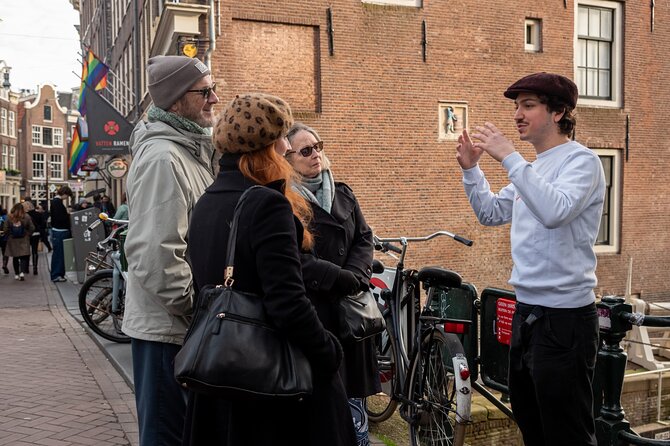
A Red Light District walk isn’t like a big museum. It’s close streets, quick turns, and lots of small sights. If your group is too large, you lose two things:
1) You can’t hear the guide well when people stop and start.
2) You don’t feel safe asking questions.
With a maximum of 15 travelers, the pace stays manageable. People can regroup at corners. Your guide can check in with the group. And you’re more likely to get specific answers instead of general commentary.
It also helps for first-timers. If you’re new to Amsterdam, this is a smart way to learn how the city’s rules and culture show up in one compact area.
Timing: why an evening slot can feel different
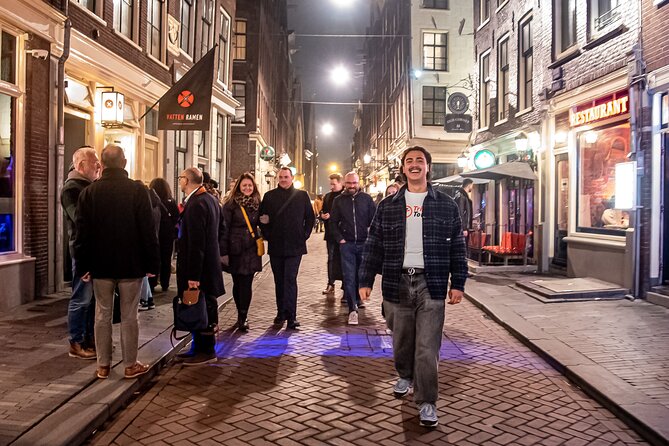
This tour topic has a rhythm. The Red Light District and its surroundings feel more active at night, and the overall atmosphere can help the story make sense. If you have the choice, I’d generally steer you toward an evening departure.
Cold and rain can hit Amsterdam hard, though. This tour requires good weather, and if conditions are poor you’ll be offered a different date or a full refund. So keep a flexible plan for your evening.
Practical tips so you get more from the walk
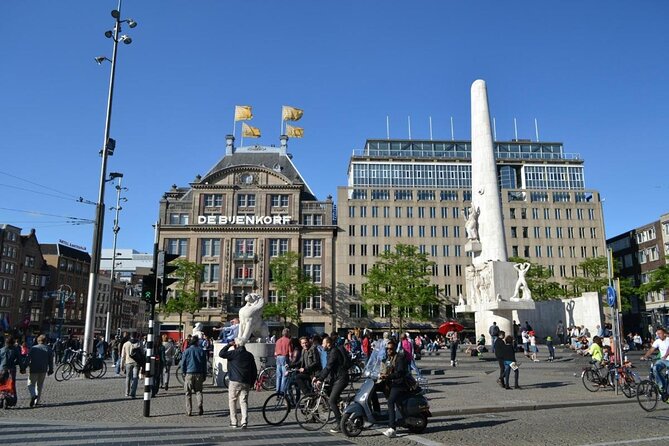
A few things will make the experience smoother and more respectful:
- Wear shoes you can walk in for a long 2-hour stretch. You’ll be moving through narrow streets and uneven pacing.
- Keep your attention on what the guide is explaining. In this area, quick glances are normal, but lingering or blocking can become a problem fast.
- Expect bicycles. Amsterdam traffic is fast, and your guide may remind you to watch for bikes while crossing and standing still.
- If you like useful local pointers, ask for them. Some guides close with practical recommendations, including tips on what to do next nearby.
Also, if you’re curious about coffeeshop culture, use that as your question fuel. The tour isn’t only about De Wallen windows; it’s also about the broader social rules and how coffeeshops fit into the city’s tolerance story.
Value check: is $34.17 worth it?
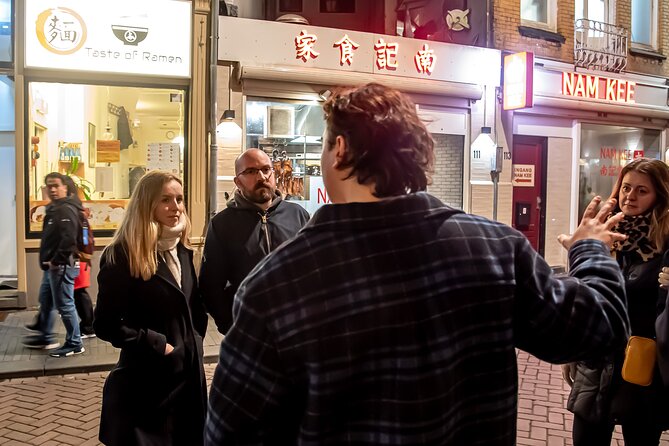
At about $34.17 per person for roughly 2 hours, this isn’t a budget “walk by yourself” activity. But it’s also not overpriced when you compare it to what you gain: a guided explanation of a neighborhood that’s easy to misread.
Here’s the value logic I see:
- You get a local guide doing all the interpretation work.
- You get small-group handling, which matters on foot through tight streets.
- You cover both De Wallen and multiple historic stops, so it’s not a single-topic tour that ends after the first photo-worthy street.
- You can approach the area with less confusion, which saves time. You’ll know what you want to explore again on your own.
If your goal is to get oriented quickly as a first-timer, this hits the sweet spot: structured context in a short window.
Who should book this Red Light District guided tour?
This tour fits best if you want:
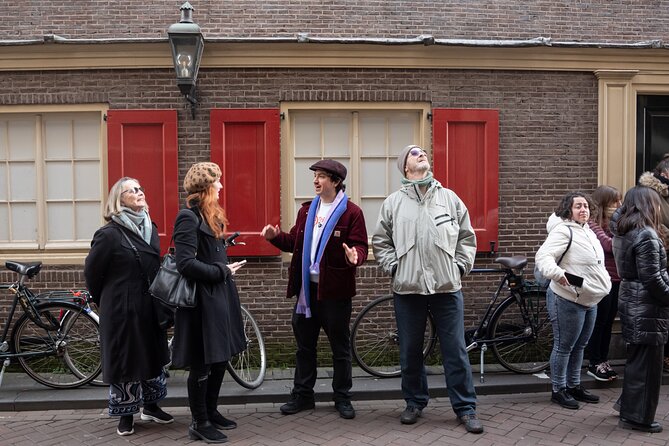
- A first-timer orientation to Amsterdam’s Red Light District through history and laws
- A respectful, educational explanation that avoids sensationalism
- A walking tour with enough stopping points to connect the dots
It may not fit as well if you:
- Need step-free routes or have limited mobility (it’s not recommended)
- Expect a purely daytime sightseeing experience
For people who are uneasy about the subject matter, the guide’s respectful tone is a big plus. It’s designed to keep you informed, not shocked.
Should you book it?
If you’re coming to Amsterdam for the first time and you want to understand De Wallen instead of just glance at it, I’d say book this. The small-group size, the local law-and-history framing, and the extra old-town stops make it feel like more than a one-note attraction.
Go into it with a curious mindset, dress for a cold or rainy night if needed, and ask questions. You’ll leave with a clearer picture of how Amsterdam explains and manages adult life in the open—along with a handful of historic details you won’t pick up from just wandering.
FAQ
How long is the Amsterdam Red Light District guided tour?
It’s about 2 hours.
How much does the tour cost?
The price is $34.17 per person.
Where does the tour start and end?
It starts and ends at Damrak, 1012 Amsterdam, Netherlands.
Is the tour in English?
Yes, it’s offered in English.
How big is the group?
The tour has a maximum of 15 travelers.
Is admission included?
Stop 1 includes an admission ticket free.
Is the tour recommended for limited mobility?
No, it is not recommended for travelers with limited mobility.
What happens if the weather is bad?
This experience requires good weather. If it’s canceled due to poor weather, you’ll be offered a different date or a full refund.
Is the tour suitable for service animals?
Yes, service animals are allowed.