REVIEW · ANNE FRANK & WWII HISTORY TOURS
Amsterdam : Anne Frank Tour in EN/DE/IT/ES
Book on Viator →Operated by Amsterdamliebe · Bookable on Viator
A walk through the Jewish quarter with real weight. I love how the guide links Anne Frank diary passages to the street corners around you, and I love the tight flow from place to place without feeling rushed. The big trade-off is that this is a walking tour only, and you do not enter the Anne Frank House.
You’ll end at the National Holocaust Names Monument, where you can try to spot Anne’s name among 102,000 brick stones. Expect a small group, a licensed guide speaking German and English, and an outdoor experience in all weather.
In This Review
- Key Things That Make This Tour Worth Your Time
- A 2-Hour Walk That Trades Ticket Lines for Story
- Start at De Waag and Nieuwmarkt: The Jewish Quarter Comes Into Focus
- Rembrandt’s House Spot: Art, Money, and the Jewish Quarter
- Auschwitz Monument and South Church: Remembrance Without Spectacle
- Joods Museum and Portuguese Synagogue: How WWII Played Out Nearby
- Holocaust Name Monument: The Moment You’ll Remember
- Anne Frank House: Why You See the Outside Here
- How the Guides Bring the Story to Life (From Deborah to Kaya)
- Price and Time: Good Value If You Want Context Fast
- Getting There and What to Bring (No Transfers, All Weather)
- Should You Book This Anne Frank Jewish Quarter Tour?
- FAQ
- How long is the Amsterdam: Anne Frank Tour?
- How much does the tour cost?
- What languages are available?
- Does this tour include entry to the Anne Frank House?
- Do you enter the Joods Museum or Portuguese Synagogue?
- Where is the meeting point?
- Where does the tour end?
- Is this a mobile-ticket tour?
- Does the tour run in bad weather?
- Can I cancel for a full refund?
Key Things That Make This Tour Worth Your Time

- Anne Frank diary excerpts tied to real locations in Amsterdam
- Stop-by-stop context for Jewish life, WWII deportations, and remembrance
- Holocaust Name Monument: find Anne’s name among 102,000 bricks
- Most major sites are viewed from the outside, so you go for meaning, not ticket lines
- Licensed guides who tell the story with clear, emotional focus
- A 2-hour walk that fits easily before or after visiting the Anne Frank House
A 2-Hour Walk That Trades Ticket Lines for Story
This tour is built for people who want the story behind Amsterdam’s Jewish quarter, not another museum shuffle. You’ll spend about two hours outside, moving at a steady walking pace between meaningful stops, with a guide guiding the connections between past and present.
At this price point (about $35.68 per person), the value isn’t about admissions. Most of the stops are free to view, so what you’re paying for is the human part: a licensed guide, strong storytelling, and interpretation that helps the places make sense. If you’re the type who likes to know why a building or street matters, you’ll feel satisfied instead of just “passing by.”
One more thing: this tour is offered in English and German, and the group size stays capped at 100. That upper limit is mostly reassuring for crowd control, but the tour also positions itself as a small-group walk.
You can also read our reviews of more tours and experiences in Amsterdam.



Start at De Waag and Nieuwmarkt: The Jewish Quarter Comes Into Focus
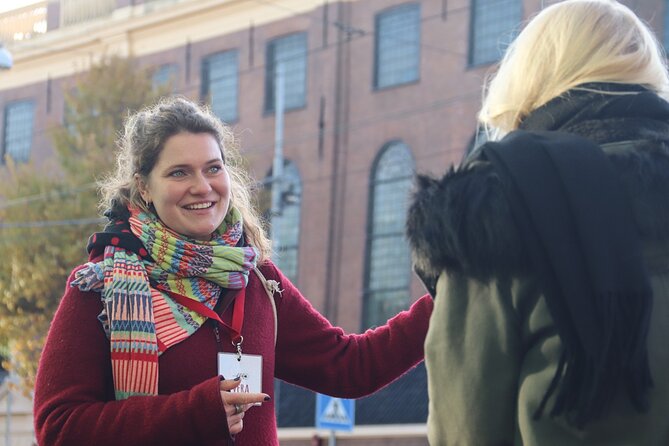
The walk kicks off at the Restaurant-Café In de Waag on Nieuwmarkt 4. This start matters because it puts you right in the heart of the area people often associate with Jewish Amsterdam. It’s also a good practical meeting spot since the location is near public transportation.
At the Waag, you get the tone of the tour: Amsterdam’s old neighborhoods, the way communities chose strategic places, and how ordinary streets became part of extraordinary history. You won’t be sitting still. You’ll be learning by looking—then asking questions—then moving on.
Nieuwmarkt is the next stop, and it’s a smart early inclusion. The guide explains why the first Jewish population chose this strategic settlement area. That helps you understand the neighborhood as a home, not just as a backdrop for WWII events.
Rembrandt’s House Spot: Art, Money, and the Jewish Quarter
Next you reach Museum Het Rembrandthuis area. This is one of those stops that helps the story feel less like a single tragedy and more like a layered community. You’ll learn why Rembrandt’s home sat in the Jewish quarter and how the artist profited from the location.
For me, that framing is a win because it gives you a before-and-during perspective. You’re not only hearing about persecution. You’re also seeing that this neighborhood had culture, business, and everyday life.
Time here is short (about 10 minutes), so don’t expect a full museum experience. But if you’re hoping for “just enough” to make the rest of the walk click, this stop does its job.
Auschwitz Monument and South Church: Remembrance Without Spectacle
Then the tour shifts into heavier remembrance.
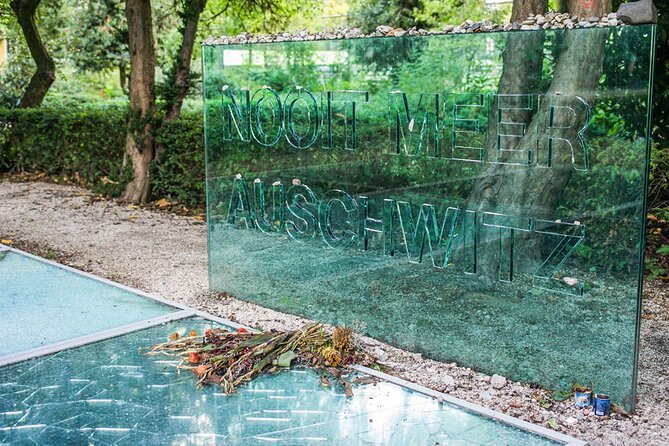
At the Auschwitz Monument, you’ll pause and learn about remembrance of Holocaust victims in Amsterdam. It’s placed in a way that makes you slow down. Even if you don’t feel like an emotional person on vacation, this kind of stop tends to get through.
After that comes South Church, tied to the former Black Death cemetery. This is a fascinating contrast: different historical suffering, different time periods, and the way cities keep memory in plain sight. You explore the secrets of the cemetery area, again mostly by looking and listening rather than touring interiors.
A small consideration here: since you’re walking outdoors and stopping briefly, you’ll want your guide’s pace to match your own. If you prefer long stops and lots of photos, you might wish you had a bit more time to linger at the most emotional locations.
Joods Museum and Portuguese Synagogue: How WWII Played Out Nearby
This is where the tour’s focus becomes very clear. You’ll hear about the Nazi deportation system in the Jewish quarter context, but you’re not going inside museums.
At Joods Museum, you’re specifically not visiting the inside of the museum. You’re learning from the street-side perspective—what the institutions represented and how WWII actions affected Jewish life in Amsterdam.
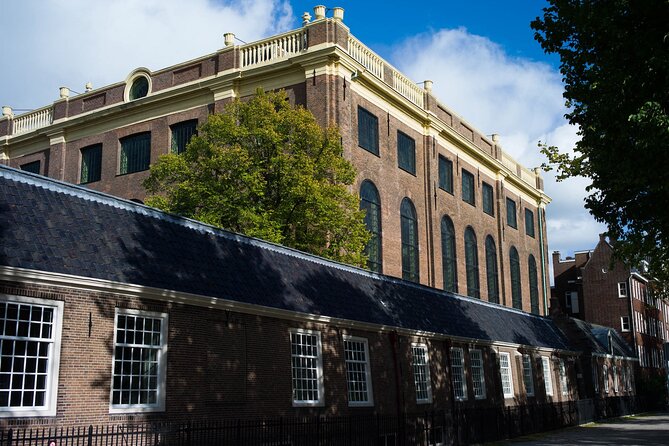
Then you’re also told about Amsterdams oldest synagogue and its role during WWII. One caution based on what people report: these stops are primarily for exterior viewing. If you’re hoping for door-to-door access inside the Portuguese Synagogue or the Jewish museum, this tour won’t deliver that.
That doesn’t make it “less.” It just means you should book it for meaning, not for ticketed entry. The benefit is that you get continuity. You can keep moving through the neighborhood and connect the dots while your momentum stays intact.





Holocaust Name Monument: The Moment You’ll Remember
When the tour ends, it ends in a powerful way.
The Holocaust Name Monument is where you try to spot Anne’s Name among the 102,000 brick stones. That’s the kind of moment that turns a history lesson into something personal. Even if you only find the name you’re looking for after a bit of scanning, you’ll still come away with a clear memory anchor.
Also, the stop-by-stop approach pays off here. By the time you reach the monument, you’ve already heard about Jewish settlement patterns, community life, WWII pressure, and the machinery of deportation and persecution. So the names aren’t floating in space. They feel connected.
Anne Frank House: Why You See the Outside Here
You’ll reach the Anne Frank House area, but you won’t enter.
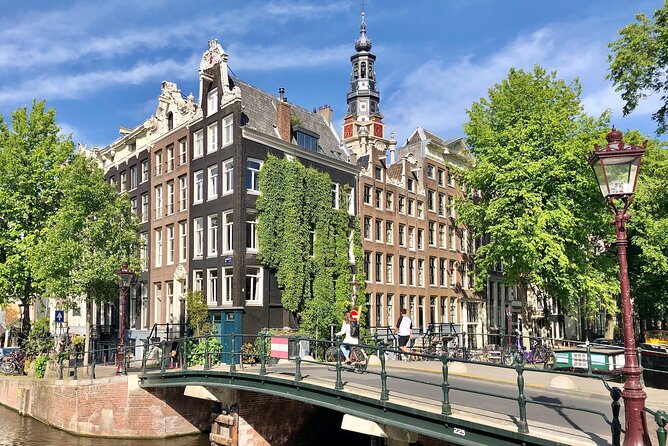
This tour keeps it to the outside, and the guide’s approach is practical: the tour prefers to spend more time in the Jewish Quarter because there isn’t a lot to see from the outside alone. If you’re doing this as a warm-up before booking Anne Frank House tickets separately, this structure can actually work well.
If you’re coming with the expectation that you’ll go inside the Anne Frank House on this exact tour, that’s where people get disappointed. So my advice is simple: treat this walk as the story and the context. Treat the house visit as its own ticketed experience.
How the Guides Bring the Story to Life (From Deborah to Kaya)
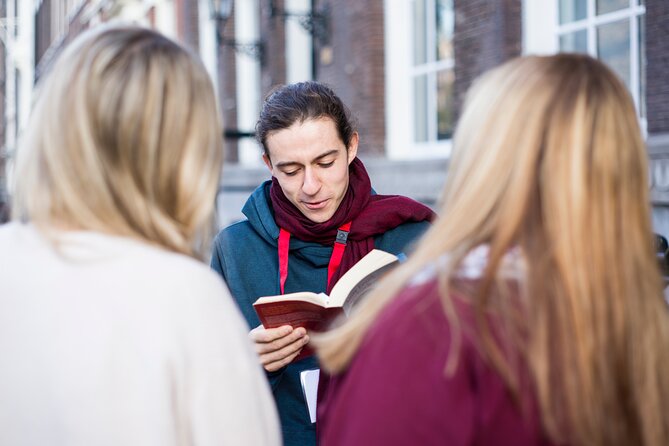
This tour’s reviews have one consistent theme: the best guides make the neighborhood feel alive through story, emotion, and diary excerpts. You don’t just get dates. You get details that help you picture what daily life could have looked like—and what changed.
Some guides that have led groups include Deborah, Valentina, Antonia, Linn, Kaya, Joschka, and Chantal. Names aside, here’s what you’re really looking for in a guide style on this route:
- Clear explanations that connect a stop to a larger WWII picture
- Short excerpts from Anne Frank’s diary used as narration points
- A willingness to answer questions and keep the group engaged
In particular, groups have praised the way diary passages were highlighted. People also mention a few startling specifics, like how deported people had to pay their own fares. You might hear details like that too, depending on your guide and how the story gets emphasized on the day.
Price and Time: Good Value If You Want Context Fast
At about $35.68 for a 2-hour walk, you’re paying for interpretation more than for entry tickets. That can be great value when:
- You’re short on time
- You want to understand the neighborhood before visiting a major site
- You like walking tours that explain the “why” behind buildings and streets
It also helps that most stop admissions are listed as free for this experience, and all fees and taxes are included. So you should not arrive thinking you’ll be hit with surprise paid entrances for each location.
This tour is commonly booked around 43 days in advance on average. That suggests steady demand. If you’ve planned it as your prelude to the Anne Frank House, I’d book early enough to avoid date mismatches.
Getting There and What to Bring (No Transfers, All Weather)
You handle your own way to the meeting point. There’s no transfer included, so plan to arrive under your own steam. The start is near public transportation, which is helpful.
Since the tour runs in all weather conditions, bring an umbrella if rain shows up. Wear shoes that can handle cobblestones and uneven old-city sidewalks. This is not the day for thin-soled footwear and “I’ll just take it easy” socks.
If you travel with a service animal, service animals are allowed. And generally, most travelers can participate, but it’s still a walking tour. If you know you can only do short distances, check whether the pace works for you.
Should You Book This Anne Frank Jewish Quarter Tour?
I think this is a strong pick if you want to understand Amsterdam’s Jewish quarter as a living place—then as a place deeply shaped by WWII—and you’re okay with outside viewing of key sites. The biggest strength is the story connection: diary excerpts tied to real locations, plus memorial stops that make the history land in your body, not just your browser.
I’d skip it (or at least adjust expectations) if your top goal is entering the Anne Frank House or going inside the Portuguese Synagogue or the Joods Museum. This walk is designed for context, not interior tours.
If you’re planning an Anne Frank House visit on another day, doing this beforehand can help you appreciate the bigger picture. You’ll walk those streets with more meaning and less confusion.
FAQ
How long is the Amsterdam: Anne Frank Tour?
It’s approximately 2 hours.
How much does the tour cost?
The price is $35.68 per person.
What languages are available?
The tour is offered in English (and also in German).
Does this tour include entry to the Anne Frank House?
No. You do not visit the Anne Frank House on this tour, and you’ll only see the house outside.
Do you enter the Joods Museum or Portuguese Synagogue?
The tour does not include the interior of the Joods Museum. For the Portuguese Synagogue, people report it is viewed from the outside on this tour.
Where is the meeting point?
Restaurant-Café In de Waag, Nieuwmarkt 4, 1012 CR Amsterdam.
Where does the tour end?
At the National Holocaust Names Monument, 1018 DP Amsterdam.
Is this a mobile-ticket tour?
Yes, it includes a mobile ticket.
Does the tour run in bad weather?
It takes place in all weather conditions, so bring an umbrella if rain is possible.
Can I cancel for a full refund?
Yes. You can cancel up to 24 hours in advance for a full refund.