REVIEW · HISTORICAL TOURS
Amsterdam: Private Pedicab Historical Sightseeing Tour
Book on GetYourGuide →Operated by Bram de Haan Events · Bookable on GetYourGuide
Dam Square sets the tone, then the pedicab keeps you moving without fuss. What I love most is the private, door-to-door feel plus real local perspective from your guide, Bram de Haan. You cover major sights without wrestling for seats on crowded boats or buses.
I also like how the ride is built around Amsterdam’s layers: early city origins at Dam, the canal-ring streets, and then the Jewish Quarter and Museumplein. One thing to consider is that this is a compact 2-hour experience, so cold weather and photo stops can feel tight if you’re the type who wants long stays at every curbside landmark.
In This Review
- Key highlights before you go
- Why this pedicab tour works so well in Amsterdam
- Dam Square: where Amsterdam begins (and where you orient fast)
- Zeedijk and Nieuwmarkt: dikes, the oldest hints of Chinatown, and a 15th-century gate
- Montelbaanstoren and the Oude Waal: defenses and houseboat drama
- The Jewish Quarter: synagogues, the Holocaust name monument, and merchant-era canal houses
- Skinny Bridge and the Amstel River: classic Amsterdam views, with built-in photo timing
- The 17th-century canal district: half-circles of merchant power
- Museumplein and the Rijksmuseum area: a fast hit of the Museum Quarter
- Price and value for $230: private time, not just a checklist
- Comfort, limits, and weather reality checks
- Should you book this Amsterdam pedicab tour with Bram?
- FAQ
- How long is the Amsterdam private pedicab historical sightseeing tour?
- Where does the tour start and how do pickup and drop-off work?
- What’s included in the price?
- Is food or drinks included?
- What languages is the live guide available in?
- Is the tour private or shared?
- Do I need to bring warm clothing?
- Is there a weight limit for passengers?
- Can I choose where to finish the tour?
- What’s the cancellation policy?
Key highlights before you go
- Hotel pickup and drop-off make the start and finish painless.
- Bram’s storytelling uses maps and photos to connect buildings to the city’s past.
- Pedicab streets let you glide where cars don’t, which keeps the vibe more “old Amsterdam.”
- Jewish Quarter stops include synagogues, the Holocaust name monument, and 17th-century canal houses.
- Amstel River views and bridge scenery give you classic Amsterdam photos fast.
- Museumplein timing lands you at the Rijksmuseum area with a quick stop in the square.
Why this pedicab tour works so well in Amsterdam
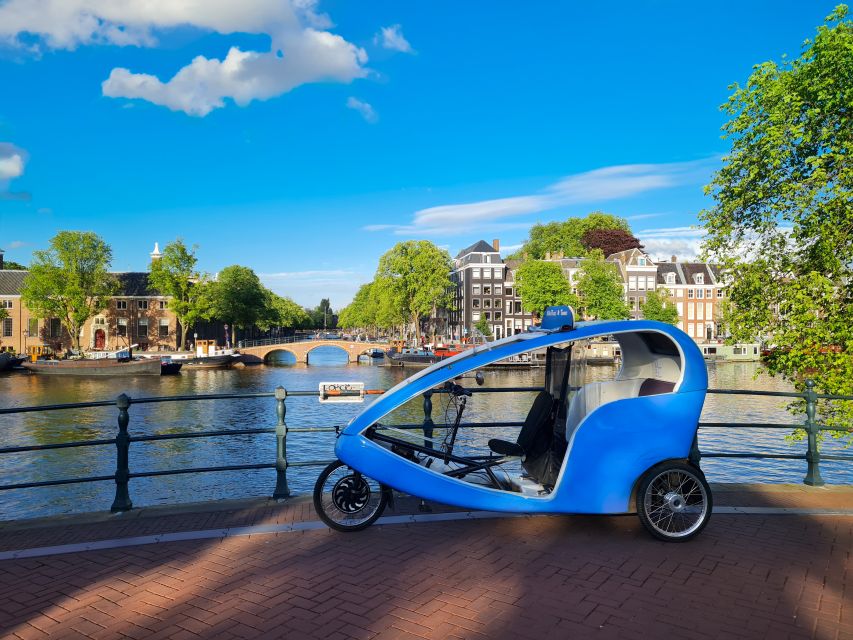
Amsterdam can be a lot on foot. Even when you pick the right sights, you still lose time circling back, climbing awkward sidewalks, and stopping every few minutes to confirm you’re on the right street. A private pedicab solves that with a simple promise: you ride, you look, and your guide handles the route.
This specific tour is designed like a highlights loop through the historic core. You start at Dam Square, then move into the older streets that formed the city’s defenses and trade routes. Later, you shift to the Jewish Quarter, then the Museum Quarter around Museumplein. That structure matters because it keeps you from bouncing randomly across town.
It’s also genuinely comfortable for people who want to see a lot without a heavy walking day. In the reviews, I saw repeated praise for Bram being accommodating for guests with limited mobility or seniors—pedicabs do the legwork, and the stops are planned so you can see key places without long treks.
You can also read our reviews of more private tours in Amsterdam


Dam Square: where Amsterdam begins (and where you orient fast)
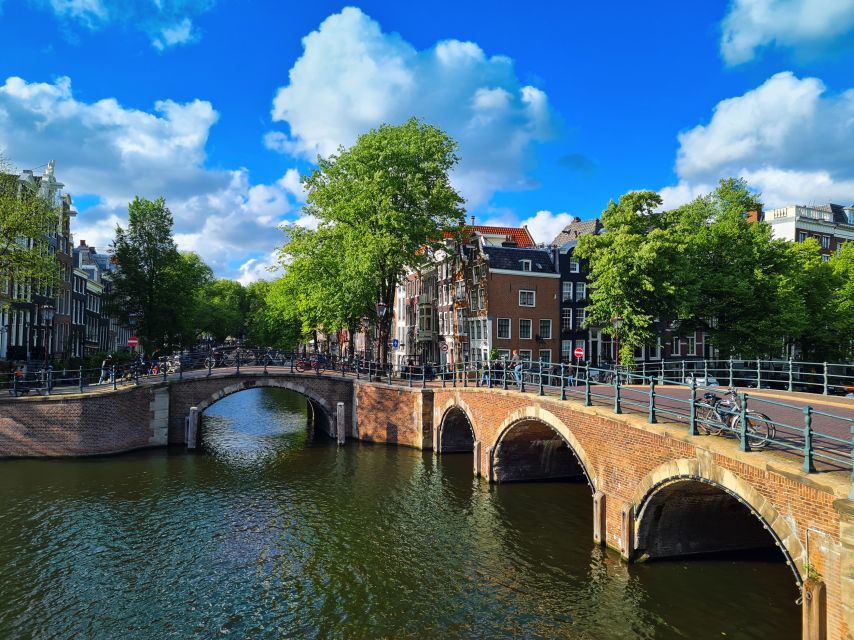
Your tour kicks off at Dam Square, the symbolic center where Amsterdam’s story starts. This is the big first landing pad of the old city—so even if you’re only here for a short trip, you get a solid mental map fast.
From Dam Square, you’ll understand why the area is still packed with meaning: the Royal Palace, the Nieuwe Kerk (New Church), and the National Monument anchor the square’s role in Dutch public life. Dam Square isn’t just a pretty postcard stop. It’s where the city’s identity crystallized, and it’s the point your guide uses to explain how Amsterdam evolved outward from this original hub.
Practical tip: If you’re traveling with limited time, treat Dam Square as your orientation checkpoint. It’s easier to absorb the rest of the route once you’ve seen where the city’s “center of gravity” lives.
Zeedijk and Nieuwmarkt: dikes, the oldest hints of Chinatown, and a 15th-century gate
Next comes Zeedijk. Today it’s a street—but the name points back to the older function of the area. Your guide talks about how it used to be tied to the dikes protecting the old city. That context is surprisingly useful because Amsterdam’s flat geography can make it feel like the city was always “just there.” Learning about water management explains why certain streets and neighborhoods formed where they did.
You’ll also catch a glimpse of the nearby Chinatown area from the street. It’s not a full deep-dive stop here, but it’s a meaningful preview: you see how neighborhoods in Amsterdam have layered over time without erasing each other.
Then you reach Nieuwmarkt. What makes this stop click is the central landmark: a 15th-century city gate standing right in the middle of the square. You don’t just look at an old structure—you get the sense of how this space functioned as a real entry point in earlier days. For first-timers, that’s a powerful shift from “I’m seeing buildings” to “I’m understanding movement.”
Montelbaanstoren and the Oude Waal: defenses and houseboat drama
A short ride brings you to the Montelbaanstoren, an old watch and defense tower. This is one of those Amsterdam sights that feels more impressive once you know what it was built to do. The tower is connected to the city’s expanded defense line from the early 16th century, and your guide uses that to explain how Amsterdam protected itself and controlled access.
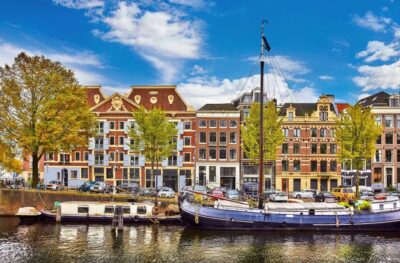
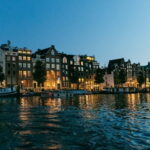
From there, you get a viewpoint over the Oude Waal. This matters because it shows you Amsterdam as a living water city, not just a scenic one. You’ll see houseboats lined up with 17th-century canal houses in the background—an instant picture of how residents have shaped the canal environment over generations.
If you care about photos: this is a good angle stop. You’re not fighting for a place on a crowded bridge deck; instead, you get a viewpoint where the canal-and-houses composition does a lot of the work for you.
The Jewish Quarter: synagogues, the Holocaust name monument, and merchant-era canal houses
The Jewish Quarter is one of the most meaningful sections of the route. Your guide points out multiple layers at once—religious landmarks, community history, and the painful modern memory that still sits in the streets.
You’ll see the Big Synagogue area, described as the first synagogue Jewish people were allowed to build in Western Europe over 350 years ago. You’ll also spot the Portuguese Synagogue across the street. Hearing the differences between these communities and time periods gives you a better sense of how Amsterdam fit into broader European Jewish history.
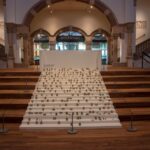
A key stop here is the Holocaust name monument, with 102,000 bricks listing the names of Dutch Jewish victims of World War II. This is the part where a guide’s tone matters, because it’s easy for monuments to become “just another stop.” In this tour, it’s handled as a grounded remembrance moment that frames the rest of what you’re looking at.
Then there’s the distinctly Amsterdam detail: old 17th-century canal houses across the area. You’ll learn they were homes of Sephardic immigrants who were successful in the diamond business. That connection between migration, commerce, and the canal-house architecture helps the neighborhood feel human, not frozen in time.
You can also read our reviews of more historical tours in Amsterdam






Skinny Bridge and the Amstel River: classic Amsterdam views, with built-in photo timing
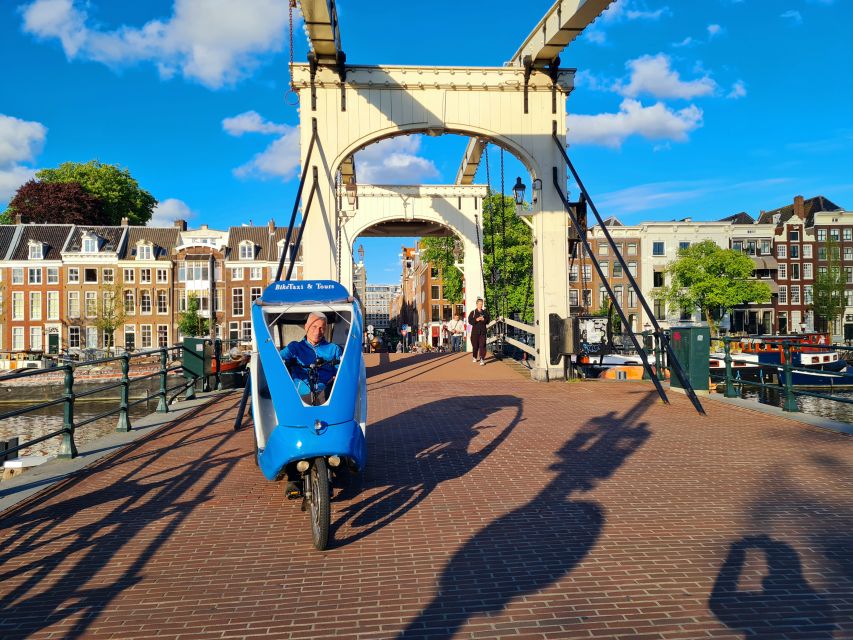
After the Jewish Quarter, the route shifts into the most scenic zone: the canal and river sightlines around the Amstel. A big highlight here is the Skinny Bridge, one of Amsterdam’s iconic narrow crossings. Your guide explains how it lights up at night with hundreds of bulbs, but even during the day it’s a recognizable photo stop because of its shape and scale.
You’ll also get a panoramic view of the Amstel River, which your guide positions as the main and widest canal in Amsterdam. The practical value is this: once you’ve seen the Amstel from the right angle, your mental map of “where the city opens up” becomes much clearer.
Photo tip: Bring a phone camera strap or secure grip. Canal-side stops can bring wind and occasional drizzle. This is the kind of route where you might think you’re fine without gear—then you’re suddenly grateful for a steady setup.
The 17th-century canal district: half-circles of merchant power
One of the tour’s central arcs is the 17th-century canal district surrounding the old center. On most maps, the canal ring appears as a series of half-circles wrapping around the city core. Riding through this area helps you see that geometry in real life.
Your guide points out the typical canal-house patterns—along with what makes each house slightly different. The idea isn’t to memorize architecture terms. It’s to help you notice a pattern: these canals were built around wealth, trade, and the status of merchants. Seeing the houses as a group makes the city feel planned rather than accidental.
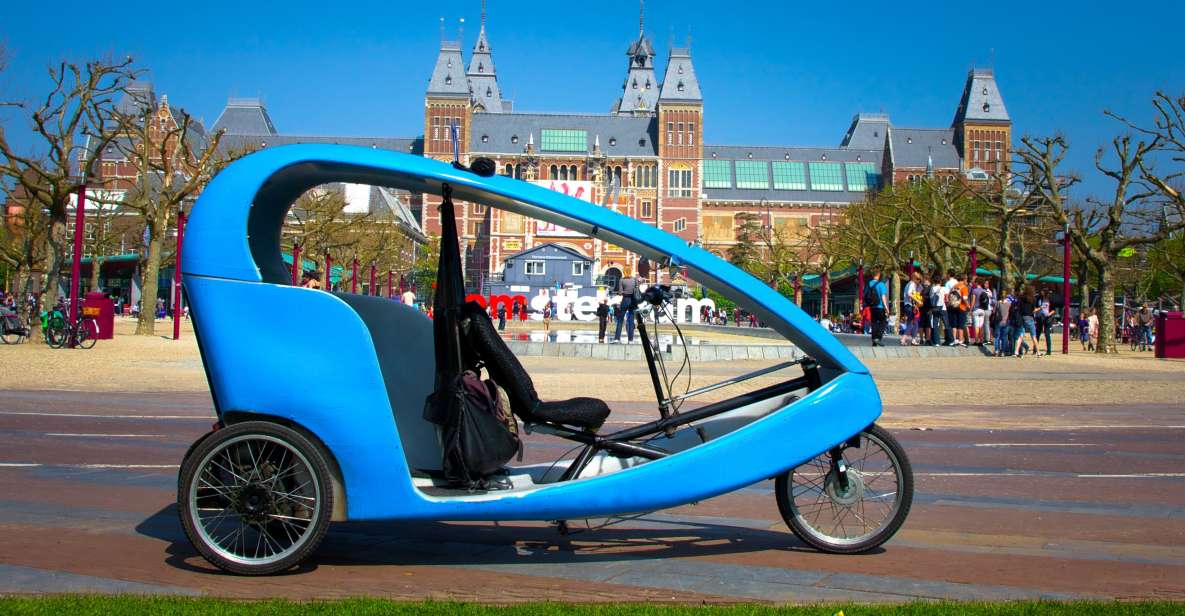
This is also where the pedicab itself earns its keep. The streets and bridge approaches can feel tighter than they look on paper, and you’re moving at a pace where you can actually observe façades, window rhythms, and street-level details before you’re gone.
Museumplein and the Rijksmuseum area: a fast hit of the Museum Quarter
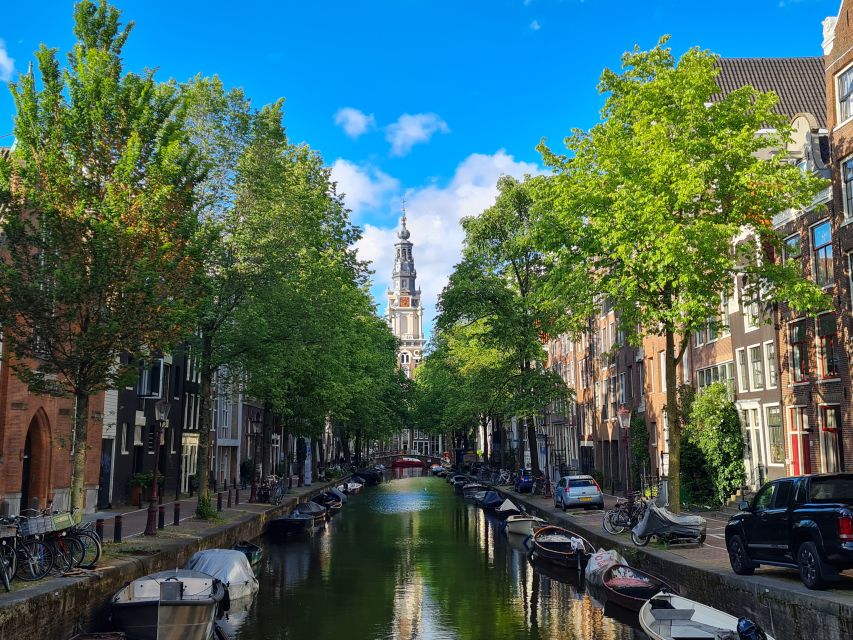
The final big landmark stop is Museumplein, a large green open square from the 19th century. This is where Amsterdam shifts from older medieval and merchant-era structure to the museum age—so you end with variety rather than only old stones and canals.
In your ride, you’ll see the Rijksmuseum and Van Gogh Museum as anchors around the square. You’ll also drive through the Rijksmuseum tunnel and make a stop in the middle of the square. That tunnel detail matters because it gives you a quick sense of how major institutions sit right inside the city’s flow.
This is a smart ending point for two reasons. First, the area is visually open, so you’re not stuck in a narrow street at the end. Second, it’s convenient for continuing your day: it’s easy to grab a tram or head toward your next museum or dinner plan.
You can also set a desired location to finish the tour in advance, which is helpful if you’ve got a reservation and don’t want to return to the exact same spot.
Price and value for $230: private time, not just a checklist
At $230 per group up to 2 for 2 hours, this is priced for a private experience. That’s important. You’re not paying per head while your guide is effectively still working one group at a time—this setup is designed so a couple or small party gets the guide’s attention without waiting for others to walk back from photos.
The tour includes pickup and drop-off, plus a blanket in case of cold weather. That blanket might sound small, but comfort changes everything on canal-side streets and open squares, especially if you’re doing a short outing in cooler months. Several reviews specifically call out warmth on rainy or chilly days.
You also get an in-depth explanation live in English, Dutch, or German. In the reviews, Bram is praised for being prepared, for using visual aids like maps and photos, and for blending facts with local perspective. That’s the value you can’t buy with a phone app: interpretation.
What isn’t included is food and drinks. That’s not a deal-breaker for a 2-hour tour, but plan to eat before or after. If you’re tempted to turn this into a long lunch stop, you may find the timing tighter than you want.
Comfort, limits, and weather reality checks
Pedicabs are great, but they have rules and real-world conditions.
You’ll want warm clothing, and you should expect that Amsterdam weather can change fast. The included blanket helps, but it’s still smart to dress like you’ll be outside between stops.
There’s also a combined maximum passenger weight of 200 kg. The tour notes that it’s not suitable for people over 220 lbs (100 kg). If you’re traveling with anyone close to that limit, check before booking.
Finally, remember this is a focused highlights tour. It’s designed to cover multiple neighborhoods in a short span, so you’ll see a lot of sites from the road and at planned stops. If your travel style is “linger for an hour at each location,” you may feel a bit rushed. On the other hand, if you want the big Amsterdam story in one neat ride, this pacing is exactly the point.
Should you book this Amsterdam pedicab tour with Bram?
If it’s your first time in Amsterdam and you want a guided route that feels personal, I’d book it. It’s especially worth it when you care about history but don’t want a marathon walking day. The route hits the core essentials—Dam Square, the Jewish Quarter, Amstel views, and Museumplein—and your guide brings that material to life with visual support like maps and photos.
I’d skip it only if you’re the type who needs long time inside museums or you want a tour that’s mostly free to roam. This experience is built for movement and interpretation, not for slow browsing.
If you’re traveling as a couple (or up to 2 people), the $230 group price can feel like strong value because you get a private guide plus pickup, not just a seat on a schedule.
FAQ
How long is the Amsterdam private pedicab historical sightseeing tour?
The tour lasts 2 hours.
Where does the tour start and how do pickup and drop-off work?
You start at Dam Square and you’ll get pickup from your hotel. The tour also includes hotel drop-off. You should wait outside in front of the hotel.
What’s included in the price?
Pickup and drop-off, a blanket for cold weather, and in-depth explanation about the sights are included.
Is food or drinks included?
No. Food and drinks are not included.
What languages is the live guide available in?
The live guide is available in English, Dutch, and German.
Is the tour private or shared?
It’s a private group tour.
Do I need to bring warm clothing?
Yes. The tour recommends warm clothing, and a blanket is provided in case of cold weather.
Is there a weight limit for passengers?
Yes. The maximum combined passenger weight is 200 kg, and the tour is not suitable for people over 220 lbs (100 kg).
Can I choose where to finish the tour?
Yes. You can set a desired location to finish the tour before the tour starts.
What’s the cancellation policy?
You can cancel up to 24 hours in advance for a full refund. There’s also a reserve now and pay later option.