REVIEW · CITY TOURS
Amsterdam City Center, Red Light District and Coffee Shops Tour
Book on Viator →Operated by Alex · Bookable on Viator
Amsterdam can feel like two cities at once, and this walking tour helps you hold both in your head. You start at Dam Square, then move through royal-era landmarks and war memorials before stepping into the Red Light District with a local guide. Two things I’d especially like: you get context (not just sights) and the route is designed to keep things moving at a human pace for about 3 hours.
I also like that the guide, Alex (and yes, his name may show as Aleks when booked), is described as friendly and story-driven, the kind of person who answers follow-up questions instead of rushing you onward. A drawback to consider: parts of De Wallen are genuinely sensitive, and even with a respectful explanation, it’s not a tour for anyone who wants a totally squeaky-clean Amsterdam.
In This Review
- Key things to know before you book
- Dam Square sets the tone for Amsterdam
- Royal Palace, National Monument, and the city’s ceremonial landmarks
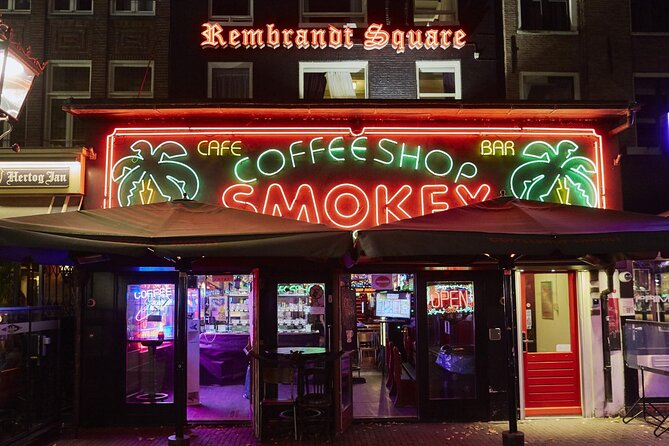
- De Wallen and coffeeshops: learning the rules without pretending it’s normal
- Ons’ Lieve Heer op Solder and Fo Guang Shan: faith hidden in plain sight
- The Waag, Weeping Tower, and St. Nicholas Basilica: power, trade, and empire
- Ending at Centraal Station: the city’s big engineering flex
- What $347.05 per group buys you in 3 hours
- Who should book this tour (and who should skip it)
- Should you book it
- FAQ
- How long is the Amsterdam City Center, Red Light District and Coffee Shops Tour?
- What’s the price, and how many people is the group for?
- Where does the tour start and end?
- What’s included in the tour price?
- Which major stops have entrance fees not included?
- Is there a mobile ticket?
Key things to know before you book
- Private group feel, up to 6 people, so the guide can slow down when you ask questions
- 3 hours in the city center, mostly walk-and-talk with a short break for De Wallen
- Coffee or tea is included during or right after the tour
- Several big sights have entrance fees not included, so plan for extra costs
- Alex/Aleks focuses on context, including how the Netherlands handles prostitution and light drugs
Dam Square sets the tone for Amsterdam

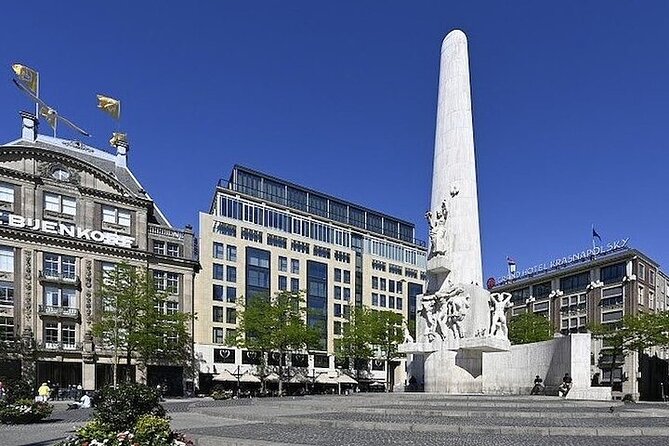
You don’t ease into Amsterdam here with a random street corner. You begin at Dam Square, the central and oldest square in the city, tied to the place where Amsterdam’s story started. The setting is great for orientation, because you can see how the surrounding buildings define the feel of the center.
Expect a quick but pointed introduction to the area: the Royal Palace, the New Church, the National Monument, and nearby landmark buildings such as Magna Plaza and Hotel Krasnopolski. It’s the kind of start that helps you stop walking like a tourist and start walking like someone who understands what they’re looking at.
You can also read our reviews of more city tours in Amsterdam



Royal Palace, National Monument, and the city’s ceremonial landmarks
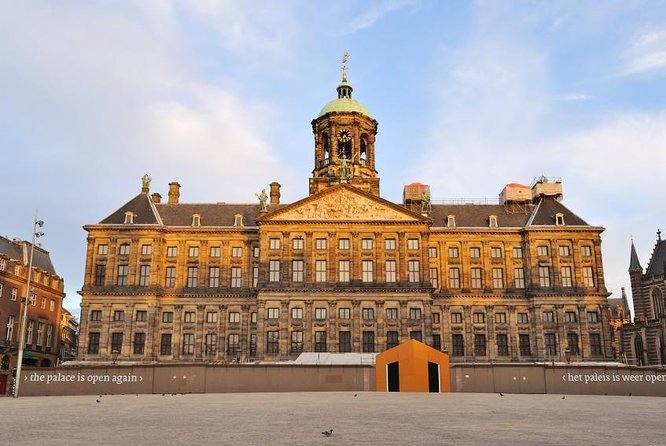
After Dam Square, the tour focuses on buildings that signal power, memory, and ceremony. The Royal Palace Amsterdam used to be the city’s hall in the mid-1600s, and it’s built on 13,659 wooden poles. That detail matters because it explains why Amsterdam’s architecture looks the way it does: the ground is soft, and the city grew an engineering solution.
Next comes the National Monument, a 22-meter reminder of World War II casualties and later armed conflicts, placed there in 1956. If you’ve ever visited a memorial and felt like you needed the story behind it, this stop is made for that. You’re not just looking upward; you’re learning why this spot became a national point of remembrance.
From there, you’ll head to Nieuwe Kerk, an important church that dates back to the 15th century. It began as a worship church for the Dutch Reformed Church, and it still has royal ceremony uses today for weddings and crowning events. If you like architecture with a purpose, this is one of those stops where the building’s past explains its present.
De Wallen and coffeeshops: learning the rules without pretending it’s normal
This is the emotional center of the tour. You’ll spend about 30 minutes in De Wallen (the Red Light District), with a guided, moderated conversation about prostitution and the Netherlands’ drug policy. The key word here is moderated: you’re not getting a shock-show walk, and you’re not getting a lecture that ignores the reality of the neighborhood.
You’ll learn a bit of the history of prostitution, how it looks today, and the practical “yes and no” of light drugs—framed around what’s legal and how to avoid stepping into trouble. I appreciate that the focus is also on respectful behavior and clear boundaries, because this area has a reputation that can make some visitors act thoughtlessly.
You’ll also pass along the broader mix that makes Amsterdam feel contradictory in the best way: coffeeshops, canal-side cabins, nearby museums, restaurants, and theaters. This isn’t about condoning anything. It’s about understanding why the city allows something that many places would push underground, and how the rules shape what visitors see on the street.
One more practical note: this stop is short, which is a good thing. You get enough guided context to decode what you’re seeing, then you’re not stuck feeling awkward for the whole afternoon.
Ons’ Lieve Heer op Solder and Fo Guang Shan: faith hidden in plain sight
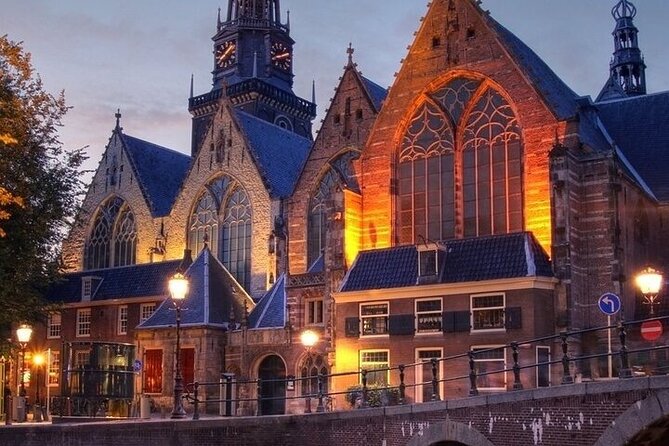
After De Wallen, the tour shifts gears into a different kind of intrigue: hidden spaces and unexpected spiritual landmarks. At Ons’ Lieve Heer op Solder (The church in the Attic), you’ll learn about one of Amsterdam’s famous secret churches. The site is restored and now functions as a museum, which means you can connect the building’s “how could this exist here?” story to what people needed during earlier times.
Next is Fo Guang Shan, a Buddhist (Chinese) temple in the heart of Amsterdam’s Chinatown. The tour description places it as the second biggest of its kind in Europe, which makes it more than a quick detour. If you’re the type who enjoys seeing how different communities shape a city’s everyday look, this stop gives you that side of Amsterdam beyond the canals.
What I like about this pairing—secret church attic plus Chinatown temple—is that it broadens the city’s identity fast. You’re not just swapping one landmark for another; you’re learning how Amsterdam’s people built spiritual life in very different ways.
The Waag, Weeping Tower, and St. Nicholas Basilica: power, trade, and empire
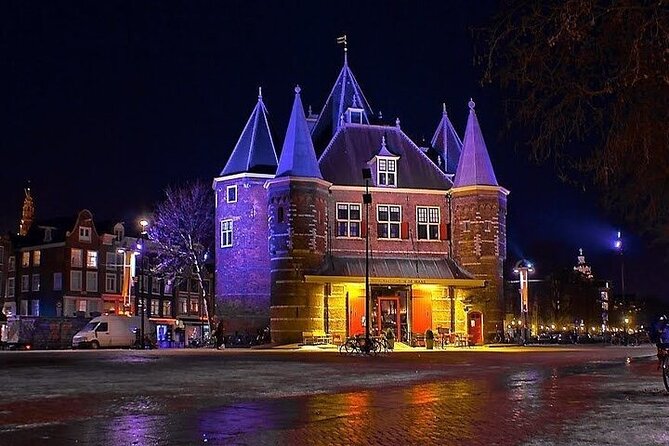
Then you move into a streak of stone-and-story stops that help you feel Amsterdam’s long timeline.
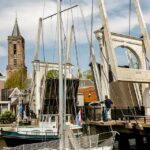
At De Waag, you’re at a building that served as a city weigh-house and was tied to customs and guild headquarters. The tour notes it dates from the beginning of the 15th century and connects to Amsterdam’s earlier city gates concept—one of the three gates into the inner city. If you’ve ever wondered how trade shaped the look of European cities, this is the kind of stop that makes that connection feel real.
The Weeping Tower is another “why is it here?” moment. It was once part of the medieval wall built around Amsterdam (from the 15th century). Even more interesting: it’s described as the location from which Henry Hudson set sail on his journey to North America. That turns a small-looking city corner into a launchpad for bigger world history.
Finally, you’ll reach St. Nicholas Basilica, described as the biggest Catholic temple in the Netherlands. It dates to the second half of the 19th century, so it’s a different architectural era than the medieval stops before it. If you want Amsterdam to feel like more than one style and one century, this sequence does that.
You can also read our reviews of more shopping tours in Amsterdam





Ending at Centraal Station: the city’s big engineering flex
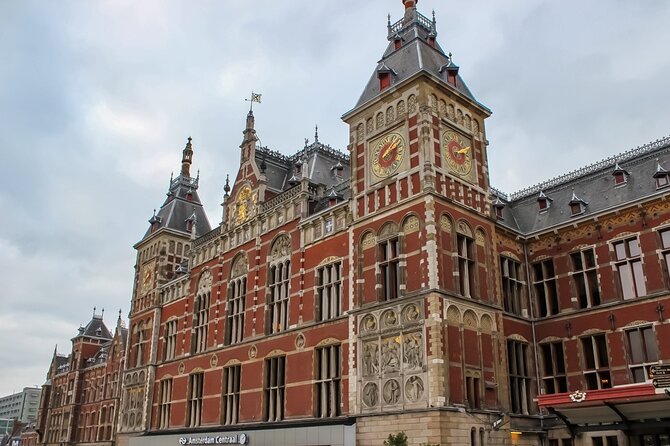
You finish at Amsterdam Centraal Station, one of the most recognizable European train stations on the planet. The tour highlights the design logic in a very Amsterdam way: it’s built on 6,059 wooden poles and features Dutch neoclassical architecture. Those numbers and the pole detail connect back to the city’s water-and-ground reality.
This end point is practical, too. When you’re done with a 3-hour walk, you’re not stuck figuring out how to return. Centraal gives you straightforward transit options, and the station itself is part of the spectacle—especially if you’ve never stared at old engineering while waiting for trains.
What $347.05 per group buys you in 3 hours
Let’s talk value in plain terms. The price is $347.05 per group (up to 6 people) for about 3 hours. That works out best when you’re traveling with friends or family and you can split the group cost.
You also get tangible extras: coffee or tea is included during or after the tour, which is a small thing that makes the whole experience feel smoother. Most walking tours are all story and no comfort; here you get a pause.
The big “value watch” is entrances. The tour includes guided sights and explanations, but entrance fees are not included for places like the Royal Palace Amsterdam, Nieuwe Kerk, and Ons’ Lieve Heer op Solder. If you plan to go inside those, budget for add-on tickets so there are no surprises.
Also, the tour is listed as private, and that matters more than people expect. You’re not blending into a large crowd where questions vanish. A smaller group can change the rhythm, especially around De Wallen where respectful, clear guidance helps a lot.
Who should book this tour (and who should skip it)
This tour is a good fit if you want:
- A fast way to get oriented in Amsterdam’s center without rushing through five separate neighborhoods
- Context-heavy sightseeing, including the how and why behind De Wallen
- A mix of landmarks: civic squares, royal sites, memorials, hidden religious spaces, and major stations
I’d think twice if you:
- Want only classic postcard Amsterdam and prefer to avoid any discussion of prostitution or drug policy
- Don’t want any extra entrance costs for the indoor stops that may tempt you to go inside
Should you book it
I’d book it if you like your Amsterdam with real edges, not just pretty surfaces. The route gives you a smart cross-section of the city—history, institutions, religion in unexpected places, and the controversial district handled with moderation.
Just go in with a simple plan: wear comfortable shoes, keep an open mind for De Wallen, and budget for entrance fees at Royal Palace Amsterdam, Nieuwe Kerk, and Ons’ Lieve Heer op Solder if you want to enter.
If you want the guide’s exact style, look for Alex/Aleks when booking. The tone around him is that he’s friendly and willing to go beyond the script, and that’s exactly what makes a short, 3-hour tour feel worth your time.
FAQ
How long is the Amsterdam City Center, Red Light District and Coffee Shops Tour?
It runs for about 3 hours. The walking focus is on the city center, with a scheduled break for the De Wallen segment.
What’s the price, and how many people is the group for?
The tour costs $347.05 per group for up to 6 people. It’s private, meaning only your group participates.
Where does the tour start and end?
The tour starts at Dam Square, 1012 Amsterdam and ends back at the same meeting point.
What’s included in the tour price?
The included items are the tour guide service and coffee or tea within or after the tour.
Which major stops have entrance fees not included?
Entrance fees are not included for Royal Palace Amsterdam, Neue Kerk, and Ons’ Lieve Heer op Solder.
Is there a mobile ticket?
Yes, the tour uses a mobile ticket. Confirmation is provided after booking, subject to availability.