REVIEW · ANNE FRANK & WWII HISTORY TOURS
Amsterdam: Anne Frank Walking Tour – Guided in EN/DE/IT/ES
Book on GetYourGuide →Operated by Amsterdamliebe · Bookable on GetYourGuide
Your shoes hit cobblestones; the past hits hard. This Anne Frank walking tour takes you through Amsterdam’s Jodenbuurt and pairs real WWII locations with Anne Frank diary passages in your chosen language.
I love the way the route turns the neighborhood into a living timeline. I also like the guide’s focus on specific memorials and Stolpersteine so you can connect streets to people and dates, not just facts.
One drawback: be ready for heavy material, plus 2–3 kilometers of walking in all weather.
In This Review
- Key things I’d plan around
- Walking Amsterdam’s Jewish Quarter with Anne Frank’s words
- Where you start at De Waag (and how not to end up at the wrong door)
- Nieuwmarkt Square: the neighborhood’s “front porch”
- Zuiderkerk and the lesson about who lived here
- Huis de Pinto: a quick look at stately homes
- Rembrandt House stop: why this walk doesn’t treat the quarter like a museum
- Sint Antoniesluis: street-level history and the feel of the neighborhood
- Portuguese Synagogue: a photo stop with real context
- Jewish Historical Museum: memory built into the city
- Auschwitz Monument and the shift from neighborhood to WWII reality
- The Dokwerker and names: remembering isn’t only about places
- Anne Frank’s diary on the street: why this tour avoids the usual problem
- Pace, distance, and language choices you should get right
- Price and value: why $28 can feel like a bargain here
- Who should book this Anne Frank Jewish Quarter walk
- Should you book it? My take
- FAQ
- How long is the Anne Frank Walking Tour in Amsterdam?
- How much does the Amsterdam: Anne Frank Walking Tour cost?
- What languages are available, and is the tour bilingual?
- Does this tour include the Anne Frank House or admission to it?
- Is the tour wheelchair accessible, and how much do you walk?
- Where do I meet the guide?
Key things I’d plan around

- Anne Frank diary passages on the walk: short readings that help you feel the human scale of what happened.
- Stolpersteine and memorial stops: you see how remembrance is built into the city itself.
- A route that includes Jewish and non-Jewish stories: it’s not only suffering; it’s also everyday community life before and during the war.
- Portuguese Synagogue photo moment: a brief, meaningful stop with context for the Portuguese Jewish presence in Amsterdam.
- Language matters (not bilingual): choose EN/DE/IT/ES carefully so you get the full experience.
Walking Amsterdam’s Jewish Quarter with Anne Frank’s words
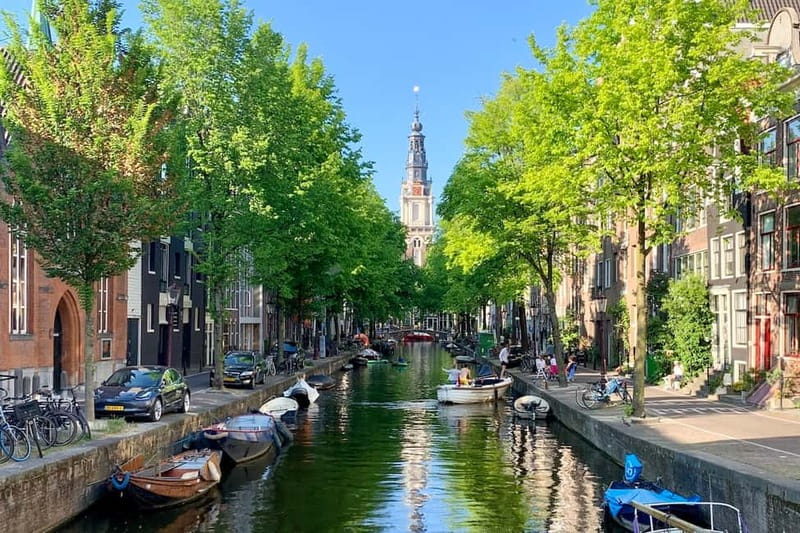
This tour isn’t about checking boxes. It’s about understanding a place that has been shaped by faith, trade, discrimination, and resistance. You start in the Nieuwmarkt area and work your way through the Jewish Quarter, the part of Amsterdam locals refer to as Jodenbuurt. Along the way, your guide uses the Anne Frank diary as a thread. Not as a dramatic gimmick, but as a way to show how ordinary life and sudden terror can sit side by side.
The tone is serious. You’ll hear about the Jews of Amsterdam, Nazi persecution, deportations, and the Holocaust. You’ll also hear about resistance, including the February Strike in 1941 and the brave actions of Jews and non-Jews who risked their own safety to help others. Guides read diary passages and connect them to what you’re standing next to, which keeps the story grounded in geography.
You can also read our reviews of more walking tours in Amsterdam



Where you start at De Waag (and how not to end up at the wrong door)

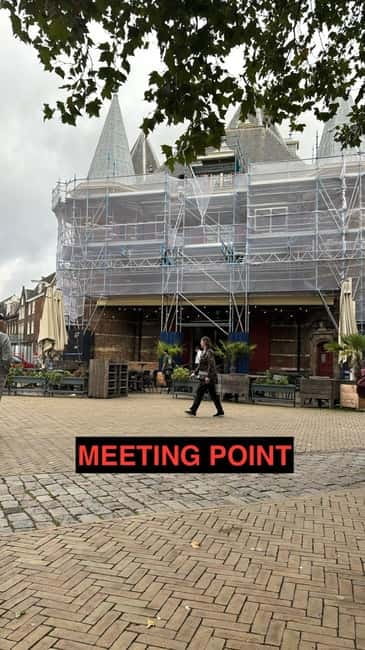
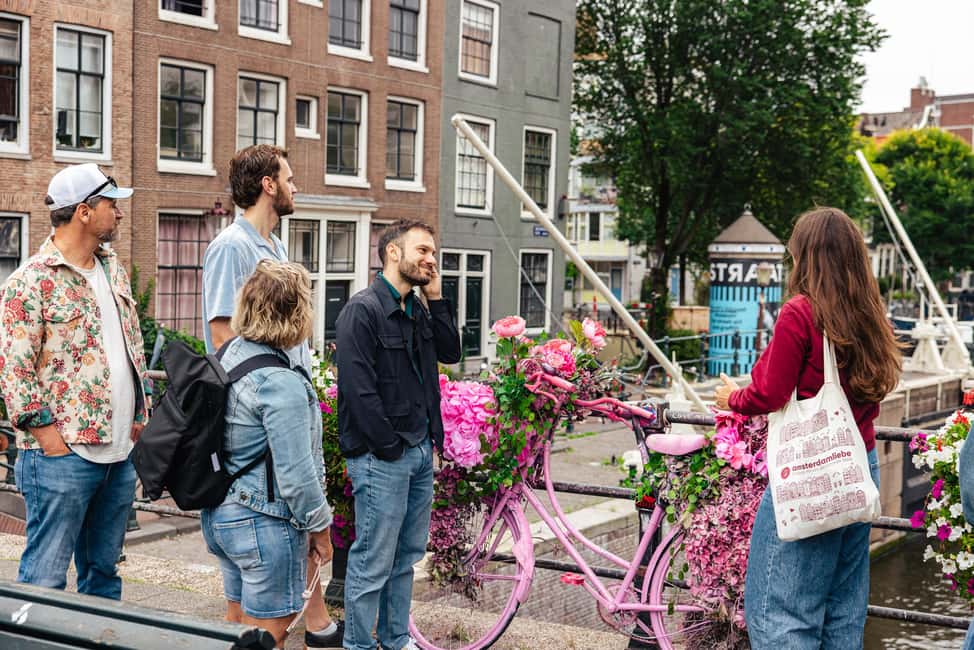
Your meeting point is the entrance to De Waag, a historic building in the middle of Nieuwmarkt. Your guide wears a red name tag around their neck. It sounds simple, but Amsterdam’s map can be annoying here.
Here’s the practical tip that really matters: if Google Maps sends you to the back side of the building, you’ll waste time and feel flustered right at the start. If you spot the coffeeshop Jolly Joker, you’re on the wrong side. Walk around the building to the actual entrance area and you’ll be fine.
This matters because the tour timing is tight—multiple short stops. Getting the starting point right helps you avoid rushing, and rushing is the last thing you want on a tour like this.
Nieuwmarkt Square: the neighborhood’s “front porch”
You begin near the Waag and quickly move to Nieuwmarkt Square for about 10 minutes. This is one of those Amsterdam spots where the modern city is right on top of the past. From here, your guide sets up the big picture: how the Jewish community in Amsterdam formed and grew, especially after expulsions tied to the Spanish Inquisition.
A key idea you’ll hear is that Jews helped shape Amsterdam’s economy and cityscape. The story is not only tragedy. It’s also the arrival of a community that became part of daily commercial life, leaving an imprint on the neighborhood you’re walking through.
Zuiderkerk and the lesson about who lived here
Next is Zuiderkerk (around 10 minutes). This stop helps the tour do something important: it avoids the misleading idea that the Jewish Quarter was only one group, one story, one moment in time.
You’ll hear how Jewish life was central to the area, but not exclusive. Non-Jews lived nearby too, including famous artist Rembrandt van Rijn, whose home is in the neighborhood you pass later. The point isn’t name-dropping. It’s to help you picture the quarter as a real place where multiple lives intersected.
In practical terms, this stop is also a good time to orient yourself. Once you understand who was living around these churches, synagogues, and historic houses, the later memorials hit differently.
Huis de Pinto: a quick look at stately homes
You’ll pause at Huis de Pinto (about 5 minutes). The highlight here is scale and presence: this is where you notice that the community wasn’t living in the shadows. You’re seeing architecture tied to wealth, status, and community organization.
It’s a small stop, but it matters. Tours that focus only on suffering can accidentally flatten history. Here, the neighborhood’s physical markers help you understand that Jewish Amsterdam had prosperity and influence before WWII shattered normal life.
You can also read our reviews of more guided tours in Amsterdam





Rembrandt House stop: why this walk doesn’t treat the quarter like a museum
About 15 minutes are spent near Rembrandt House. Even if you don’t go inside, this stop anchors a crucial message: Amsterdam’s Jewish Quarter wasn’t just a wartime stage. It was a lived-in area where arts, trade, and faith all overlapped.
Because the tour is designed as a walking experience with no paid admissions, you get the sense of place without turning your trip into a string of entrances. You can look at the street and understand why the area was so meaningful to the communities that called it home.
Sint Antoniesluis: street-level history and the feel of the neighborhood

You’ll then head to Sint Antoniesluis (about 10 minutes). This is the kind of stop that often becomes a favorite for people who like street-level context. It’s less about a single famous building and more about the neighborhood shape—how people moved, where life clustered, and how the area’s layout framed what came later.
This is also a good moment to pay attention to your guide’s pacing. Many guides keep the story flowing with short reminders so the heavy parts don’t arrive all at once. If you’re traveling with family or you’re sensitive to intense topics, this is where you’ll see how the guide manages tone.
Portuguese Synagogue: a photo stop with real context
At Portuguese Synagogue you get a photo stop plus guided context (around 10 minutes). This is one of the most recognizable symbols of Amsterdam’s Portuguese Jewish community in the area, and your guide uses it to connect past identity to what followed under Nazi rule.
Even without an interior visit, you’ll learn what made the synagogue important, and why it fits this broader story of community formation and then persecution. If you’re the kind of traveler who likes to photograph places you’ve learned something about, this is a stop you’ll enjoy.
Jewish Historical Museum: memory built into the city
Next is Jewish Historical Museum (about 5 minutes). The short time means you won’t get a full museum experience here. Instead, think of it as a landmark moment. You’re reminded that Amsterdam didn’t only preserve the past. It actively documents it.
This stop works well because by the time you reach it, you already have a timeline in your head: the community’s early presence, its role in the city, then the Nazi occupation and deportations.
Auschwitz Monument and the shift from neighborhood to WWII reality
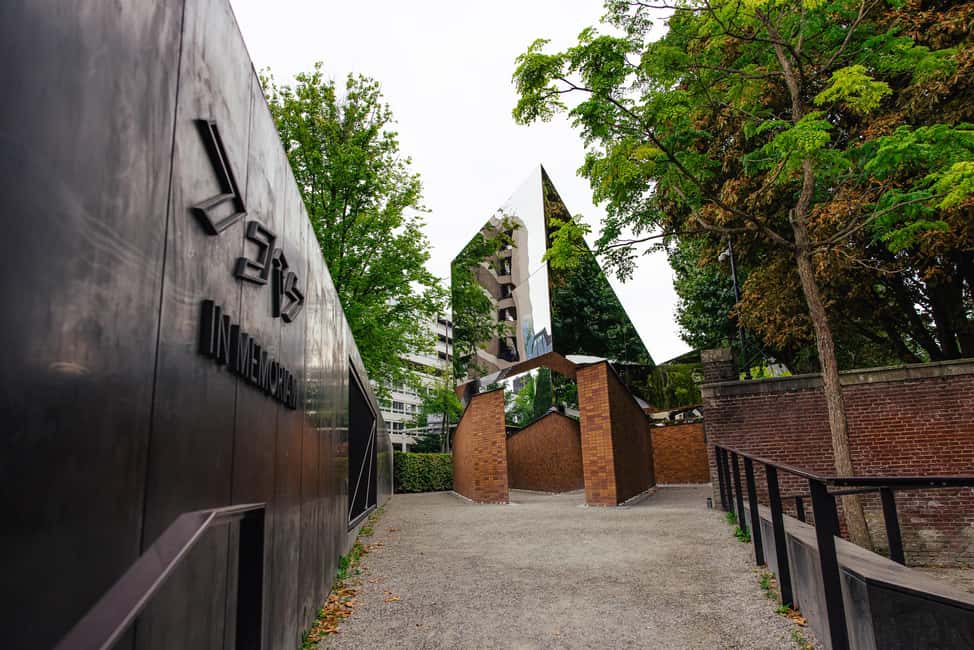
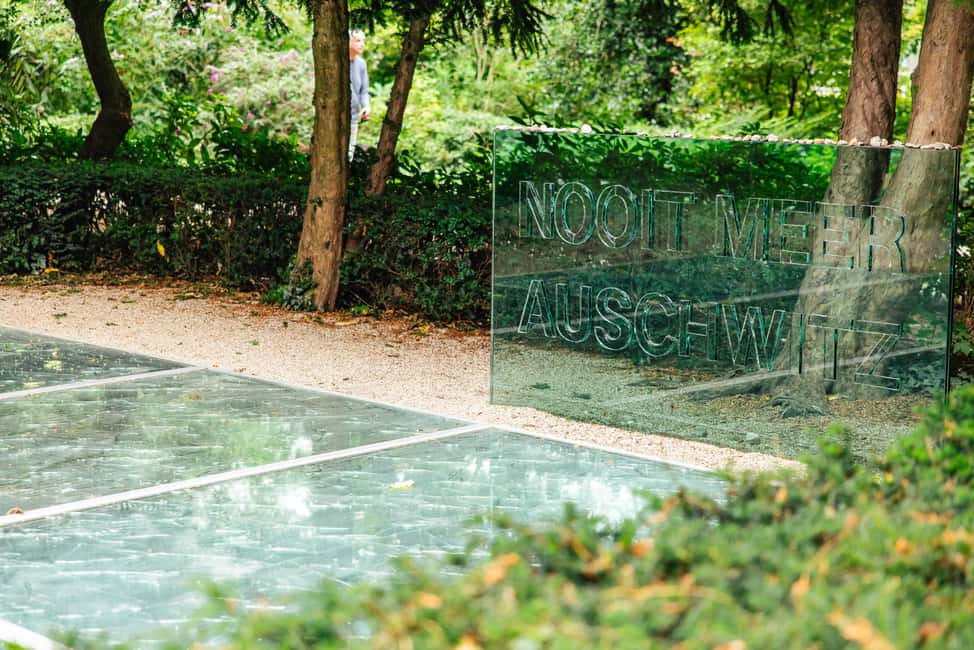
At Auschwitz Monument, Amsterdam you spend about 10 minutes. This is one of the emotional turning points of the tour. It’s where the walk stops being just “history about Amsterdam” and becomes “history about the Holocaust,” with the neighborhood connected to what happened to real people.
Your guide ties this to the story of deportation—how thousands were deported and how many did not return. The diary passages you heard earlier start to feel less like literature and more like testimony.
A heads-up: if you’re visiting with someone who struggles with WWII topics, you’ll probably want to prepare them for this moment in advance. The walk stays respectful, but it won’t avoid the reality.
The Dokwerker and names: remembering isn’t only about places
You then pass The Dokwerker (about 5 minutes). Like other memorial art in the area, it functions as a kind of emotional compass. You’ll hear what the monument is meant to commemorate, and how it fits into the larger WWII story in Amsterdam.
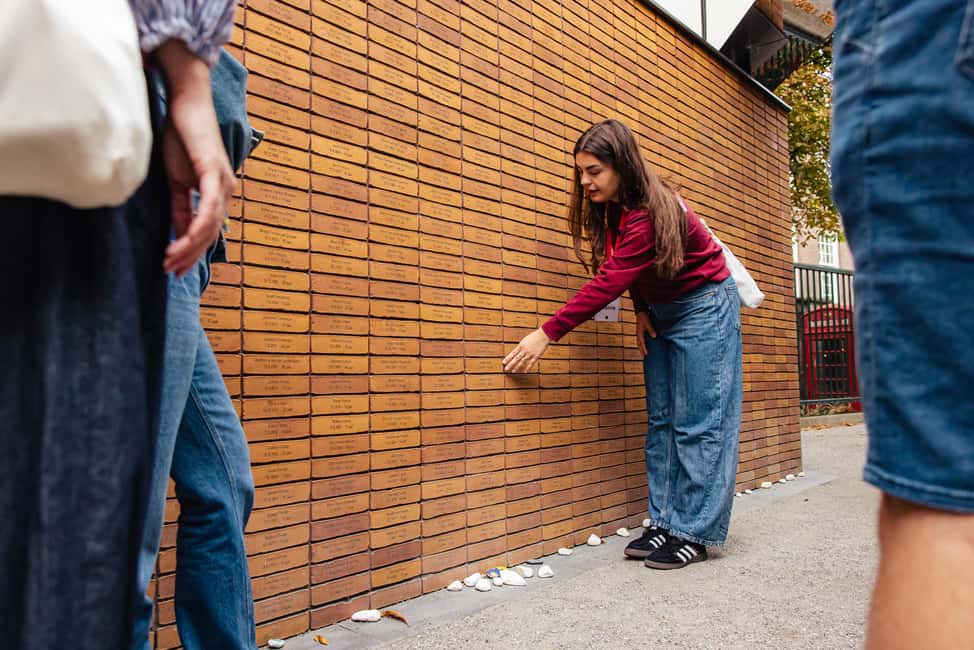
Then you move to National Holocaust Names Monument, with a photo stop plus guided time (about 15 minutes). This is where the tour leans into remembrance through names. It helps you shift from “events happened” to “people were targeted, hidden, deported, and lost.”
That change in mindset is the value here. You’re not just learning a sequence. You’re learning how memory is organized in public space.
Anne Frank’s diary on the street: why this tour avoids the usual problem
Many Anne Frank-related tours either feel too literary or too sightseeing-heavy. This one tries to balance the two by reading diary excerpts while you stand near places the guide connects to the story.
So when you hear about the young and courageous Anne Frank—living under threat, hiding to avoid deportation, writing her diary—the message lands with extra weight because you can see how the neighborhood looks today. The past isn’t floating in a textbook. It’s walking-distance away.
You’ll also hear about refusal and resistance—people who didn’t look away. That’s where the diary passages often matter most. They give you a human voice while the guide talks about February Strike-era courage and the danger faced by those who helped.
Pace, distance, and language choices you should get right
This is a walking tour of about 2–3 kilometers over roughly 2 hours. Wear comfortable shoes. This is not a sit-on-a-bench and listen kind of experience.
Also: it runs in all weather conditions. Bring an umbrella if rain is possible. Amsterdam loves quick changes, and you don’t want to cut your tour short because you’re cold and wet.
Language is another practical detail. The tour is offered in German, English, Spanish, or Italian, but it’s not bilingual. Pick the right option in advance. If you’re fluent in multiple languages, still choose based on what you can comfortably process while walking and listening.
Price and value: why $28 can feel like a bargain here
At $28 per person for a 2-hour guided walk, this is strong value for two reasons.
First, the tour includes a real guide (German or English, plus other language options), and you’re getting multiple stops that connect WWII history to the actual streets of Amsterdam. You aren’t paying for a single museum entrance. You’re paying for interpretation, timing, and a structured route.
Second, the sights along the way can be visited for free during the tour. The highlights are public spaces and recognizable landmarks, plus the kind of memorial sites that don’t require you to buy tickets to move through the story.
Food and drinks aren’t included, so plan a snack or coffee before or after if you want one. But the core experience is guided walking, not ticketed attractions.
Who should book this Anne Frank Jewish Quarter walk
This tour is a great fit if you:
- want to connect Anne Frank’s story to the wider WWII and Jewish history of Amsterdam
- like guided walks where you get a timeline tied to real locations
- prefer public memorial sites and street context over museum hours
- want an experience in English, German, Spanish, or Italian without needing a separate museum ticket
It’s less ideal if you:
- want a light, casual sightseeing route
- need the Anne Frank House specifically (this tour does not visit it and won’t even provide a look at it)
- struggle with walking for 2–3 kilometers in varying weather
Should you book it? My take
Yes, I’d book it if your Amsterdam plans include the Jewish Quarter and you want the Anne Frank story told in a way that stays tied to place. The route gives you a strong structure: neighborhood origins, community life, persecution, then resistance and remembrance.
Just be honest about the tone. This is not entertainment. It’s history with real grief behind it. If you’re ready for that, you’ll come away with a better understanding of Amsterdam than you’d get from looking at buildings alone.
FAQ
How long is the Anne Frank Walking Tour in Amsterdam?
The tour lasts about 2 hours.
How much does the Amsterdam: Anne Frank Walking Tour cost?
The price is $28 per person.
What languages are available, and is the tour bilingual?
You can choose German, English, Spanish, or Italian. It is not bilingual, so you should select the language you want.
Does this tour include the Anne Frank House or admission to it?
No. The Anne Frank House is not visited and you won’t have entry to it on this tour.
Is the tour wheelchair accessible, and how much do you walk?
Yes, the tour is wheelchair accessible. It is a walking tour of about 2–3 kilometers, so comfortable shoes help a lot.
Where do I meet the guide?
Meet your guide at the entrance to De Waag in the middle of Nieuwmarkt. The guide wears a red name tag. If you end up by the coffeeshop Jolly Joker, you’re on the wrong side—walk around to the correct entrance.