REVIEW · HISTORICAL TOURS
History & culture tour in Amsterdam with a local
Book on Viator →Operated by Guidance Travel · Bookable on Viator
Amsterdam can feel like a maze of canals and names. This 2-hour walking tour helps you connect the dots, from the city’s trading beginnings to the neighborhoods and buildings you still see today.
I especially liked the way the route stays compact and focused, so you get a clear story instead of random sightseeing. I also liked the small group size (up to 15), which makes it easier to ask questions and hear the guide clearly as you walk.
One thing to consider: it’s mostly outside on foot, so if you’re sensitive to weather, you’ll want a rain layer and comfortable shoes ready.
In This Review
- Key highlights to look for
- Why This 2-Hour Amsterdam History Walk Feels Personal
- Beursplein: From Fishing Village Roots to a City Name Story
- Dam Square and the Royal Palace: Power, Ceremony, and WWII Memory
- Begijnhof Courtyard: Quiet Tolerance and One of Amsterdam’s Oldest House Types
- House on the Three Canals and the Bicycle Bridge Idea
- Nieuwmarkt: Waag, Guilds, and the Story Behind the “Dancing Houses”
- Zeedijk Chinatown: How One Street Changes Over Time
- Centraal Station: Architecture and the City’s Long Memory of Connections
- The Stroopwafel Break: More Than a Sweet Stop
- What Guides Add: Clear Stories, Friendly Tone, and Adaptation
- Practical Value: Price, Group Size, and What You Get
- Who Should Book This Tour
- Should You Book This Amsterdam Tour? My take
- FAQ
- How long is the Amsterdam history and culture walking tour?
- Where does the tour start and end?
- What language is the tour offered in?
- What’s included besides the guided walk?
- How many people are in a group?
- Do I need tickets or pay admission at the stops?
- What cancellation options do I have?
Key highlights to look for
- A tight route with real context across central Amsterdam, not just photo stops
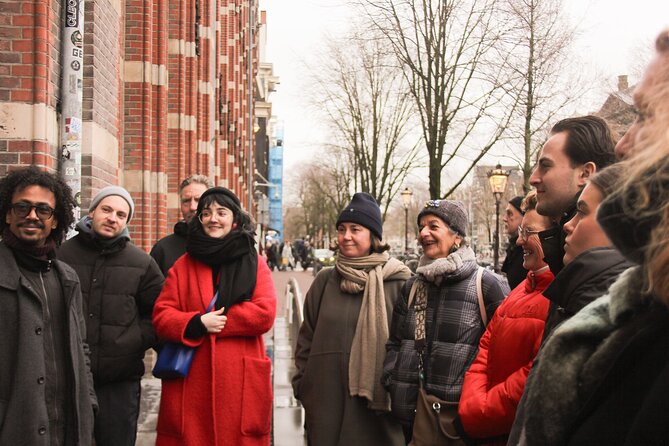
- Small group energy that helps you connect with other history-minded people
- Stroopwafel included as a classic Dutch break during the walk
- Big-picture landmarks in bite-size chunks at each stop (about 10–15 minutes)
- Guide flexibility: some tours can be tailored to your interests, depending on the group
- Free admission at each listed stop, so you pay for the guide, not tickets
Why This 2-Hour Amsterdam History Walk Feels Personal
You don’t need to be an Amsterdam expert to enjoy this tour. You just need curiosity and good walking shoes, because the guide’s job is to translate the city’s layers into something you can actually follow while you’re standing in the street.
With a duration of about 2 to 2.5 hours, it’s long enough to matter, but short enough that you won’t lose the thread. The guide keeps moving between major points while explaining how the city formed, how it traded, and how it changed socially over time.
And yes, there’s a classic Dutch stroopwafel included. It’s not just a snack; it’s a reminder that Amsterdam history isn’t locked behind museum doors. You’ll feel it in everyday places and traditions.
You can also read our reviews of more historical tours in Amsterdam



Beursplein: From Fishing Village Roots to a City Name Story
Your tour starts at Beursplein, a great choice because it sets the tone right away. You’ll hear how the city’s early identity connects to its growth, including the story behind Amsterdam’s name and how a small fishing village evolved into a major economic hub by the 17th century.
This is where a local guide shines. Instead of treating the waterfront and old trade routes like trivia, you get a cause-and-effect explanation: prosperity didn’t appear out of nowhere, and Amsterdam’s later layout and institutions followed that momentum.
Practical note: this stop is short, around 10 minutes, so come ready to listen. If you love origins stories, this start gives you momentum for the rest of the walk.
Dam Square and the Royal Palace: Power, Ceremony, and WWII Memory
Next up is Dam Square, the kind of landmark you’ve probably seen in photos, but it hits differently when you understand what it represents. You’ll learn why the square matters to the city’s formation, then you’ll look toward the Royal Palace on the Dam and connect it to the idea of government and authority in Amsterdam.
The guide also brings in the square’s role during the Second World War. That adds weight to what can otherwise feel like a stop for quick sightseeing.
A small caution: Dam Square is a busy area. Even on a calm day, you’ll want to stay close to the group and let the guide pull you into the explanation between gaps in foot traffic.
Begijnhof Courtyard: Quiet Tolerance and One of Amsterdam’s Oldest House Types
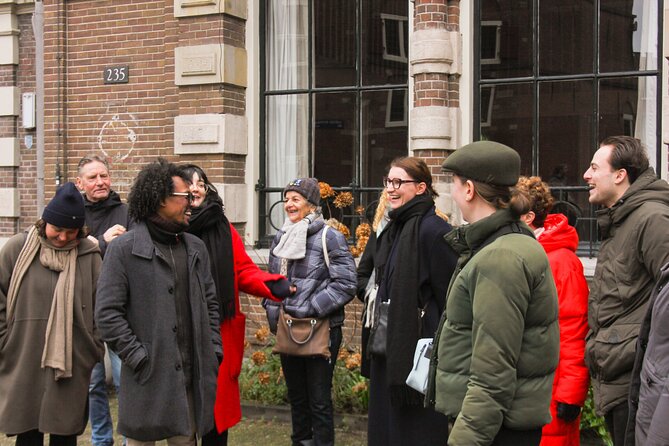
Begijnhof is the moment the tour slows down mentally. You step into a serene courtyard that feels removed from the street noise, and the guide explains the religious history of the place and what it reveals about Amsterdam’s reputation for tolerance.
This stop also includes a standout physical detail: you’ll see one of the oldest houses in Amsterdam, plus the mention of two wooden cottages. That kind of specific detail helps you picture the scale of time passing, even when the buildings are right in front of you.
Because this stop runs about 15 minutes, it’s also the best chance on the tour to ask questions. If you’re the type who likes to understand how ordinary daily life was shaped by religion and community rules, this one will land.
House on the Three Canals and the Bicycle Bridge Idea
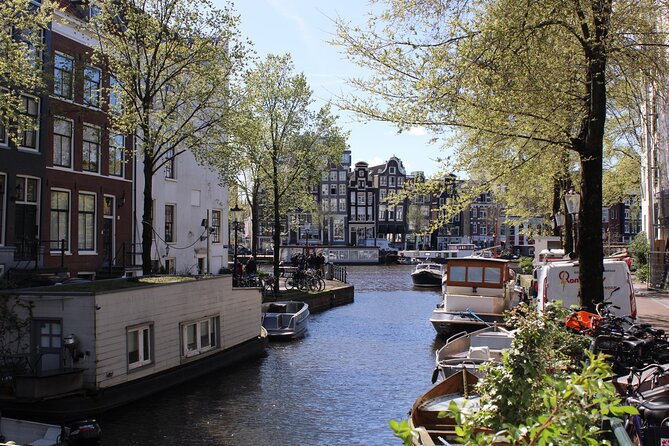
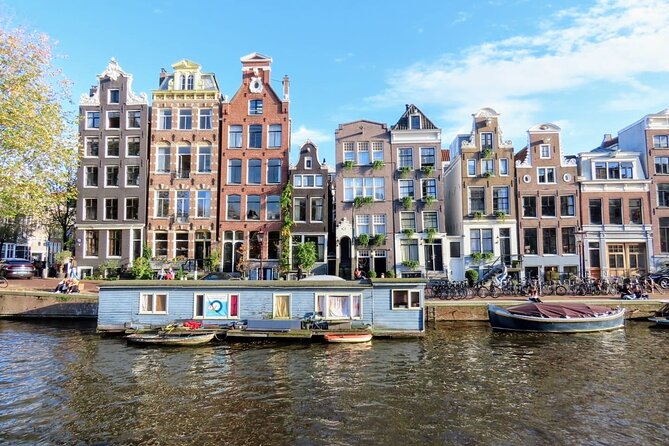
Then you’ll shift to a fascinating streetscape story at the House on the Three Canals. The guide points out the unusual setup and helps you understand why Amsterdam’s canal system isn’t just scenic, it’s built into the city’s logic.
You’ll also hear about the bicycle bridge. Even if you already know Amsterdam is cycling-country, a guided explanation helps you connect how infrastructure supports daily movement across water and through crowded urban space.
This segment is about 10 minutes, so it’s more about specific storytelling than long explanations. Think of it as architectural curiosity with a purpose: it shows how the city solves real problems with real design.






Nieuwmarkt: Waag, Guilds, and the Story Behind the “Dancing Houses”
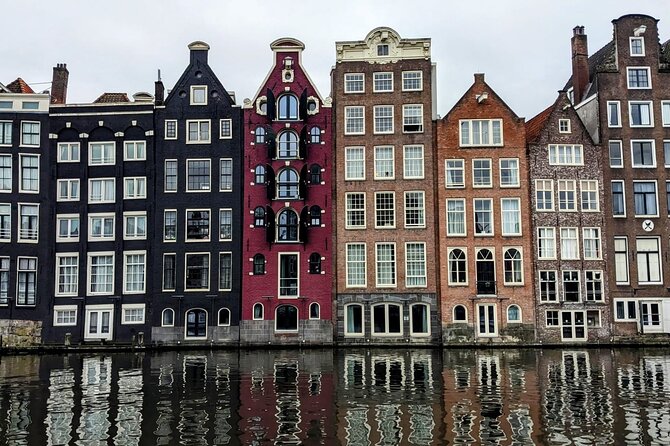
At Nieuwmarkt, the focus turns to commerce and city institutions. You’ll see the Waag, an old city gate that later became a guild hall, and you’ll learn why guilds mattered in Amsterdam.
Guilds weren’t just fancy associations. They shaped trade, standards, and who had the right to work in different crafts. When you understand that, the city’s buildings start to feel like part of a system, not isolated landmarks.
You’ll also take in the dancing houses. This is a visual story stop: you’ll hear what makes these buildings notable, and it gives you a new way to look at unevenness and angles in historic Amsterdam architecture.
If you’re a history lover, this stop is a strong mid-tour anchor. It’s a clear link between economics, regulation, and what people built.
Zeedijk Chinatown: How One Street Changes Over Time
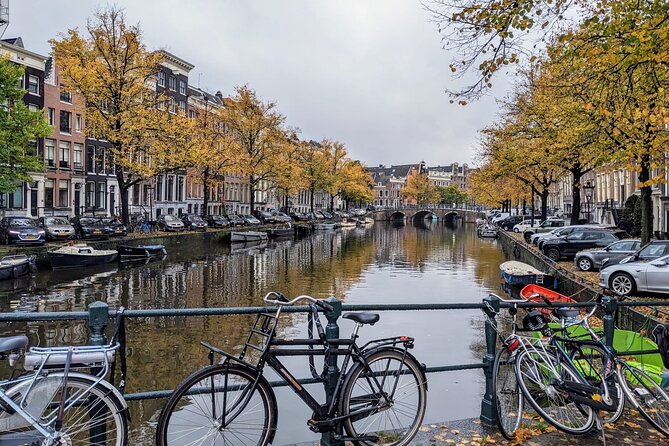
Zeedijk brings the tour into social history. The guide explains that Chinatown on this street was once the most dangerous area in Amsterdam during the 1970s, then you’ll hear about its decline and how the street transformed into a favorite spot for many Amsterdammers.
That arc matters because it’s not just about facts, it’s about how cities move on. Amsterdam isn’t frozen in time, and neither are its communities.
A consideration here: because it’s a well-known area, you’ll likely see shops and crowds. Stay with the guide so you get the full story rather than only the visuals.
Centraal Station: Architecture and the City’s Long Memory of Connections
Your final stop is Centraal Station, and it’s a fitting finish. You’ll explore one of Amsterdam’s stunning buildings and hear why the station’s location has mattered for centuries as a transportation hub and a symbol of connection and prosperity.
This stop works because it ties everything together. Earlier, you learned how Amsterdam grew through trade and civic structures. Here, you see the modern version of that same idea: movement, links, and the city’s role as a crossroads.
This is also a practical end point. If you’re continuing your day afterward, Centraal makes it easy to travel onward.
The Stroopwafel Break: More Than a Sweet Stop
The tour includes a classic Dutch stroopwafel, and timing makes it feel like a proper pause. It’s usually the kind of treat you’ll remember because it’s connected to the route’s storyline, not just handed out like a token.
For me, snack-in-the-middle tours work best when they give you a mental reset. You’ll be walking, listening, and taking in architecture for about two hours—so having one planned break keeps you fresh for the next landmark.
If you have a food restriction, check with the provider ahead of time. The information you have confirms the stroopwafel, but it doesn’t list alternatives.
What Guides Add: Clear Stories, Friendly Tone, and Adaptation
This experience is led by a local guide, and the human touch is a big part of why it earns such strong ratings. I’ve seen guides like Manouk and Malik described as friendly and knowledgeable, with the ability to tailor the tour to different needs.
That tailoring matters. Sometimes you want more background, sometimes you want fewer facts and more “what am I looking at.” When a guide can shift, you get a better fit without changing the whole structure of the walk.
The best part is that the guide doesn’t treat Amsterdam like a textbook. You’re standing in the actual spaces while the story is being explained, which helps the city stick in your mind after the tour ends.
Practical Value: Price, Group Size, and What You Get
At $30.07 per person for roughly 2 to 2.5 hours, this tour lands in the “good first day” range. You’re paying for a local storyteller, not just access to landmarks, and the itinerary includes multiple named stops.
The group size cap of 15 travelers is one of the best value signals in the whole experience. Smaller groups mean you hear more, walk together more smoothly, and don’t spend half the tour trying to reposition for visibility.
Also, each stop is listed with free admission for the places you’ll be viewing. That means the cost is focused on the guide and the experience flow.
If you like to plan ahead, note that this tour is often booked about 79 days in advance on average. Booking early can help you get a time that fits your schedule, especially during peak season.
Who Should Book This Tour
You’ll probably love this if you’re in Amsterdam for a short stay and want a clean starting framework. It’s also a great pick for history lovers because the tour connects civic development, architecture, and social change into one walking story.
It’s a good match for first-timers who feel overwhelmed by the city’s scale. The stops are central and clearly defined, so you leave with better orientation for the rest of your trip.
If you already know the basics of Dutch history and just want lifestyle or food experiences, this might feel a bit too structured. But even then, the canal and architecture details at places like the three-canals house and the station stop can still surprise you.
The tour is offered in English and runs near public transportation, which helps if you’re building the rest of your day around it. Service animals are allowed, and most people can participate since it’s a walking tour rather than a complicated transit plan.
Should You Book This Amsterdam Tour? My take
If you want Amsterdam to feel understandable fast, I’d book it. This is the kind of tour that gives you names, reasons, and meaning while you’re in the right spots to absorb them.
It also scores well on value: a small group, a clear route, multiple meaningful landmarks, and a stroopwafel break, all wrapped into about two hours. The pacing is short enough to stay fun, and the storytelling is specific enough that it doesn’t blur together.
I’d hold back only if you hate walking, dislike listening to history, or you’re looking for a tour that focuses mostly on modern neighborhoods and restaurants. For first-day context and classic central Amsterdam sights with real explanation, it’s a smart pick.
FAQ
How long is the Amsterdam history and culture walking tour?
It runs about 2 hours (with an option up to about 2.5 hours), with short stops and explanations as you walk between highlights.
Where does the tour start and end?
The tour starts at Beursplein, 1012 JW Amsterdam and it ends back at the meeting point.
What language is the tour offered in?
The tour is offered in English.
What’s included besides the guided walk?
You’ll enjoy a classic Dutch stroopwafel during the tour.
How many people are in a group?
The group has a maximum size of 15 travelers.
Do I need tickets or pay admission at the stops?
The listed stops show free admission tickets, so you’re not paying admission for those sights as part of the tour.
What cancellation options do I have?
Cancellation is free, and you can cancel up to 24 hours in advance for a full refund.