REVIEW · CHEESE
Cheese and Wine tasting in Amsterdam
Book on Viator →Operated by Old Amsterdam Cheese Store · Bookable on Viator
Your palate gets a fast training session. In Amsterdam, Old Amsterdam Cheese Store runs a 55-minute cheese and wine tasting built around five 2024 award-winning cheeses paired with white, red, and port. I love the tight structure (it’s not a long, wandering thing) and I like that the guide talks you through what to notice while you taste. You may also get the session run by staff members such as Ron Pieters, Maria, or Luca, depending on the day and group.
The other reason I think this works is the room above the shop is set up for learning, with time for questions and clear explanations. You’ll often hear pairing logic that helps you tell goat vs. cow cheeses and how aging changes flavor. One possible drawback: it’s centered on the store’s own selection, so if you want a broad, multi-stop street-market cheese crawl, you’ll need to add time elsewhere.
In This Review
- Key Things I’d Not Miss
- Why This Amsterdam Cheese and Wine Tasting Feels Worth It
- Damrak Meeting Point: Easy to Find, Low-Stress Start
- Inside Old Amsterdam: The Upstairs Room and the 55-Minute Rhythm
- The Five Cheeses: What You’ll Learn While You Taste
- A word on variety
- Wine Pairings: White, Red, and Port That Actually Teach Something
- The Tasting Setup: Cutlery, Portion Size, and the Pace
- Group Size: Why Smaller Feels Better Here
- Price and Value: What You’re Paying For (and What You’re Getting)
- Possible Downsides to Keep in Mind
- Who This Tasting Is Best For
- Should You Book This Cheese and Wine Tasting?
- FAQ
- How long is the cheese and wine tasting?
- Where do I meet for the experience?
- What’s included in the price?
- Is private transportation included?
- How many cheeses and wines will I taste?
- What is the minimum drinking age?
- How many people are in each group?
- Is there free cancellation?
Key Things I’d Not Miss
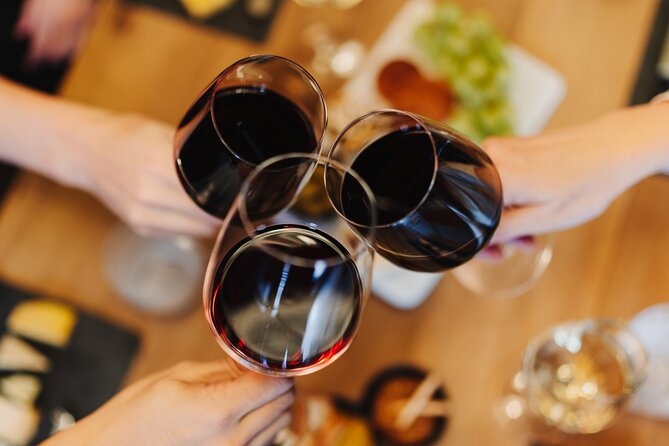
- Five 2024 award-winning cheeses served with matched wine pairings
- White, red, and port wines used to show how flavors shift with cheese type
- Goat vs. cow and aging explanations that make the tasting feel less random
- A small-group setup (maximum 26 people) that keeps it interactive
- A built-in chance to buy cheese afterward, often with a 10% discount
Why This Amsterdam Cheese and Wine Tasting Feels Worth It
This isn’t just a plate of cheese. The whole point is training your palate in a way that makes you a better eater afterward, not just a satisfied one for an hour.
At Old Amsterdam Cheese Store, you taste five cheeses, and you pair them with three wines: a white, a red, and a port. That combo matters. Cheese can be buttery, tangy, nutty, or sharp depending on milk type and aging. Wine does the same thing. The guide’s job is to show you the cause-and-effect, so you don’t just shrug and say, This is good. You start noticing why it’s good together.
I also like the format because it’s time-efficient. You’re looking at around 55 minutes, which is ideal if Amsterdam has you walking all day and you still want one “food-focused” moment that doesn’t swallow your evening.
You can also read our reviews of more food & drink experiences in Amsterdam

Damrak Meeting Point: Easy to Find, Low-Stress Start
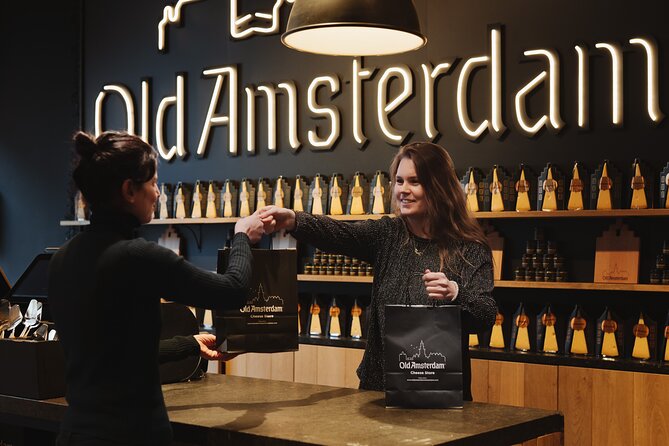
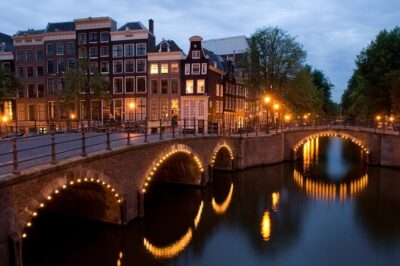
You meet at Damrak 62HS, 1012 LM Amsterdam. That’s a handy location because it’s in the city center and the experience is described as being near public transportation, so you can fit it into a normal day without building a special route.
The session uses a mobile ticket, which keeps things simple. And since the tasting ends back at the meeting point, you don’t have to worry about hidden transit or a confusing finish line.
One more small practical note: the experience states that service animals are allowed, so if you need that, you can plan with more confidence.
Inside Old Amsterdam: The Upstairs Room and the 55-Minute Rhythm
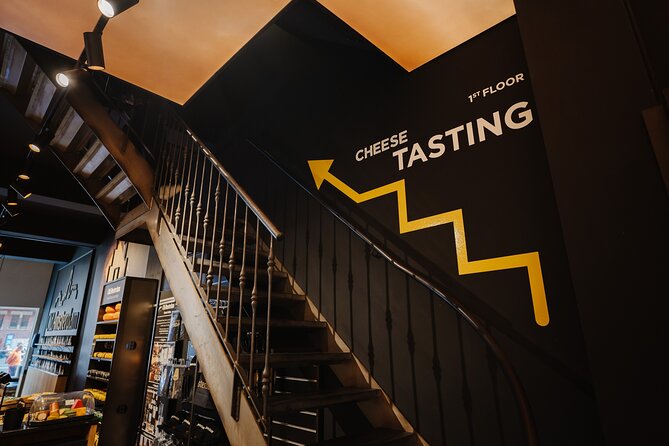
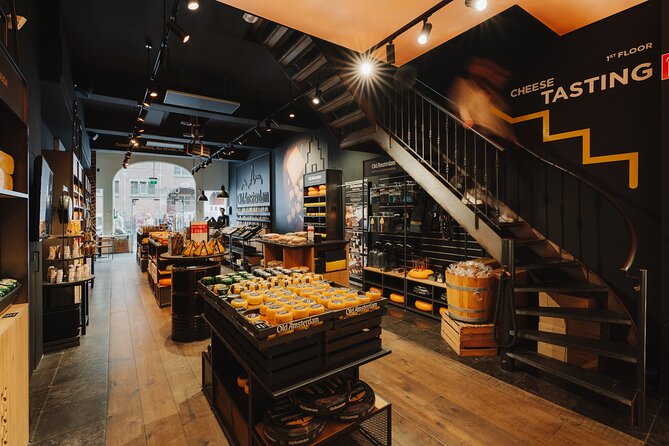
This experience happens right at the shop—at Old Amsterdam Cheese Store—and the flow is designed to feel like an organized class with a friendly tone.
From the way the tasting is described and how it’s talked about, you can expect a setup that supports learning: you get the guide’s explanations while you taste, not just a list of names. Several people highlight that the presentation area is set up for teaching, including a screen and live commentary. That’s a big deal in a tasting. If you’re trying to remember five cheeses plus three wines, a visual aid and clear pacing makes it stick.
The interaction style is also part of the value. People mention that the host helps with questions and even gives recommendations beyond the tasting itself. In practice, that means you leave with at least a few ideas for what else to try in Amsterdam—or what to buy at the shop without guessing.
The Five Cheeses: What You’ll Learn While You Taste
The tasting is built around five different types of award-winning cheeses of 2024, and the guide explains what makes each one tick—texture, flavor direction, and how to recognize it.
In particular, people consistently connect the experience to the fundamentals of Dutch cheese:
- Differences between goat and cow cheeses
- How aging changes flavor and intensity
Some tastings include a spread across ages—for example, cheese described as ranging from 4–18 months—so you can feel how the same general style evolves as it matures. Not every group will get the exact same menu, but the teaching approach stays the same: you taste, you compare, then you understand the pattern.
Here’s why this matters for you: if you’ve ever tried Gouda (or another Dutch cheese) and thought, Okay, it’s good, but I don’t know what I’m tasting, this helps. You’ll get language for your own preferences. Mild vs. sharper. Creamy vs. firmer. Sweet-nutty vs. more savory. That turns a random cheese purchase into something you can actually choose.
A word on variety
One fair consideration: the tasting is focused on the store’s selection. A couple of people mention wanting more flavor-style variety (beyond the standard natural cheeses). If you’re specifically craving heavily seasoned or flavored cheeses, you might find this format more “classic Dutch” than experimental.
You can also read our reviews of more wine tours in Amsterdam



Wine Pairings: White, Red, and Port That Actually Teach Something
Wine pairing is where a lot of tastings go vague. This one tries to avoid that by keeping it structured: white, red, and port show up in set pairings tied to the cheese types.
People highlight that the guide explains what makes each pairing work—like when a white supports certain flavors, and when a red gives more weight to others. With port in the mix, you get a different style of sweetness and richness, which can be a great reality check: not every cheese needs the same kind of wine.
You’ll also see that the wine choices aren’t treated like random add-ons. The idea is to help you understand pairing logic so you can recreate it at home. Even if you don’t consider yourself a wine person, this is one of the easier ways to start thinking like one.
The Tasting Setup: Cutlery, Portion Size, and the Pace
Included in the experience:
- Food tasting
- Wine tasting
- Cutlery
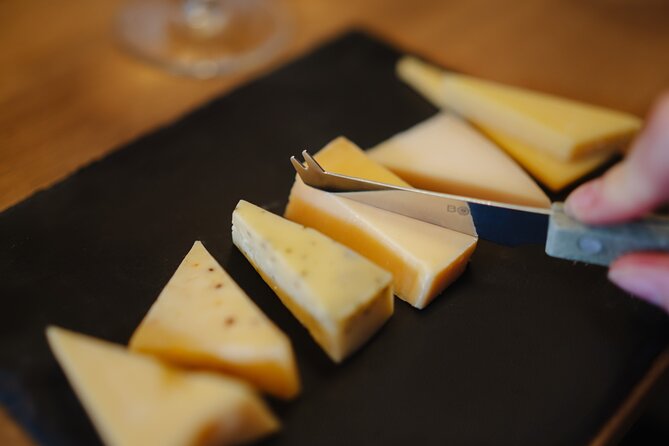
That’s practical. It means you’re not trying to figure out what to use or whether you need to bring anything. And because it’s a shop-based tasting, portions are built for a guided schedule: enough to compare five cheeses without making you overly full.
The pace is also a fit for most days in Amsterdam. It’s not a marathon. You can do it mid-afternoon, early evening, or as a break between walks and museum stops. About an hour is a sweet spot when you want a sensory activity that doesn’t drain your energy.
Group Size: Why Smaller Feels Better Here
This experience has a maximum of 26 people. That size matters because it keeps the room from feeling chaotic. You’re more likely to get direct answers, and you can follow the pairing explanations without playing a waiting game for the guide.
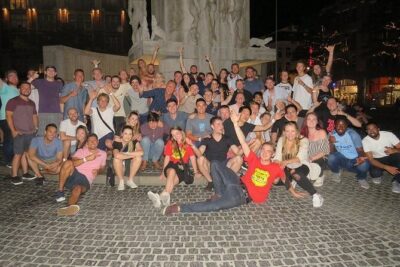
Several people describe the group as small and intimate. Even without guessing exact numbers on your day, you can plan on an experience that’s designed for conversation, not just consumption.
If you’re going solo, this also tends to be a good fit. You’re not stuck in a big crowd where it’s hard to connect with others. Instead, you share the tasting experience and then talk about what you liked—goat vs. cow, which wine worked best, and what to buy after.
Price and Value: What You’re Paying For (and What You’re Getting)
The price is $32.65 per person, for roughly 55 minutes and includes:
- five cheese tastings
- wine tastings (white, red, port)
- cutlery
So you’re not paying for a single snack. You’re paying for an organized tasting session, guide-led pairing explanations, and the cost of wine service—plus the fact that everything happens in a proper shop setting.
Is it a bargain? Compared to doing cheese and wine separately (and paying for wine tasting access on top), it often looks like a solid deal. The best value part is the pairing teaching. If you leave with the ability to choose cheeses and wines you enjoy, the experience keeps paying dividends after the tasting ends.
One additional value boost: people note a 10% discount on cheese at the end, which can make the whole thing feel more like a starter kit than a standalone event.
Possible Downsides to Keep in Mind
Balanced advice beats blind hype, so here are the main things to watch for:
- It’s shop-centered. The format is focused on Old Amsterdam’s offerings. If you want an independent, multi-location exploration, plan additional activities before or after.
- Five cheeses is a fixed set. It’s enough for learning, but not enough if you’re hoping for a huge buffet of styles.
- The flavor range is classic. If you’re hoping for lots of strongly flavored cheeses, you might find the menu leans traditional.
None of these make it a bad choice. They just help you match the experience to your expectations.
Who This Tasting Is Best For
This session is a great fit if:
- you want a food-and-wine activity that teaches as it goes
- you like learning the basics of Dutch cheese through comparisons
- you’re visiting Amsterdam and want a focused experience that doesn’t require long travel
- you enjoy trying a small set of items and then buying what you loved
It also works well as a group activity because the guide-led structure keeps everyone engaged, even if the group ranges from cheese pros to first-timers.
Should You Book This Cheese and Wine Tasting?
If you want an hour in Amsterdam that feels genuinely “about taste,” this is a strong booking. You get five award-winning cheeses, white/red/port pairings, and a guide-led explanation that helps you understand what you’re tasting—not just whether you like it.
I’d skip it only if your goal is a big, sprawling cheese tour with lots of stops or if you specifically want flavored cheeses rather than classic styles. Otherwise, for most people, this is a practical way to taste your way into Dutch cheese culture without spending your whole day chasing it.
FAQ
How long is the cheese and wine tasting?
It lasts about 55 minutes.
Where do I meet for the experience?
You start at Damrak 62HS, 1012 LM Amsterdam, Netherlands.
What’s included in the price?
The experience includes food tasting, wine tasting, and cutlery.
Is private transportation included?
No, private transportation is not included.
How many cheeses and wines will I taste?
You taste five different cheeses, paired with three wines (a white, a red, and a port).
What is the minimum drinking age?
The minimum drinking age is 18.
How many people are in each group?
The tour has a maximum of 26 people.
Is there free cancellation?
Yes. You can cancel for a full refund up to 24 hours in advance.