REVIEW · FOOD
10 Tastes of Amsterdam: Food Tour by UNESCO Canals and Jordaan
Book on Viator →Operated by Adam & Eve Amsterdam Food Tours · Bookable on Viator
Savor Amsterdam in ten bite-size stops. This 3-hour walking food tour links UNESCO canal views with Jordaan favorites, packed with 10 premium tastings and local drinks for small groups. You’ll hop through spots in Spui, the Nine Streets, and the Jordaan with stories that connect food to where it all happened.
I love the start in Gastrovino’s underground cheese cellar, with pairings like Dutch Gouda plus local liquorette or wine. I also love how Hans Egstorf turns stroopwafel into a hands-on moment, with the waffle made right before you, then capped off by classic Amsterdam seafood and sweets. Guides such as Dennis and Kees come up again and again for setting a fun pace, keeping the day organized, and making every stop feel intentional.
One thing to plan for: you’ll walk about 1.5 miles (2.5 km), often standing at tastings, and some stops involve small stairs. If you’re not up for that rhythm, the private option is the smarter call.
In This Review
- Key points before you go
- A 3-hour food walk through Jordaan, Spui, and the UNESCO canal ring
- Getting your bearings: the Gastrovino meeting point on Spuistraat
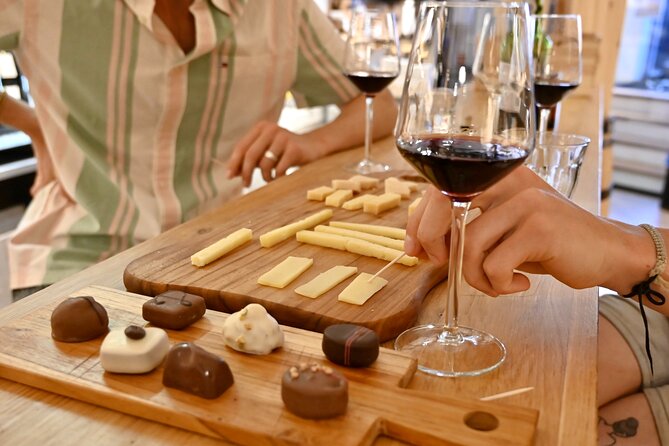
- Gastrovino cellar cheese and liquor pairings: the tastiest opening move
- Brown bar, Spui market fishmonger, and that 15th-century surprise
- Hans Egstorf stroopwafels: sticky-sweet, made in front of you
- Herring Stall Jonk: Dutch sashimi and the 4pm cut-off
- Flower Market (Bloemenmarkt) along the Singel Canal
- Chocolate stop at Puccini Bomboni and the candy-break payoff
- University spirits moment, then Jordaan poffertjes and brown-café vibes
- Canal ring views, Café Hegeraad, the 9 Streets story, and where Anne Frank fits
- Price and what you actually get for about $102
- Vegetarian, pescetarian, and gluten-free: how to plan your best version
- Who should book this and who should go private instead
- Should you book 10 Tastes of Amsterdam for UNESCO canals and Jordaan?
- FAQ
- How long is the 10 Tastes of Amsterdam food tour?
- Where does the public tour start and end?
- Is hotel pickup included?
- Are vegetarian or pescetarian options available?
- Can I get gluten-free options on this tour?
- Is herring included, and is there a time limit?
- How big is the group?
Key points before you go
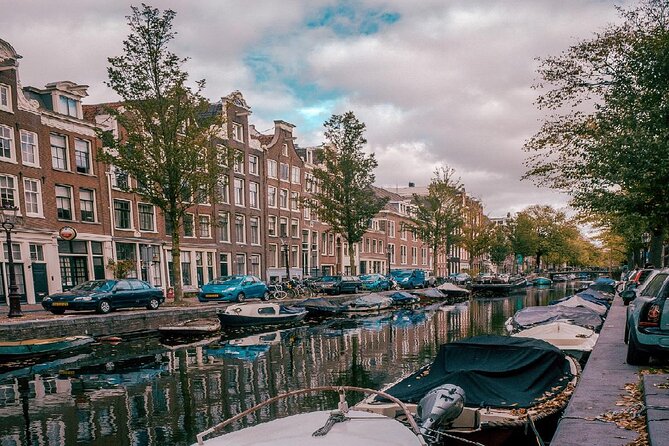
- Underground cheese start at Gastrovino’s wine-and-cheese cellar, setting a local tone fast
- Hans Egstorf stroopwafels made live, so you see what you’re eating (not just taking it to go)
- Herring Stall Jonk timing matters, because it’s tied to opening hours (tours starting latest 4pm)
- You get a spread of flavors, including Dutch classics plus tastes influenced by other food traditions in Amsterdam
- Small group size (max 12), which helps the guide keep the flow smooth
- Vegetarian and pescetarian friendly, with options at most stops
A 3-hour food walk through Jordaan, Spui, and the UNESCO canal ring
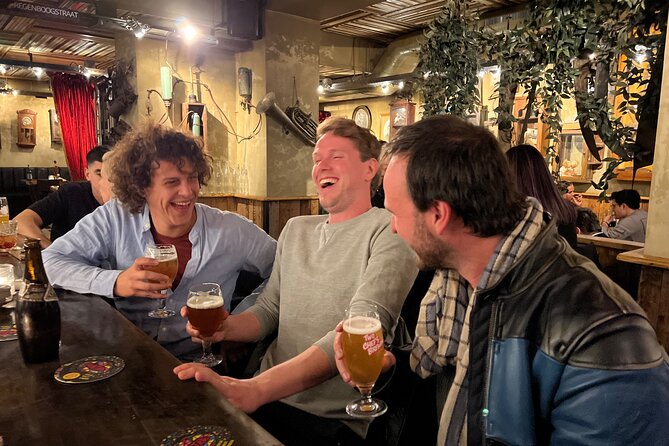
This is the kind of Amsterdam experience I like for your first full day: not too long, not too rushed, and designed to show you how the city eats. In about three hours on foot, you’ll move across neighborhoods that feel like real Amsterdam—Spui market energy, the Nine Streets’ dense crunch of cafés and shops, and the Jordaan’s brown-café mood—then end near the Anne Frank House.
The format is simple: 10 premium tastings across 5+ beloved local spots, plus included drinks. It’s a walking tour, but it’s not a scavenger hunt. The stops are spaced for nibbling, so you’re not constantly sprinting from one place to the next. And because the group is capped at max 12 travelers (max 10 foodies noted), you get enough attention to ask questions and get practical recommendations beyond the tastings.
If you’re the type who wants Amsterdam through food instead of only through museums, this fits. It’s also a good rainy-day option since you spend much of your time inside small shops and cafés.
You can also read our reviews of more food & drink experiences in Amsterdam


Getting your bearings: the Gastrovino meeting point on Spuistraat
The public tour starts at Gastrovino Amsterdam – De Mannen Van Kaas, on Spuistraat 330 (1012 VX). Your guide brings you inside the cheese shop, and the tour begins underground in the wine basement. That matters more than it sounds: you’re not starting with a loud street scene. You’re stepping into a focused tasting environment right away.
From a practical standpoint, the meeting location is easy to reach. It’s close to major transit, and it’s an 8-minute walk from Dam Square. If you’re taking a tram or Metro, you’re not stuck with a long approach walk. Since this is a walking tour that ends near the Anne Frank House, you also get a logical arc across central Amsterdam—spend the first half learning the city’s food logic, then finish near one of the most visited landmarks.
One note: there’s no hotel/ship pickup for public tours. If you want pickup, you’re looking at the private tour option.
Gastrovino cellar cheese and liquor pairings: the tastiest opening move
Stop one sets the tone in a very Amsterdam way: a cellar start, guided tastings, and pairings that feel like they belong together. At Gastrovino – De Mannen Van Kaas, you’ll sample aged and young Gouda. Then you’ll try a pairing that can include a seasonal Dutch liquorette or port.
This is a strong first stop because it covers two things at once: taste and context. Gouda isn’t just a cheese you buy in a shop. In the Netherlands, it’s a food story tied to trade, farming, and the way people socialize over drinks. Starting here also helps you understand what you’re about to experience for the rest of the walk—sweet meets salty, dairy meets spirits, and the city’s “brown café” culture shows up in multiple forms.
You’ll also get the sense that the guide isn’t guessing. Multiple guides in the reviews (including Dennis) get credited for balancing facts, humor, and pacing. That’s exactly what you want on a tasting tour: someone who can keep things moving without turning it into a lecture.
Brown bar, Spui market fishmonger, and that 15th-century surprise
After the cheese cellar, the tour threads through older Amsterdam rhythms. One stop is built around a brown bar that has served sailors for over 400 years. Think “old-room drinks” energy: a place where locals would have met, talked, and traded news for generations.
Right after that, you’ll spend time around Spui market, where writers, students, and bookworms gather—especially on weekends. The emphasis here is on an excellent fishmonger. That’s one of those Amsterdam details that matters: Spui isn’t only scenic, it’s functional. It’s a place where food sourcing culture lives close to the street.
There’s also a history teaser point on the route: your guide will point out where you can find a 15th-century hidden garden with a secret house church. If there’s time, you may even get a peek inside. This kind of stop is more about orientation than a full sightseeing block. It helps you spot what you’re walking past and understand why Amsterdam feels like it has layers.
Hans Egstorf stroopwafels: sticky-sweet, made in front of you
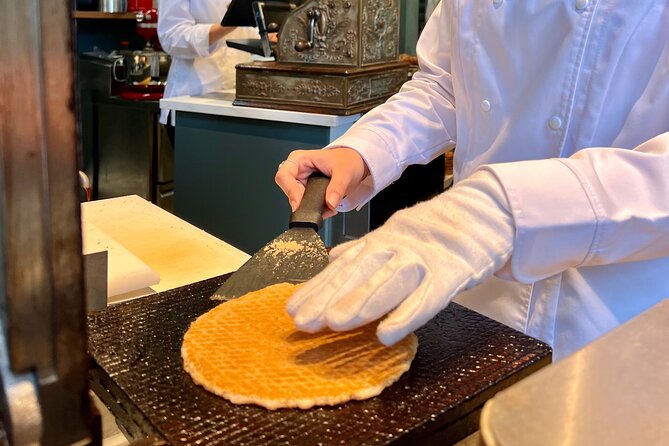
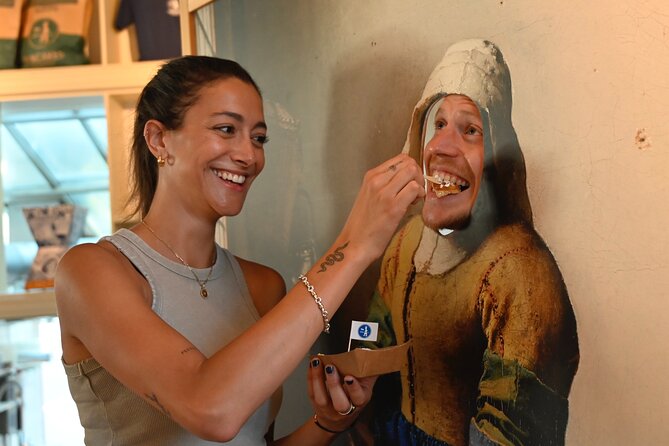
If stroopwafels are on your Amsterdam list, this is one of the best ways to do them. At Hans Egstorf, a 200-year-old bakery, the stroopwafels are made right before you. You get that gooey-meets-crispy texture that people chase, and you don’t have to guess about quality because you’re watching the process.
This stop is only about 10 minutes, but it’s one of the most memorable moments of the route because it turns a snack into a mini performance. Also, it explains why stroopwafels are such an easy street-food love: the waffle is basically portable comfort, and the caramel filling hits your sweet spot right at the moment you want a reset.
In reviews, guides like Maria and Joeri are praised for the overall flow and for making the tastings feel fun rather than transactional. That’s important here. If your guide rushes you, stroopwafel loses its charm. The tour’s structure tends to avoid that.
You can also read our reviews of more tours and experiences in Amsterdam




Herring Stall Jonk: Dutch sashimi and the 4pm cut-off

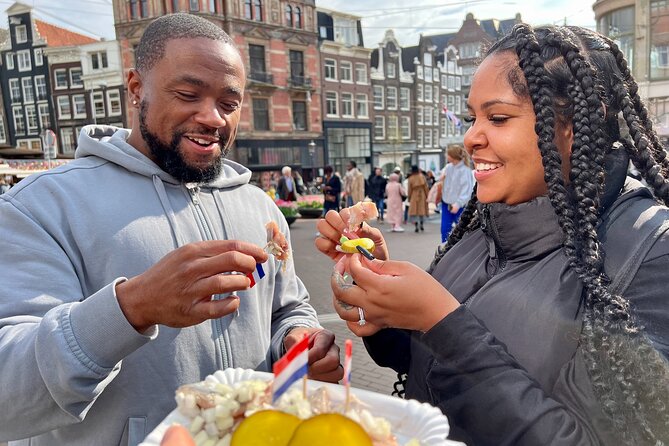
For the classic Amsterdam hit, you’ll stop at Herring Stall Jonk and try herring served as Dutch sashimi—an ingredient Amsterdam has eaten for over 1,000 years. The wording is playful, but the point is real: herring is part of how the city built its food identity.
Timing matters. Herring is available only until the place’s opening times, and the tour notes that herring is for early birds—tours that start latest 4pm. If your schedule runs late, you might still enjoy the rest of the tour, but you should assume the herring stop depends on your start time.
This is also a good stop for your expectations. If you’ve never had raw herring style before, ask your guide what to expect and how to eat it. The tour format gives you a quick, guided introduction instead of leaving you alone to decide whether you should try the “fishy” thing.
Flower Market (Bloemenmarkt) along the Singel Canal
You’ll stroll past the floating flower stalls at the Bloemenmarkt on the Singel Canal. Even if you’re not a “buy tulip bulbs” person, this is a nice sensory break during a food-focused walk.
The tour notes that most tours include this area, but the route differs by guide. That’s useful to know because it means you’re not locked into a one-size-fits-all script. It also helps explain why your guide’s personality matters. The best guides shape the walk, not just the food.
From a decision point of view, think of this stop as a palate cleanser. You’re coming from savory bites and then moving into more sweets and drinks. Flowers are part of the Amsterdam mood, and the canal setting gives you a quick visual recharge without slowing the day down.
Chocolate stop at Puccini Bomboni and the candy-break payoff
At Puccini Bomboni, you’ll taste Dutch pralines. The tour ties it to a big cacao theme: the Netherlands imports huge amounts of cacao, and that shows in everyday sweets. The chocolate stop is free in the schedule provided, and it works well because it shifts your taste buds from salty and spiced flavors to something smoother.
This is also a practical stop for your pacing. You can use it as a reset for your energy, especially if you’re trying the herring earlier. If you go in expecting this to be a small bite, that’s fine. But if you’re someone who likes sweets, don’t under-eat before the chocolate stop—you’ll want room to actually enjoy it, not just survive it.
University spirits moment, then Jordaan poffertjes and brown-café vibes
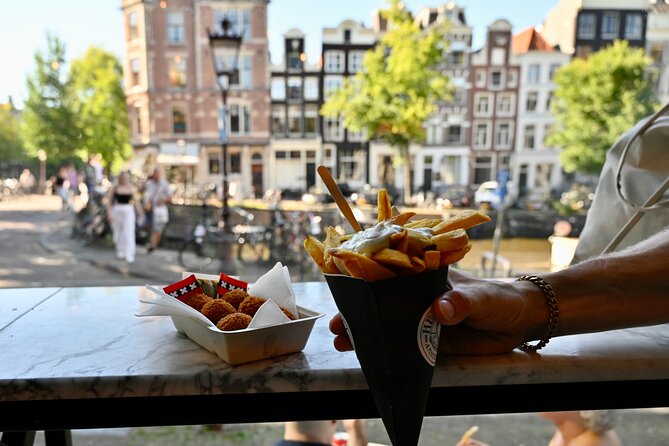
You’ll get a sight-and-sip type moment tied to the 400-year-old University, where young intellectuals are said to enjoy Dutch spirits and bitterballen. You won’t spend all your time on a single monument, but you’ll notice how Amsterdam mixes ideas with snacks and drinks.
Then comes the big neighborhood payoff: the Jordaan. This area is known for cozy brown cafés, and the tour leans into that mood. You’ll savor poffertjes—tiny fluffy pancakes—drenched with butter. The tour also includes a toast with local brews to cap the Jordaan stretch.
This part matters because it’s where the tour feels most like a “city moment,” not just a list of food stops. Jordaan is the place where Amsterdam feels personal—small lanes, casual cafés, and a sense that people live here, not just visit here. Poffertjes are also a smart choice for a walking tour: they’re warm, easy to portion, and instantly rewarding.
If you want a quick “what is this city really like” answer, this segment is one of the closest you’ll get without doing a full sit-down meal.
Canal ring views, Café Hegeraad, the 9 Streets story, and where Anne Frank fits
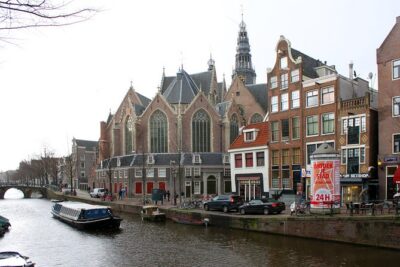
After Jordaan, you’ll take in the Amsterdam Canal Ring, with the backdrop of 17th-century canal rings. This is a short segment—around 15 minutes in the schedule—but it’s worth it. Even when you’re focused on food, Amsterdam’s canal layout is part of how food trade and daily life connected. Seeing it during a walking route makes the city feel less like a postcard and more like a working system.
Next you’ll hit Café Hegeraad, a centuries-old brown pub. The tour frames it as the meaning of Dutch courage, plus famous apple pie and local beer. This is the drink-and-dessert culture in one stop: a café that feels old enough to have survived fads and still serve what people crave.
Then there’s a history sighting: a glimpse of a 400-year-old royal palace where the House of Orange once lived. You’re not going inside based on what’s provided, but it gives context for why the city’s center holds so much power and memory.
Finally, you’ll explore the 9 Streets. This stretch is guided like a story. The route connects dishes to Amsterdam’s historic roots, from a small fishing village to a global trading powerhouse in the Golden Age. It’s the kind of explanation that helps you see food as something shaped by people moving goods, ideas, and flavors across oceans.
The tour often ends near the Anne Frank House at Westermarkt, with a note to ask your guide if you’ll walk by. Either way, you finish near a major landmark, so you can continue your day on foot or by tram.
Price and what you actually get for about $102
At $102.06 per person for about three hours, this is best judged by what’s included. You’re not just buying a few bites at random spots. You’re getting 10 premium tastings, plus drinks like local liquor/jenever, wine, coffee, tea, soda, and bottled water.
That cocktail of inclusions changes the value math. A normal “just dinner” meal in Amsterdam can be expensive, and even multiple snacks quickly add up—especially in central neighborhoods. This tour bundles the tastings and beverages into one set experience, and it’s built for sampling across multiple specialty shops instead of trying to plan a custom crawl yourself.
Also, group size matters for value. With max 12 travelers, you’re less likely to feel like one face in a crowd. Reviews repeatedly credit guides by name—Dennis, Kees, Maria, Joeri, Todd, Dani, Daniel, Katya—for pacing, humor, and keeping things organized.
One fair caution: this is still a walking tour with food stops, not a full sit-down meal. If you want long restaurant time at each place, choose a private food route or plan a separate dinner after.
Vegetarian, pescetarian, and gluten-free: how to plan your best version
Good news up front: vegetarian and pescetarian options are available. The tour asks you to tell the guide, and the schedule notes that most stops offer solid veg/pesc choices.
Gluten-free is trickier. The information provided says gluten-free is possible at about 70% of stops for tours starting 16:00 or earlier, and for a fully gluten-free plan, you’re better off with the private tour so every stop can be designed around your needs.
If you’re traveling with allergies, share them in booking and remind your guide at the start. The tour notes that cross-contamination is possible in shared kitchens, even when places try to help.
My practical advice: if gluten-free is central to your trip and you’re worried, pay for the private option. It’s the simplest way to turn “maybe” into “planned.”
Who should book this and who should go private instead
This public tour is a great match if you want a guided food path with a mix of Dutch classics, sweets, and seafood, without needing to plan a route. It’s especially good for first-timers who want Spui, the Jordaan, and the canal ring in one sweep.
You should consider the private option if any of these are true:
- You need full gluten-free customization
- You have mobility limits and want a shorter route
- You want pickup and a more flexible plan
Also keep in mind the walking format: you cover about 1.5 miles (2.5 km), not all places have seating, and some eateries have steps or small stairs. Strollers are allowed, but you may need to park them briefly.
If you’re traveling with friends, the small group format still feels sociable, and the tour includes an insider guide for where to eat next. It’s one of the best ways to leave with more than just memories.
Should you book 10 Tastes of Amsterdam for UNESCO canals and Jordaan?
If your goal is to eat your way across central Amsterdam in a few focused hours, I think this is an easy yes. The big wins are the variety—cheese cellar, live-made stroopwafels, herring, chocolate, poffertjes—and the included drinks that help you taste more than you could on your own.
Book it if:
- You like walking tours with short, structured tastings
- You want a mix of savory and sweet without planning
- You’re open to trying herring and classic Dutch sweets
- You want guides who keep the energy up (Dennis, Kees, Maria, Joeri show up as favorites)
Don’t book it as your only plan if you:
- Can’t handle standing and steps for about 1.5 miles
- Need fully gluten-free food at every stop without compromise
- Have a tight schedule that might push you past the herring window
If you fit the first group, this is one of the more dependable ways to understand Amsterdam’s food culture fast, while ending near one of the city’s most important landmarks.
FAQ
How long is the 10 Tastes of Amsterdam food tour?
It runs for about 3 hours (approx.) and is a walking tour.
Where does the public tour start and end?
The tour starts at Gastrovino Amsterdam – De Mannen Van Kaas, Spuistraat 330, and it ends near the Anne Frank House at Westermarkt 20.
Is hotel pickup included?
For public tours, no hotel/ship pickup is included. Pickup is included when you select the private tour option.
Are vegetarian or pescetarian options available?
Yes. Vegetarian and pescetarian options are available. Tell your guide at booking.
Can I get gluten-free options on this tour?
Gluten-free options are not always possible on the public tour, but they are available at about 70% of stops for tours starting at 16:00 or earlier. For a fully gluten-free experience, the private option is recommended.
Is herring included, and is there a time limit?
Herring at Herring Stall Jonk is included, and it’s only available for early birds. The note says tours starting no later than 4pm.
How big is the group?
The tour has a maximum of 12 travelers, described as small-group with up to 10 foodies.