REVIEW · 2-HOUR EXPERIENCES
Amsterdam 2 Hour History Walking Tour
Book on Viator →Operated by Hit the Bricks · Bookable on Viator
Amsterdam tells its story in 2 hours. This small-group walk keeps a relaxed pace while mixing canals, the city’s darker corners, and lighter humor so you actually remember what you’re seeing.
I really like the way the guide connects places to Dutch life, not just dates and names—plus you get helpful tips and tricks for what to do after the walk. Most stops are free, and you’ll hit camera-friendly moments like the spot by the Monet bridge.
One thing to keep in mind: the route includes sensitive topics (wartime history and the Red Light District), so if you prefer a purely cheerful sightseeing day, this might feel like a lot in only two hours.
In This Review
- Key highlights
- Quick take: who will enjoy this Amsterdam history walk most
- Meeting at Hit the Bricks, ending at Dam Square (and why that matters)
- Your 2-hour path: what each stop teaches you (and what to watch for)
- Canal Ring (Grachtengordel): why canals are more than scenery
- De Wallen (Red Light District): history, function, and Dutch attitudes
- Dam Square: the fight against water, in the center of power
- South Church: Catholic to Protestant, with a calm courtyard feel
- Jodenbreestraat: the Jewish Quarter beginnings and wartime memory
- Bushuis – Oost-Indisch Huis: the Dutch East India Company’s power
- Stopera Pier: modern city hall and the story behind the nickname
- Begijnhof: a secret garden with a human story
- Royal Palace Amsterdam: royal origins, French influence, and the orange fact
- Groenburgwal and the Monet bridge: last photos, then you’re done
- Guides, humor, and the kind of stories you actually remember
- Price and value: is $30.04 worth it?
- Practical tips so your day runs smoothly
- Should you book this Amsterdam 2-hour history walking tour?
- FAQ
- How long is the Amsterdam 2 Hour History Walking Tour?
- What language is the tour offered in, and do I get a mobile ticket?
- Where do I meet the guide, and where does the tour end?
- Is the Royal Palace admission included?
- What should I bring during the tour?
- Can I cancel for free, and what if weather is bad?
Key highlights
- Maximum 10 people keeps the group easy to manage at a walking pace
- English tour with a mobile ticket for straightforward entry
- Free admission at most stops, with only the Royal Palace requiring its own ticket
- Photo stop at the Monet bridge near Groenburgwal
- History with humor, from water management to the Dutch East India Company
Quick take: who will enjoy this Amsterdam history walk most
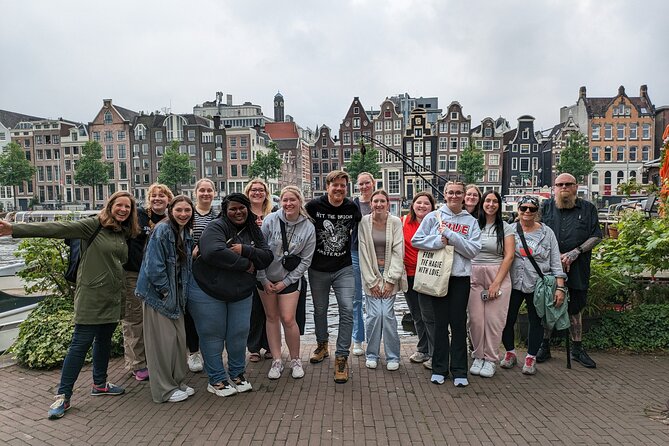
This is a smart choice if you’re new to Amsterdam and want your bearings fast. In two hours, you cover major landmarks plus the stories that explain why this city thinks the way it does.
I’d point it at people who want more than surface photos. You’ll walk through the canal belt, the De Wallen area, the Jewish Quarter beginnings, and then into royal and religious power—so your trip makes more sense later.
You can also read our reviews of more walking tours in Amsterdam



Meeting at Hit the Bricks, ending at Dam Square (and why that matters)
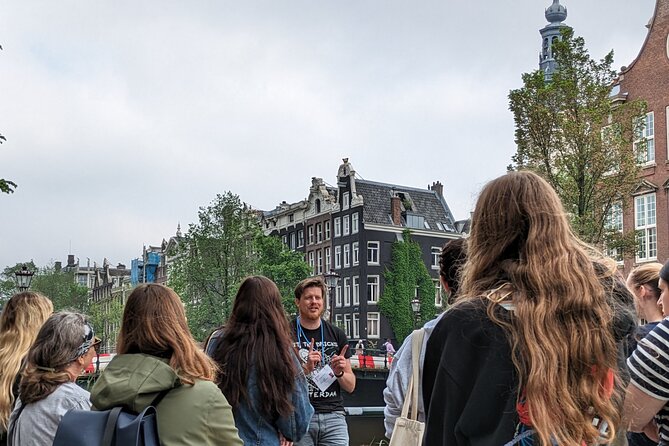
You start at Hit the Bricks Walking Tours, Prinsenstraat 13 (1015 DA), with an 11:00 am start time. You’ll end on Dam Square, close to multiple transit options, so you can roll into the rest of your day without lots of backtracking.
Because the group is capped at 10 travelers, you’re less likely to feel lost in a crowd. You also get enough time at each stop to hear the main story without being rushed through like a conveyor belt.
Tip: arrive a few minutes early. The office at the meeting point is where you’ll get set up, and it’s also where you can settle your bearings before the walk begins.
Your 2-hour path: what each stop teaches you (and what to watch for)
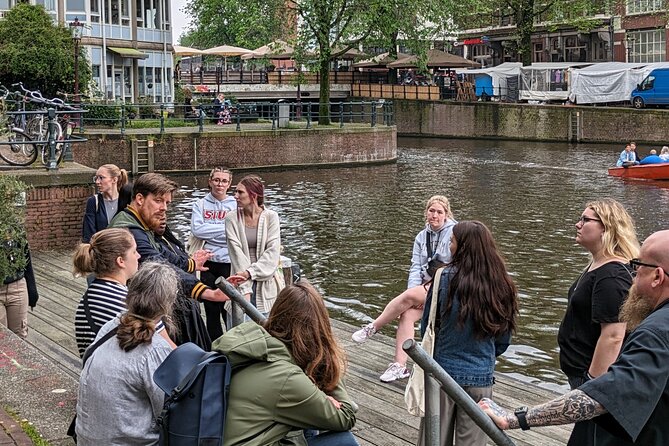
Canal Ring (Grachtengordel): why canals are more than scenery
You begin in the canal belt, the heart of Amsterdam’s most iconic look. The key idea you’ll hear is how Dutch life was shaped by living next to water—practical survival that became a cultural mindset.
This stop works even if you don’t know any Dutch history. Look at the canal forms, the relationship to the streets, and think about it as “infrastructure that shaped people,” not just pretty architecture.
De Wallen (Red Light District): history, function, and Dutch attitudes
Next comes De Wallen, Amsterdam’s famous Red Light District. You’ll get the history of why it exists and how it works today, plus a sense of how the Dutch talk about and handle it as a society.
A practical consideration: the atmosphere here can feel intense. Even if you’re curious, keep your expectations realistic—this isn’t a “cute alley photos” stop. Stay respectful, keep moving when the group moves, and treat it like part of the city’s broader history.
You can also read our reviews of more historical tours in Amsterdam






Dam Square: the fight against water, in the center of power
From there you head to Dam Square, the city’s central meeting point. The story focuses on the Dutch fight against water and how that struggle shaped culture and thinking.
This is a good mental pivot. After seeing the canal belt and moving into the city’s most talked-about neighborhood, Dam Square gives you the bigger picture: Amsterdam isn’t only about commerce and buildings. It’s also about managing risk.
South Church: Catholic to Protestant, with a calm courtyard feel
At South Church, you’ll learn how the Netherlands shifted from Catholic to Protestant. The stop highlights the beautiful, serene inner courtyard beside the church, which is a contrast to the louder areas you’ve already walked through.
If you’re the type who likes quiet pauses, this one does the job. Spend a minute letting the courtyard calm your head after more emotionally heavy stops later.
Jodenbreestraat: the Jewish Quarter beginnings and wartime memory
You then arrive at Jodenbreestraat, where the Jewish Quarter story begins. The guide’s focus is tragic: the fate of tens of thousands of Jewish people who lived in Amsterdam, including the period around the hunger winter during World War II.
This stop is emotionally serious, and that’s the point. I’d treat it like a moment for slower attention rather than a quick photo break, even if you feel tempted to “keep it moving.”
Bushuis – Oost-Indisch Huis: the Dutch East India Company’s power
Next is Bushuis – Oost-Indisch Huis, the former headquarters of the Dutch East India Company. You’ll connect the dots between how a small country built enormous reach and how it cornered spice trade—while fighting for its own independence.
This stop helps you understand why Amsterdam became a trading city, not just a canal city. If you’re thinking about food (spices) or global connections, this is where the dots start to connect.
Stopera Pier: modern city hall and the story behind the nickname
Along the Amstel river you’ll see the Stopera Pier area and Amsterdam’s modern city hall. The guide explains why locals call it Stopera, and why—even if the building isn’t everyone’s favorite—it still carries pride for Amsterdammers.
This one adds present-day texture. It’s not only “old Amsterdam.” You’ll get a sense of how people talk about identity and public buildings right now.
Begijnhof: a secret garden with a human story
At Begijnhof, you’ll find a quiet, tucked-away garden in the middle of the city. The guide tells you about the beguine sisters who built it, giving you a small, human-scale story inside a big, famous city.
If you like to pause and reset, this works well. After religious changes and wartime history, the garden gives you a different kind of meaning: community and refuge.
Royal Palace Amsterdam: royal origins, French influence, and the orange fact
Then comes Royal Palace Amsterdam. This is one of the few stops where admission isn’t included, so you’ll need to handle the ticket separately if you want to go in.
The guide covers how the Dutch royal family came to be, the French connection, and why the national color is orange while the flag is red, white, and blue. Even if you skip entry, these facts can make Dutch symbols click.
Groenburgwal and the Monet bridge: last photos, then you’re done
Finally, you reach Groenburgwal, where you’ll stop for the famous Monet bridge and get time for pictures. It’s short—just a few minutes—but it’s timed well as a finish.
This last stop is the payoff for your earlier walking. By the end, you’ll be able to frame the city in your head: canals, power, faith, trade, and memory—then one more postcard moment to take home.
Guides, humor, and the kind of stories you actually remember
The best part of this tour is how it keeps moving while staying relaxed. You’ll hear stories with humor, and that mix makes heavy material easier to hold in your brain without going numb.
In the feedback that helped shape my expectations, guides such as Axel and Mark come up for being personable and funny while still keeping the facts straight. That matters because Amsterdam can feel like a blur if you’re relying only on signs and guesswork.
Price and value: is $30.04 worth it?
At $30.04 per person for about two hours, the value mostly comes from organization and context. You’re not paying for entry tickets at most stops—most locations are marked as free within the itinerary—so you’re paying for a guide who ties the city together.
For newcomers, that can be a bargain. Two hours won’t cover museums, but it can help you understand what you’ll see later: the canals, the political/religious shifts, the global trade story, and the wartime memory woven into neighborhoods.
One caution: if you want Royal Palace entry, you’ll need an extra ticket because admission isn’t included. Still, you can treat it as an optional add-on.
Practical tips so your day runs smoothly
Here are the small things that make a big difference on a short history walk:
- Bring a refillable water bottle. Bottled water isn’t included, and there are places to refill during the walk.
- Wear shoes you can live in for two hours. You’ll be walking between central sights, not browsing from a bench.
- If you’re sensitive to intense topics, mentally label the Jewish Quarter and De Wallen areas as “serious zones,” not photo stops.
The tour also notes good weather is required, so plan your Amsterdam day with a bit of weather flexibility.
Should you book this Amsterdam 2-hour history walking tour?
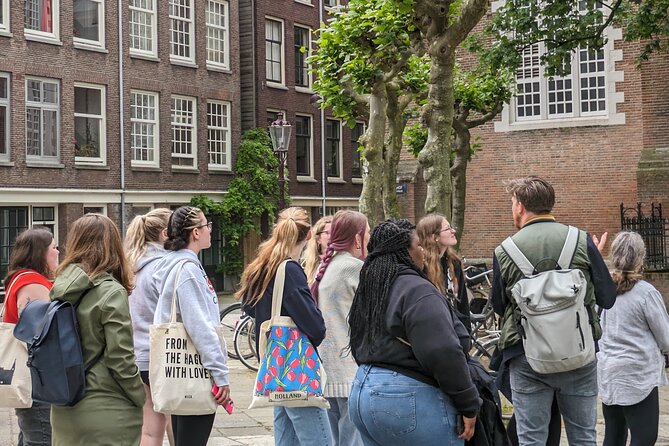
Book it if you want a tight overview that feels human—canals plus culture, but also truth. If you’re arriving with “I’ve seen the postcards” energy and want the stories behind them, this delivers.
Skip it (or choose a different style of tour) if you want only light, breezy sightseeing with zero heavy content. In only two hours, the itinerary covers both the Dutch relationship with water and some very tough wartime and social history.
If you’re on a first visit and you like history told with a little humor, this is a strong value: you’ll finish near transit on Dam Square, with enough knowledge to start picking which museum or neighborhood feels right next.
FAQ
How long is the Amsterdam 2 Hour History Walking Tour?
The tour runs about 2 hours.
What language is the tour offered in, and do I get a mobile ticket?
The tour is offered in English, and you’ll receive a mobile ticket.
Where do I meet the guide, and where does the tour end?
You meet at Hit the Bricks Walking Tours, Prinsenstraat 13, 1015 DA Amsterdam. The tour ends on Dam Square, Dam 1012 Amsterdam.
Is the Royal Palace admission included?
Royal Palace Amsterdam admission is not included. Other stops listed are free, but Royal Palace requires its own ticket if you want to enter.
What should I bring during the tour?
Bring a refillable water bottle. Bottled water isn’t included, and the route includes opportunities to refill.
Can I cancel for free, and what if weather is bad?
You can cancel for a full refund up to 24 hours before the start time. The tour requires good weather, and if it’s canceled due to poor weather, you’ll be offered a different date or a full refund.