REVIEW · CITY TOURS
Amsterdam city center run tour
Book on Viator →Operated by Tourist Run Amsterdam · Bookable on Viator
This jog turns Amsterdam into quick stories. I love the hotel pickup idea, because you start moving without wasting time figuring out where to meet. You also get an easy pace through the canal-lined core, with guide talk built around what you’re seeing.
I really like that the route mixes big-name stops with real street-level details. You’ll see famous landmarks like the red light district and the Amstel river, and guides have a knack for making it feel practical and photo-friendly, including standout guidance from Paul and Katya in past runs. One thing to consider: this is still a running tour, so you should be comfortable with moderate fitness and plan for the fact that bottled water isn’t included.
In This Review
- Why this Amsterdam city center run is a smart way to see it
- Getting your bearings with an easy-paced Amsterdam run
- Price and value: what $37.01 buys you in Amsterdam
- Pickup and the start: how to make it painless
- Stop 1: Rijksmuseum area for first views and quick orientation
- Stop 2: Magere Brug and the Amstel river crossing
- Stop 3: The red light district with context and respect
- Stop 4: Anne Frank House area and the weight of history
- Stop 5: The Jordaan for gable stones and street-level Amsterdam
- Stop 6 and 7: Leidseplein (Leidse Square) to Dam Square
- Stop 8: H’ART Museum for a modern stop along the run
- Stop 9: Gay Monument for visible history and symbolism
- Guides, pace, and why the small group feels better
- Who should book this and who should skip it
- Should you book this Amsterdam city center run?
- FAQ
- What time does the Amsterdam city center run start?
- How long is the tour?
- How many people are in the group?
- Is hotel pickup included?
- What languages is the tour offered in?
- What are some of the main stops on the route?
- Do I need to bring water?
- What’s the cancellation policy?
Why this Amsterdam city center run is a smart way to see it
- Hotel pickup right at your place means you lose less time to logistics. You start the run feeling fresh instead of rushed.
- Small group size (max 10) keeps things relaxed and helps the guide pace the group.
- Canals plus iconic neighborhoods gives you variety in just about an hour.
- Multiple languages (English, German, Dutch) are offered, so you can match your comfort level.
- Stops that teach context you won’t get from a quick photo stop—especially around sensitive areas.
- A guide who pays attention to photos can turn a morning run into a useful sightseeing memory.
Getting your bearings with an easy-paced Amsterdam run
This tour is built for people who want movement without turning sightseeing into a workout. Expect an easy pace through Amsterdam’s ancient city heart, with the guide keeping things light but informative while you run or jog through the streets.
The timing helps too. An 8:30am start is early enough to enjoy the city before the day’s crowds fully arrive, and you still finish with time to do museums, canals trips, or just wander on your own later.
You’ll also want to think about comfort. The route is short (about 1 hour 10 minutes), but it’s still a run on real city sidewalks and crossings. If your legs prefer a slow walk, you might have to work at the pace.
You can also read our reviews of more city tours in Amsterdam


Price and value: what $37.01 buys you in Amsterdam
At $37.01 per person for roughly 1 hour 10 minutes, the value comes from what’s included and what would cost you otherwise. Hotel pickup is included, which alone can save time and transit hassle in the center.
You’re also paying for two things that matter in Amsterdam: (1) a route that strings together major sights efficiently, and (2) a guide who tells stories while you’re moving. Guides who took groups like Paul and Katya were specifically praised for pacing and photo help, which is exactly what turns a run from chores into a fun morning plan.
If you already know you’ll like running tours, this is a good buy. If you’re unsure about jogging, the low duration can still work, but only if you’re comfortable keeping a moderate effort the whole way.
Pickup and the start: how to make it painless
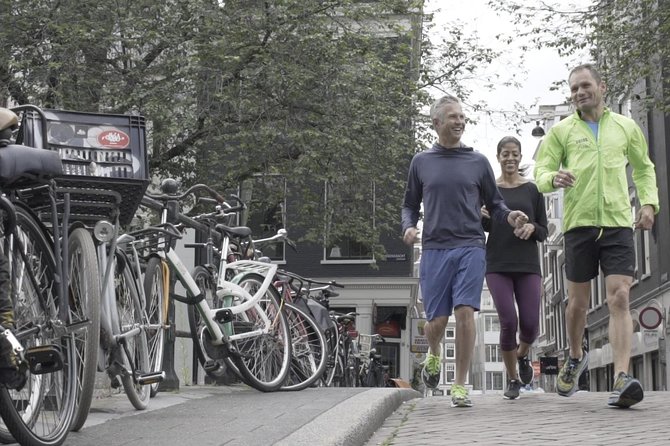
The tour offers pickup directly from your hotel or AirBnB address. That matters in Amsterdam because you don’t have to solve meet-point confusion or drag your luggage across the city before your tour even begins.
You’ll get confirmation at booking time, and you’ll use a mobile ticket. Service animals are allowed, and the meeting area is near public transportation, which helps if you’re staying somewhere without direct pickup access.
Also note the group limit: maximum 10 travelers. In practice, that usually means fewer waiting moments and a smoother run where the guide can keep everyone together.
Stop 1: Rijksmuseum area for first views and quick orientation
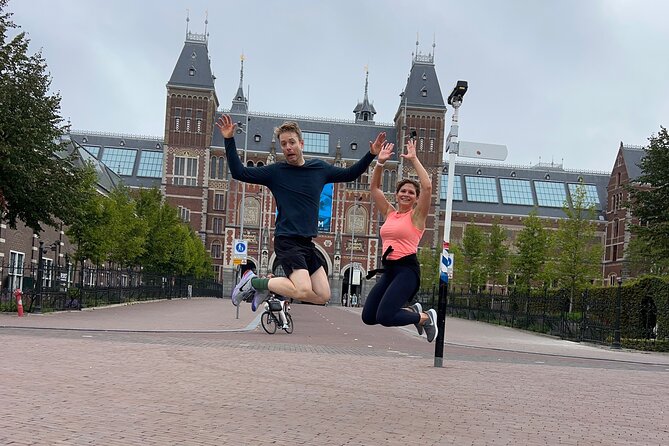
The run starts near the Rijksmuseum, a solid launch point because it places you in the museum district zone and close to major landmarks. You get a chance to start your Amsterdam experience with big architectural and street views, and it sets expectations for the style of the rest of the route.
What I like about starting here is the logic. You begin near a recognizable place, then your guide can steer you from grand facades into canals and older neighborhoods while the group is still warmed up and easy to manage.
A possible drawback: since it’s a central area, you’ll likely see more foot traffic right at the start. That’s normal. The tour’s stated easy pace is meant to handle that mix.
Stop 2: Magere Brug and the Amstel river crossing
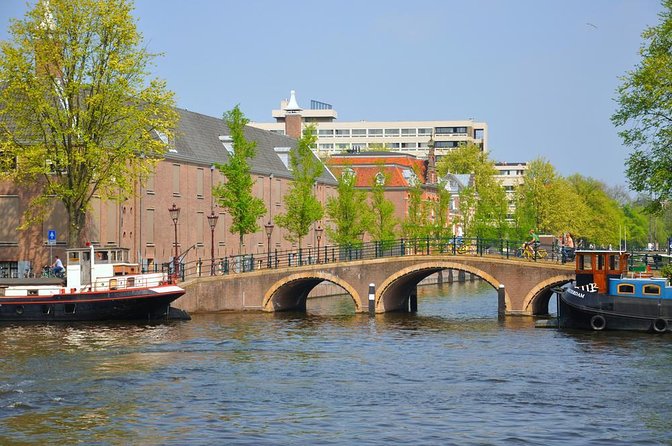
Next up is Magere Brug, famous for its photogenic look and the way it frames Amsterdam’s water city vibe. Then you cross the Amstel river, which is one of those Amsterdam moments that clicks instantly: you feel like you’re inside the geography instead of just passing by it.
This section is valuable because it shifts your perspective. One minute you’re tracking streets; the next you’re moving across a river that helps explain why so much of Amsterdam’s layout looks the way it does.
For anyone who cares about photos, this is also where good timing matters. Even if you’re not trying to be a street photographer, a bridge moment gives you a clear visual reward for keeping up the pace.



Stop 3: The red light district with context and respect
Then comes the red light district—one of the most recognizable, debated areas in the city. A running tour doesn’t give you a long, lingering tour inside it, but it can still be a useful way to see the neighborhood while learning how it fits into Amsterdam as a whole.
The key here is how the guide handles the subject. In past runs, guides were praised for being engaging and story-forward, and that’s what you want when visiting an area that can feel shocking or sensational if you only treat it like a spectacle.
Consideration: if you’re sensitive to adult-themed sights, you may want to mentally prepare before you arrive. The run still passes through, and that’s part of the deal.
Stop 4: Anne Frank House area and the weight of history
Next is Anne Frank House. Even without going inside, this stop matters because it anchors the run in Amsterdam’s moral and historical gravity. Your guide can connect the location to the city’s larger story, and the stop functions as a reminder that Amsterdam isn’t only canals and cafes.
This is also where pace matters. You can’t skim a moment like this the way you might skim a street view. The best tours slow down just enough for your brain to catch up, and the easy-run format is meant to keep things controlled.
If you prefer to spend more time at memorial sites, you can use this stop as a prompt. Then you can return later when you want a quieter, deeper pace on your own.
Stop 5: The Jordaan for gable stones and street-level Amsterdam
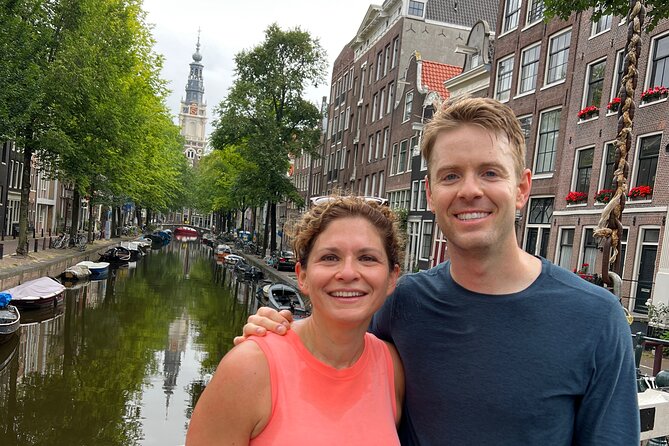
After the heavier moments, you move into Jordaan, a neighborhood that feels more like a lived-in patch of the city than a checklist stop. Here’s where you start seeing Amsterdam through details: facades, streets, and the kind of small markers that make the city feel specific.
In past runs, guides pointed out small landmarks like gable stones (gevelstenen) and the Stumbling Stones. That kind of information is gold because it gives you a lens. Once you know what you’re looking for, you’ll notice those same details during the rest of your trip, even when you’re not on the run.
One practical note: Jordaan streets can feel tight and busy. The easy pace helps, but it’s still smart to keep your footing and expect normal city movement.
Stop 6 and 7: Leidseplein (Leidse Square) to Dam Square
Then the route rolls to Leidseplein (Leidse Square), a central square area tied to nightlife energy and everyday city life. From there, you’ll head toward Dam Square, the other major magnet in the center.
This pairing works well for two reasons. First, it shows you how Amsterdam shifts from one public-space vibe to another—squares as social stages. Second, it keeps you from doing those cross-city hops on your own.
A small caution: Dam Square is a camera destination, which means you may be threading through crowds. That’s where the small group size can help. You’re not trying to manage a large pack while also running.
Stop 8: H’ART Museum for a modern stop along the run
The route includes a stop at H’ART Museum, which adds a different flavor from the purely historical stops. It’s a reminder that Amsterdam isn’t stuck in the past; it keeps moving through contemporary art and culture.
Why this matters: a city tour that only focuses on old-world landmarks can leave you with a one-note feeling. A modern cultural stop gives your brain a palate cleanser after history and architecture.
If you’re hoping to go inside, the tour format likely won’t be long enough for a full museum visit. Still, as a way to place H’ART Museum into your mental map, it’s a solid addition.
Stop 9: Gay Monument for visible history and symbolism
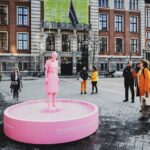
Finally, the route reaches the Gay Monument. This stop brings another layer to Amsterdam: how the city records social progress in public space.
Even if you don’t know a lot beforehand, this is the kind of landmark that works well in a guided walk. Your guide can explain what the monument represents and how it connects to Amsterdam’s identity.
This closing section is a nice way to end with meaning rather than ending on pure sightseeing. You finish the run with a stronger sense of how Amsterdam tells its stories.
Guides, pace, and why the small group feels better
The big praise across runs is simple: guides like Paul and Katya were described as engaging, paced well, and great at turning stops into stories. That’s what you want, because a running tour can otherwise become just jogging with someone talking occasionally.
In this tour format, pacing matters as much as the route. An easy pace keeps the group together and lets the guide deliver details without losing people at crossings.
The other thing that gets mentioned: photo help. A guide who spots good angles and times your stops right can turn a fast city overview into a set of images you’ll actually use later.
Who should book this and who should skip it
This tour fits best if you want to get oriented quickly, enjoy canal-and-neighborhood variety, and don’t mind a moderate jogging pace for about 70 minutes.
It’s a great choice for:
- early risers who like starting the day with a planned activity
- couples and small groups who want movement plus stories
- first-time Amsterdam visitors who want a fast route through the center
It may not fit if:
- you’re dealing with injury or poor mobility, even if the pace is described as easy
- you’re looking for a walk-only tour with long stops
Should you book this Amsterdam city center run?
If your goal is practical sightseeing—canals, iconic neighborhoods, and quick orientation—this is a strong pick. The hotel pickup, small group, and efficient mix of landmarks make the $37 price feel more like value than a splurge.
Book it if you’re comfortable jogging at a moderate effort for a short morning run and you want your city stories delivered while you move through Amsterdam’s center. Skip it if jogging sounds like a chore. In that case, you might prefer a traditional walking tour where you can stop longer and slow down whenever you want.
FAQ
What time does the Amsterdam city center run start?
The start time is 8:30am.
How long is the tour?
It runs for about 1 hour 10 minutes.
How many people are in the group?
This tour has a maximum of 10 travelers.
Is hotel pickup included?
Yes. Hotel pickup is included, and pickup is done right at your hotel or AirBnB address.
What languages is the tour offered in?
The tour is offered in English, German, and Dutch.
What are some of the main stops on the route?
Stops include the Rijksmuseum, Magere Brug, the red light district, Anne Frank House, the Jordaan, Leidseplein, Dam Square, H’ART Museum, and the Gay Monument.
Do I need to bring water?
Bottled water is not included, so it’s smart to bring your own.
What’s the cancellation policy?
You can cancel for a full refund up to 24 hours in advance of the experience’s start time.