REVIEW · HISTORICAL TOURS
Amsterdam Highlights and History Walking Tour (MUST DO)
Book on Viator →Operated by Trigger Tours · Bookable on Viator
Amsterdam has a way of pulling you in fast. What makes this walking tour worth your time is the small-group size and on-foot orientation: you connect the dots between politics, religion, and daily life while you move through the center. The only real drawback is simple but important: you’ll be walking and standing for about two hours, and bike traffic is constant.
You start at Damrak 1-5, then finish back near the same spot, which makes it easy to roll into lunch or a canal stroll afterward. This runs in English, keeps things manageable with a maximum of 15 people, and uses a mobile ticket you can show your guide.
With a 4.9 rating and 97% saying they’d recommend it, the theme is consistent: guides like Andrea, Gio, and David get praised for turning landmarks into stories you actually remember. Just come prepared with comfy shoes, and you’ll be set.
In This Review
- Key highlights you’ll care about
- Where Damrak Gets You Oriented in Real Time
- Dam Square: Politics, Culture, and the City’s Main Stage
- UNESCO Canal Ring: Seeing the Engineering Behind the Beauty
- A 14th-Century Courtyard and the Beguines Story
- Old Church (13th Century): From Catholic Roots to Cultural Center
- Royal Palace: Built as a Town Hall, Now a Royal Site
- Nieuwmarkt: Where City Walls Once Sat, Now Market Life
- Pacing, Group Size, and Bike-Traffic Reality
- Guides and Storytelling: Why the Facts Land
- Value for the Price: What $26.91 Buys You
- Who This Tour Fits Best (And Who Should Consider Another Plan)
- Should You Book This Amsterdam Highlights and History Walking Tour?
- FAQ
- How long is the Amsterdam Highlights and History Walking Tour?
- Where does the tour start?
- What’s included in the ticket price?
- Are food and drinks included?
- How big is the group?
- Is free cancellation available?
Key highlights you’ll care about
- Start at Dam Square and understand why this spot matters in Dutch life
- UNESCO canal ring viewpoints that make the city plan click
- A rare beguines courtyard stop tied to 14th-century religious community life
- Old Church context: Catholic origins, later Protestant use, now a cultural center
- Royal Palace background: built as a town hall, later adopted by the monarchy
- Small group (max 15) with strong guide rapport and plenty of Q&A time
Where Damrak Gets You Oriented in Real Time
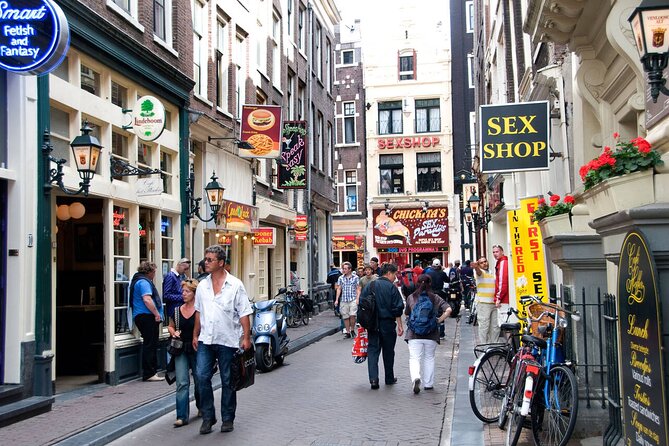
I like Amsterdam best when I understand what I’m looking at. This tour starts you in the right place: Damrak 1-5, right in the center where you can feel the city’s rhythm immediately. You’re not sent off to random corners. Instead, you’re guided through the main beats that shape Amsterdam’s identity: government, worship, neighborhood life, and the canal system that helped the city grow.
Damrak is also practical. You’re near public transportation, so if your day plan changes, you can still get back to the meeting area and continue on. And because the tour ends back at the meeting point, you don’t feel trapped far from dinner options.
You can also read our reviews of more walking tours in Amsterdam



Dam Square: Politics, Culture, and the City’s Main Stage
Dam Square is one of those places that looks obvious once you’re standing there. The tour helps you see why it’s been important for centuries. As you walk into the area, expect the guide to frame Dam Square not just as a photo stop, but as a stage where power and public life have played out over time.
This is a key reason I’d call the tour a smart first-day move. Amsterdam can feel like a postcard collage at first. Dam Square gives you a first anchor: a sense of where civic life happens and why the city’s center has stayed center-stage.
What to watch for: keep an eye on people flow and bicycle movement near central squares. This is city life, not a quiet museum lane.
UNESCO Canal Ring: Seeing the Engineering Behind the Beauty
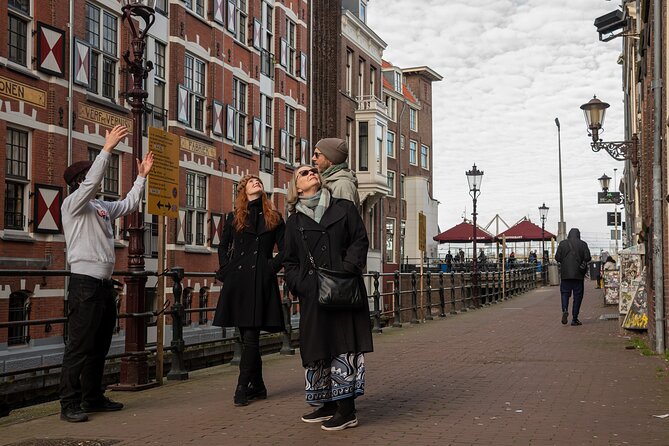
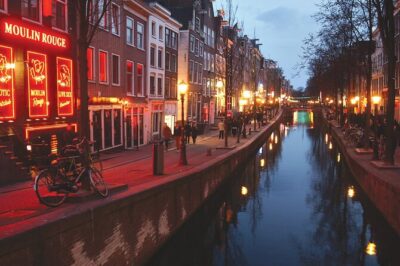
Then you shift to the canal ring, a UNESCO World Heritage Site and one of the most picturesque parts of Amsterdam. The value here isn’t only the view (though, yes, you’ll get plenty of those). It’s the explanation of how the canals connect to planning and engineering, and how that planning supported cultural and everyday development.
If you’ve ever walked canals and thought, This is pretty, but why does it work?, this stop aims to answer that. You’ll come away with a clearer mental map for how Amsterdam grew and how the water shaped movement, trade, and neighborhood structure.
Practical tip: wear shoes that handle uneven pavement. Canal-side streets can be a mix of flat sections and slightly rough footing, and you’ll be on your feet most of the way.
A 14th-Century Courtyard and the Beguines Story
One of the more intriguing pauses on the walk is a historic courtyard dating back to the 14th century. This place is tied to Beguines, religious women who lived in a semi-monastic community. That detail matters because it reframes what you might expect from medieval religious life.
Instead of imagining religion only through grand buildings or official institutions, you get a sense of how communities also formed around everyday faith and social roles. A courtyard stop like this is often the difference between a tour that names landmarks and a tour that makes you feel the human scale of the city.
Why I like this kind of stop: Amsterdam has plenty of big sights, but smaller spaces like courtyards help the city feel lived-in. You get a breather from the main streets while learning something specific.
Old Church (13th Century): From Catholic Roots to Cultural Center
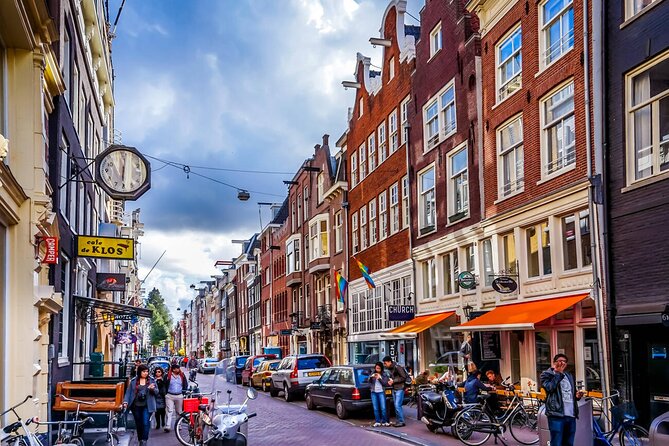
Next is the Old Church, Amsterdam’s oldest surviving building, dating back to the 13th century. The tour places it in context: it began as a Catholic church, later used by Protestant congregations, and today it functions as a cultural center.
That timeline gives you a quick, useful way to understand how Amsterdam’s religious and civic identity shifted over time. It’s also a reminder that buildings can outlive the exact beliefs of the people who first built them. When the tour pauses here, you should take the time to look around, because the structure’s age is part of the story.
If you’re the kind of person who likes history that feels real, this stop is one of the best. You’re not just seeing a facade; you’re watching one building hold multiple roles across centuries.
You can also read our reviews of more historical tours in Amsterdam






Royal Palace: Built as a Town Hall, Now a Royal Site
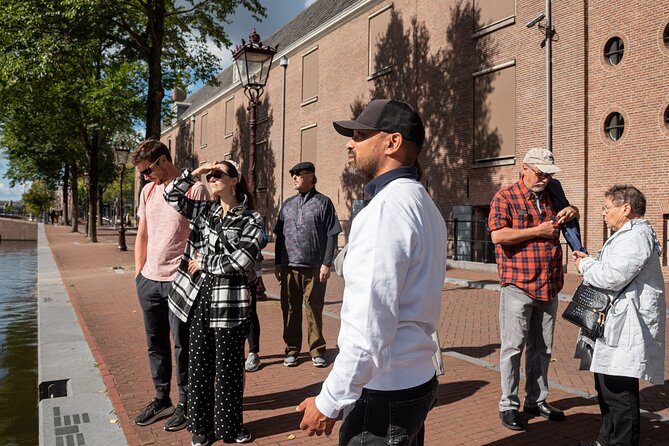
The Royal Palace on the tour is a great example of Amsterdam reusing architecture with a new purpose. It was originally built as a town hall in the 17th century. Today it’s one of three palaces used by the Dutch royal family and is open to the public for tours.
Even if you don’t go inside during your walk, the explanation helps the exterior make sense. You start thinking about how power works in the city—who ran municipal life, how authority evolved, and why the center still matters.
Worth noting: your walking route likely gives you key visual angles. If you want to go further later, the fact that it’s open to the public is handy for planning the rest of your day.
Nieuwmarkt: Where City Walls Once Sat, Now Market Life
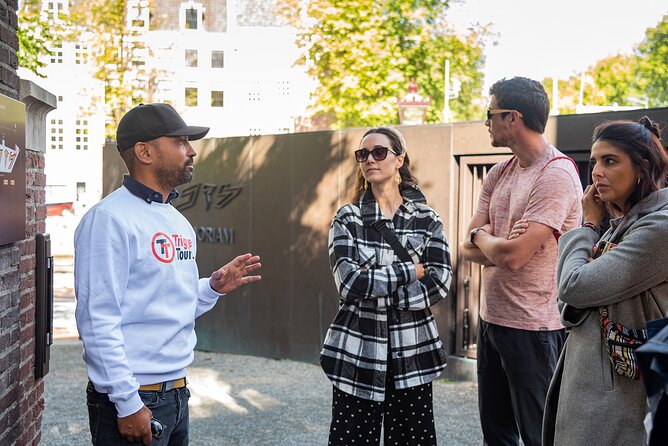
The walk finishes with Nieuwmarkt, a square that used to be tied to Amsterdam’s city walls. Now it’s a lively gathering spot with a daily market, cafes, and restaurants, surrounded by historic buildings.
This stop works because it ties past and present together. City walls tell you about defense and how cities managed boundaries. A market square tells you about daily needs—food, social contact, and commerce. Seeing both themes in one stop helps you connect Amsterdam’s growth from protection to exchange.
If you’re hungry after the walk, Nieuwmarkt is the kind of place where you can keep momentum. You’ll have plenty of options for something simple without needing a big transit plan.
Pacing, Group Size, and Bike-Traffic Reality
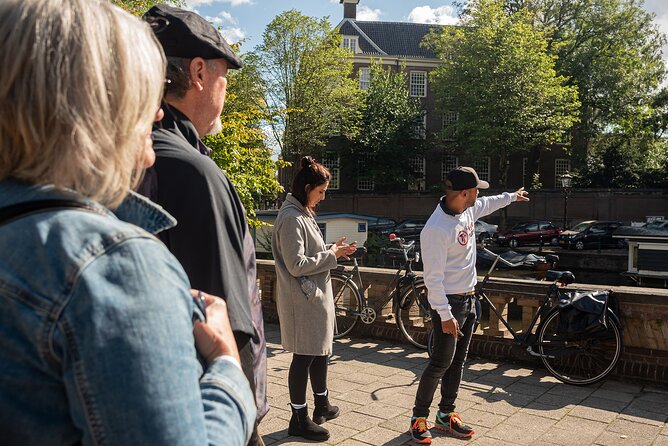
The tour runs about two hours and keeps a moderate pace. The message from the feedback is clear: you need to be able to stand and walk for that duration. I’d plan on wearing shoes you’d happily use for a long city day, not just a short stroll.
Also, bicycle traffic is a real factor. Amsterdam is biking-forward, and central routes can be lively. The good news is the tour is small—maximum 15 travelers—so the guide can manage the group and help you cross streets safely.
A small group also tends to mean more personal attention. In the praise for this experience, that’s one of the repeat themes: guides stay engaged, answer questions, and keep the story tied to what you’re seeing around you.
Guides and Storytelling: Why the Facts Land
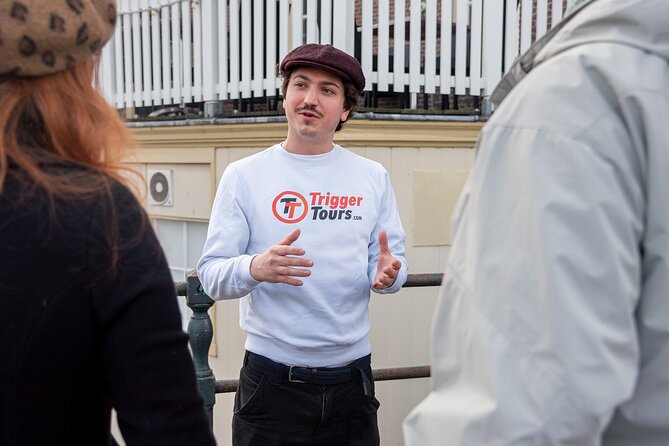
What I like about this tour is how consistently people talk about the guide’s delivery. Guides such as Andrea, Gio, David, and James earn credit for making history feel less like a list and more like cause-and-effect. You get explanations tied to why a building or square matters, not just dates and names.
That storytelling style matters because Amsterdam is packed. Without context, you can walk past major things and still feel like you missed the point. With context, the city starts talking back. You’ll notice details you might otherwise skip: the shift from one kind of civic space to another, the way religious sites connect to broader changes, and how canal planning shaped city life.
Value for the Price: What $26.91 Buys You
At $26.91 per person for about two hours, this is priced like an affordable orientation tour—small-group walking plus a local guide. The value is strongest if you’re early in your trip and want to understand Amsterdam quickly without paying separately for multiple “history” experiences.
You’re getting:
- A local guide who explains what you’re seeing
- Core city-center landmarks that many first-time visitors try to cover anyway
- A small group that helps keep the experience responsive
You’re not getting food and drinks, so plan a snack or meal before or after. That’s actually part of the value math: you’re not paying for a meal you may not eat. You’ll just need to fuel yourself for standing and walking.
For first-timers, this can save time later. You’ll know which areas to revisit and which stories you want to follow up on.
Who This Tour Fits Best (And Who Should Consider Another Plan)
This tour is ideal if:
- It’s your first visit to Amsterdam and you want the highlights with context
- You like history that connects buildings to real-life change
- You prefer a small group walk over a crowded bus tour
- You want a guide who answers questions and keeps things moving
You might want to rethink if:
- You struggle with standing/walking for about two hours
- You’re sensitive to street-level activity like bicycles and crowds near the center
- You want a food-focused tour (this one is not built around eating)
If your schedule is tight and you need a smart start, this is a strong match. If you’re already deep into Amsterdam history, you may still enjoy it for orientation, but you’ll likely get the most from it when you’re new to the city.
Should You Book This Amsterdam Highlights and History Walking Tour?
Yes, if your goal is to understand Amsterdam’s center fast. I’d book it when:
- You want to hit major landmarks in a short time
- You care about why places matter, not only what they look like
- You appreciate a guide who can make history feel practical
It’s also an easy win for a short stay. A good two hours here can prevent the classic mistake of seeing lots of things but remembering none of the connections.
Just go in with the right expectations: it’s a walk, and you’ll be on your feet. If the weather is rough, keep an eye on updates and plan something flexible afterward.
FAQ
How long is the Amsterdam Highlights and History Walking Tour?
It runs for about 2 hours.
Where does the tour start?
The tour starts at Damrak 1-5, 1012 TM Amsterdam, Netherlands.
What’s included in the ticket price?
A local guide is included, along with a tour of Amsterdam.
Are food and drinks included?
No. Food and drinks are not included.
How big is the group?
The tour has a maximum of 15 travelers.
Is free cancellation available?
Yes, free cancellation is available. You can cancel up to 24 hours in advance for a full refund.