REVIEW · HISTORICAL TOURS
Historical Walking Tour, private with local Dutch guide
Book on Viator →Operated by Artsy Tours · Bookable on Viator
Amsterdam clicks when you walk it. This private historical route helps you get your bearings fast, with stories from a Dutch guide who’s lived in the city for 25 years. I really like the mix of medieval leftovers, Golden Age merchant power, and neighborhood flavor, and I also like that most stops are quick and low-stress, with free access built in. One possible drawback: it’s about 2 hours of walking/standing, and there’s no mobility aid support.
You’ll start at Café the Schreiertower on Prins Hendrikkade and finish near Westerkerk, close to the Anne Frank House area. The tour is in English, it’s private (just your group), and service animals are welcome, so it’s a straightforward way to kick off a first trip without over-planning your day.
In This Review
- Key things you’ll notice on this walk
- A first-day Amsterdam walk that feels local, not canned
- Your guide and pace: private time, built for questions
- Stop-by-stop route: from medieval defense to canal wealth and Jordaan streets
- Stop 1: Weeping Tower (Schreiertoren)
- Stop 2: Zeedijk (the old dike story)
- Stop 3: The Waag (medieval city gate)
- Stop 4: Oostindisch Huis and the spice trade
- Stop 5: Het Kleinste Huis van Amsterdam
- Stop 6: Dam Square (the city’s heart)
- Stop 7: Canal Ring (Grachtengordel) and Golden Age merchant houses
- Stop 8: Jordaan—brown cafés, boutiques, and tight streets
- Stop 9: Westerkerk (Protestant church landmark)
- What the history actually teaches you as you walk
- Price and value: $96.02 for a private 2-hour orientation
- Practical tips to make the most of your 2 hours
- Who this private tour suits best
- Should you book Artsy Tours for this Amsterdam walking tour?
- FAQ
- How long is the walking tour?
- Is this a private tour or a group tour?
- What language is the tour offered in?
- What’s included in the price?
- Are admission tickets included for the stops?
- Is bottled water included?
- Where does the tour start and where does it end?
- Is the tour suitable for people with walking difficulties?
- Are service animals allowed?
- Is free cancellation available?
Key things you’ll notice on this walk
- A first-day orientation that doesn’t feel like a checklist
- A private guide with lived-in local perspective (25 years in Amsterdam)
- Stop admissions are effectively handled for you—many are free
- You’ll see the city’s “defense and water” story from the ground up
- Canals and Jordaan in one route, plus a strong architecture focus
A first-day Amsterdam walk that feels local, not canned
If you’ve ever wandered Amsterdam for hours and still couldn’t tell one canal from another, this is the kind of tour that fixes that problem quickly. You get a route that moves through the older bones of the city first, then flows into the Canal Ring and the Jordaan—two areas that shape how Amsterdam looks and lives today.
What makes it work is the rhythm: short stops early on, then longer segments where you can actually look around. You’re not stuck listening in one place. Instead, you’re walking, pausing, and getting a “why this matters” explanation as you go.
The guide’s style is also a big part of the value. People describe the experience as confident, funny in a dry way, and strong on Q&A. You’ll also get personalized attention—if you care about architecture, trade, religion, or city planning, you can usually steer the emphasis toward what you want to understand most.
You can also read our reviews of more walking tours in Amsterdam



Your guide and pace: private time, built for questions
This is a private tour, so it doesn’t feel like a crowded group shuffle. Only your group participates, and that matters because Amsterdam is full of small details: street crests, gate structures, canal-house designs, and layers of history that look obvious once someone points them out.
Expect a pace that keeps you moving but still lets you ask questions. The longer blocks come where you want them: the Canal Ring segment and the Jordaan segment give you time to look at façades, houseboats, and the street pattern rather than rushing past.
Also worth noting: there’s no bottled water included. If you’re doing this on a warm day, I’d plan to bring your own water or grab a drink before you start. Your legs will thank you.
Stop-by-stop route: from medieval defense to canal wealth and Jordaan streets
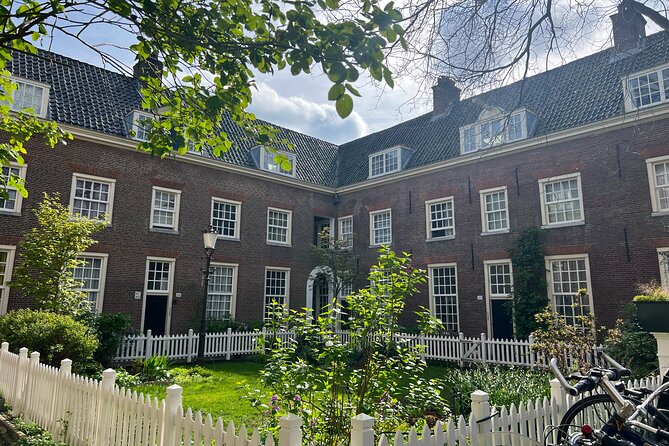
Here’s what you’ll experience, in order, and why each stop is worth those few minutes.
Stop 1: Weeping Tower (Schreiertoren)
You begin at a medieval watchtower called the Weeping Tower—one of the few remnants from Amsterdam’s middle-ages. The guide uses this as a foundation: where the city came from and what Amsterdam was protecting itself against long before it became a canal-princess postcard.
Practical note: since the stop is brief, be ready to look and listen at the same time. This is a “set the map in your head” moment, not a slow museum-style visit.
Stop 2: Zeedijk (the old dike story)
Next is Zeedijk, one of Amsterdam’s oldest streets, and it gets explained in a very Amsterdam way: this wasn’t just a street. It functioned as a dike with locks, helping protect the city from flooding.
This is a useful stop even if you don’t think you care about engineering. Once you understand Amsterdam as a water-managed city, the rest starts making sense—canals, gates, and even the flat geography.
You can also read our reviews of more guided tours in Amsterdam





Stop 3: The Waag (medieval city gate)
At The Waag, you’ll see a medieval city gate tied to the defensive wall and mote system. It’s one of those places where the “seriousness” of the past shows up in stone and placement.
The drawback here is simple: the history is strong, but the physical stop can feel more like a look-and-learn moment than a hands-on experience. Still, it’s a great bridge between defense and commerce.
Stop 4: Oostindisch Huis and the spice trade
Then you reach the Oostindisch Huis, tied to the Dutch East India Company (founded in 1602). This stop focuses on the spice trade, and it also connects that trade to ideas behind the modern corporation and stock market.
If you like history that explains how money and power work, this is one of the most interesting parts of the whole route. It’s not just dates and names—it’s about how Amsterdam’s global connections shaped what you see locally.
Stop 5: Het Kleinste Huis van Amsterdam
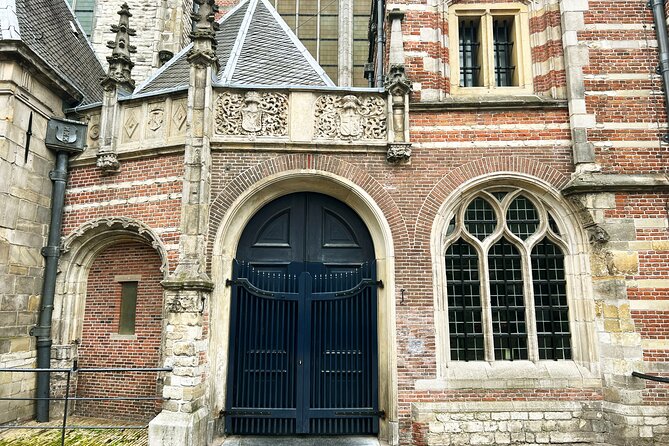
Het Kleinste Huis van Amsterdam is exactly what it sounds like: the smallest house in Amsterdam, located next to a gate with the city’s crest and symbolic decorations. It’s a quick photo stop, but the guide treats it as a clue.
This is a good reminder that Amsterdam’s history isn’t only grand buildings. The city also records itself in small, quirky places—and those symbolic details can be easy to miss if you’re walking without context.
Stop 6: Dam Square (the city’s heart)
At Dam Square, the tone shifts from defensive and commercial stories to the city center. You’ll learn how it became the old market square—basically the heart of Amsterdam—where major institutions and national memorials now sit.
The time here is longer than earlier stops (about 10 minutes), which helps. Dam Square is wide, busy-looking even when it’s not crowded, so you’ll want that extra time to orient your sense of “where everything is.”
Stop 7: Canal Ring (Grachtengordel) and Golden Age merchant houses
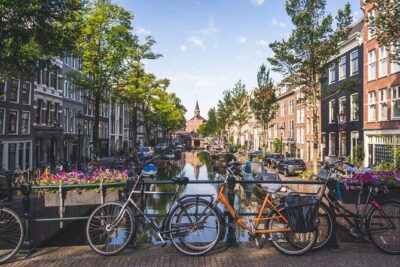
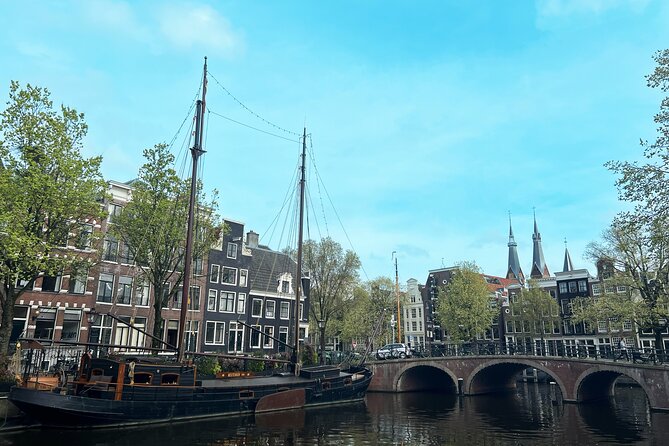
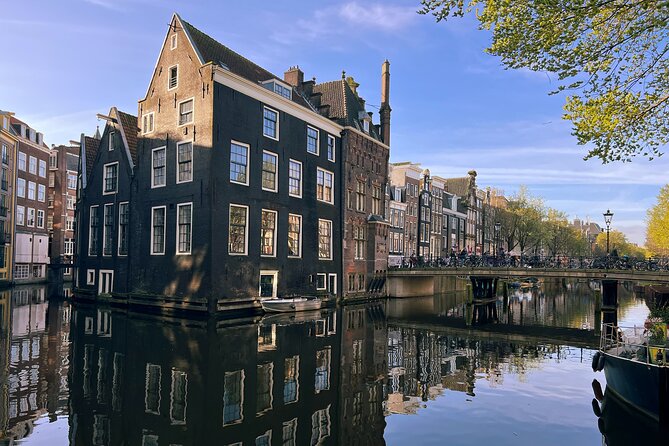
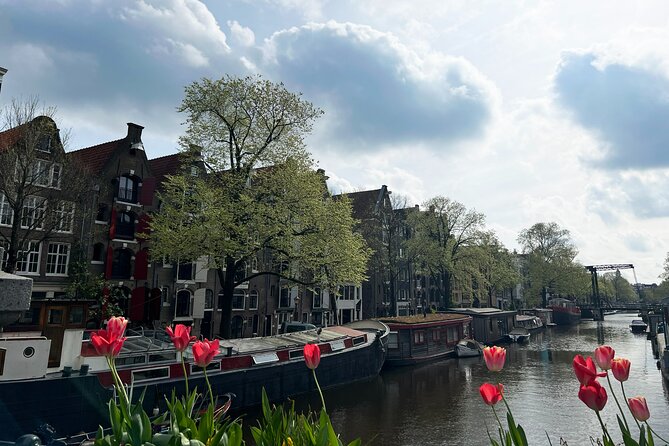
Now for the big visual payoff: the Canal Ring district (Grachtengordel). This is where wealthy merchants built their showpiece canal houses during the Golden Age. You’ll see northern baroque style details and a range of canal-house types, plus plenty of houseboats.
This part is allotted around 30 minutes, and that’s the right amount. You need time to compare façades and notice the different “personalities” of buildings along the same waterway.
One practical thing: Amsterdam is full of bikes and bike lanes. You’ll be walking around bikes and across small “dam-like” connections as you move through the canal area, so keep an eye out and follow your guide’s positioning.
Stop 8: Jordaan—brown cafés, boutiques, and tight streets
Next is Jordaan, a neighborhood known for picturesque streets and traditional brown cafés, plus unique boutiques. The story here isn’t only about architecture—it’s about the feel of the area.
This segment also runs about 30 minutes, which is helpful because Jordaan is best understood by slowly looking at how streets bend, where people gather, and how storefronts relate to the canal-adjacent layout.
If your goal is to see more than “famous photo spots,” this is where you start getting that local texture.
Stop 9: Westerkerk (Protestant church landmark)
You finish at Westerkerk, a Dutch Protestant church with a recognizable spire. It’s one of Amsterdam’s most loved local landmarks, and you’ll end near the Anne Frank House area, so it fits naturally into a day of sightseeing.
This is a good closing note because the church landmark gives you a final visual anchor. After the medieval origins and canal planning lessons, it helps to see where the city landed as it grew.
What the history actually teaches you as you walk
It’s easy to do a walking tour where you collect facts but don’t change how you see the city. This route is built to change the way you read Amsterdam.
Here’s the payoff:
- Water management becomes a story, not a trivia topic. The Zeedijk dike/lock explanation helps you understand why Amsterdam’s shape is the way it is.
- Commerce is explained as architecture and institutions. The Oostindisch Huis stop connects trade to how power worked, including the ideas behind corporations and stock markets.
- Amsterdam’s layers show up in small signs. Things like crests, gate decorations, and an “odd” tiny house become meaningful once your guide frames them.
- You get social history beyond the obvious headline. The tour includes stories about Jewish history in Amsterdam beyond the Anne Frank House focus, so it adds depth without requiring you to add another ticketed stop.
And if you’re the type who likes humor and quick explanations rather than a lecture, this tour’s tone tends to land well. Expect dry wit, clear English communication, and answers that actually connect to what you’re standing in front of.
Price and value: $96.02 for a private 2-hour orientation
At $96.02 per person for about 2 hours, this is priced for a private guide experience in central Amsterdam. What makes it feel fair is what’s wrapped in:
- All fees and taxes are included.
- Most of your key stops don’t require paid admission (they’re effectively handled as free).
- You get a local guide with long-term city perspective, plus the time to ask questions.
What’s not included is small but real: bottled water. So budget a drink on your own.
If you’re traveling with someone who doesn’t want to spend the first day researching and routing, you’ll probably feel you’re buying convenience and clarity, not just “walking with a guide.” And since this tour is commonly booked about 70 days in advance, I’d treat that as a sign to lock in your preferred day early—especially if your schedule is tight.
Practical tips to make the most of your 2 hours
- Wear comfortable shoes. Even a “short stop” tour adds up when you’re constantly moving on uneven older streets.
- Bring water. It’s not included, and Amsterdam walking can sneak up on you.
- Have your camera ready, but don’t stare through the lens. Some of the most useful moments are when the guide points out symbols and design details.
- If you care about a specific thread—architecture, trade, or city planning—ask early. This tour is set up for the guide to adapt to your interests.
- Plan for an easy follow-on. The tour ends near Westerkerk and close to the Anne Frank House area, so you can transition smoothly without losing time getting across town.
Who this private tour suits best
This is a strong fit if:
- it’s your first time in Amsterdam and you want quick orientation
- you like walking tours that explain how the city works
- you’re curious about medieval origins, the city’s water management, and Golden Age trade
- you want local neighborhood flavor with the Canal Ring and Jordaan in one route
- you need a tour where service animals are welcome
It’s not the best fit if:
- you have trouble walking or standing for about 2 hours
- you use a walker, since mobility aids are not available
Should you book Artsy Tours for this Amsterdam walking tour?
I’d book it if your priority is understanding Amsterdam quickly—how it formed, why it looks the way it does, and what parts most tourists skip. The private format and free-stop structure make it a tidy, efficient way to start your trip without burning your whole morning on transportation.
Skip it if you need a more mobility-friendly option, since this is a walking-based experience with no mobility aids provided.
If you’re trying to choose between “more sites” and “better explanations,” this one leans toward the second. You leave with a mental map, plus stories that make the city feel less random the moment you step off the route.
FAQ
How long is the walking tour?
The tour lasts about 2 hours.
Is this a private tour or a group tour?
It’s private, so only your group participates.
What language is the tour offered in?
The tour is offered in English.
What’s included in the price?
All fees and taxes are included.
Are admission tickets included for the stops?
For the listed stops, admission tickets are free.
Is bottled water included?
No, bottled water is not included.
Where does the tour start and where does it end?
It starts at Café the Schreiertower, Prins Hendrikkade 95, 1012 AE Amsterdam, and ends near Westerkerk at Prinsengracht 279, 1016 DL Amsterdam.
Is the tour suitable for people with walking difficulties?
It’s not recommended for participants who have trouble walking and standing for 2 hours.
Are service animals allowed?
Yes, service animals are allowed.
Is free cancellation available?
Yes. Free cancellation is available up to 24 hours in advance for a full refund.