REVIEW · CANAL CRUISES
Amsterdam: Exclusive Tulip Tour Canal Cruise
Book on Viator →Operated by Flagship Amsterdam · Bookable on Viator
A tulip-covered canal boat is a fun shortcut. This 1-hour Amsterdam canal cruise trades long walks for a tight route through some of the city’s most photogenic waterways.
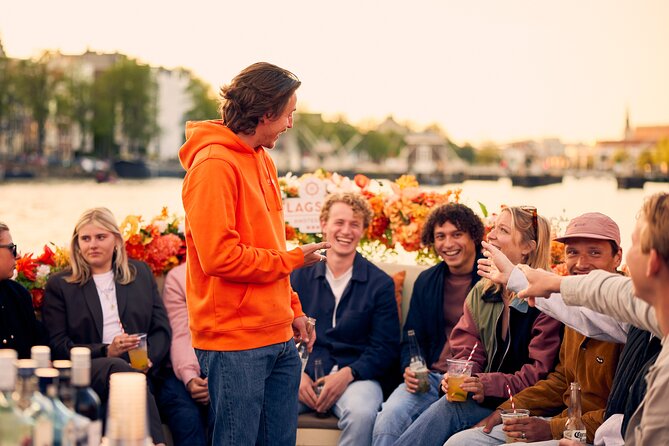
I like two things most about it. First, the small group (max 10) keeps the vibe relaxed and the photo stops actually work. Second, the skipper experience seems to matter here, with guides like Tim, Wes, Bart, and Abel called out for being friendly and good at explaining what you’re seeing.
One key consideration: tulip-boat availability depends on conditions. The tour requires good weather, and at least one winter booking was canceled because strong winds and bad weather can make the tulip setup impractical.
In This Review
- Key things to know before you go
- Why a 1-Hour Tulip Canal Cruise Fits Amsterdam Days
- Price and What You’re Actually Paying For ($37.80 for 60 Minutes)
- Where You Meet: Prins Hendrikkade and a Clean Start
- Oosterdok: Harbor-Old Meets Museum-Cool Views
- Houseboat Alley: The Water-to-Home Feeling
- Amstel and the Tilted-House Science You Can See
- Stopera and the 7 Bridges: The Tight Photo Zone
- Herengracht Golden Bend: Mansions Along the Water
- The Tulip Boat Detail: Fun Color, Real-World Weather Limits
- Guides, Atmosphere, and Why Small Groups Matter
- Who This Tour Fits Best (and Who Might Want Something Else)
- Should You Book the Amsterdam Exclusive Tulip Tour Canal Cruise?
- FAQ
- FAQ
- How long is the Amsterdam Tulip Tour Canal Cruise?
- How many people are on the boat?
- What language is the tour offered in?
- Where do I meet for the cruise?
- Is the onboard bar included?
- Is there a mobile ticket?
- What’s the cancellation policy if weather changes?
- Does the tulip boat run in all seasons?
- What’s included in the ticket price?
Key things to know before you go
- Max 10 people means less crowding on the boat and easier viewing of the bridges and canal houses
- 1 hour is the sweet spot for hitting multiple famous areas without draining your day
- Tulip-covered boat for photos gives you instant color on the water, even if the flowers aren’t real seasonally
- Route highlights line up fast: Oosterdok, houseboats, Amstel, Stopera, the 7 Bridges area, and Herengracht
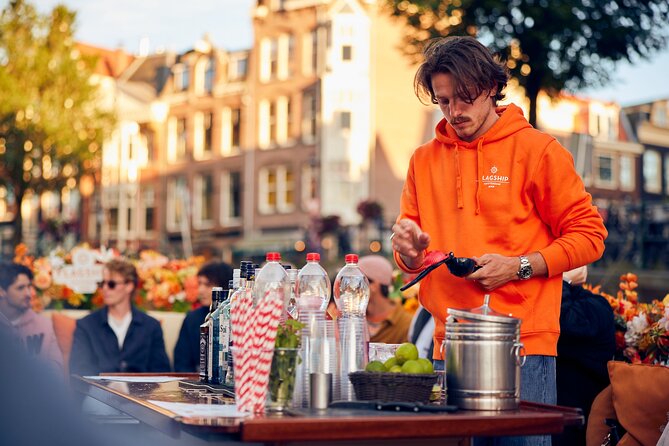
- Onboard bar is included, drinks aren’t: you can buy what you want during the cruise
- English is offered and the guides focus on practical, story-driven canal details
Why a 1-Hour Tulip Canal Cruise Fits Amsterdam Days
Amsterdam can be a lot. Cobblestones, bikes, crowds—sometimes you just want a moving seat with a view. This cruise is about one hour, which makes it a smart “middle-of-the-day” move or a great way to bookend your sightseeing.
The other reason I like this format: you get to cover more ground than you would on foot. Even with a short time window, you’ll pass through areas that are famous for their canal architecture and harbor history, plus a couple of spots that are made for photos.
And yes, the tulip theme matters. A boat decorated for tulip photos turns an ordinary canal ride into something with color and character on every angle.
You can also read our reviews of more boat tours in Amsterdam
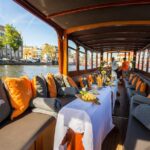
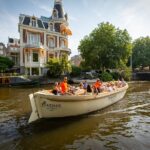

Price and What You’re Actually Paying For ($37.80 for 60 Minutes)
At $37.80 per person, you’re paying for a short, guided cruise plus the “event” factor of a tulip-covered boat. This isn’t just transportation; it’s entertainment with a built-in photo moment.
What’s included is the skipper and the cruise itself, and there’s also an onboard bar. Drinks are available for purchase, so if you plan to order cocktails or wine, expect extra costs on top of the ticket price.
The max group size (up to 10) is where the value starts to make sense. In a city where many cruises pack people in, a smaller boat can feel more like a guided outing than a slow cattle car.
Where You Meet: Prins Hendrikkade and a Clean Start
You start at Prins Hendrikkade 33A, 1012 AB Amsterdam, and the cruise ends back at the meeting point. That simple start-and-finish setup helps if you’re trying to line up plans for later—dinner, a museum slot, or just a quiet walk without needing to figure out a new pickup location.
It’s also near public transportation, which matters because Amsterdam’s transit hubs can be quick to navigate compared with trying to bike or find parking.
One more practical note: this experience is confirmed at booking time, and it runs in English. If English guidance is important to you, this matches that need without extra planning.
Oosterdok: Harbor-Old Meets Museum-Cool Views
The cruise begins in Amsterdam Oosterdok, an area that used to be a 19th-century harbor and now mixes modern buildings with big-water views. From a boat, you’ll get an “in-between” perspective that’s harder to get when you’re just walking the canals.
As you pass this area, you’ll likely notice the contrast between old waterways and newer architecture. It’s a good warm-up stretch because it sets the tone: Amsterdam isn’t only about canal rings and brick facades. It’s also trade history, engineering, and a city that keeps building forward.
If you like taking photos, this first stretch is useful. You’re not stuck right away in the tightest canal bends; you get open angles and a sense of space.
Houseboat Alley: The Water-to-Home Feeling
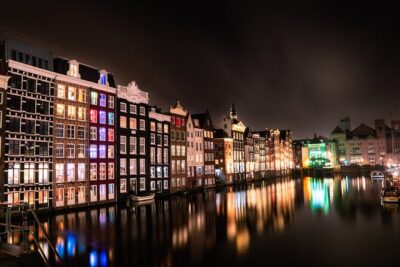
Next comes Houseboat Alley, a residential stretch where traditional houseboats line the canals. The difference here is subtle but big: it’s not tourist scenery designed just for visitors. It’s a neighborhood where people live on the water, and that changes the feel of the view.
From the boat, you can see the canals in a more human scale. Instead of only looking at grand mansions from the outside, you’re closer to daily life along the waterline. It also tends to be a calmer section for photos because the scene is so distinctive—paint, windows, boats, and canal reflections all together.
The only downside: because this is a residential area, the boat experience is as much about observation as it is about landmarks. If you’re the type who wants every minute packed with famous buildings, you may mentally treat this as a mood stop rather than the biggest “wow” stop.

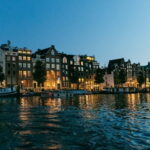

Amstel and the Tilted-House Science You Can See
Then you’ll move into the story behind Amsterdam’s founding waterway, the Amstel. You’ll hear the basic origin story: Amsterdam developed from the Amstel, and there’s even a simple explanation of how people built a “dam,” creating the area that became Amsterdam.
After that, one of the more memorable bits is the explanation for why so many Amsterdam houses look tilted. The city is built on marshlands, so heavy buildings sink unless they’re supported. The solution was building on wooden poles that reach deeper, sturdier layers.
This is one of those “it makes sense only once you know the reason” details. From the boat, you’re watching entire facades and canal edges at once, so the explanation lands better than if you just read it on a sign.
Practical tip: if you’re taking photos, this stretch rewards you for stepping into the light. Tilts and reflections show up best when you’re not fighting glare.
Stopera and the 7 Bridges: The Tight Photo Zone
After the Thorbecke bridge, you get the famous 7 Bridges area. If conditions are right and there aren’t too many boats in the way, you can catch the repeating stone-bridge look in a row.
This is the part of the cruise that feels most “scheduled,” even though it’s moving. You’ll want to pay attention as you approach the bridge zone, because you’re not stopping for long. The good news is that the boat position gives you a front-row view of the canal geometry.
Right around here, you’ll also pass the Stopera, which combines the city hall (Stadhuis) and an opera space. From water level, big public buildings can look surprisingly different—less like a landmark on a brochure, more like a mass of stone and structure that dominates the canal edge.
In other words: this section gives you both architecture and the classic Amsterdam bridge rhythm, which is a win if you only have one cruise to fit into your day.
Herengracht Golden Bend: Mansions Along the Water
Finally, you’ll see the Golden Bend of the Herengracht, known for its historical grandeur and lavish canal architecture. This is where the cruise shifts from “explaining Amsterdam” to “showing Amsterdam.”
What makes the Golden Bend special from the water is the perspective. On foot, you can miss the full sweep of the canal frontage. From the boat, you get a long, continuous look at the mansions and the spacing between them.
If your goal is a visual checklist—canal houses, elegant facades, reflections—this is the end stretch you’ll remember.
The Tulip Boat Detail: Fun Color, Real-World Weather Limits
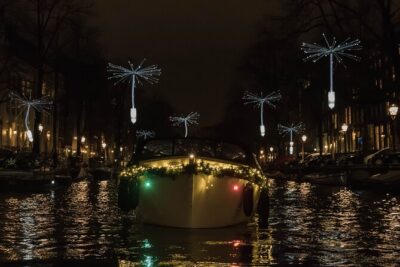
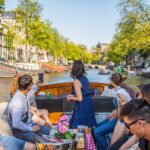
The whole point is the tulip theme: the boat is described as covered in lifelike tulips, so you’re not just riding past tulips in the distance. You’re sitting in front of tulip color for the duration of the cruise, which makes it feel like an event, not a generic canal tour.
But here’s the practical part: the tour requires good weather, and there’s a clear warning sign for winter travelers. Strong winds and bad weather can affect whether a tulip setup runs, and in at least one winter case, a booked tulip-boat experience didn’t happen as expected.
What you should do with that info: if you’re visiting in colder months, don’t treat the tulip-covered boat as guaranteed. The provider does offer an alternate date or a full refund if the cruise is canceled due to poor weather, but you still want flexibility in your schedule.
If you’re traveling in spring or early seasons when the city is already tulip-forward, you’ll feel more confident that the tulip vibe will match what you’re expecting.
Guides, Atmosphere, and Why Small Groups Matter
The cruise experience seems to improve when the guide is strong, and the names that pop up in feedback are real characters. People highlight skippers like Tim, Wes, Bart, and Abel for being friendly and explaining what you’re seeing in a way that clicks.
That’s exactly what I’d look for on a one-hour tour. With only 60 minutes, there’s no time for a guide who reads a script. You want someone who makes the city’s canal details feel relevant while you’re passing them.
The small group also supports that. With up to 10 people, you’re less likely to be stuck behind others whenever the captain turns for a good angle.
Who This Tour Fits Best (and Who Might Want Something Else)
This is a good match if you:
- Want a short canal experience that still feels special
- Care about photos and like the idea of a tulip-covered boat
- Prefer English guidance and a small group setting
- Want to see key canal areas without spending the whole day walking
It might be less ideal if you:
- Are visiting during a season with higher chances of wind and weather disruptions, and you can’t adjust plans
- Want longer stops or a deeper, slow-travel pace (this one is designed to move)
Should You Book the Amsterdam Exclusive Tulip Tour Canal Cruise?
I’d book it if you want a one-hour Amsterdam highlight that gives you real color on the water and a small-group feel. The combination of a tulip-themed boat, classic canal sights, and a skipper-driven story works well for people who feel overwhelmed by choices in the city.
Book it sooner rather than later if your schedule is tight, since it’s commonly reserved in advance. And if you’re traveling in winter, I’d keep your plans flexible and assume weather may affect the tulip boat experience.
FAQ
FAQ
How long is the Amsterdam Tulip Tour Canal Cruise?
It’s listed as approximately 1 hour.
How many people are on the boat?
The experience has a maximum group size of 10 travelers.
What language is the tour offered in?
The tour is offered in English.
Where do I meet for the cruise?
You meet at Prins Hendrikkade 33A, 1012 AB Amsterdam. The cruise ends back at the meeting point.
Is the onboard bar included?
The onboard bar is included, but drinks are available for purchase.
Is there a mobile ticket?
Yes, it’s listed as a mobile ticket.
What’s the cancellation policy if weather changes?
You can cancel for a full refund up to 24 hours before the experience start time. The experience requires good weather, and if it’s canceled due to poor weather, you’ll be offered a different date or a full refund.
Does the tulip boat run in all seasons?
The experience requires good weather, and winter availability can be affected by strong winds and bad weather.
What’s included in the ticket price?
The ticket includes a skipper and the 1-hour canal cruise on the tulip tour. Drinks are not included unless you purchase them onboard.