REVIEW · CANAL CRUISES
Amsterdam Cheese and Wine Canal Cruise
Book on Viator →Operated by Boat Amsterdam · Bookable on Viator
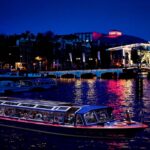
Cheese and canals are a winning combo. This 1-hour cruise from Amstel 51F pairs Dutch cheeses with wine, beer, and more, while a live guide ties the waterways to what you’re seeing. You also get the calm thrill of looking at Amsterdam from a boat—close enough to notice details you’d miss on foot.
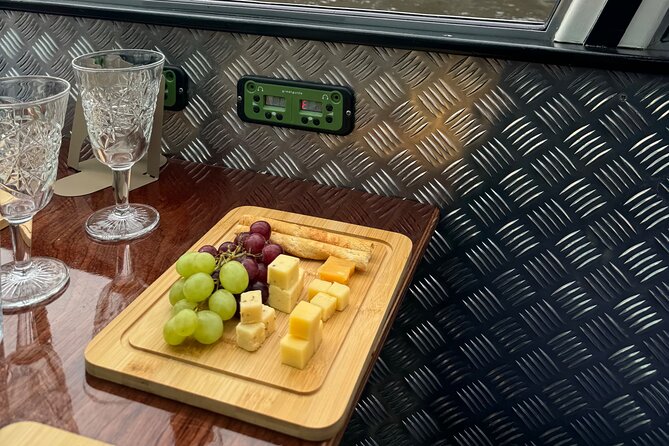
Two things I really like: the tasting feels generous (cheese plus bread-like bites and grapes show up in the experience), and the commentary adds context to the canal belt instead of just naming spots. My main consideration: the boat setup can vary, and if you need strong sun control or a table for easier eating, you should check the vessel type before you go.
In This Review
- Key things that make this cruise worth your time
- Cheese-and-wine canal cruising in Amsterdam: the value play
- From Amstel 51F: timing, group size, and what to expect on board
- Herengracht and the Reguliersgracht seven-bridges panorama
- Jordaan on Leliegracht: garden streets and working-class canal planning
- Prinsengracht #263 and the Westerkerk tower you can’t miss
- Skinny Bridge and Blue Bridge: Amsterdam’s love for narrow crossings
- Amstel Church, the Hermitage Museum, and a calmer canal-belt vibe
- Drinks, cheese pairings, and how to make the tasting work for you
- Guides with personality: getting history without the lecture
- Who should book this Amsterdam cheese and wine canal cruise?
- Should you book this tour or skip it?
- FAQ
- How long is the Amsterdam Cheese and Wine Canal Cruise?
- Where do I meet, and do I return to the start?
- What’s included with the ticket price?
- Is the tour offered in English?
- What size group is this cruise?
- Are service animals allowed?
- What’s the cancellation policy for a full refund?
Key things that make this cruise worth your time
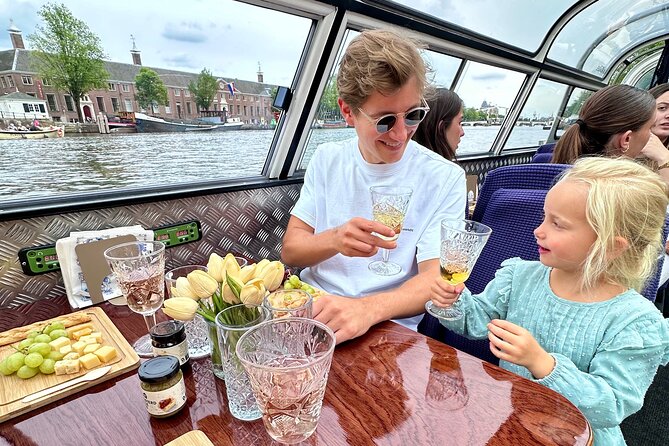
- Dutch cheese and drinks included: Heineken beer, wine, sodas, coffee, and tea all come with the ticket.
- Live guide commentary: You’re not just floating; you’re learning as you pass landmarks.
- Seven-bridges sightline at Reguliersgracht: A standout view you won’t get from most canal angles.
- Class history visible in canal design: The tour moves between canals that tell different stories about wealth and work.
- Iconic bridges in one route: You’ll see the Skinny Bridge and Blue Bridge close up.
- A small-group feel: It’s capped at 36, and some departures can feel extra intimate.
Cheese-and-wine canal cruising in Amsterdam: the value play
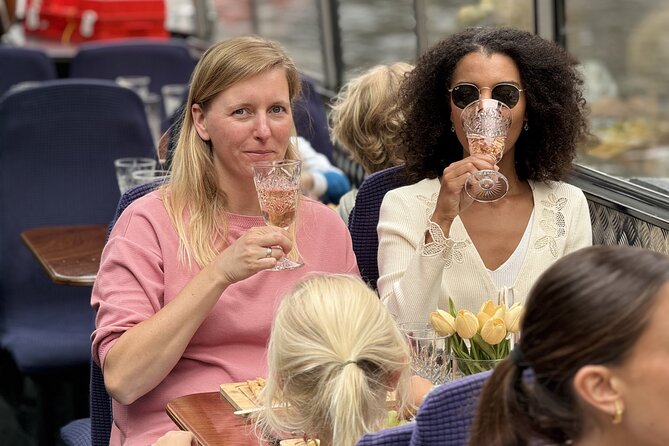
At $45.01 per person for about an hour, this isn’t just a sightseeing boat—it’s a built-in food-and-drink break. That matters in Amsterdam, where snacks can add up fast and you often end up paying separately for a tasting elsewhere. Here, the ticket bundles the experience: a cheese spread plus drinks, with the canals as the setting.
I also like that the pace is easy. One hour is long enough to feel like you did something real, but short enough that it doesn’t crowd out your day. If you’re arriving in Amsterdam and want an “I get the city” moment, this kind of cruise does that better than trying to squeeze canals and food into your first afternoon.
Just be realistic about what a canal cruise is: you’re outside, you’re moving, and you’re sampling. If you’re the type who needs a perfectly quiet, seated museum-like setting, you may prefer a slower indoor food tour. But if you want views + taste + stories, this hits a sweet spot.
You can also read our reviews of more boat tours in Amsterdam

From Amstel 51F: timing, group size, and what to expect on board
You meet at Amstel 51F, 1018 EJ Amsterdam, and the tour ends back at the same meeting point. It’s also near public transportation, and you’ll get a mobile ticket. The tour runs in English with an in-person guide.
The group is capped at 36 travelers, which keeps things from feeling like a floating lecture hall. In practice, the experience can feel more personal on smaller departures—especially because live commentary works best when you can actually hear it without competing noise.
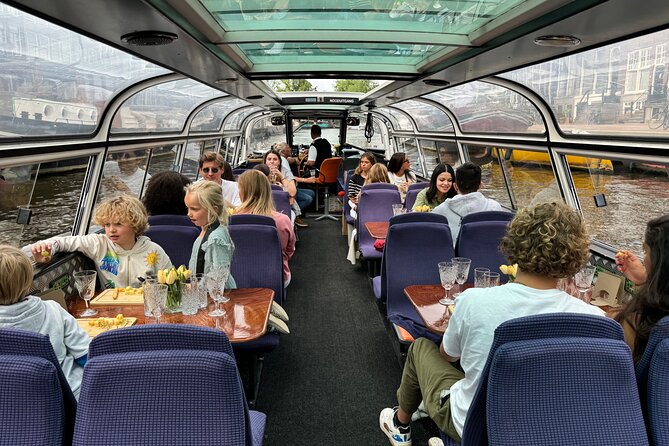
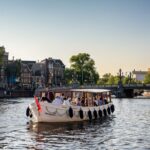
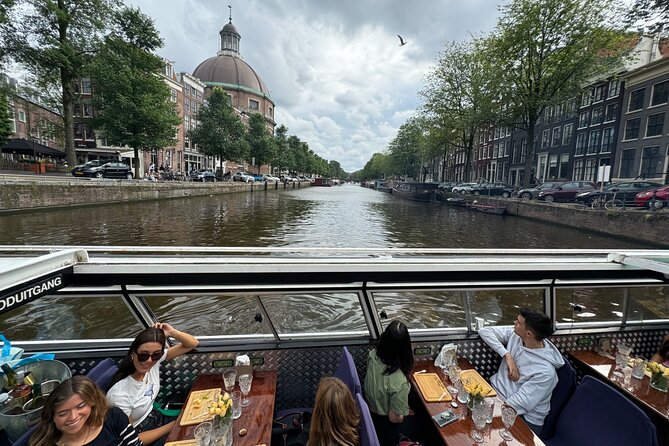
One practical note: boat setups can vary. Some people have described an open-air arrangement and mentioned challenges like direct sun and difficulty reaching food from where they sat. If you’ll be traveling with anyone who needs extra shade (or if having a table matters to you for holding a plate), I’d treat this as a “check first” item. Also, if bathroom access is a must for you, you should confirm whether there’s one on the specific vessel used for your departure time—smaller boats aren’t always set up the same way.
Herengracht and the Reguliersgracht seven-bridges panorama
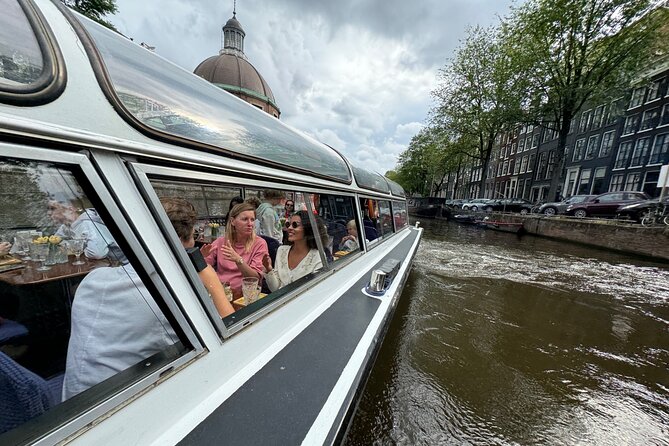
The cruise begins by moving through the Herengracht, one of Amsterdam’s most famous canals. This is where the canal belt shows its ambition. Herengracht sits in the upper-class lane of canal geography, and the architecture reflects that—bigger, more formal, and built for the people with money to spare.
Then comes a standout: Reguliersgracht (7 Bridges). This stretch is famous because you can see seven bridges in a row from a single viewpoint. The effect is simple but powerful: multiple crossings compress into one view like a canal-belt photo book coming to life. If you like “wow” moments that are actually sight-specific, this is it.
This part of the route also gives you a fast orientation to how the canal belt works. Amsterdam’s canal system is big—165 canals, about 100 km total length, with 1,680 bridges connecting neighborhoods. That’s why the bridges become part of the story, not just decoration.
One small drawback: canal cruises are never completely motion-free. If you’re sensitive to movement, try to pick a seat where you’ll feel stable, and consider sipping slowly with your food so nothing feels frantic.
Jordaan on Leliegracht: garden streets and working-class canal planning
The tour heads toward the Jordaan area via Leliegracht. This is where Amsterdam’s canal history shifts from the wealthier canals to a more practical story.
Here’s what makes this stretch interesting: the Jordaan was designed for Amsterdam’s growing working class, and the neighborhood’s name connects to plants and trees—Jordaan comes from the French word jardin, meaning garden. You’ll see that theme in the street naming, and the housing pattern feels different too: the houses are smaller, and the streets follow an older ditch pattern that was already there. Cutting costs mattered, so the plan wasn’t about grand uniformity.
From the boat, you get a different rhythm of streets and facades. Instead of walking through one neighborhood block at a time, you read it like a panorama, and you notice how planning decisions shaped the look of the place.
If you’re a first-time Amsterdam visitor, this section does a lot of good work for your understanding. You start to see that the canal belt isn’t one style—it’s a whole social map.
Prinsengracht #263 and the Westerkerk tower you can’t miss
Next up is Prinsengracht #263, linked to Anne Frank and the diary Het Achterhuis. This is one of those moments where a canal cruise brings you closer to the human scale of history. Even if you know the story already, seeing the canal setting next to that building gives you a stronger sense of the world she lived in—tight, brick, and tightly connected to water routes.
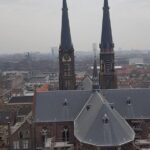
After that, you’ll pass the Westerkerk (Westerchurch). Built between 1620 and 1631 in Renaissance style, it’s famous for two things: it’s the highest church tower in Amsterdam at 87 meters, and it appears in Anne Frank’s diary. The tower crown is also notable—an imperial crown dating from 1637, tied to Maximillian I and the city’s coat of arms rights.
I like how the guide commentary can turn these facts into something you can actually see. From the water, you’ll often get a clean line toward the tower that you might miss from street level.
One more context piece fits naturally here: Prinsengracht is described as relatively modest compared with canals like Herengracht. The tour connects that to design purpose—Prinsengracht acts as a transitional canal between the richer canal belt and the surrounding working-class neighborhoods. You can even interpret that shift through “sober” building choices like narrower houses and fewer decorations.
You can also read our reviews of more wine tours in Amsterdam


Skinny Bridge and Blue Bridge: Amsterdam’s love for narrow crossings
Two bridges take the tour from “pretty canals” to “this place has character.” First is Magere Brug, the Skinny Bridge. It’s the oldest still working drawbridge in Amsterdam, partly wooden, and a National Monument. It was built in the 17th century when money was tight, so the city chose a cheaper, narrower bridge—the kind of structure where two people would have to be very careful passing each other.
The current bridge dates from 1934, and car traffic hasn’t been allowed since 2003. It’s also a famous filming location; the James Bond connection gets mentioned often, and you’ll understand why once you see it—this is bridge-as-a-symbol, not just bridge-as-infrastructure.
Then you get Blauwbrug (Blue Bridge). It owes its name to a predecessor drawbridge with blue railings. The current bridge dates from 1883 and was inspired by Pont Neuf in Paris, built for a big moment in Amsterdam: a new, grand-looking bridge was needed for the World Exhibition that year. The crowns on top use the same imperial crown symbolism tied to the city’s arms and trade support.
From a practical standpoint, bridges are also where you get those perfect photo pauses. From the deck, you can frame architecture that sits at an angle to the water, and you’ll feel like you’re in the scene rather than just watching it.
Amstel Church, the Hermitage Museum, and a calmer canal-belt vibe
Not every stop here is about one famous headline. Some are about atmosphere.
Amstel Church (Amstelkerk) dates from 1668, and it’s tied to a clever workaround: it began as a wooden, temporary church when the canal belt area was newly built. Plans for a permanent stone church never happened, so the temporary church remained in use—still standing after almost 350 years. Today, it hosts cultural events, which means it’s not just locked in the past.
Then comes the Hermitage Museum, in the Amstelhof building from 1681. The structure started life as a nursing home, and it later became a museum in 2007. It’s also an annex of the Hermitage in Saint Petersburg, sharing part of its art collection. That connection matters if you’re the kind of traveler who likes to know whether you’re seeing local-only things or part of a bigger art world.
This portion of the route often feels a bit calmer in tone. You still get canal-belt views, but you also get that sense of Amsterdam as a living city—spaces that evolved from practical buildings into cultural stops.
Drinks, cheese pairings, and how to make the tasting work for you
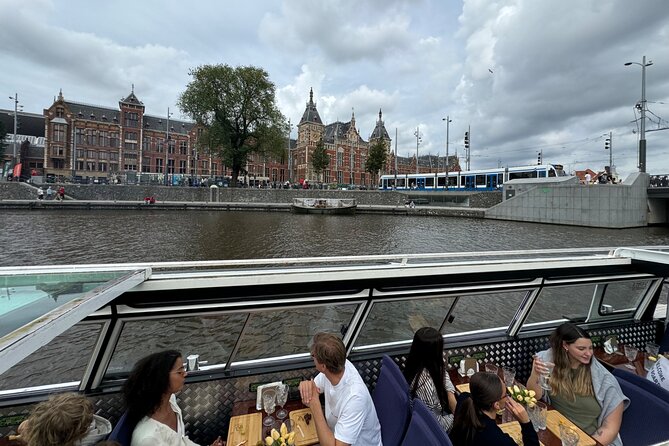
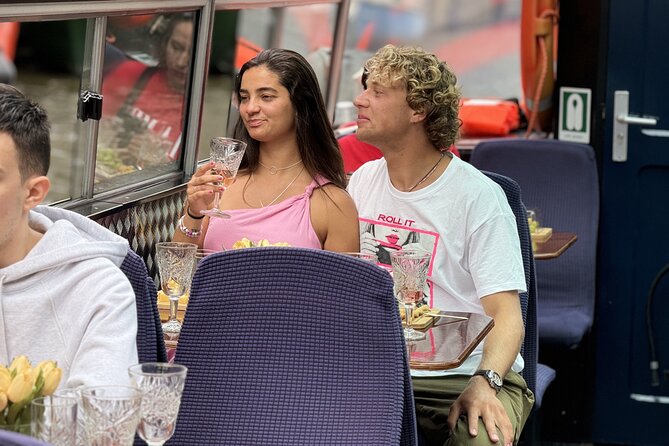
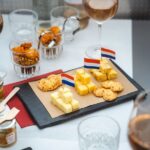
What you’re actually paying for includes the tasting. The tour offers a fine selection of Dutch cheeses plus Heineken beer, wine, sodas, coffee, and tea. That means you’re not stuck with one drink choice, and it helps if your group doesn’t all want the same thing.
I like the way this kind of pairing is handled on a cruise: you’re sampling while you move, so you’re not stuck eating a plate while everyone stares at the same spot. Cheese and wine work best when you can adjust your pace—take a few bites, then sip, then pause for a viewpoint. On this route, you get frequent sight changes, which keeps the food portion from feeling like an afterthought.
Also, practical tip: tasting boards can disappear quickly if you’re not ready for them. If you want the best selection, don’t wait until the end of the hour. Grab a portion early, then relax into the sightseeing.
And if you’re sensitive to cold or wind, plan for it. One mismatch people have raised is that some boats can be open-air. Even if your weather is decent, you may feel cooler while floating. Bring a light layer so you can enjoy the whole hour.
Guides with personality: getting history without the lecture
The biggest difference between a good cruise and a great one is the guide. In this experience, guides bring the canal belt to life through live narration.
A few guide names showed up in people’s descriptions—Floris, Robbie, Ronald, Lex, Tom, Pippin, Berent, and Michel—and the common thread is style. The best tours feel relaxed: you learn facts, but you also get a sense of how Amsterdam works day to day.
For example, guides talk about why Amsterdam’s canals look the way they do—how class shaped architecture and how bridges were designed for practical constraints like money and width. They also tend to answer follow-up questions, including lighter, current-event topics (like festival scenes) if you’re curious while you’re in the city.
If you’re the type who gets impatient with long explanations, this tour’s structure helps. The narration keeps pace with what you’re seeing: canal, bridge, neighborhood shift, then another landmark. You’re not trapped listening for long stretches without visuals.
Who should book this Amsterdam cheese and wine canal cruise?
I’d recommend this cruise if you want:
- A first-night Amsterdam plan that’s easy and doesn’t require museum stamina
- Food and drink built into sightseeing (cheese plus multiple drink options)
- Views of the canal belt’s most photogenic features, including seven-bridges and both the Skinny Bridge and Blue Bridge
- A guide who connects architectural choices to real social history
I’d think twice if:
- You have very specific needs around seating comfort, sun exposure, or table setup (boat types can differ)
- You need guaranteed onboard restroom access and don’t want to confirm in advance
- You want a full, deep museum-style immersion. This is one hour, not a multi-hour history marathon.
Should you book this tour or skip it?
Book it if you want a straightforward, enjoyable Amsterdam “hit list” done with tasting included and live commentary. The $45 price makes more sense here than paying for food separately, and the itinerary covers the canal belt in a way that helps you see Amsterdam’s neighborhoods as a connected system.
If you’re picky about boat comfort or you need a specific seating setup, don’t treat the booking as a guarantee of the same vessel you might picture online. Ask a quick question when you book, so your experience matches your needs. For most people, this cruise is a smart, low-stress way to start your Amsterdam days.
FAQ
How long is the Amsterdam Cheese and Wine Canal Cruise?
It runs for about 1 hour.
Where do I meet, and do I return to the start?
You meet at Amstel 51F, 1018 EJ Amsterdam, and the tour ends back at the meeting point.
What’s included with the ticket price?
The experience includes a selection of Dutch cheeses and alcoholic beverages (including Heineken beer and wine), plus sodas, coffee, and tea. It also includes live in-person guide commentary in English.
Is the tour offered in English?
Yes, the guide provides the experience in English.
What size group is this cruise?
The tour has a maximum of 36 travelers.
Are service animals allowed?
Yes, service animals are allowed.
What’s the cancellation policy for a full refund?
There is free cancellation. You can cancel up to 24 hours in advance for a full refund. If you cancel less than 24 hours before the start time, the amount you paid is not refunded.