REVIEW · WALKING TOURS
Small Group Walking Tour – Hello Amsterdam
Book on Viator →Operated by Who Is Amsterdam Tours · Bookable on Viator
Dam Square in two hours.
This Hello Amsterdam small-group walk is a fast way to learn the city’s layout and stories through the center, using short stops, sights you’ll recognize, and guide-led interaction so it feels more like a guided city reset than a lecture.
I especially like the orientation value for first-timers and the interactive culture moments that keep you paying attention. You also get practical local pointers on where to eat and shop from your guide, which is the kind of usefulness that actually saves time on the rest of your trip.
One thing to plan around: it’s only about two hours, so you cover a lot of key ground without going very deep. Also, the meeting point is extremely central, so arrive a bit early to avoid losing time figuring out who your guide is.
In This Review
- Key things I’d watch for on this tour
- Two Hours to Get Your Bearings in Amsterdam’s City Center
- Price and Value: Why This Small-Group Tour Costs $35
- How the Route Flows: From Dam Square to Westerkerk
- Dam Square and Damstraat: Royal Palace, New Church, and the National Monument
- Beurs van Berlage: The Stock Exchange Building and Amsterdam’s Money Story
- Damrak Near the Red Light District: True-or-False Games and Coffee-Shop Culture
- Haarlemmersluis and the Canal Belt Gateway: Bikes, Bridges, and Photogenic Views
- Singel and the Dancing Houses: Tilted Architecture Along the Water
- Torensluis to Keizersgracht: UNESCO Canals, Slavery Memory, and Family Life
- Westerkerk, Anne Frank House Area, and the Homomonument Finish
- Guides and Interactive Moments: Danni, Jonas, and Adam’s Style
- Practical Tips: What to Wear, How to Find Your Guide, and How to Pace It
- Should You Book This Amsterdam Small-Group Walking Tour?
- FAQ
- How long is the Hello Amsterdam walking tour?
- What’s the group size limit?
- Where does the tour start and end?
- What language is the tour offered in?
- Do I need to pay for admissions at the stops?
- Is there free cancellation, and what if the weather is bad?
Key things I’d watch for on this tour
- Dam Square as the launch pad: start at the National Monument area, with the Royal Palace and New Church in your first line of sight
- Beurs van Berlage stop with a money-story focus: learn how Amsterdam’s stock exchange helped shape the city’s growth
- Damrak near the Red Light District, with games: a true-or-false format that teaches Dutch culture and tolerance fast
- Canal belt viewpoints tied to real themes: dancing houses, bike culture, and the UNESCO canal story
- Torensluis brings in slavery history: a harder chapter is acknowledged alongside the pretty canals
- Finish at Homomonument near Westerkerk and Anne Frank House: you end right where many people want to go next
Two Hours to Get Your Bearings in Amsterdam’s City Center
If Amsterdam feels like a puzzle, this tour gives you the first few corner pieces. You start at Dam Square and end near the Westerkerk and the Homomonument, so you’re not wandering randomly. It’s designed to help you recognize places later, not just take photos while everything blurs together.
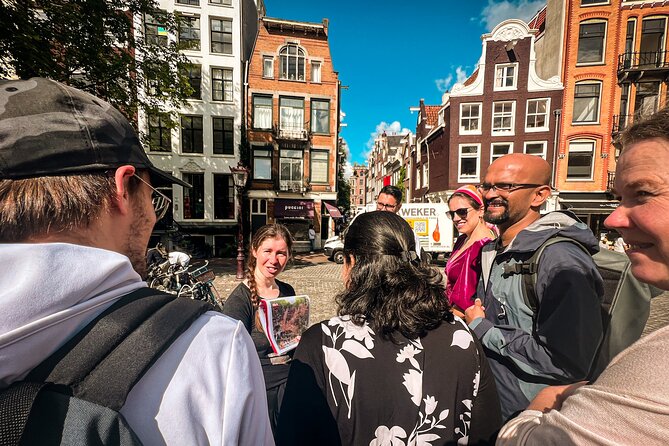
I like that the pacing matches what most people need on day one or day two: short segments, quick explanations, and enough time to look up at architecture while you move. The group size is capped at 15, which helps the guide keep track of questions and keeps the walk from turning into a herd.
And yes, the tour uses games. Not for show, but because it’s a simple way to remember what you learn about Dutch culture—especially in the Damrak area near the Red Light District, where the guide turns facts into a quick true-or-false challenge.
You can also read our reviews of more walking tours in Amsterdam



Price and Value: Why This Small-Group Tour Costs $35
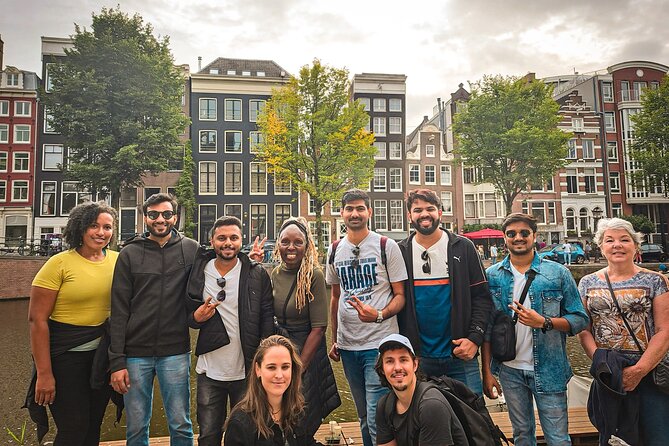
At $35.07 per person for about 2 hours, the value is in the structure. You’re paying for a guide to stitch together major landmarks, neighborhood vibe, and practical tips, without you needing to plan a route.
A big part of the “value equation” here is that the stops are free to enter (no admission-ticket cost baked in). That matters in Amsterdam, where the paid attractions can add up fast. You’ll also get a mobile ticket, and the tour is in English, so you’re not forced into a complicated logistics scramble.
Also, this runs with a small group and has a real guide at the center of it, not just a self-guided script. One more practical point: this is booked on average about 56 days in advance, so if you’re traveling in peak season or on a weekend, I’d lock it in sooner rather than later.
How the Route Flows: From Dam Square to Westerkerk
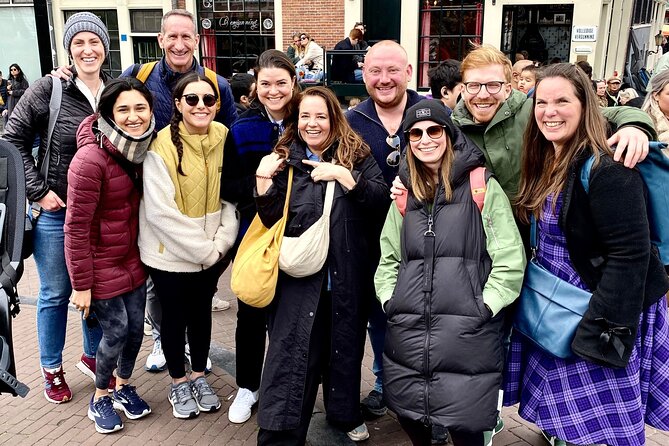
The route is a clean line through the center: Dam Square → Damrak corridor → canal belt edges → final area around Westerkerk and the Homomonument. You’ll walk through places first-time visitors usually want to hit, but the guide frames them with themes—money, culture, bikes, architecture, and history—so it’s not just sightseeing.
Typical stop timing is short (around 10 minutes, with one stop at 15 minutes), which keeps the tour moving without long “stand still and listen” stretches. That’s great if you’re doing Amsterdam for the first time and want to feel oriented in one shot.
One consideration: because the tour is short, it’s best if you treat it as a foundation. If you want a deep dive into any one neighborhood (or the full political and cultural complexity behind the topics mentioned), you’ll likely want to pair this with another specific tour or museum visit afterward.
Dam Square and Damstraat: Royal Palace, New Church, and the National Monument
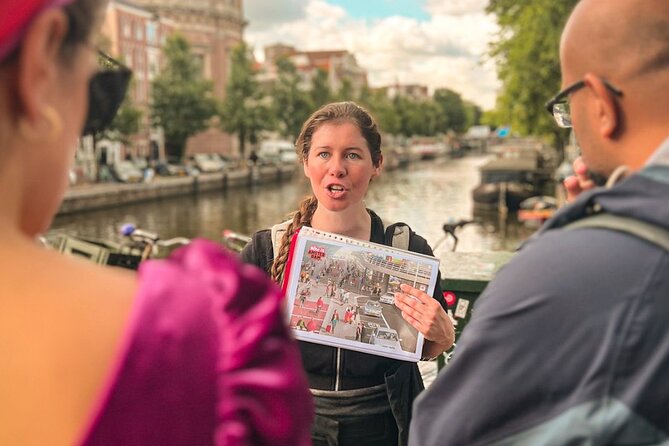
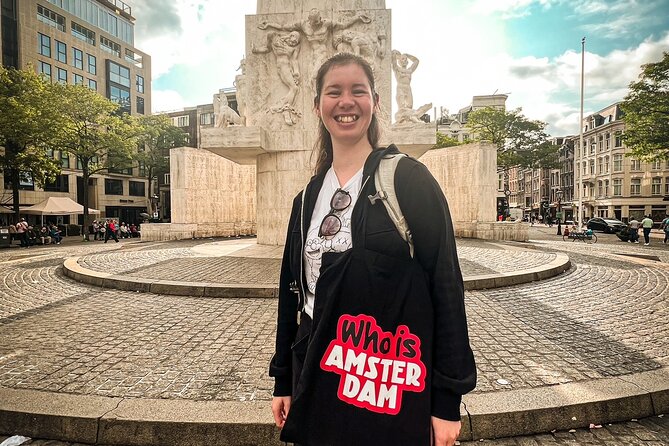
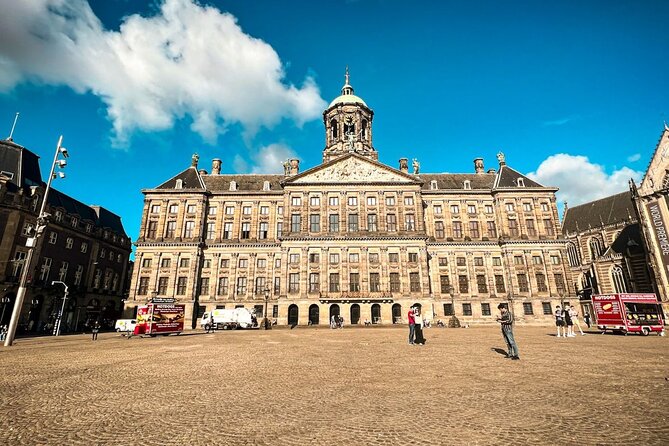
You start at the National Monument on Dam, at 10:00 am, meeting at Dam, 1012 JS Amsterdam. This is the city’s classic “start here” zone: you get a tight view of the Royal Palace area, the National Monument, and the New Church.
Why this start works: Dam Square is central and easy to reference later. Even if you forget some details from the tour, you’ll remember the square as your mental anchor. The guide’s job here is to set the timeline and the context quickly, so the rest of the walk feels connected rather than like random stops.
Potential drawback: Dam Square is crowded and visually intense. If you’re relying on identifying details from your ticket, arrive a few minutes early. One small issue people can run into is confusion about the local operator name shown on the ticket instructions—so check your confirmation and plan to meet at the exact point rather than wandering the square for a long time.
Beurs van Berlage: The Stock Exchange Building and Amsterdam’s Money Story
Next you head to Beurs van Berlage for about 15 minutes. This stop is all about Amsterdam’s financial history—how the city pioneered the stock exchange and how that helped fuel its growth.
I like this angle because it explains why Amsterdam looks the way it does. When you understand that trade and finance shaped the city, the architecture and civic choices make more sense. It also breaks up the tour from being only “pretty canals and photos,” giving you a different kind of story thread.
You don’t need any prior knowledge for this one. The guide keeps it approachable and tied to what you can see at the stop.





Damrak Near the Red Light District: True-or-False Games and Coffee-Shop Culture
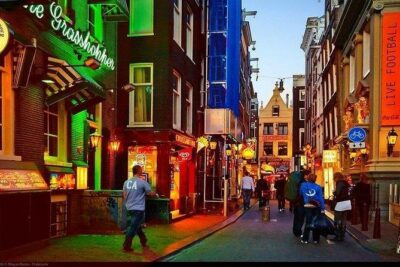
Then comes the Damrak stretch, right by the Red Light District area. This is where the tour gets playful: you’ll do a fast true-or-false game focused on Dutch culture topics, including ideas about tolerance and the culture around coffeeshops.
What makes this effective is that it lowers the intimidation factor. You’re not sitting through a lecture about a sensitive neighborhood. Instead, you’re answering questions, listening, and correcting assumptions in real time—so you actually remember it.
A small caution: Damrak is also one of the busier corridors. Keep your attention on the guide’s instructions and where to stand so you don’t lose time in foot-traffic.
Also, while you’re in this zone, you’ll be looking toward the dancing houses you’ll see echoed again later on the route. It’s a good way to notice a visual theme and then track it as you move.
Haarlemmersluis and the Canal Belt Gateway: Bikes, Bridges, and Photogenic Views
At Haarlemmersluis, you pause for around 10 minutes. This stop acts like a gateway into the canal belt world, with a built-in theme: Amsterdam’s bike culture.
The guide highlights one of the city’s most famous facts in plain terms—there are more bikes than people—and connects it to how locals move through the city. Even if you don’t rent a bike, this kind of context changes the way you view the streets and paths as you walk.
This is also a scenic moment. You’ll get canal-side views and a good “reset” before you head toward the more architectural stop areas.
Singel and the Dancing Houses: Tilted Architecture Along the Water
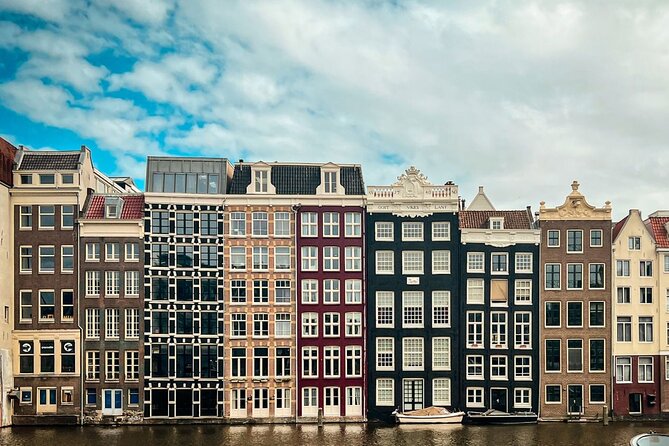
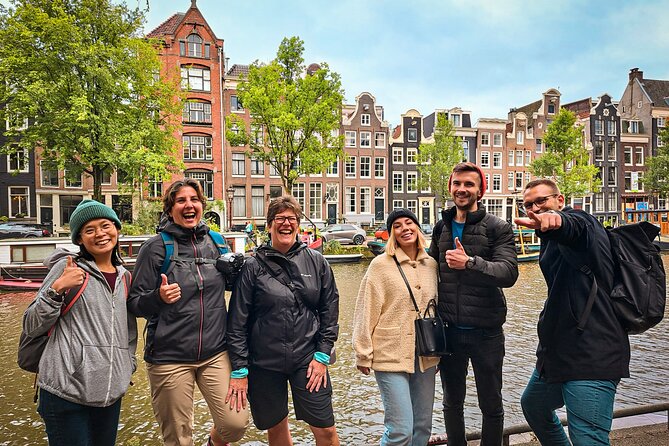
Next is Singel, another canal scene, where you focus on the Dancing Houses. These are the tilted canal-side buildings you see in Amsterdam postcards, and the guide gives you the story behind why they look the way they do.
I like pairing this with the earlier bike-culture stop. After learning about bikes and movement, you shift to architecture shaped by the city’s canal environment. It helps your brain build categories: how people travel versus how buildings behave along water.
This stop is short, around 10 minutes, so make your time count:
- Position yourself for a clear canal view
- Look up as well as ahead, because the character of these houses is in their angles
Torensluis to Keizersgracht: UNESCO Canals, Slavery Memory, and Family Life
At Torensluis, you’re in the UNESCO canal belt area for about 10 minutes. Here the guide covers how the canal belt came together and shares one of Amsterdam’s more difficult chapters: slavery history. It’s not only beauty-focused. The message is that the city’s legacy has light and dark, and you should learn both.
That balance matters. Amsterdam’s canals can feel like pure scenery, but history is attached to the shapes and wealth that made the city possible. This is one of the stops that gives the tour more weight than an ordinary orientation walk.
Then you move to the Emperor’s Canal (Keizersgracht) for about 10 minutes. The theme shifts again, this time to Dutch family life and identity. The guide references UNICEF in 2017, including the idea that Dutch kids ranked among the happiest. You also get guidance on blending in with local rhythms—how the Dutch communicate and what family life can look like day to day.
Why I think this works: it turns culture into something you can imagine, not just facts you forget. It also gives you a kinder lens for reading the city when you’re out on your own later.
Westerkerk, Anne Frank House Area, and the Homomonument Finish
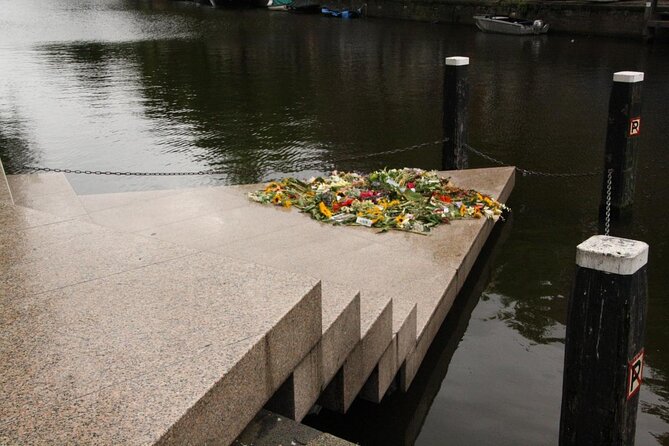
Your final stop is Westerkerk, about 10 minutes. From here, the tour connects the themes of the whole walk—acceptance, diversity, and the idea of live and let live—with the sites around you.
You’ll also encounter the Gay Monument, and the guide ties that theme to Amsterdam’s social mindset, referencing a viewpoint often associated with Geert Mak. It’s a respectful, clear way to bring the tour from the big landmarks into the city’s human values.
The tour ends at the Homomonument near Westermarkt, and it’s only about a 2-minute walk from Anne Frank House, right by Westerchurch. That finish is practical: if you had planned to visit Anne Frank House (or at least want to see the area), you’re already there when you’re done.
If you want to keep moving after the tour, this ending location is a smart starting point.
Guides and Interactive Moments: Danni, Jonas, and Adam’s Style
This tour’s biggest strength is how guides teach. In the stories and games, you’ll hear the names Danni, Jonas, and Adam—and each of them is described as keeping the walk fun and fact-based.
Here’s what that typically means in practice:
- You’ll get explanations that sound like conversation, not a script
- You’ll use quick games (like the Damrak true-or-false format) to lock in facts
- You’ll get local suggestions on where to eat and shop, which is the real-world payoff after the landmarks
One more note from the experience style: it’s engaging enough that you may find yourself wishing the walk were longer. The tour is built to fit the two-hour window, but the tempo can make you want more neighborhood time.
Practical Tips: What to Wear, How to Find Your Guide, and How to Pace It
A few things I’d do before you go:
- Wear comfortable shoes. It’s a walking tour across the center, with a moderate amount of walking. Your pace will be friendly, but Amsterdam streets add up.
- Plan for weather. This experience requires good weather. If you’re traveling in months when rain is likely, bring a light rain layer.
- Arrive early at Dam Square. It’s a major landmark with lots happening. Give yourself time to locate the correct meeting point and the guide.
- Keep your mobile ticket handy. You’ll have it on your phone, and it helps for last-minute checking.
- Use the endpoint to your advantage. Since you finish near Anne Frank House, think about whether you want to visit next or take a longer break in the area.
If you’re the type who likes your day structured, this tour is a clean way to start. If you hate being herded at all, the small group size (max 15) should feel manageable.
Should You Book This Amsterdam Small-Group Walking Tour?
I’d book it if you:
- Are in Amsterdam for the first time and want fast orientation
- Like walking tours that include games and practical local tips
- Want a route that covers major center landmarks without needing separate tickets
I’d hesitate if you:
- Want a long, deep, museum-level experience in one day (this is short on purpose)
- Prefer learning without interaction or quizzes (the tour includes at least one game-style stop)
- Are visiting with very uncertain weather, since good weather is required
Overall, this is a solid “day-one help” tour: you get the big sights, you learn why they matter, and you finish in a location that makes it easy to continue your Amsterdam day.
FAQ
How long is the Hello Amsterdam walking tour?
The tour runs for about 2 hours (approx.).
What’s the group size limit?
The tour has a maximum of 15 travelers.
Where does the tour start and end?
It starts at the National Monument on Dam (1012 JS Amsterdam) and ends at the Homomonument near Westermarkt (1016 DW Amsterdam), about a 2-minute walk from Anne Frank House.
What language is the tour offered in?
The tour is offered in English.
Do I need to pay for admissions at the stops?
Admission tickets are listed as free for the stops included on this walking tour.
Is there free cancellation, and what if the weather is bad?
You can cancel for a full refund up to 24 hours before the experience start time. The tour requires good weather, and if it’s canceled due to poor weather, you’ll be offered a different date or a full refund.