REVIEW · ANNE FRANK & WWII HISTORY TOURS
Anne Frank Walking Tour in Amsterdam
Book on Viator →Operated by EuroQuest Travel · Bookable on Viator
Amsterdam has a quiet kind of power. WWII stories turn the streets into something you can feel, not just read about, and the walk guides you from the Jewish Quarter toward the Anne Frank House area. You’ll learn how Amsterdamers coped during the occupation, and you’ll see key locations that connect everyday life to resistance and survival.
Two things I really like: the focus stays on a clear, human story line, and the guide approach is practical and well prepared. You get a structured route through the Portuguese Synagogue and Jewish Museum area, then the tour sharpens into resistance history like the February Strike and the Winter of Hunger, plus the reality of hiding places. The group is capped at 45 people, which helps keep the experience from feeling chaotic.
One thing to watch: the Anne Frank House ticket is not included (starting at €7), so you’ll need to plan for that extra step if you want to go inside.
In This Review
- Key things to know before you go
- Why this 2-hour walk works so well in Amsterdam
- Price and what $55.94 buys you (and what it doesn’t)
- Nieuwe Amstelstraat meeting point: plan your arrival
- Stop 1: the Jewish Quarter streets, Portuguese Synagogue area, and the occupation years
- Stop 2: Resistance and Survival—February Strike, Winter of Hunger, and hiding places
- Hollandsche Schouwburg: why this stops so many people cold
- Anne Frank House ticket strategy (entry not included)
- Guide style: why the storytelling feels tight, not rambling
- Group size, timing, and choosing the right slot
- Who should book this tour—and who should skip it
- Should you book the Anne Frank Walking Tour in Amsterdam?
- FAQ
- How long is the Anne Frank Walking Tour?
- What does the tour cost?
- Is the tour offered in English?
- Where does the tour start and end?
- Is the Anne Frank House ticket included?
- What’s included in the price?
- Are there different tour times during the day?
- How big is the group?
- What happens if I cancel?
Key things to know before you go
- Two-stop route (Jewish Quarter → Anne Frank House area) keeps the story moving instead of looping.
- WWII details you can place on a map: Amsterdam during occupation, the February Strike, and the Winter of Hunger.
- Portuguese Synagogue and Jewish Museum area are part of Stop 1, and that segment has free admission.
- Hollandsche Schouwburg connection links resistance-era stories to a real deportation center turned memorial.
- Anne Frank House entry is extra and must be booked separately on the official site.
- Max 45 people in English means you can hear the guide without joining a huge pack.
Why this 2-hour walk works so well in Amsterdam
Amsterdam is great at rewarding curiosity, but it can also overwhelm you. This tour helps by giving you a tight timeline and a clear storyline—occupation life, the Jewish neighborhood’s role, and then the Anne Frank House area where the story’s impact is impossible to miss.
The duration is about 2 hours, which is a sweet spot if you’re trying to fit big experiences into a day that may also include canals, museums, and multiple neighborhoods. And because there are various tour timings throughout the day, you can pick a slot that doesn’t wreck your schedule.
If you prefer learning that feels anchored in place—stones, street corners, and buildings you can point to—this format fits. It’s not just names and dates. It’s the setting that makes the history stick.
You can also read our reviews of more walking tours in Amsterdam



Price and what $55.94 buys you (and what it doesn’t)
At $55.94 per person, you’re paying for a professional tour guide and a structured walk through the key locations tied to Amsterdam’s WWII Jewish history and the Anne Frank House area.
That price does not cover Anne Frank House entry. The tour explicitly says entrance to the Anne Frank House is NOT included, and it starts at €7. So your real “total cost” depends on whether you plan to add the visit inside the house.
Here’s how I think about value for this tour:
- You’re buying context and direction—someone helps you connect what you see with what it meant.
- You’re also buying time efficiency. Trying to piece together the same story alone across multiple locations can take longer and may leave you missing the links the guide makes.
- You’ll still need to budget for the Anne Frank House ticket if you want the full experience.
So the tour price is a solid deal for a guided, place-based introduction. The only caveat is the separate add-on cost if you want to enter the house.
Nieuwe Amstelstraat meeting point: plan your arrival
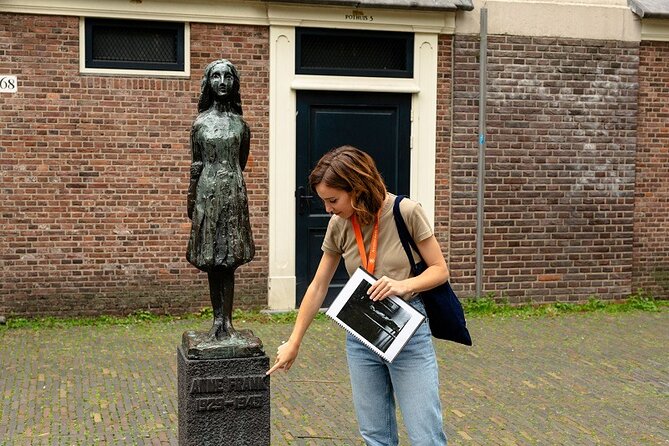
The tour starts at Nieuwe Amstelstraat 1, 1011 RH Amsterdam, and it ends back at the same meeting point. That is helpful because it reduces “where do I end up?” stress when your day is already packed.
It’s also near public transportation, which matters in Amsterdam where good transit can save your feet for the parts you really want to linger at. And since the tour is about walking, I’d treat it like a real walking outing: wear shoes you’re comfortable in and keep your bag light.
Two small scheduling notes:
- Confirmation comes at booking time.
- It helps to pre-book in advance since the experience is popular enough that timing can sell out.
Stop 1: the Jewish Quarter streets, Portuguese Synagogue area, and the occupation years
Stop 1 is where the tour builds the foundation. You’ll walk through the heart of Amsterdam with a focus on monuments and buildings that still carry marks of the war. Your guide shares what Amsterdamers did to cope during the occupation—how normal life didn’t simply stop, even as it was controlled and pressured.
Then you shift into the historic Jewish neighborhood. The tour highlights the area around the Portuguese Synagogue and the Jewish Museum. This is important, because it keeps you from treating the Anne Frank story as a sealed-off, standalone tragedy. You’re shown how this neighborhood mattered, not just as a backdrop, but as a real community with institutions and daily rhythms.
Stop 1 is listed as 1 hour with admission ticket free for this tour segment. Practically, that means you’re not paying for a separate entry during this part of the walk as long as you’re following along with the tour route.
A watch-out (the only one worth caring about here): because the neighborhood is in a living city, you’ll want to keep your attention on the guide’s route. If you get distracted by nearby details, it’s easy to miss the exact historical “why” being pointed out.
Stop 2: Resistance and Survival—February Strike, Winter of Hunger, and hiding places
Stop 2 turns from “place and community” into “what people faced.” Here, the tour focuses on resistance and survival, including the February Strike and the Winter of Hunger. Those events aren’t just referenced—they’re used to explain the pressure the occupation brought and the stakes behind survival stories.
You’ll also hear about secret locations where families—including the Franks—hid to escape persecution. Even if you already know parts of Anne Frank’s story, this section is where the tour helps you understand the broader pattern: fear didn’t appear out of nowhere, and resistance didn’t happen in a vacuum.
This stop is also about places, not just themes. The tour includes Hollandsche Schouwburg, which was a former theater that served as a deportation center during the occupation. Today, it functions as a memorial and museum. That shift—from a stage for performances to a stage for deportations—is the kind of reality check that makes the history feel heavier than a textbook page.
Stop 2 runs about 1 hour, and it notes admission ticket not included. In practice, that lines up with the bigger point: the Anne Frank House itself is where you may want to add your own entry.
The tour concludes near the Anne Frank House, so you finish right at the place everyone came for, with the story fresh in your head.






Hollandsche Schouwburg: why this stops so many people cold
Some sites are famous. Others are famous later. Hollandsche Schouwburg falls into the second category for many visitors: it may not be the first name you hear when you plan your trip, but it carries weight because it explains how the occupation machinery worked.
The tour’s focus makes sense. If you only concentrate on hiding, you miss the wider reality—how people were forced into systems of persecution. By connecting resistance history and hiding places with a deportation center that is now a memorial, the tour gives you a fuller picture of how hope and catastrophe lived side by side.
Also, the tour’s tone matters here. The experience is guided, structured, and clearly prepared, and that helps you keep respect without feeling lost. One of the best parts, in my opinion, is how the stories feel tied to ongoing work to remember and research lives lost. That kind of care changes the whole vibe of a history stop.
Anne Frank House ticket strategy (entry not included)
The tour ends near the Anne Frank House, but entry to the Anne Frank House is not included in the walking tour price. The listing says tickets start at €7, and the tour recommends buying separately from the official Anne Frank House website.
So here’s the simple strategy:
- If your heart is set on going inside, plan to book your Anne Frank House ticket separately for a time that works with your walking tour slot.
- If you’re not sure, at least decide before you arrive, because the walking tour finishes at the right doorstep—but you won’t be able to assume access is bundled.
This is also why pre-booking matters. The walking tour itself is something you should secure ahead of time to avoid disappointment, and the Anne Frank House add-on may have its own timing pressure.
Guide style: why the storytelling feels tight, not rambling
The guide is the product here, and the good news is the experience is built around a guide who can keep the thread straight. The walk is organized into two coherent stops, with a clear shift from Amsterdam during occupation to Jewish neighborhood context, then onward to resistance and survival stories.
You’ll also notice something else: the tour doesn’t treat history as frozen. One of the strongest signals from the experience itself is that the information is presented with respect for what is still being researched and understood about the lives affected. That doesn’t turn it into a lecture. It keeps the tone human and grounded.
And because the group size is capped at 45 people, you’re more likely to hear the guide without playing a constant game of shoulder-to-shoulder listening.
Group size, timing, and choosing the right slot
The tour runs in English and has a max size of 45 travelers—and I’d treat the small-cap group rule as a big deal, not trivia. In busy Amsterdam, smaller groups mean fewer disruptions and more chance to follow the explanation as you walk.
Tour timings are available throughout the day, which helps you match it to your energy. If you schedule it too late in the day, history can start blending together with fatigue. If you do it early or mid-day, you’ll likely feel more alert to the guide’s details and the meaning of each location.
Also, the average booking window is about 34 days in advance, which is a quiet hint that this is not a “wing it” experience. Pre-booking is mentioned as the best way to avoid disappointment, and that tracks with how popular Anne Frank-themed experiences can be.
Who should book this tour—and who should skip it
This tour is a strong fit if you want:
- A guided, place-based introduction to Amsterdam’s WWII-era Jewish neighborhood and the Anne Frank House area
- A walk that connects occupation life, community context, resistance efforts, and survival
- A manageable 2-hour experience that you can pair with other Amsterdam plans
You might want to skip or adjust your plan if:
- You only want to focus on Anne Frank House interior time and nothing else (because entry isn’t included—you’ll still need separate tickets)
- You don’t have any flexibility to add that ticket step later
Most people can participate, and it allows service animals. It also runs near public transportation, so getting there doesn’t have to eat your day.
Should you book the Anne Frank Walking Tour in Amsterdam?
Yes—if you want a guided, respectful way to connect the story to real locations. The value is in the structure: Amsterdam and the Jewish Quarter first, then resistance and survival, then a close finish near the Anne Frank House. That pacing keeps you from treating it like a checklist.
Book it in advance because it’s popular enough to sell out, and remember that the Anne Frank House visit is an add-on. If you’re willing to handle the separate ticket and you like guided walks that turn streets into story, this is one of the most practical ways to see this chapter of Amsterdam with your eyes open.
FAQ
How long is the Anne Frank Walking Tour?
The tour lasts about 2 hours.
What does the tour cost?
The price is $55.94 per person.
Is the tour offered in English?
Yes, it’s offered in English.
Where does the tour start and end?
It starts at Nieuwe Amstelstraat 1, 1011 RH Amsterdam, and it ends back at the same meeting point.
Is the Anne Frank House ticket included?
No. Entrance to the Anne Frank House is NOT included, and tickets start at €7. You can buy tickets separately from the official Anne Frank House website if you want to visit.
What’s included in the price?
The price includes a professional tour guide.
Are there different tour times during the day?
Yes. The tour has various tour timings throughout the day.
How big is the group?
The tour has a maximum size of 45 travelers.
What happens if I cancel?
The experience is non-refundable and cannot be changed for any reason, so you won’t get your money back if you cancel or request an amendment.