REVIEW · WALKING TOURS
Walking Tour about Golden Age Architecture, private local guide
Book on Viator →Operated by Artsy Tours · Bookable on Viator
Amsterdam has a way of pulling you in fast. This private 90-minute walking tour turns street scenes into clear stories about Golden Age building design, engineering, and the people who paid for it. You’ll start in Dam Square, then move canal to canal toward the Westerkerk, with a local guide pointing out details most passersby never notice.
I especially like how the tour focuses on how buildings worked, not just how they looked. Two standouts for me: you’ll learn the engineering logic behind major landmarks, and you’ll get the kind of practical detail about façades and materials that makes Amsterdam feel readable on your own. If your guide is Anna, you’ll likely notice another big plus too: she’s praised for crisp English and answering real questions without rushing you.
One possible drawback: this is a walking tour and it’s not built for slow mobility. It’s roughly 1.5 hours on foot, with no mobility aids provided, so plan accordingly if standing or walking is tough for you.
In This Review
- Key things to look forward to
- Why Amsterdam’s Golden Age architecture still feels personal
- Your 90-minute route: how to get real value for the money
- Dam Square to the Royal Palace: power, planning, and building on tough ground
- House Bartolotti and the canal-belt façades: baroque drama with merchant fingerprints
- De Dolphijn and the story of Frans Banning Cocq: wealth symbols you can actually spot
- Ronde Lutherse Kerk to Prinsengracht warehouses: religion, shipping, and hoisting beams
- Jordaan’s gevelstenen (facade stones): the tiny plaques that explain the city
- Westerkerk spire and Rembrandt’s final resting place: closing with scale and meaning
- Who should book this walking tour (and who should think twice)
- Should you book this Golden Age architecture walk?
- FAQ
- How long is the Golden Age architecture walking tour?
- What’s the price per person?
- Is the tour private or shared?
- What language is the tour offered in?
- Where does the tour start and where does it end?
- Are tickets or entry fees included?
- Is bottled water included?
- Is the tour suitable if I use a walker or have trouble walking?
- What’s the cancellation policy?
Key things to look forward to
- A private local guide just for your group so you can ask questions as you go
- Dam Square to Westerkerk in a tight route that hits major Golden Age beats
- Architectural details with a purpose: trade, building materials, and how structures were made
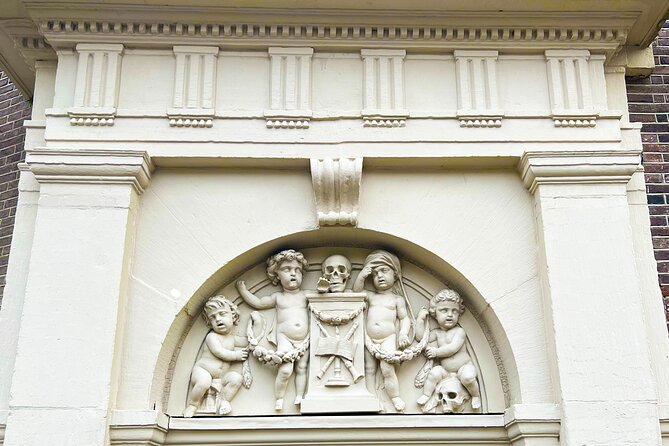
- Canal belt façades you’d miss otherwise, including gevelstenen facade stones
- Short stop times, lots of pointers so you return to the street with a sharper eye
Why Amsterdam’s Golden Age architecture still feels personal
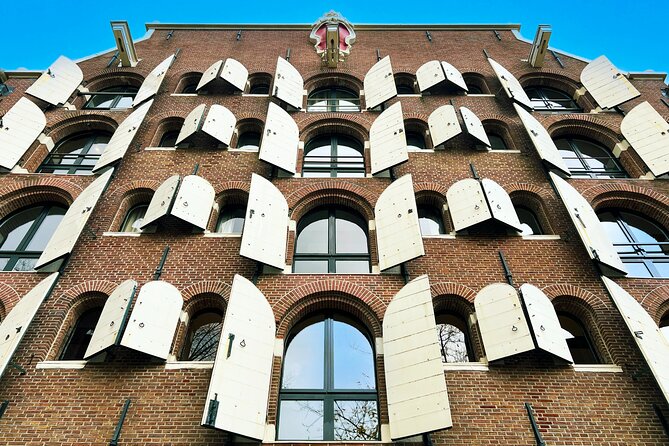
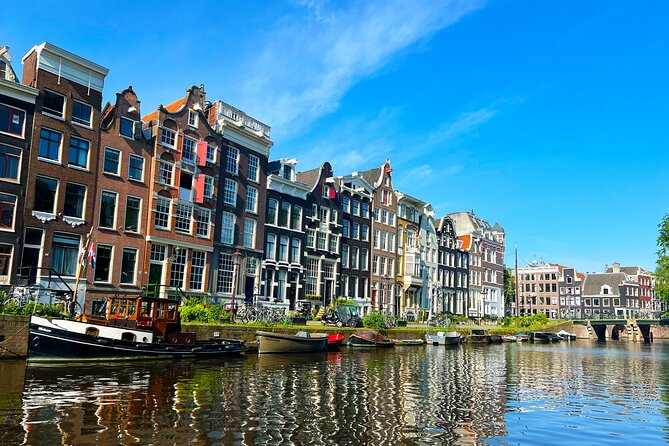
Amsterdam’s 17th-century prosperity didn’t just create big monuments. It funded everyday architecture along the canals, and it shaped how the city functions even today. When you see Golden Age buildings with context, the city stops feeling like random pretty streets and starts feeling like a living design system.
That’s what I like about this tour format. You’re not only looking at landmark exteriors; you’re learning the “why” behind forms like steep gables, sculpted stonework, and the façade patterns that marked wealth. You also get stories tied to trade—maritime power, merchant ambition, and the practical needs of shipping goods in and out of the harbor.
A private guide makes this easier because you can ask follow-ups on the spot. And with this particular route, the buildings aren’t just famous. They’re placed so you can compare styles and see how they changed as the city grew.
You can also read our reviews of more walking tours in Amsterdam


Your 90-minute route: how to get real value for the money
The price is $73.59 per person for about 1 hour 30 minutes, in English, with a private local guide. That might sound “tour-ish,” but the math makes sense for a city where finding the right details on your own can take hours. You’re paying to save time and to get a guided eye trained on engineering, design choices, and the stories behind specific façades.
A few practical notes to set expectations:
- Stop times are brief, so you’ll get a lot of highlights quickly rather than long museum-style viewing.
- It’s a walking tour, so comfort matters more than collecting tickets or entry stamps.
- Mobile ticket is part of the deal, and bottled water isn’t included—bring your own or plan to buy along the way.
Booking timing also hints at demand: it’s commonly reserved around 43 days ahead. Translation: if you’re visiting in peak season, don’t wait until the last week.
One more practical perk: the tour is set up as private, meaning only your group participates. That’s ideal for couples who want calm pacing, friends who like photos and questions, or solo travelers who don’t want to compete with a big group.
Dam Square to the Royal Palace: power, planning, and building on tough ground
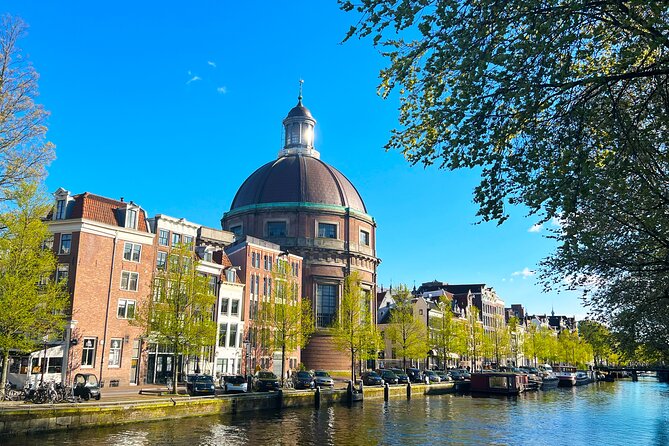
You start at Dam Square, and the guide doesn’t waste time turning the plaza into context. This is where you get the city’s big picture: Amsterdam’s rise in the 17th century as a global trade hub, and how that wealth translated into architecture and culture. It’s a useful warm-up, because the rest of the walk becomes easier to follow once you understand the city’s priorities back then.
Then you head to the Royal Palace Amsterdam, originally built as the city’s town hall during the Dutch Golden Age. Here’s the kind of detail I love: you learn how it was a symbol of Amsterdam’s power and prosperity, and later transformed into a royal residence. Even if you’ve seen photos, the architectural language matters when you know the building began as civic headquarters.
The guide also highlights the Dutch Neoclassical style and the practical reality that it was built on challenging clay and marshy ground. That’s not trivia—it changes how you read “grand” buildings. If the ground is soft, the structure has to handle it. You’re seeing engineering choices shaped by the soil, not just aesthetic choices aimed at impressing visitors.
Potential downside for some: the tour leans on explanations and exterior-to-interior concepts rather than long inside time. If you expect extended palace-style viewing, this walk is more about interpretation than sightseeing deep enough to linger.
House Bartolotti and the canal-belt façades: baroque drama with merchant fingerprints
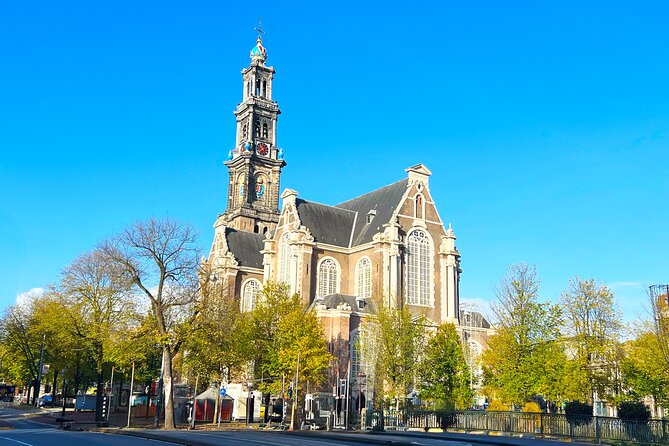
From the Royal Palace, you move to House Bartolotti, a 17th-century example of Dutch baroque architecture along one of the canals. You’ll see the striking red brick, the large windows, and sculptural details made from sandstone. The point isn’t just that it looks fancy—it signals status, and the story connects that status to trade routes, including the owner’s trading ties with Italy.
This stop works because it trains your eye on patterns. Once you’ve noticed the materials (red brick and sandstone) and the façade style, you start recognizing how Amsterdam’s wealth showed up in brickwork and stone carving, not only in large buildings.
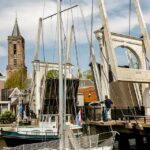
Next comes Torensluis, a wide bridge with views of four distinct façade designs popular with the mercantile class. You also get a quick lesson in how Baroque style got adapted in the Netherlands. This is where the tour gets extra Amsterdam-specific: you’ll notice the charm—and oddness—of crooked houses. Their lean is not a design joke. It’s tied to Amsterdam’s soft, marshy ground over time.
If you like architecture because it’s honest about limitations, this is one of your best stops.
De Dolphijn and the story of Frans Banning Cocq: wealth symbols you can actually spot
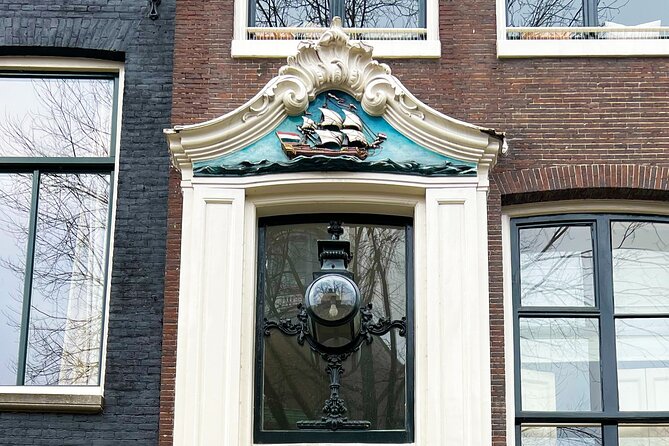
At De Dolphijn, you learn the meaning behind the house name. The dolphin symbol links to wealth from Amsterdam’s maritime trade during the Dutch Golden Age. You also hear the ownership story: it was originally owned by Frans Banning Cocq, the captain immortalized in Rembrandt’s The Night Watch.
This is a smart storytelling choice. Instead of treating the building like a random canal house, the guide connects it to a recognizable cultural reference. Then you can look at the façade with a sense of who wanted to be seen, and why.
What you’re really doing here is collecting “visual clues.” Once you know a dolphin can mean maritime wealth, you’ll start noticing other symbols and details as you walk on your own later. That’s the hidden value of a good architecture guide: it gives you a skill, not just a schedule.
You can also read our reviews of more guided tours in Amsterdam




Ronde Lutherse Kerk to Prinsengracht warehouses: religion, shipping, and hoisting beams
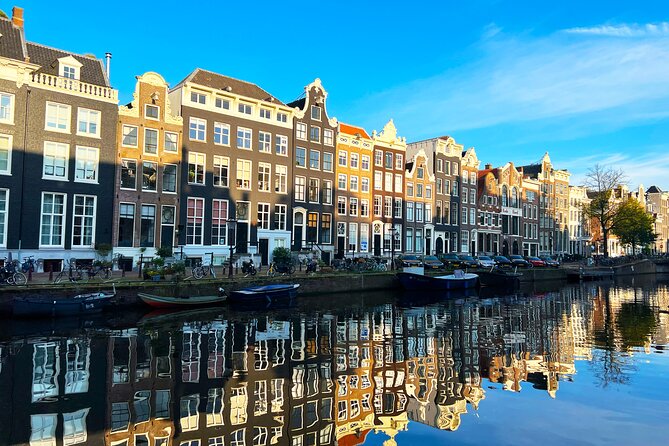
The tour then shifts mood slightly at Ronde Lutherse Kerk. This stop centers on domes and the fact that domes were a high point of architectural achievement during the Renaissance. Even in a city famous for Golden Age canal façades, it’s useful to see how big structural ideas—like the dome—fit into broader European architectural trends.
From there, you get to Prinsengracht, and this is a highlight if you like the practical side of architecture. The warehouses along Prinsengracht are classic Golden Age trade buildings designed to handle goods, not to show off too much ornament.
You’ll learn what to look for:
- tall, steeply pitched gables
- large windows
- wooden hoisting beams on the roof used to lift heavy cargo from ships docked along the canal
And the façades tell you the same story. Exteriors are relatively simple, with clean lines and minimal ornamentation. The grand scale signals merchant power, while the design details show day-to-day logistics.
A small but helpful tip: once you understand that these buildings were built for lifting and storage, you’ll start “seeing work” in the architecture. That makes the canal belt feel less like wallpaper and more like infrastructure.
Jordaan’s gevelstenen (facade stones): the tiny plaques that explain the city
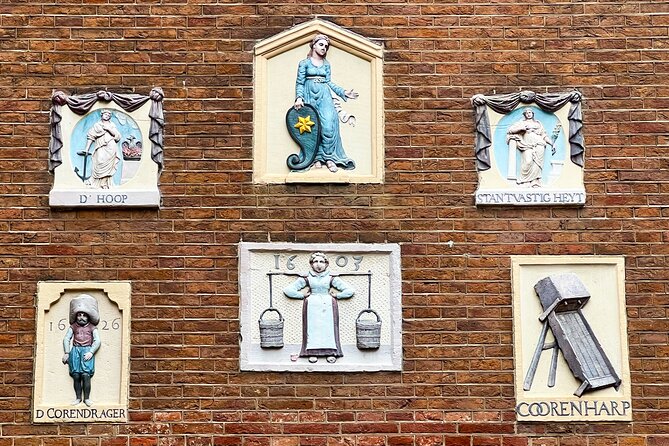
Next you reach the Jordaan area, and the guide uses it to connect urban layout with class and work. In the 17th century, this neighborhood included residential and commercial life. It was originally developed for craftsmen and laborers—people who built, repaired, sold, and traded. Over time, you can see how the canal grid and dense housing created a walkable workday.
But the real star here is what you focus on: gevelstenen, or facade stones. These are small decorative plaques embedded in façades. They often communicate:
- how a building was used
- the profession of the owner
- other key facts about residents and people working there
Many feature detailed carvings, so the street becomes a record of identity and occupation. This is one of those stops where a good guide changes your whole experience of a city. After you learn what to spot, you’ll start noticing the “micronarrative” in doorways, corners, and façade lines as you wander.
Westerkerk spire and Rembrandt’s final resting place: closing with scale and meaning
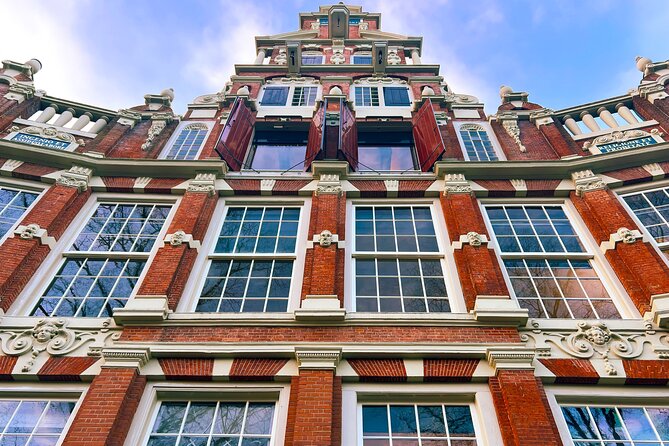
The walk ends near the Westerkerk, one of Amsterdam’s important landmarks, with the final stop positioned close to the Anne Frank House area.
Here’s what makes this ending satisfying. The Westerkerk began as a Calvinist church built for a growing population, and the architecture reflects that: a large, airy interior with simple, elegant design typical of Calvinist worship spaces. You’ll also learn its major historical connection as the final resting place of Rembrandt van Rijn.
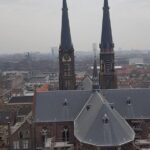
Then the conversation moves upward—literally. The church spire rises 85 meters (280 feet) above the Jordaan district, completed in 1638. It’s crowned with an imperial crown symbol linked to Amsterdam’s status since the 15th century. And the clock’s chimes are part of the cultural story, with Anne Frank’s diary mentioning the sound as the hours moved by.
If the tour started with trade power at Dam Square, it ends with civic identity and cultural memory. It’s a tidy arc: from commerce to belief to art, all in a walk you can finish in about 90 minutes.
Who should book this walking tour (and who should think twice)
This is a great fit if you:
- love architecture and want specifics about materials, styles, and engineering
- want a fast way to learn what you’re seeing on Amsterdam’s canal belt
- prefer a smaller, private format where you can ask questions and take photos without feeling rushed
- like history that’s tied to real buildings, not just dates
It may be less ideal if you:
- struggle with walking and standing for around 1.5 hours
- use a walker, since the tour is not recommended for that
- need mobility aids, since none are provided
One other practical note: it’s not a bottled-water tour. Bring something to drink if you tend to get thirsty on walks.
Should you book this Golden Age architecture walk?
If you want to understand Amsterdam in one short stretch, I’d book it. The value is in the focused guidance: you see major Golden Age buildings, but you also learn the design logic behind them—trade needs, material choices, and even why houses lean. It’s also a private format, which makes it feel more personal and easier to control your pace.
Skip it only if your mobility is limited enough that 1.5 hours on foot is likely miserable. Otherwise, this is the kind of tour that gives you a better relationship with the city long after you leave the canal belt.
FAQ
How long is the Golden Age architecture walking tour?
It runs for about 1 hour 30 minutes.
What’s the price per person?
The price is $73.59 per person.
Is the tour private or shared?
It’s private. Only your group will participate.
What language is the tour offered in?
The tour is offered in English.
Where does the tour start and where does it end?
It starts at Royal Palace Amsterdam, Nieuwezijds Voorburgwal 147, 1012 RJ Amsterdam, and ends near the Westerkerk at Prinsengracht 279, 1016 DL Amsterdam, close to the Anne Frank House.
Are tickets or entry fees included?
Admission Ticket is listed as Free for the stops.
Is bottled water included?
No, bottled water is not included.
Is the tour suitable if I use a walker or have trouble walking?
It’s not recommended for participants who use a walker, and it’s also not recommended if you have trouble walking and standing for 1.5 hours. Mobility aids are not available.
What’s the cancellation policy?
Free cancellation is available. You can cancel up to 24 hours in advance for a full refund.