REVIEW · WALKING TOURS
Amsterdam Small-Group Walking Tour
Book on GetYourGuide →Operated by Guides and Tours · Bookable on GetYourGuide
Amsterdam can feel like a puzzle at first. This walking tour is built to turn the streets into a clear story fast. I especially like the small-group size (10 people max) and the way guides such as Rob and Laura mix history with a lively, not-try-hard tone that keeps you paying attention. It’s also a great format for first-timers because you cover major landmarks without spending your whole day on buses.
What you’ll get is a guided walk through Amsterdam’s best-known places plus the human stories that usually don’t fit on postcards. You’ll hear about the Golden Age, the evolution around the Red Light District, Dutch approaches to prostitution and drug policies, and moving 20th-century history including the Nazi occupation and Anne Frank. One possible drawback: it’s a walking tour—and while it’s listed as wheelchair accessible, it’s also marked as not suitable for people with mobility impairments, so you should judge the route and your own pace carefully.
In This Review
- Golden-Age Orientation Starts at Beursplein 1
- Beursplein to Dam Square: Commerce Meets Power
- Nieuwe Kerk and the Royal Palace: Photo Stops, Real Context
- Zeedijk Street and the Red-Light Neighborhood Edge
- Nieuwmarkt Square and the Jewish Cultural District
- Begijnhof: The Courtyard Pause You’ll Appreciate
- Amsterdam Flower Market: A Busy Visit That Breaks Up the Day
- Muntplein Finish: Where You Reset Before Exploring More
- What the Guide Story Style Feels Like in Practice
- Price and Value: Why $20 for 2.5 Hours Makes Sense
- Who This Tour Fits Best (and Who Should Think Twice)
- Should You Book This Amsterdam Small-Group Walk?
- FAQ
- Where does the tour start and how do I find the guide?
- How long is the Amsterdam Small-Group Walking Tour?
- What’s included in the price?
- What language(s) are tours offered in?
- How many people are in the group?
- Is it wheelchair accessible?
- What should I bring?
Golden-Age Orientation Starts at Beursplein 1
Beursplein 1 is a smart starting point because it puts you in the middle of the action without forcing you into a long commute. You’ll meet at Cafe Bistro, by the bull figure, with your guide holding a blue umbrella (or a tag with the Amsterdam Guides & Tours logo). From there, the guide sets the tone quickly: what Amsterdam is, why it grew, and how to read the city as you walk.
The tour begins with a guided introduction at Beursplein itself. That first stretch matters more than it sounds. Amsterdam’s canals, bridges, and dense building blocks can confuse you when you arrive cold and jet-lagged. This kind of opening helps you build a mental map before you’re standing in front of big squares and churches.
Beursplein to Dam Square: Commerce Meets Power
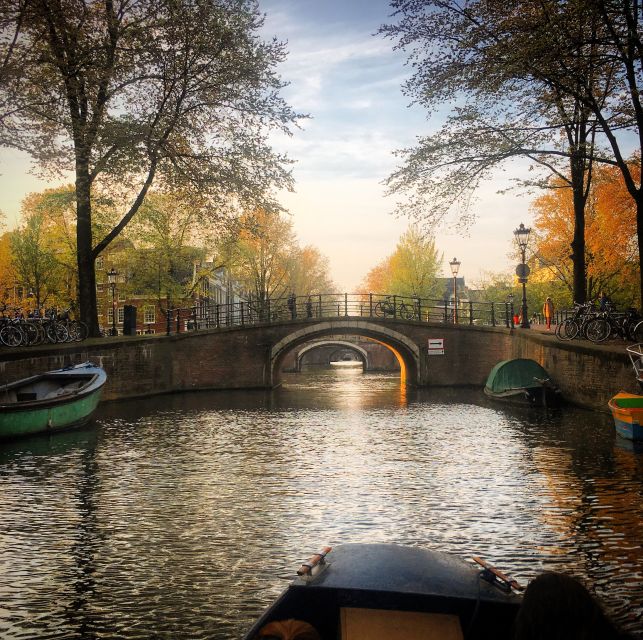
Your walk heads toward Dam Square, Amsterdam’s classic centerpiece. Dam Square is the kind of place where you can easily miss what’s really going on because it looks like a single big open space. The guide helps you see it as a power center tied to trade, governance, and the city’s changing values over time.
You also get picture-stop time at key landmark clusters near the square. Even if you only get a few minutes at each spot, a good guide’s framing turns those stops into something more useful than photos. Think: where you’re standing, what era you’re looking at, and what social change was happening around it.
You can also read our reviews of more walking tours in Amsterdam



Nieuwe Kerk and the Royal Palace: Photo Stops, Real Context
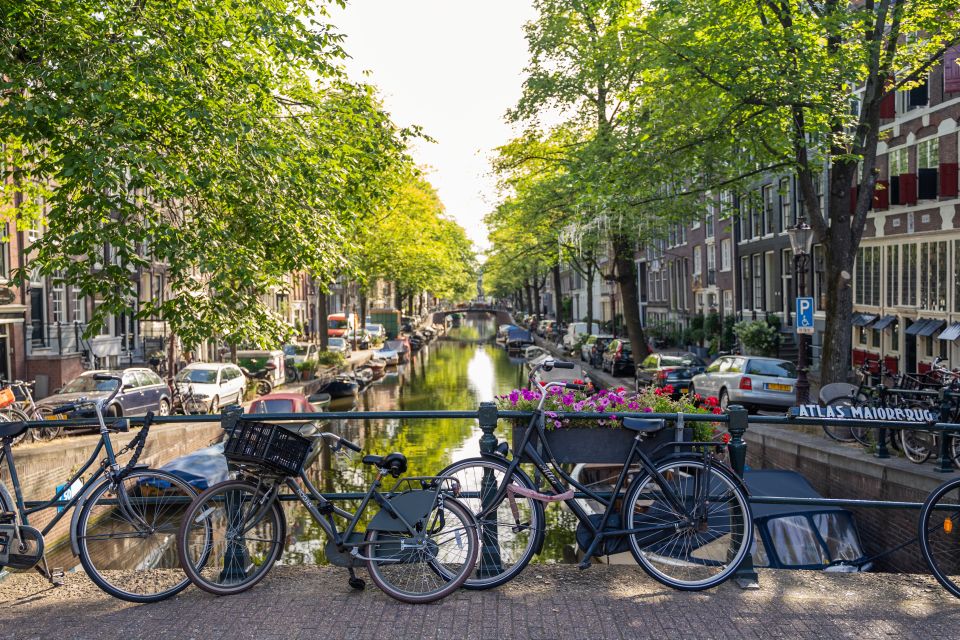
You’ll stop at Nieuwe Kerk (New Church) and the Royal Palace for photos. The structure here is simple: short time at the sites, then back into walking. The value is in the explanation, not the linger.
Nieuwe Kerk and the Royal Palace are often treated like must-see backdrops. Here, you’re guided toward understanding why this area became a stage for public life. It’s a nice way to “get oriented” without turning the morning into an all-day museum plan.
Practical note: because these are photo stops, you’ll want to be ready to move. If you like lingering, save that energy for later after the tour ends and you know where you want to return.
Zeedijk Street and the Red-Light Neighborhood Edge
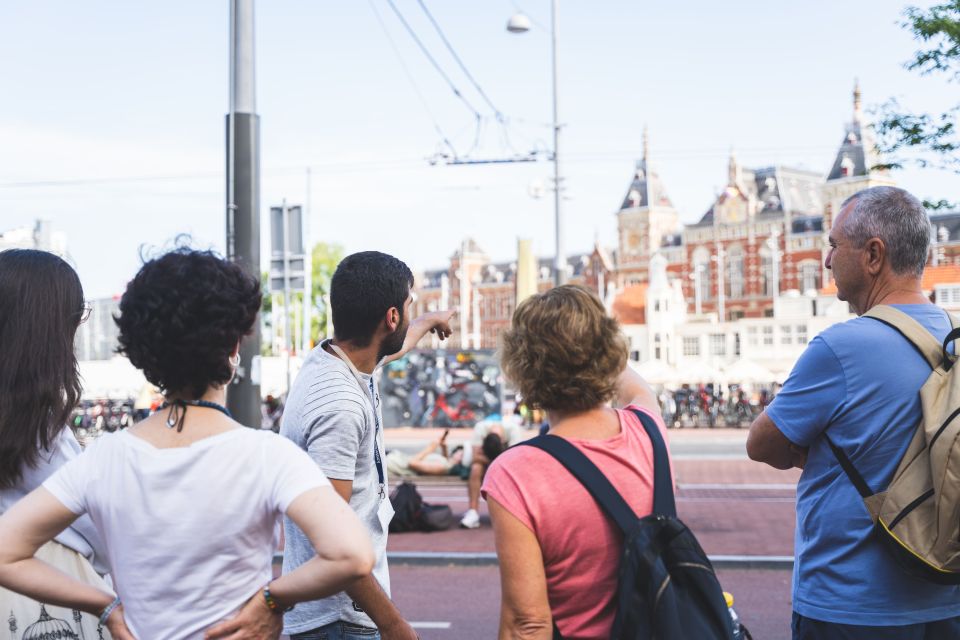
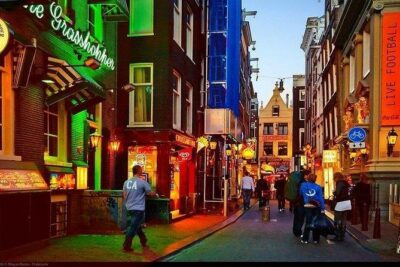
Zeedijk Street is where the tour’s tone starts to change. It’s still central Amsterdam, but it feels older and more layered—exactly the kind of street where stories matter. The guide uses this area to connect Amsterdam’s reputation with how policy and social life have shaped the city over time.
This is also where you’ll likely hear about the Red Light District in a way that tries to explain systems, not just shock. The tour’s overview explicitly includes the history and evolution of the Red Light District and the city’s liberal approach to prostitution. That context is useful because it helps you understand what you see, instead of just judging it or ignoring it.
If this subject is sensitive for you, it helps to know that the tour presents it as history and policy—plus the human side—rather than as a gimmick.
Nieuwmarkt Square and the Jewish Cultural District
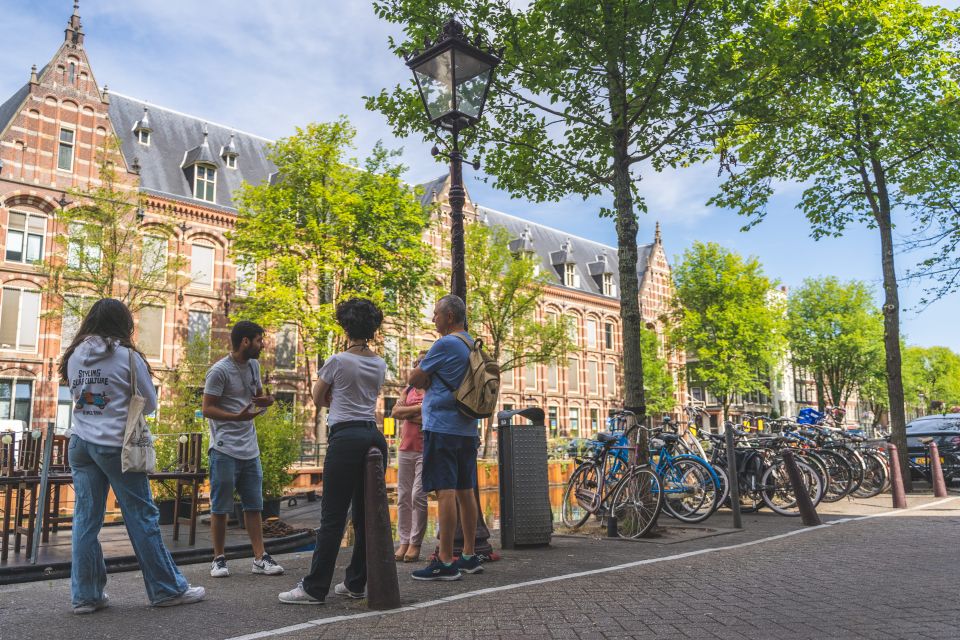
At Nieuwmarkt Square, you shift into Amsterdam’s communities and crossroads energy. Nieuwmarkt is a good anchor point because the area has long connections to trade and migration, so it works as a bridge between the city’s “business brain” and its lived experiences.
From there you move through the Jewish Cultural District with guided time. This matters because the tour doesn’t treat Amsterdam like a single-era postcard. It specifically includes the darker chapters of the 20th century, including the Nazi occupation, and it ties that memory to what survives in the city’s story.
Zuiderkerk is another photo stop that helps you feel the layers of faith and neighborhood life. In a short visit, you won’t study the building like you would inside a church or museum. But with the guide’s framing, you can at least connect architecture to the city’s social history.
Begijnhof: The Courtyard Pause You’ll Appreciate
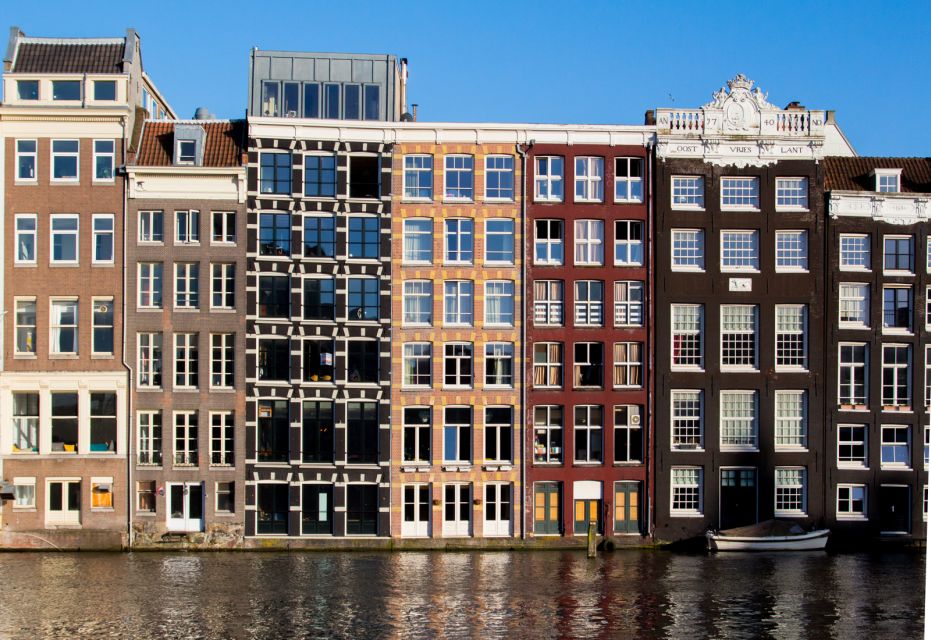
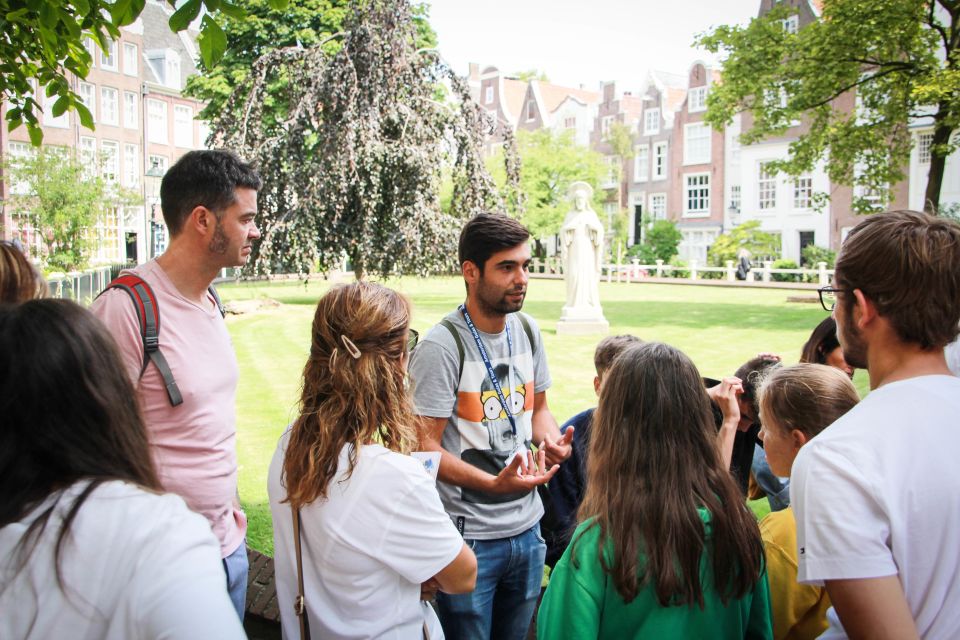
Begijnhof is a turning point in the walk. After squares and streets, you get a guided stop with real quiet-courtyard energy. This is the kind of place that makes Amsterdam feel less like a theme park and more like a city with everyday routines and hidden corners.
Begijnhof is also a good example of why a guide is worth it. You could walk past an area like this and think it’s just a pretty courtyard. With explanation, it becomes part of Amsterdam’s social fabric—an example of how communities lived side-by-side and what values shaped daily life.
The time here is long enough to actually take it in—about 20 minutes. That’s a gift on a walking tour, especially if you’re visiting in wind and cold.






Amsterdam Flower Market: A Busy Visit That Breaks Up the Day

Then you hit the Amsterdam Flower Market with a set visit window. Flower markets can feel touristy fast, but having a timed stop can be a smart way to experience it without getting stuck shopping for an hour.
This is a good moment to use your senses. The tour keeps you moving, but the market pause gives you a change of pace before the final photo stop. If you want small gifts—seasonal bulbs, souvenirs tied to Dutch horticulture—this is the spot to consider.
Muntplein Finish: Where You Reset Before Exploring More

You’ll finish with a photo stop at Muntplein and then head back to Beursplein 1. That structure works well because you end near where you started. You don’t have to think about transit logistics or map your way back while you’re tired.
Muntplein is also a natural “reset point.” After a 2.5-hour orientation, you’ll be ready to decide what’s next: canalside wandering, museum time, shopping streets, or a slower return to any stop that grabbed you.
What the Guide Story Style Feels Like in Practice
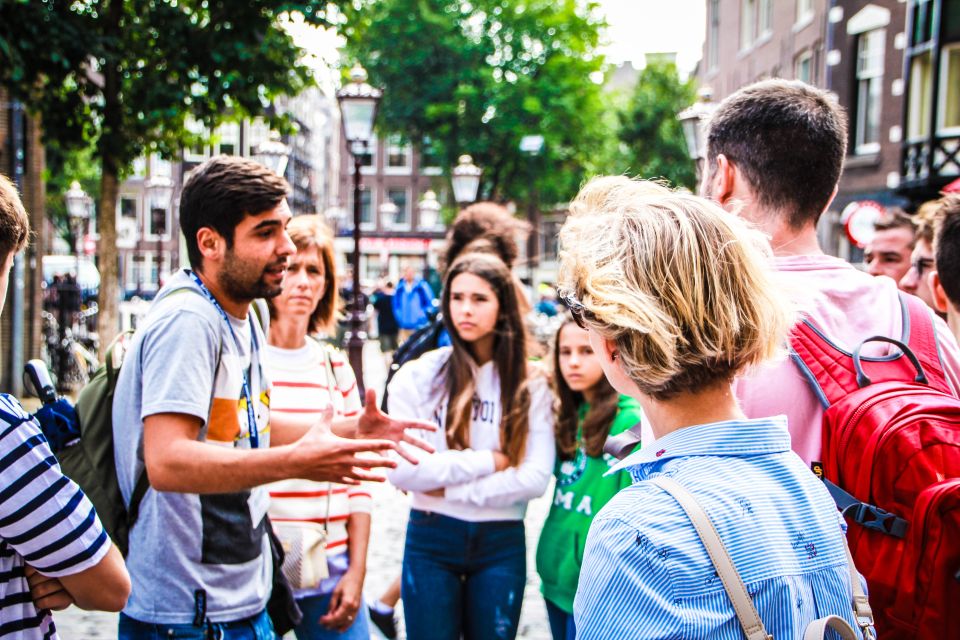
The big selling point here isn’t only the stops—it’s the way the guide connects dots. The tour description promises history, culture, and entertainment, and the guide style is repeatedly praised as funny, engaging, and not exhausting.
You’ll see this reflected in how guides are described in the provided details: some guides are noted for a dry sense of humor and light foreshadowing (Ilyan is one name associated with that style). Others are described as sympathetic and easy to follow without rushing (Rob and Laura come up again and again). When people are only a couple on the tour, the experience can feel more personal, with time to ask questions and linger where you want.
A couple practical touches show up too. Some guides have been praised for taking you to a warm café stop when weather gets rough, and for being responsive about pace and photos. Even if you don’t expect extra stops, it’s a good sign that the tour is guided with real-world pacing, not a strict cattle-line schedule.
Price and Value: Why $20 for 2.5 Hours Makes Sense
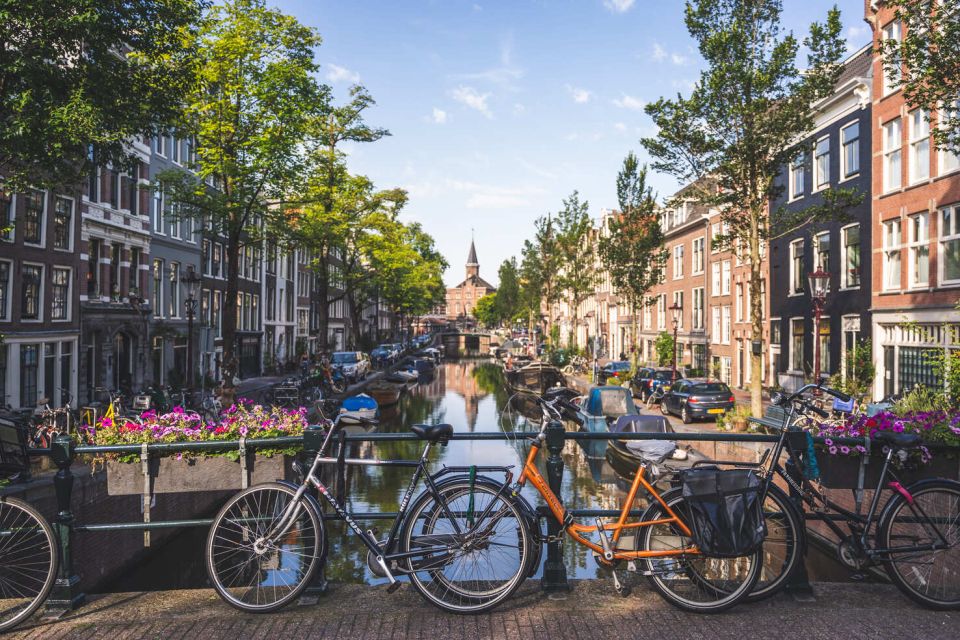
At about $20 per person for roughly 2.5 hours, the value is the guide time and the framing. You’re paying for someone to explain why Amsterdam developed the way it did: a small muddy settlement on the Amstel grew into a major trading hub, bringing merchants, artists, and adventurers. That kind of context changes how you interpret what you see later.
It also works because you’re not locked into entrance fees. Museums and attractions aren’t included, so your money isn’t wasted if you decide to spend that time doing something else. Instead, the tour acts like a starter pack for the city—helping you choose what to do after you’ve got your bearings.
Who This Tour Fits Best (and Who Should Think Twice)
This is a great fit if you:
- Are visiting Amsterdam for the first time and want a fast, accurate orientation
- Like walking tours but want them sized for conversation (10 people max)
- Prefer context for controversial topics, with history and policy explained
- Want a guide who can answer questions rather than just lecture
It may be less ideal if:
- You don’t handle walking well for 2.5 hours, even at an easy pace
- You want a mostly quiet, museum-style experience instead of street-level storytelling
- You’re looking for long time inside churches or museums (this is mostly outside, with photo stops and guided moments along the route)
Should You Book This Amsterdam Small-Group Walk?
If you want to understand Amsterdam beyond its postcard face, I’d book this kind of tour early in your trip. The route is built to give you the “why” behind the “what,” with enough time at key places to form a map in your head. The price is also hard to beat for a small-group guided introduction.
One thing I’d do before you go: wear shoes you trust and plan to stay flexible if the weather turns. This tour keeps moving, and the guide’s job is to translate the city while you’re walking. If you show up ready to listen, you’ll leave with a clear sense of where you are and what you’re looking at.
FAQ
Where does the tour start and how do I find the guide?
The tour departs from Beursplein 1. The guide waits in front of Cafe Bistro next to the bull figure, holding a blue umbrella or wearing/tagged with the Amsterdam Guides & Tours logo.
How long is the Amsterdam Small-Group Walking Tour?
The duration is about 2.5 hours. Tour length is approximate, and routes/stories can vary depending on the guide and the group.
What’s included in the price?
You get a 2.5-hour walking tour (about), an expert local guide, time at iconic sights in the historic city center, and personalized tips to continue exploring.
What language(s) are tours offered in?
The live guide is listed as Spanish and English.
How many people are in the group?
It’s a small group limited to 10 participants.
Is it wheelchair accessible?
The activity is listed as wheelchair accessible, but it is also marked as not suitable for people with mobility impairments. If you have mobility concerns, it’s worth checking with the operator before booking.
What should I bring?
Bring comfortable shoes and drinks, since it’s a walking tour.