Two hours, 800 years, and a wink. This small-group tour strings Amsterdam’s past into a walk you can actually follow, from the canal belt to Dam Square. I especially like the tight, central route and the way the guide brings the story to life with wit and humor (you might even catch a couple of puns). One thing to consider: it’s a walking tour in a concentrated area, so you’ll want comfortable shoes and it may not work well for people with mobility or hearing needs.
I also like that you’re not stuck in a one-size-fits-all lecture. The group stays small (limited to 10), so you can ask questions and steer the food, drink, and things-to-do recommendations toward what you actually want. A potential drawback is that it ends in the middle of the city (Dam Square), so your next step depends on your transport plan, and entrance fees to any sights are not included.
In This Review
- Key highlights you will feel right away
- How the tour turns Amsterdam’s past into a walkable story
- Meeting at Those Dam Boat Guys: starting in the right place
- The short Red Light District stop: history you can’t ignore
- Burgwallen Oude Zijde: getting your bearings in the old city
- VOC and the Dutch East India Company: trade’s fingerprints everywhere
- Zuiderkerk and Stopera: religion and civic life in the same loop
- Waterlooplein Market and Groenburgwal: quick moments that add flavor
- Spui Square: where people meet, and the city shows its personality
- Begijnhof: the quiet courtyard that gives the tour a heartbeat
- Amsterdam Museum: a history anchor without the ticket headache
- Dam Square finish: the easiest place to continue
- Pricing and value: $32 for a guide-led two-hour orientation
- What you’ll need to enjoy it (and what to skip)
- Who should book this Amsterdam history-and-humor walk
- Quick practical tips to make your day smoother
- Should you book this tour
- FAQ
- How long is the walking tour?
- Where do we meet?
- Is the tour in English?
- Is food or drinks included?
- Are entrance fees to attractions included?
- What is the maximum group size?
- Is it suitable for children?
Key highlights you will feel right away
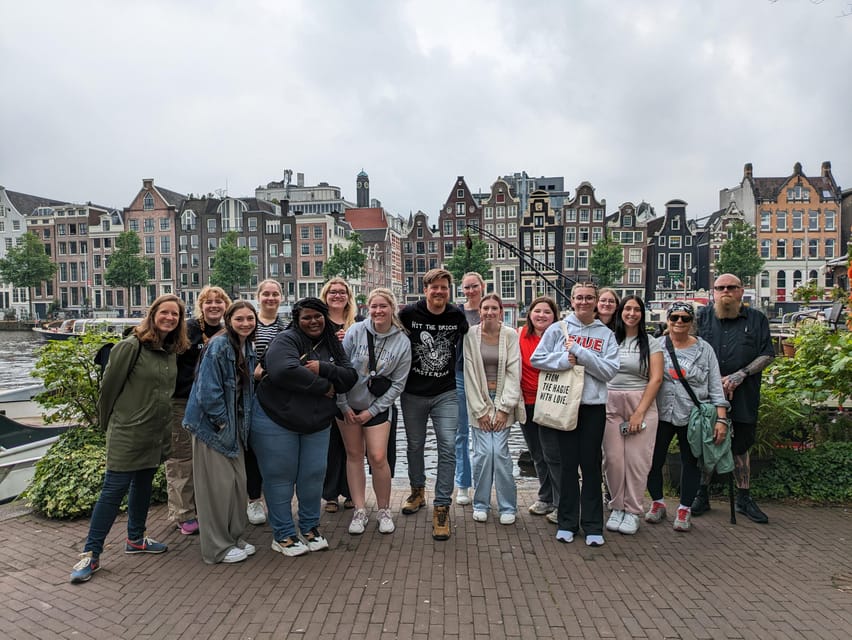
- 800 years in 2 hours with a clear, story-first route that stays mostly in the city center
- Humor that actually supports the history, with guides like Axel noted for excellent English and sharp timing
- Small group (up to 10) so questions are encouraged and recommendations can be tailored
- Canal belt focus plus hidden courtyards, including a stop at Begijnhof
- Practical end point at Dam Square, where you can easily continue by tram, metro, taxi, or on foot
How the tour turns Amsterdam’s past into a walkable story
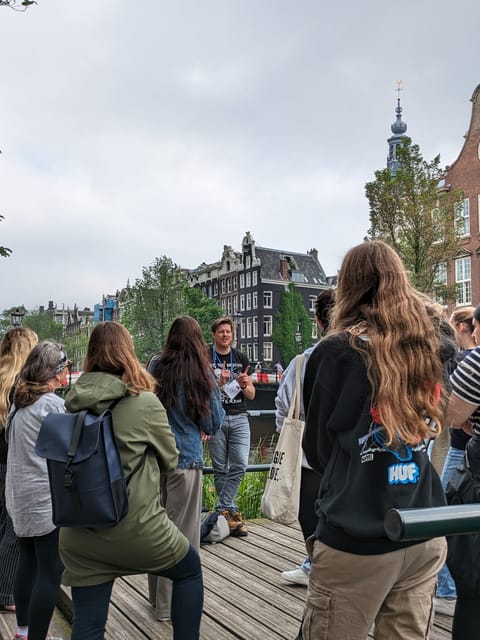
This tour is built for first-timers and anyone who wants context fast. Instead of hopping between random landmarks, you follow a sequence that explains how the city’s choices shaped daily life and Dutch culture over centuries. In a compact two-hour window, it connects politics, trade, religion, and city life into something you can remember.
The best part is the pacing. You’re walking along picturesque canals and through smaller pockets of the center, including courtyards that feel like a pause button. And because the group is limited, the guide can adjust on the fly—if you’re curious about a particular era or topic, you can usually nudge the conversation.
You can also read our reviews of more historical tours in Amsterdam



Meeting at Those Dam Boat Guys: starting in the right place
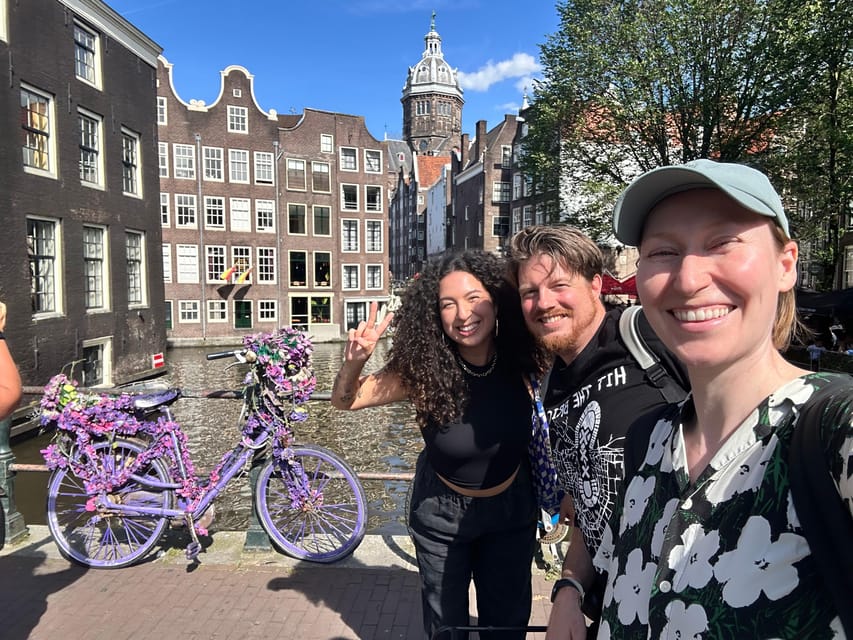
You meet at the office of Those Dam Boat Guys. That matters because the boat tours start from the same spot, and you’ll want the staff to know you’re there for the WALKING tour so you don’t get mixed up.
The start also sets the tone: you begin in the heart of Amsterdam’s canal belt area, not on the edge of town. That means you spend your limited time where the stories are thickest and where you can keep wandering afterward without needing a transfer.
The short Red Light District stop: history you can’t ignore
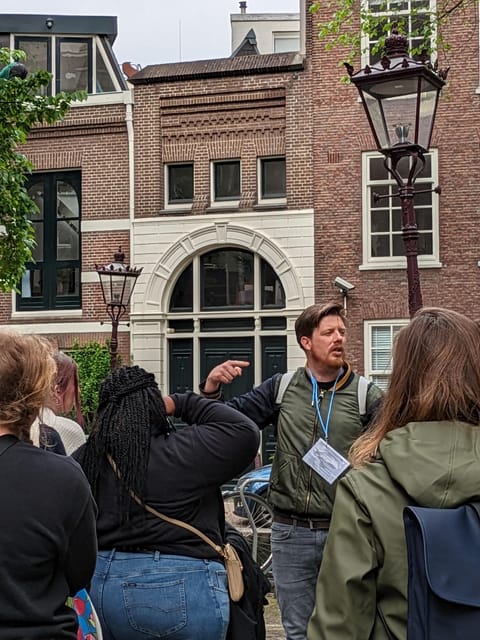
The tour includes a guided stop near the Amsterdam Red Light District. Even if you don’t want to stare at shopfronts, this area is a useful starting point because it helps explain why Amsterdam is the way it is—rules, enforcement, trade, and the city’s long relationship with tolerance and commerce.
A realistic consideration: the area is known for attention and activity, so if you want a calm, quiet vibe the whole time, this may not be your favorite moment. Still, the guided context helps you see it as part of the bigger Amsterdam story rather than just a headline.
Burgwallen Oude Zijde: getting your bearings in the old city
From there you move into Burgwallen Oude Zijde, with a short guided segment. This is where you start feeling the structure of the historic center: canal-side buildings, tightly placed streets, and the sense that the city grew by design, not by accident.
What I like about stopping here is that it gives you a mental map. By the time you hit later landmarks, you’re no longer thinking, Where am I? You’re thinking, Oh, this is why this area matters.
VOC and the Dutch East India Company: trade’s fingerprints everywhere
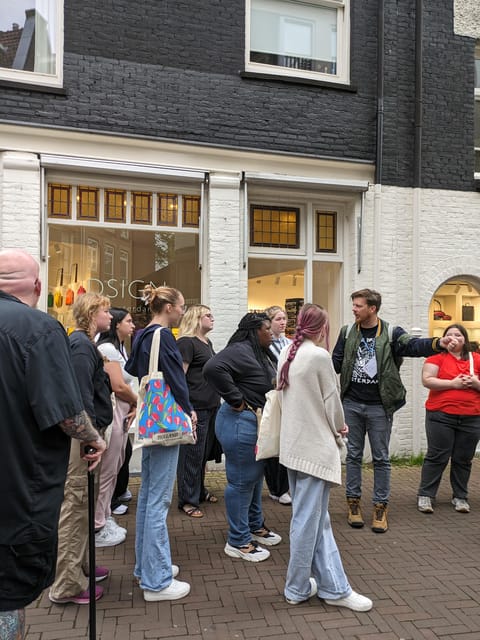
Next comes VOC, the Dutch East India Company. Even if you know VOC as a name, you’ll likely connect it to why Amsterdam developed the way it did—wealth from trade, power from shipping, and the city’s international reach.
The value of this stop is how it ties global history to local streets. You’re not just told that trade mattered. You’re shown how that kind of money and influence can shape what you see around you—politics, civic ambition, and the way buildings and institutions end up where they do.




Zuiderkerk and Stopera: religion and civic life in the same loop
The Zuiderkerk stop is short, but it’s placed on purpose. Churches in old European cities often acted like more than worship spaces, and this stop helps you understand how belief and public life interlocked in Amsterdam’s past.
Then you pass Stopera and get a quick guided look. This is a good hinge point: you go from older, more symbolic power (religion) to modern civic institutions and public culture. You start to see Amsterdam as a city that keeps reinventing itself while still leaning on older foundations.
If you’re the kind of traveler who likes the “how did they organize the city” angle, these stops are likely to land well. If you prefer only pretty views and minimal context, you might wish there were more time here—but the tour’s whole strength is that it stays moving.
Waterlooplein Market and Groenburgwal: quick moments that add flavor
You pass Waterlooplein Market for a short stretch. It’s not a long stop, but that’s part of the plan: you get a sense of everyday Amsterdam life, not just old monuments.
Then comes Groenburgwal, with a photo stop. This is one of those moments that feels like a reward. You’re moving through the story, then you pause briefly to catch the canal-side look that makes people love Amsterdam in the first place.
Spui Square: where people meet, and the city shows its personality
Spui Square is another guided stop, brief but useful. Squares are where a city’s social rhythm shows. In Amsterdam, that means you notice patterns: where foot traffic gathers, where people linger, and how public space supports the city’s ongoing mix of old and new.
This stop is also handy if you’re planning to explore on your own afterward. You leave with a better sense of which areas are central and walkable, not just photographed.
Begijnhof: the quiet courtyard that gives the tour a heartbeat
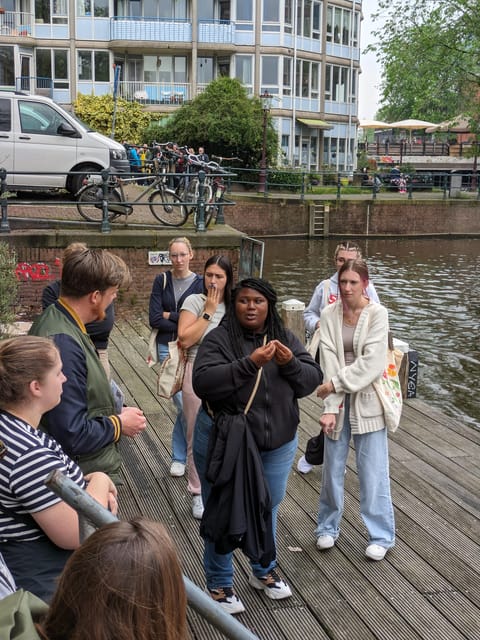
Begijnhof is one of the most “you have to see this” parts of the walk. You don’t just hear about it—you visit it and get a guided explanation.
The big win here is contrast. After louder streets and famous districts, Begijnhof offers a calmer, enclosed feel. It’s the kind of place that helps you understand why Amsterdam’s history isn’t only about big institutions. It’s also about everyday structures and community life that shaped how people lived together.
Practical note: Begijnhof is included for a guided visit for about 10 minutes, so it’s long enough to slow down without eating the whole tour.
Amsterdam Museum: a history anchor without the ticket headache
You’ll also include Amsterdam Museum as part of the route, with guided time. You’re not meant to buy the ticket during this experience, since entrance fees aren’t included. Instead, the museum stop works as an anchor: it helps you frame what you might want to see later if you want to go deeper.
Think of it as a preview. The guide’s job here is to connect themes you’ve already heard about to what the museum is likely to cover, so if you choose to come back, you do it with direction.
Dam Square finish: the easiest place to continue
You end at Dam Square. The tour includes a guided moment here, then you’re free to keep going by tram, metro, taxi, or on foot.
Ending at Dam Square is practical because it’s central and connected. You don’t feel stranded, and you can easily shift into your next plan—shopping, canals, a planned attraction, or just wandering until the day turns into evening.
Pricing and value: $32 for a guide-led two-hour orientation
At $32 per person for a 2-hour walking tour, the value is mainly in the structure and the guide. You’re paying for interpretation: someone stitching 800 years into a route you can follow, not just pointing at buildings.
The fact that entrance fees are not included is also a good thing for many people. It keeps the tour flexible and affordable, and you decide later if a museum or attraction is worth the extra cost for you.
Small group size (up to 10) is part of what you’re really buying. In a room of 30, questions get swallowed. Here, the guide can actually tailor advice, including where to eat, drink, and what to do next based on your interests.
What you’ll need to enjoy it (and what to skip)
Plan for a real walk, even if it’s not described as physically demanding. You’re moving through a narrow area around the central city, mostly around the canal belt, so the walking is straightforward but nonstop.
Bring:
- Comfortable shoes (non-negotiable)
- A camera
- Weather-appropriate layers
- A water bottle to stay hydrated
Don’t bring:
- Alcohol and drugs
- Bachelor and bachelorette party groups
And know who it’s not designed for. It’s not suitable for children under 9, wheelchair users, people with mobility impairments, hearing-impaired people, people over 95 years, and people over 309 lbs (140 kg).
Who should book this Amsterdam history-and-humor walk
This is a great fit if you:
- Are visiting Amsterdam for the first time and want a fast orientation
- Like history that connects to how people live, not just dates and names
- Want a small group where you can ask questions
- Enjoy tours where humor is part of the delivery, not just decoration
It may be less ideal if you:
- Want long stops at museums or major attractions with lots of entrance time
- Prefer quiet, uncrowded routes the whole way
- Need accessibility accommodations not listed as suitable
Quick practical tips to make your day smoother
Arrive about 10 minutes early so you can start without stress. If you’re also visiting those boat tours nearby, double-check you’re there for the WALKING tour at the Those Dam Boat Guys office.
Dress for the weather and keep your pace comfortable. A two-hour tour flies by, and the better you feel underfoot, the more you can focus on listening and watching.
Finally, use the end of the tour as your launch point. Since you finish at Dam Square, it’s a smart moment to decide what you want next: a tram ride, a canal walk, or an attraction that matches the themes the guide highlighted.
Should you book this tour
If you want the highest chance of enjoying Amsterdam early in your trip, I’d book it. For $32, you get a high-impact orientation: 800 years of change, explained with humor, in a manageable two hours with a small group.
I’d especially recommend it if you like a guide who can point out what matters and then give you practical next steps for food and activities that match your style. If you’re traveling with limited time, this is a strong way to stop feeling lost and start feeling like you understand the city.
FAQ
How long is the walking tour?
The tour lasts 2 hours.
Where do we meet?
You meet in the office of Those Dam Boat Guys.
Is the tour in English?
Yes, the live tour guide speaks English.
Is food or drinks included?
No. Food and drinks are not included.
Are entrance fees to attractions included?
No, entrance fees are not included.
What is the maximum group size?
The group is limited to 10 participants.
Is it suitable for children?
It is not suitable for children under 9 years.