REVIEW · AMSTERDAM
Discover The Netherlands Tour (from Amsterdam)
Book on Viator →Operated by Best of The Netherlands tours · Bookable on Viator
Five Dutch towns, one water story.
This small-group day trip links icons like Zaanse Schans and the mighty Afsluitdijk to explain how the Netherlands learned to live with water. I also like that you get a guided route with private transportation plus snacks, so you’re not stuck figuring things out alone. The main drawback: it’s a long day (about 8–9 hours) with several walk-and-view stops, so plan for moderate mobility.
I’m a fan of tours that feel like a theme park only in the best way: clear stops, an easy pace, and context you can carry into every town. Here, the theme is Dutch water management—wind, dikes, canals, and the sea—plus how that shaped everyday culture in places outside Amsterdam.
A bit of practical reality: this experience needs good weather, and morning timing matters. If you get a decent day, you’ll move through the highlights at a leisurely pace without feeling like you’re being herded.
In This Review
- Key highlights worth caring about
- Why this Amsterdam day trip works for first-timers
- Getting ready for the 9:00 start and a full 8–9 hours
- Zaanse Schans: windmills and wooden houses you can actually picture
- Afsluitdijk: 32 kilometers of Dutch water control in one jaw-drop moment
- Sloten (Friesland’s small-city canal walk): gables, water, and calm time
- Urk: lighthouse views and the island story before Flevoland
- Elburg: medieval gate, monuments, and a town that feels protected by time
- Why the guide matters: explanations that connect every stop
- Price and value: what $148.99 really buys you
- Who should book this tour—and who should skip it
- Should you book this tour?
- FAQ
- How long is the Discover The Netherlands tour from Amsterdam?
- What time does the tour start, and where do you meet?
- How big is the group?
- Is the tour in English?
- What’s included in the price?
- Is lunch included?
- Are admission tickets included for the stops?
- Is this tour accessible for people with limited mobility?
- What happens if the weather is bad?
- What’s the cancellation window?
Key highlights worth caring about
- Small group cap (max 7 travelers), which keeps the day calm and gives your guide room to answer questions.
- Water management focus, connecting windmills at Zaanse Schans to the Afsluitdijk barrier to canal towns in Friesland.
- Five distinct stops with about an hour each at Sloten, Urk, and Elburg, so you don’t just “photo-hop.”
- English-guided experience with a guide who sets the theme early and explains how everything connects.
- Snacks included with an air-conditioned vehicle, making the ride more pleasant than you might expect.
- Free entry noted for each main stop, while optional extras at Zaanse Schans stay optional.
Why this Amsterdam day trip works for first-timers
If you’re spending time in Amsterdam, it’s easy to stay in a single bubble—pretty streets, canals, bikes, museums. This tour does something smarter: it points you outward and answers a bigger question you’ll keep hearing in the Netherlands. How did a low country become livable without constant fear of flooding?
The route is built around Dutch water management and the culture it created. You start with the classic windmill-and-wooden-house scene at Zaanse Schans. Then you move to Afsluitdijk, a massive water barrier that’s basically the Netherlands in one engineering move: control the sea so people can farm, build, and live inland. After that, you shift to towns where you can still feel the relationship between water, trade, and identity.
You’ll get a day that’s not only “what to see,” but also “why it looks like that.” And because the group is kept small, it doesn’t turn into a rush-job.
You can also read our reviews of more tours and experiences in Amsterdam.
Getting ready for the 9:00 start and a full 8–9 hours
The meeting point is the Chamber of Commerce area at De Ruijterkade 5, 1013 AA Amsterdam. The start time is 9:00 am, and the tour ends back at the same meeting point.
A couple things you’ll want to plan for:
- Bring comfortable walking shoes. You won’t be doing a hike, but you’ll be on your feet at multiple stops.
- Expect moderate walking. The tour isn’t recommended for limited physical movement, so if that’s your situation, you may want a different format.
- Pack water and wear layers. Even in the Netherlands, a cool breeze can sneak up on you when you’re near the sea or open water.
The tour also runs on good-weather conditions. If the weather isn’t right, you’ll be offered another date or a full refund.
Zaanse Schans: windmills and wooden houses you can actually picture
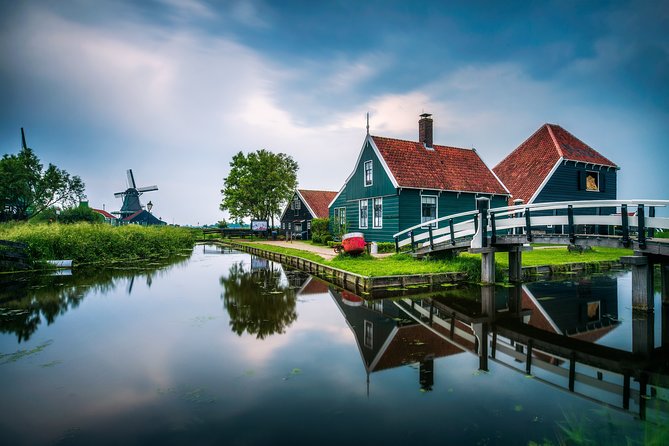
Zaanse Schans is one of those places that looks like a postcard—water, windmills, wooden houses. What makes it more than a pretty stop is how it fits into the bigger water theme of the day.
You’ll spend about an hour here, and the admission for the main visit is listed as free. That gives you time to slow down and notice details instead of just snapping the famous views.
What I’d focus on during your hour:
- The windmills aren’t just scenery; they represent a practical solution to moving water and powering industry.
- The wooden houses and historic streets help you connect engineering to daily life—this wasn’t abstract math.
- If optional activities are available on-site, only add them if you genuinely want extra time or a specific experience. The core visit is already planned.
The biggest value of Zaanse Schans on this tour is context. After you’ve been here, Afsluitdijk won’t feel random—it’ll feel like the next chapter.
Afsluitdijk: 32 kilometers of Dutch water control in one jaw-drop moment
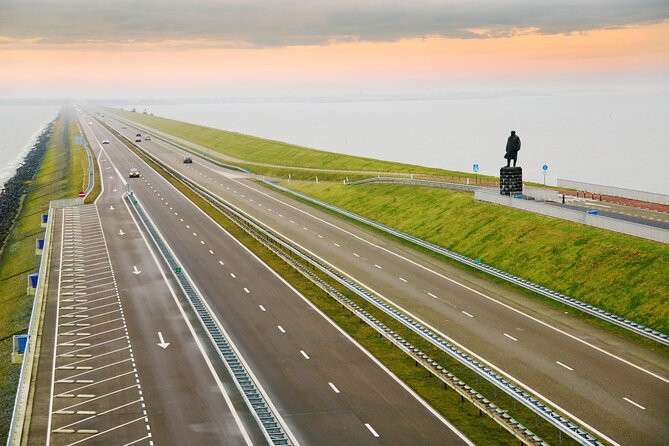
Afsluitdijk is the Netherlands showing its engineering muscle. This 32-kilometer water barrier connects Noord Holland and Friesland, and the tour allocates about 30 minutes for the stop.
Thirty minutes can sound short—until you realize what you’re really doing here. You’re getting a quick, guided “engineering interpretation” in a location that makes the scale believable. Even if you’re not a technical person, you can stand in the right place and understand the logic: control the boundary between sea and land, then build a life behind it.
A nice trick for getting more out of a short stop: ask your guide for the one-sentence explanation of what makes Afsluitdijk special, and then look at the structure and the water both ways. When the guide ties it back to reclaiming land and protecting communities, it starts clicking fast.
Sloten (Friesland’s small-city canal walk): gables, water, and calm time
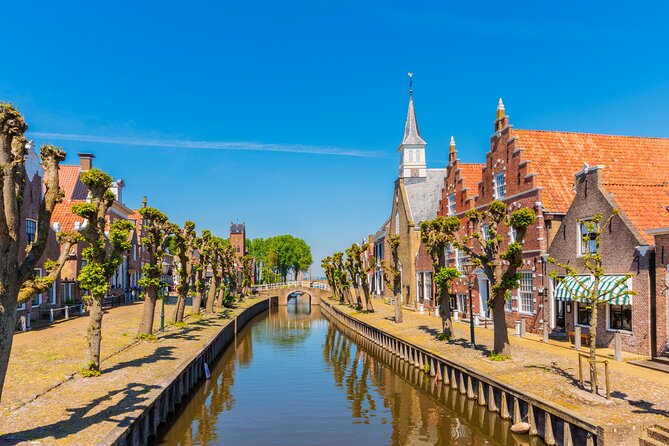
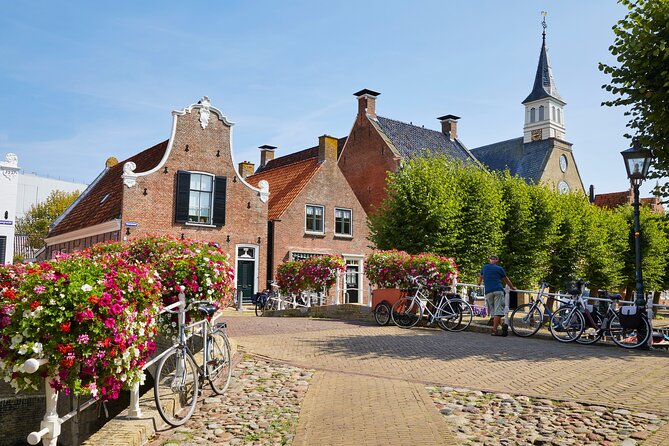
Next comes Sloten, in Friesland—spending about an hour in a place that’s described as the smallest of the “eleven cities” of Friesland. It’s also a canal-town with old houses and typical Dutch gables, which is the kind of visual pattern that’s hard to appreciate from a distance.
During this stop, you’ll walk along the canal. That’s the key experience here: you’re not chasing museums. You’re moving slowly enough to notice architecture and how the town holds its shape around water.
Things that make Sloten worth the time in a day tour:
- It gives you a Friesland flavor without the pressure of a huge crowd.
- The canal-side walk creates a slower rhythm than the highway drive between stops.
- The guide’s explanations tend to connect the “small city” identity to water-based life—trade routes, access, and how water shaped local choices.
One practical consideration: because you’ll be walking along the canal, dress for cool wind if it’s breezy. It’s often the kind of breeze that feels fine until you stop moving.

Urk: lighthouse views and the island story before Flevoland
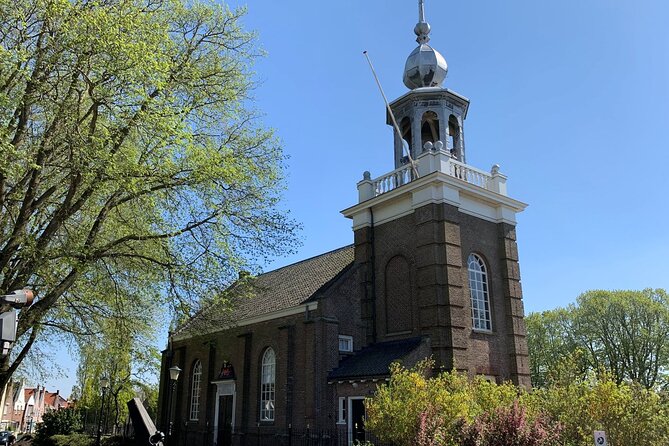
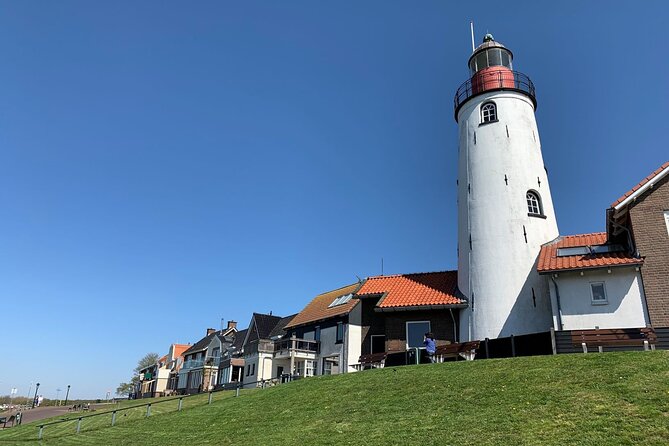
Urk is a charming fishing village by the sea, with about an hour on the ground. You’ll stroll along the lighthouse area and also see the old church near the water.
What makes Urk stand out in this route is its backstory. The village used to be an island before the man-made province of Flevoland was created. That matters, because it connects geography with identity. If you grew up in a place shaped by water access, you tend to talk and build differently than if you grew up on uninterrupted land.
You’ll get a “sea town” mood here—less windmill fantasy, more working-water reality. It’s a good balance point after the engineering stop at Afsluitdijk: you see the structure, and then you see the community that depended on water routes and fishing.
If you’re a photo person, this is where the light and shoreline vibe often help. If you’re not, the guided narrative still gives you something to anchor the visuals to.
Elburg: medieval gate, monuments, and a town that feels protected by time
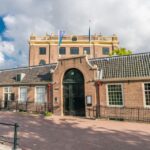
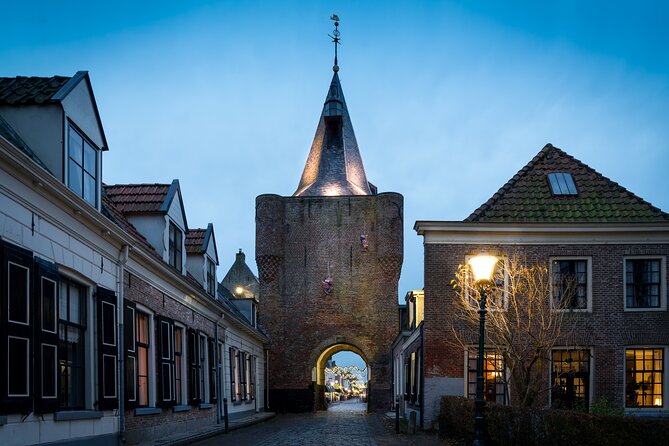
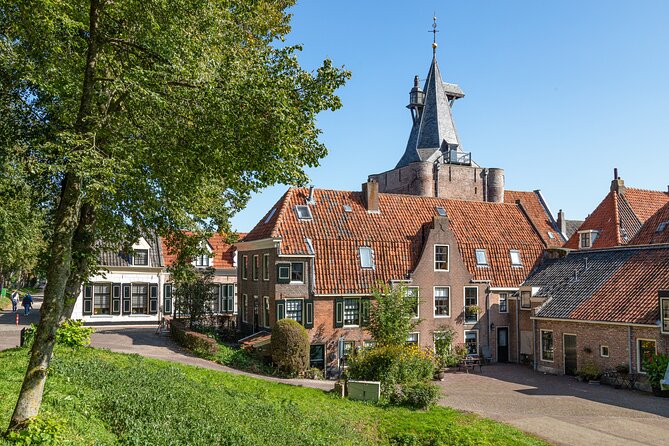
The final stop is Elburg, with about an hour allocated. Elburg is described as having a fifteenth-century entrance gate that leads into a medieval town where time feels like it slowed down.
This is one of those towns that rewards a slow stroll. You’ll pass the entrance gate experience and move into a medieval setting with lots of monuments listed as worth seeing, plus parts of the old city wall still remaining.
What I like about ending here is that it rounds out the theme. The day starts with iconic Dutch water control imagery. It then moves through Friesland’s canal-life and Urk’s sea life. Elburg brings it home by showing how settlements developed and preserved identity over centuries—behind walls, through gates, and within remembered boundaries.
Practical note: because this is your last main stop, pace yourself. Elburg is the time to linger slightly, grab a final photo, and accept that you’ll want your legs back for the ride to the end point.
Why the guide matters: explanations that connect every stop
A big part of why this tour rates so well is the guiding style. Names that come up include Simon and Adrian, and other guides like Jon and Adriaan are also referenced. While you can’t count on a specific guide, you can count on the role: your guide is there to make the day feel like one connected story rather than five separate sightseeing errands.
From the way guides are described, they tend to do three helpful things:
- They explain the Netherlands origins and how water management shaped culture.
- They answer questions without turning the day into a lecture.
- They manage pacing—knowing when to talk and when to let the view do its job.
That’s what you want on a day trip: facts you can use, plus quiet time to take in what you came to see.
If you’re the type who likes to understand things at street level, this is a good fit. Bring curiosity, and you’ll get more back than you expect from a simple “bus tour.”
Price and value: what $148.99 really buys you
At $148.99 per person, you’re paying for a full guided day outside Amsterdam: transportation, a small group experience, stops with free noted admissions, and snacks.
Here’s why that price can make sense:
- You’re getting several main sights packed into one day without the hassle of arranging trains or driving.
- The group size stays small (max 7 travelers), which usually costs more to provide on the ground.
- A/C vehicle + private transportation takes stress off your shoulders, especially when the day runs 8–9 hours.
- Snacks are included. Lunch isn’t, but at least you’re not trying to ration energy on a long route.
What’s not included is the stuff that can quietly add up on your own: lunch, and beverages beyond the free snack pack. There are also optional activities at Zaanse Schans.
My advice on value: budget for one paid meal (or a meal you bring and eat where appropriate), and treat the optional extras as icing, not part of the cake. If you do that, the base price feels like you’re buying convenience plus a guided narrative.
Who should book this tour—and who should skip it
This is a strong choice if you want:
- A guided overview of Dutch water management tied to everyday life
- A day outside Amsterdam with historic towns that aren’t overly rushed
- A comfortable ride and a small group, so you can actually hear the explanations
It’s not the best match if:
- You have limited physical movement. The tour isn’t recommended for that situation.
- You dislike walking at multiple stops. It’s not a strenuous trek, but you are moving around several times.
Good news for animal lovers: service animals are allowed. The start area is also near public transportation, which helps if you’re staying in Amsterdam and need an easy way to get there.
Should you book this tour?
Yes, if you want a day that feels like real Dutch context, not just checkboxes. The combination of windmills at Zaanse Schans, the engineering scale of Afsluitdijk, and the town variety of Sloten, Urk, and Elburg makes it a smart “outside Amsterdam” move—especially with a max group size that keeps things relaxed.
Skip it only if your mobility needs more gentle options than several hour-long stops and walking segments. If that’s not you, this tour is one of the cleaner ways to understand why the Netherlands looks the way it does.
FAQ
How long is the Discover The Netherlands tour from Amsterdam?
It runs about 8 to 9 hours (approximately).
What time does the tour start, and where do you meet?
The tour starts at 9:00 am at De Ruijterkade 5, 1013 AA Amsterdam (Chamber of Commerce area). It ends back at the same meeting point.
How big is the group?
The tour has a maximum of 7 travelers.
Is the tour in English?
Yes, it’s offered in English.
What’s included in the price?
You get a guided experience, private transportation in an air-conditioned vehicle, and a snack pack. A mobile ticket is provided.
Is lunch included?
No. Lunch and other food or beverages beyond the included snack pack are not included.
Are admission tickets included for the stops?
Admission tickets are listed as free for the main sights at each scheduled stop (Zaanse Schans, Afsluitdijk, Sloten, Urk, and Elburg). Optional activities at Zaanse Schans are not included.
Is this tour accessible for people with limited mobility?
It’s not recommended for travelers with limited physical movement. It’s described as requiring moderate physical fitness.
What happens if the weather is bad?
This experience requires good weather. If it’s canceled due to poor weather, you’ll be offered a different date or a full refund.
What’s the cancellation window?
Free cancellation is available up to 24 hours in advance of the experience start time for a full refund. Cut-off times are based on the local time at the experience.