REVIEW · CITY TOURS
Amsterdam Red Light District and City Center Walking Tour
Book on Viator →Operated by Trigger Tours · Bookable on Viator
Night changes everything in Amsterdam. This Amsterdam Red Light District walking tour takes you through De Wallen after dark, with an expert guide translating what you see and why it exists. You’ll also get a simple city-center grounding as the route moves into the older parts of town.
I especially like how the guide keeps the topic grounded in laws and real rules instead of just shock-value stories. I also like the small-group feel, with guides such as Robin, Gio, and Aaron praised for friendly attention and making room for questions.
One consideration: this is an adult neighborhood at night, so if you’re easily uncomfortable with sex work and nightlife energy, you may want a more distant sightseeing style. It also isn’t recommended for limited mobility, even though service animals are allowed.
In This Review
- Key highlights and practical takeaways
- Getting oriented in Amsterdam’s De Wallen at night
- Price and logistics: what $31.24 really buys
- De Wallen stop: what you’ll learn about windows, laws, and coffeeshops
- A realistic drawback
- The Dam area and Amsterdam’s wooden-pole foundations
- What to watch for
- Pub The Ape (Int Aepjen): one of the last timber survivors
- A potential downside
- The Waag: from city gate and defense to guild life
- Why this matters for your tour experience
- The smallest house and the VOC storage-to-living story
- What you might find frustrating
- Condom shop since 1987: adult commerce in plain view
- A simple approach if you’re uneasy
- Tips to make the most of a 2-hour Red Light District walk
- Should you book this Amsterdam Red Light District walking tour?
- FAQ
- FAQ
- How long is the Amsterdam Red Light District and City Center walking tour?
- How much does the tour cost?
- Where does the tour start?
- What language is the tour in?
- How large is the group?
- Is admission included for the stops?
- Does the tour use a mobile ticket?
- Is it near public transportation?
- Is this tour suitable for limited mobility?
- Can I cancel for a full refund?
Key highlights and practical takeaways
- De Wallen at night, with context so you understand what you’re looking at and how the system works
- Clear explanations of windows and coffeeshop rules so the district isn’t a mystery
- Historic stops close to the action, including Pub The Ape (Int Aepjen) and the Waag
- Small group size (max 16 people) that helps the guide keep track of everyone
- Admission ticket free for the stops mentioned on the route
- Mobile ticket and multiple start times, plus a meeting point that’s easy to reach
Getting oriented in Amsterdam’s De Wallen at night

If you’re visiting Amsterdam for the first time, it helps to see the Red Light District with structure. At night, De Wallen is loud, busy, and full of visual prompts that don’t explain themselves. This tour keeps you moving through the narrow streets while an expert guide supplies the missing background.
You also get the benefit of pacing. The route is short—about 2 hours—so you’re not stuck in the area for ages. Instead, you leave with a better sense of where things are, what the neighborhood does, and how it fits into the city.
The big win is that this isn’t just sightseeing. You learn about the sex work industry in Amsterdam and how the district operates, plus the surrounding coffeeshop culture you’ll notice as you walk. That context changes the whole experience, even if the place is still intense.
You can also read our reviews of more walking tours in Amsterdam



Price and logistics: what $31.24 really buys
At $31.24 per person for roughly two hours, you’re paying mainly for two things: a guide who can explain the rules without getting preachy, and an efficient walk that hits several meaningful stops.
This helps value-wise because Amsterdam is packed with sights, but adult neighborhoods are where self-guided wandering can feel confusing fast. When you have someone pointing out what things mean—like how the district is regulated and what the window system relates to—you stop guessing.
A few practical notes that matter on the ground:
- You get a mobile ticket.
- The group size is capped at 16 people, which usually keeps the vibe manageable.
- This is offered in English.
- You can choose from multiple start times.
- It ends back at the same meeting point, so you aren’t left navigating afterward.
It’s also worth noting demand. The tour is booked on average about 86 days in advance, so if your dates are tight, booking early is smart.
De Wallen stop: what you’ll learn about windows, laws, and coffeeshops
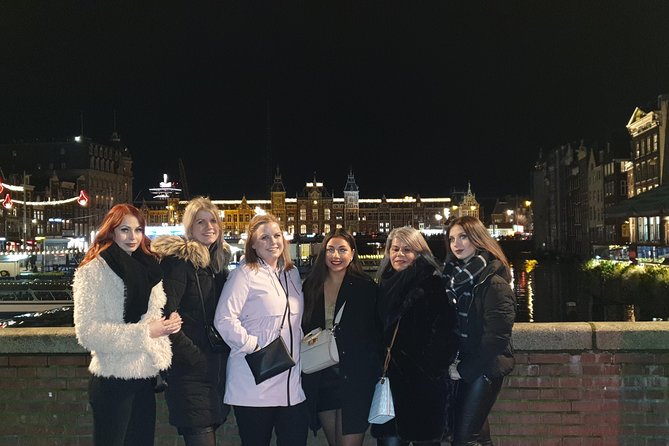
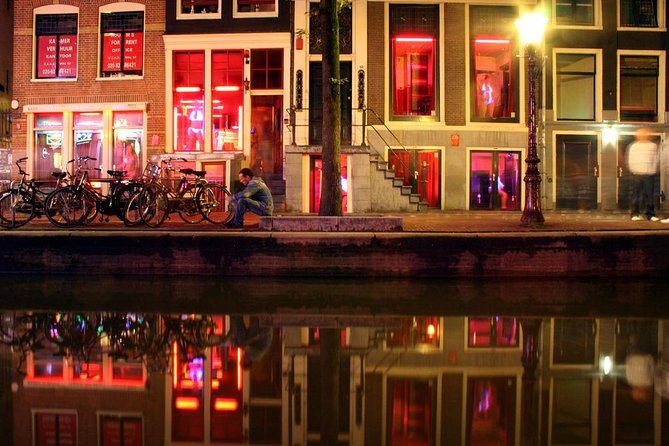
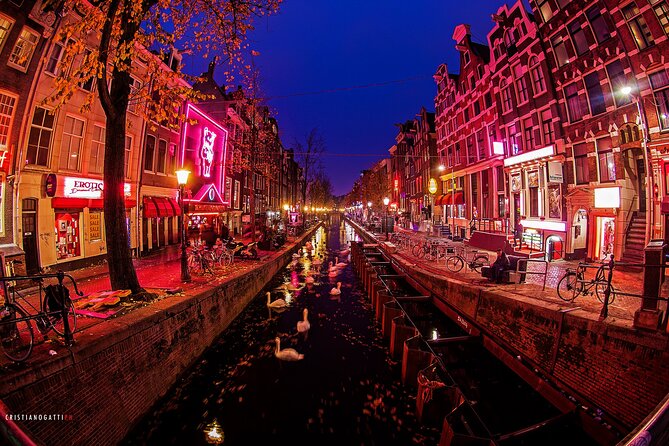
The heart of the tour is De Wallen itself. You’ll discover the narrow streets of the Red Light District at night, and your guide will connect the sights to the real framework behind them.
The most useful part is the explanation of how the district’s rules work, especially around windows and how the neighborhood operates. Instead of treating everything as rumor or legend, you’ll hear the practical side of the story—how rights and regulations come into play, and how the area functions in Amsterdam’s legal and social landscape.
You’ll also get context for coffeeshop culture, which is hard to separate from De Wallen in your day-to-day experience. A good guide helps you avoid the common mistake of focusing only on what’s visually loud, and missing the surrounding norms that locals treat as routine.
A realistic drawback
Because you’re walking through a nightlife district after dark, it may not feel like a calm history walk. If you prefer quiet museum pacing, this part can feel a bit too alive.
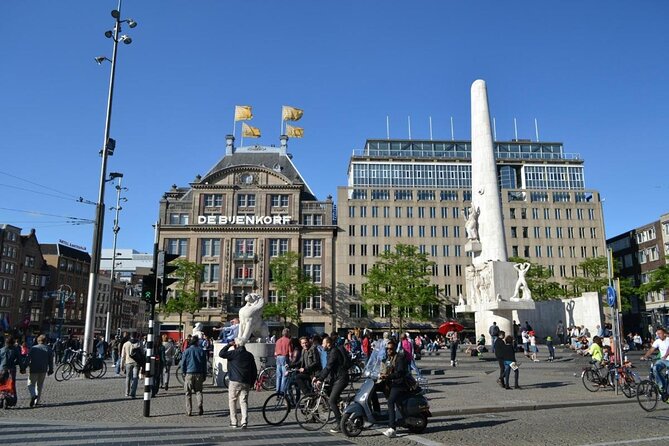
The Dam area and Amsterdam’s wooden-pole foundations
After De Wallen, the tour shifts into the older city fabric. One of the neat turns here is that you don’t just learn about “old buildings.” You learn the physical reason Amsterdam looks the way it does.
You’ll hear how the city’s soil is a thick layer of fen and clay, which meant buildings needed wooden foundation piles driven down about 11 meters until they reach solid sand. That’s a jaw-dropping detail, because it explains why so much of Amsterdam’s built environment is tied to engineering rather than just design taste.
You’ll also learn that this area connects to the Old Town side of the district context. The guide frames it as the oldest part of the city, which is why you’re seeing history stacked on top of history as you walk.
You can also read our reviews of more city tours in Amsterdam





What to watch for
This section is at its best if you like “how a city works” stories. If you mostly want photo stops and minimal talking, you might find this part more informational than cinematic.
Pub The Ape (Int Aepjen): one of the last timber survivors
Next up is Pub The Ape, also known as Int Aepjen. This stop is special because it’s tied to Amsterdam’s survival story after fire.
The building dates to around 1540, and it’s one of only two remaining wooden buildings in Amsterdam. The reason that matters: there was a big fire in 1452, and after that point, the government decided buildings should have brick facades. So when you see this timber structure, you’re basically looking at an architectural survivor.
Even if you don’t plan to go inside, this is the kind of stop that makes Amsterdam feel real. It’s not just “there’s an old building.” It’s “here’s how a city changed its rules to avoid repeating disaster.”
A potential downside
If you’re hoping for a long look inside, the tour description doesn’t promise that. Plan for a quick stop and a focus on what you can see and learn from the exterior and nearby setting.
The Waag: from city gate and defense to guild life
Then you get the Waag, a building with a strong civic past. It used to be one of Amsterdam’s city gates, part of the defensive wall, built around the 1400s. The tour notes it’s the second oldest building of Amsterdam, which is a great way to anchor your mental map of age and scale.
Later, the Waag became a space for guilds and craftsman organizations—craft groups that held authority and organized trade. You’ll also hear that these groups were situated within the Waag and around the square.
Why this matters for your tour experience
This stop connects the dots between “Amsterdam as a trading city” and “Amsterdam as a regulated society.” Once you understand that the city used gates and guild systems to structure life, it’s easier to understand why De Wallen isn’t just chaos—it exists alongside rules and institutions.
The smallest house and the VOC storage-to-living story
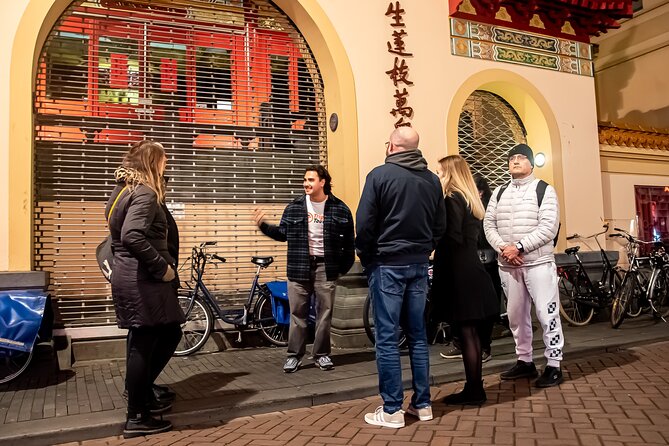
Another standout stop is the smallest house of Amsterdam, built around the 1700s. You’ll learn that it started as storage for the VOC trading company, and later became a place where people lived for a very long time.
That arc is the kind of detail that makes a walking tour feel worth it. It’s not only architectural trivia. It’s a reminder that small spaces supported big economic networks—and later, real human life.
What you might find frustrating
Because it’s described as the smallest house, your experience might be more about the concept and visual impression than about spending time inside. If you want hands-on visiting, set expectations for a brief stop.
Condom shop since 1987: adult commerce in plain view
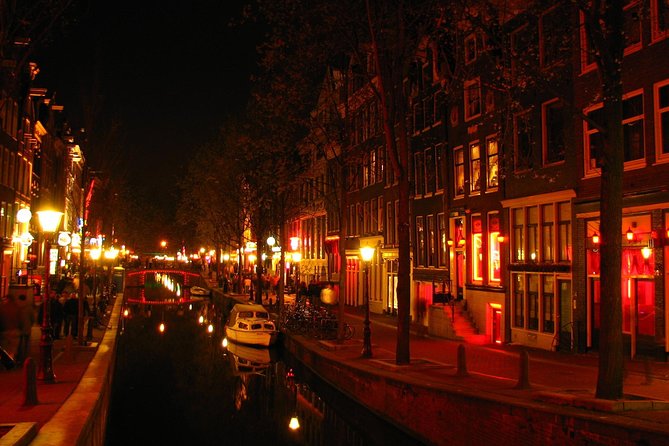
Yes, this stop is unmistakably adult. But it’s also matter-of-fact in a way that helps you process the neighborhood instead of treating it like a one-note spectacle.
You’ll see a condom shop that’s described as the world’s first special condom shop, operating since 1987. The guide explains you can get size customized condoms and other special types.
If you’re thinking why it belongs on this walk, it’s because it adds balance. It shows another side of the adult economy: practical, regulated retail that serves the same neighborhood context where you’ll also hear about sex work and local rules.
A simple approach if you’re uneasy
If this kind of stop feels too direct for your comfort, you can treat it as a quick observational moment. You don’t need to make it personal to understand the point.
Tips to make the most of a 2-hour Red Light District walk
This tour works best when you treat it like guided context, not like a dare.
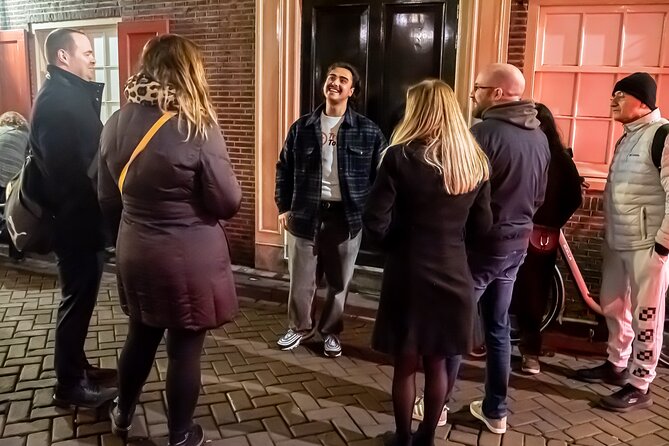
- Ask questions early. Guides such as Robin, Gio, and Aaron are praised for staying friendly and keeping an eye on the group, which usually means questions don’t get brushed off.
- Stay respectful with your timing and your tone. You’ll learn about laws and rights, and your guide can only do that well if the conversation stays calm.
- If you’re a first-time Amsterdam visitor, this is a solid way to get your bearings fast. The route includes both the De Wallen streets and recognizable older landmarks, so your mental map improves immediately.
One more practical note: because it’s not recommended for limited mobility, if that’s your situation, you’ll likely want a different format. Service animals are allowed, and the meeting point is near public transportation, so you can still plan an easy arrival if you’re able-bodied.
Should you book this Amsterdam Red Light District walking tour?
Book it if you want the Red Light District explained with real-world rules, plus a short hit of Amsterdam’s older architecture—without wasting time trying to figure it all out on your own.
Skip it if you’re looking for a peaceful, family-style sightseeing walk. The setting is adult and nightlife-heavy, and you need to be comfortable with that energy for the context to land well.
If you’re weighing it against doing this area solo, I’d pick the tour. For $31.24 and about two hours, you’re paying for clarity, not just movement—plus a route that connects De Wallen with places like Pub The Ape, the Waag, and the smaller historic house story.
FAQ
FAQ
How long is the Amsterdam Red Light District and City Center walking tour?
It runs for about 2 hours.
How much does the tour cost?
The price listed is $31.24 per person.
Where does the tour start?
The meeting point is Geldersekade 2, 1012 BH Amsterdam.
What language is the tour in?
The tour is offered in English.
How large is the group?
The maximum group size is 16 travelers.
Is admission included for the stops?
The itinerary notes admission ticket free for the Red Light District stop.
Does the tour use a mobile ticket?
Yes, it includes a mobile ticket.
Is it near public transportation?
Yes, the meeting point is near public transportation.
Is this tour suitable for limited mobility?
It is not recommended for travelers with limited mobility, though service animals are allowed.
Can I cancel for a full refund?
Yes. You can cancel up to 24 hours in advance for a full refund.