Backstreets tell the best Amsterdam stories. This 1 hour 30 minute Jordaan tour strings together Anne Frank landmarks, standout churches, and calm hofje courtyards you’d never notice on your own. I especially liked the small group size (max 15) and the fact that most stops are free to enter, so you’re paying for stories and direction, not ticket costs.
One thing to think about: the Anne Frank House ticket is not included, and the stop is outside-focused. If you want to go in, plan for that extra step separately.
In This Review
- Key things I’d watch for
- Jordaan on foot: why this route works so well
- Anne Frank Monument and Westerkerk: the story in the open air
- Anne Frank House stop: what you get, and what you might add
- Courtyard time: Sint Andrieshofje and Claes Claeszoon Hofje
- The Canal Ring: medieval foundations explained by the street itself
- Noorderkerk, Cafe Papeneiland, and the apple pie moment
- Hofje Van Brienen and Karthuizerhof: faith and greenery in one arc
- Guides make or break a walking tour: what the feedback says
- Price and value: what $33.36 really covers
- Weather and comfort: the one real planning variable
- Should you book this Jordaan walk?
- FAQ
- FAQ
- How long is the walking tour?
- Where does the tour start?
- Where does the tour end?
- What’s the price per person?
- Is the Anne Frank House included?
- Which language is the tour offered in?
- Are the other stops included and free?
- How large is the group?
Key things I’d watch for

- Small group, big attention: Max 15 people makes it easier to ask questions and get personalized explanations.
- Almost everything is free: Monument, Westerkerk, multiple hofjes, and key church/canal stops are admission-free.
- Anne Frank framing, not a museum tour: You’ll see what’s outside, plus context about how the sites connect to her life.
- Hofjes in several directions: You’ll visit multiple courtyards, including Sint Andrieshofje and Claes Claeszoon Hofje, each with its own neighborhood angle.
- Canal Ring history in plain language: The guide connects the canals’ medieval roots to why the canal houses look the way they do.
- A real local food tip: You’ll get a recommendation for the best apple pie in town.
Jordaan on foot: why this route works so well
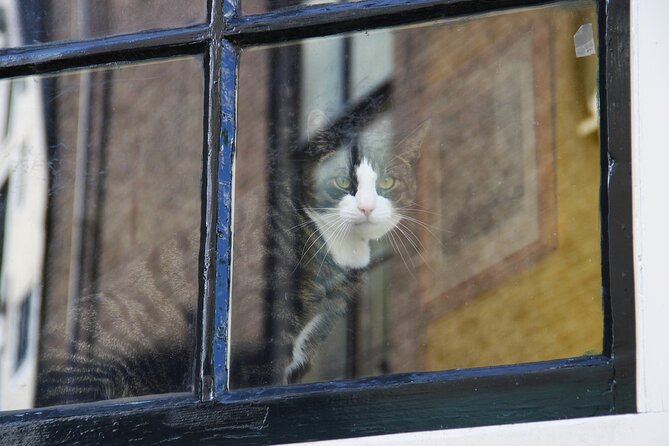
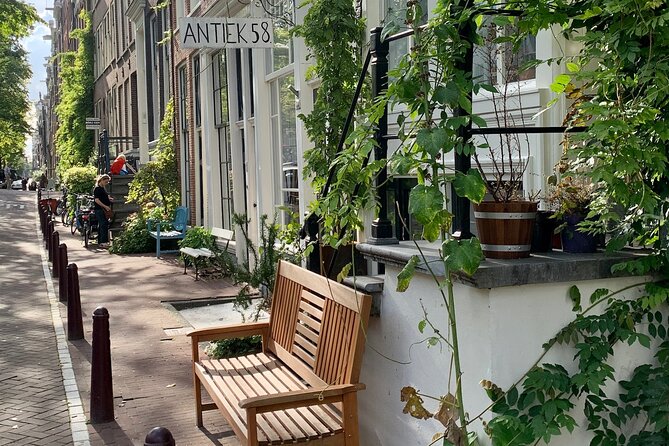
The Jordaan is one of those Amsterdam neighborhoods where the best parts are easy to miss if you’re moving too fast. This tour is set up to fix that. Instead of bouncing around the city, it stays in one area and uses a tight path of landmarks—Anne Frank connections, churches, and small inner courtyards—so you start seeing the neighborhood pattern: street, canal-world, then suddenly quiet.
The pacing also makes sense for a first visit. Each stop is brief (often 5 to 10 minutes), which keeps energy up and leaves room for quick photos and a better sense of geography. If you’re the kind of person who likes to understand where you are while you’re still close enough to walk back to shops and cafés afterward, this style fits you well.
And there’s a practical bonus: with a meeting point at Westermarkt and an end back there, you’re not forced into a long trek across town just to finish. You can stay in the area afterward for a drink, a bite, or a slower wander.
You can also read our reviews of more walking tours in Amsterdam



Anne Frank Monument and Westerkerk: the story in the open air
The tour starts at the Anne Frank Monument near Westermarkt. This is a smart opener because it gives you a strong emotional and historical anchor before you move deeper into the Jordaan streets. From there, you move into the world around it—learning how Anne Frank’s Amsterdam life connected to the neighborhood and how the area ties into her time hiding.
Right after that, you stop at Westerkerk. This isn’t just a quick “nice church” photo stop. The guide also shares the church’s important role in Anne Frank’s life. Even if you already know the basic outline of her story, this stop helps you connect the names and places to the geography you’re walking through. It makes the area feel less like a list of attractions and more like a coherent neighborhood.
One advantage here is timing. Monument and Westerkerk are relatively close and have free admission, so you can settle into the tour without fuss. The only “watch out” is your photo expectations: churches and street monuments are easy to photograph, but you’ll still be in a public space with foot traffic, so keep your phone ready and your path clear.
Anne Frank House stop: what you get, and what you might add
The itinerary includes Anne Frank House, but the approach is strictly outside-focused. You’ll look at the famous house from the exterior and keep hearing about Anne’s story through the guide’s framing.
The big consideration is ticket coverage. Admission to the Anne Frank House is not included, so you’re not guaranteed entry time as part of this walk. If you’ve got your heart set on going inside, this tour still works as a prelude, but you’ll want to plan a separate visit.
I like this setup because it keeps the walking tour from turning into a queue-and-rush schedule. Instead, you get the emotional and historical context nearby, then you choose how you want to spend your time next: a house visit, a nearby café break, or simply more wandering.
Courtyard time: Sint Andrieshofje and Claes Claeszoon Hofje
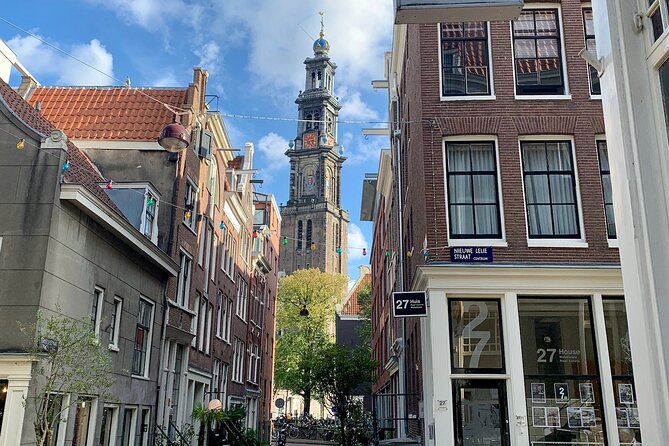
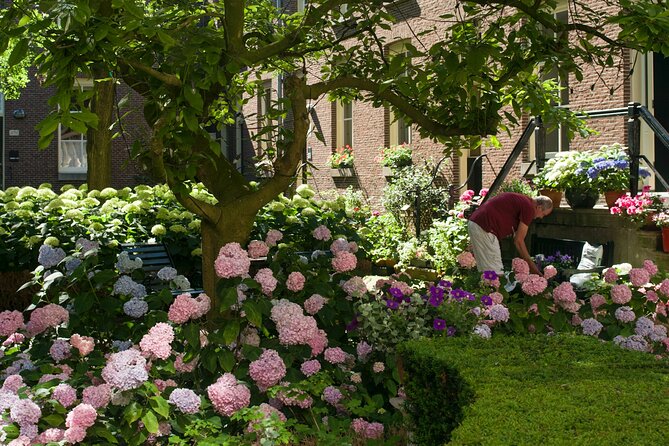
If Amsterdam has a signature sound, it might be bicycles—but the Jordaan has a quieter second language: the hofjes. These are courtyards tucked behind street fronts, where the city feels suddenly smaller and calmer.
You’ll visit Sint Andrieshofje first. The guide uses it as a lens on Jordaan neighborhood history, and the stop is the right length to notice details without losing momentum. This is the type of place where you can feel how the neighborhood was designed for daily life, not just sightseeing.
Then comes Claes Claeszoon Hofje, another courtyard built into the city’s fabric. The tour uses multiple hofjes on purpose. Each one reinforces the same idea—Amsterdam’s inner spaces matter—but they don’t all feel identical. That variety helps you remember the shape of the neighborhood instead of turning it into a single repeat photo.
Practical note: courtyards can feel shaded or breezy, depending on weather. If it’s cold or rainy, you’ll still get the value, but you’ll want a jacket handy. If it’s sunny, this part of the tour becomes a great reset for your senses between busier street views.
The Canal Ring: medieval foundations explained by the street itself
After courtyards, the tour shifts to the Amsterdam Canal Ring. This is where you start understanding why Amsterdam looks the way it does. The guide explains how the city was established in the middle ages and why the characteristic canal houses look the way they do.
You might not want a formal lecture here. The best part of this stop is that you can connect explanation to what you’re seeing immediately. Canal-side architecture is hard to appreciate from a standing screenshot, but on a walking route, it becomes tangible. You can watch how the canal world shapes the street layout, and you start noticing the logic of the buildings along the water.
Also, because this stop is admission-free and timed at around 10 minutes, it works well even if you’re tired from museum days. You’ll still get the “why” behind the look, without committing an entire afternoon to it.




Noorderkerk, Cafe Papeneiland, and the apple pie moment
You’ll then reach Noorderkerk, another big church stop with a Jordaan-to-city development connection. The guide frames how Amsterdam became the city it is today, using this setting as one more landmark in the story.
Then the tour gets fun in a very practical way. You’ll head to Cafe Papeneiland as a picturesque photo stop. This is also where the guide brings the “neighborhood life” angle: they’ll talk about how breweries in the Jordaan area influenced the rise of the typical Amsterdam bars. It’s the kind of connection that makes you see everyday street life as something with roots, not just a modern scene.
And yes, there’s a food payoff. At or around this portion of the walk, you receive a tip for the best apple pie in town. The exact place isn’t printed in your materials here, so don’t assume it’s the same recommendation for every group—but the key value is that the guide gives you a local lead instead of a generic search result.
If you like tours that end with something you can actually do right away—like walking to a bakery after you’re done—this part really helps.
Hofje Van Brienen and Karthuizerhof: faith and greenery in one arc
The tour includes Hofje Van Brienen, presented through the lens of how religion’s impact in Amsterdam evolved over the centuries. This isn’t delivered as a history textbook. It’s connected to the courtyard setting, which makes the topic easier to hold in your head. You can look around and understand why religion, housing, and community life were intertwined in how Amsterdam developed.
Next is Karthuizerhof, described as one of the greenest hidden courtyards of Amsterdam. Even if the group is moving quickly, this is the stop where you typically exhale. It’s timed around 10 minutes, and the emphasis is the garden and calm atmosphere—an antidote to the noise of big streets.
If you’re sensitive to timing, here’s a small tip: don’t treat every courtyard stop like a checklist. Let the guide’s context land, then take 1 or 2 extra minutes to look carefully at what makes each courtyard feel different. That’s usually where the experience turns from “I saw places” into “I remember places.”
Guides make or break a walking tour: what the feedback says
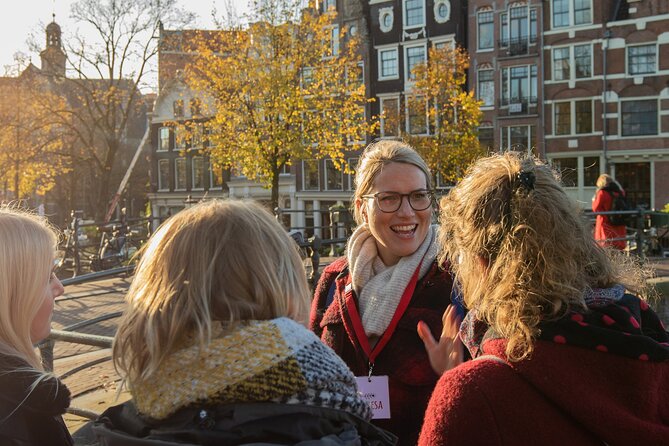
A walking tour like this lives or dies on the guide’s tone and pacing. The standout theme in feedback is that the guides keep things warm, lively, and easy to follow, even when the weather isn’t cooperating.
For example, groups were led by Noah, Stefanie, Johanna, and Shari, and the praise was consistent: guides were friendly, injected humor, and answered questions with confidence. One mention even called out that the tour was still beautiful and entertaining despite pouring rain, which matters because this kind of neighborhood walk can get slippery and damp.
That combination—clear explanations plus personality—fits this itinerary’s structure. With lots of short stops, you need someone who can connect the dots fast. Based on the guide style described, Amsterdamliebe seems good at turning narrow streets and quiet courtyards into a story you can actually follow.
Price and value: what $33.36 really covers
At $33.36 per person, you’re not paying for a museum ticket bundle. You’re paying for a guide-led route through a high-density area of landmarks, most of which have free admission. The materials also note a 1.50€ city tax is included in the price.
Here’s how I’d think about value:
- If you only want one big attraction ticket, this tour can be cost-effective because it stacks context around it.
- If you’re new to Amsterdam and want orientation in the Jordaan without spending all day in queues, this is a sensible use of time.
- If you dislike standing for short outdoor segments, the frequent brief stops might feel too “stop-and-go,” since the Anne Frank House itself is not an admission included moment.
This is also a tour where group size helps the value. With a max of 15, you’re less likely to feel like part of a moving crowd with no chance to ask questions.
Weather and comfort: the one real planning variable
Your tour materials say the experience requires good weather. That doesn’t mean you’ll never see it on gray days, but it does mean rain or storm conditions can affect whether the tour runs.
So bring the basics: an outer layer, shoes you can trust on wet sidewalks, and a plan for quick temperature swings. The route is mostly exterior and courtyard-based, so weather matters more here than it would on a tour centered on indoor museums.
Should you book this Jordaan walk?
Book it if you want a focused Jordaan experience that connects Anne Frank landmarks, major church architecture, and the courtyard life (hofjes) into one easy route. It’s also a strong pick if you like tours where the guide helps you understand what you’re seeing on the sidewalk, then points you toward an immediate follow-up like that apple pie tip.
Skip or plan carefully if you want guaranteed entry to the Anne Frank House. This walk treats the house as an exterior storytelling stop, so you’ll need to handle any inside visit separately.
FAQ
FAQ
How long is the walking tour?
It runs about 1 hour 30 minutes.
Where does the tour start?
The meeting point is Anne Frank Monument, Westermarkt 74, 1016 DL Amsterdam.
Where does the tour end?
It ends back at the same meeting point.
What’s the price per person?
The price is $33.36 per person.
Is the Anne Frank House included?
No. The stop includes looking at the house from the outside, and admission is not included.
Which language is the tour offered in?
The tour is offered in English.
Are the other stops included and free?
Most stops listed have admission marked as free, with the Anne Frank House being the one noted as not included.
How large is the group?
The maximum group size is 15 travelers.