
REVIEW · AMSTERDAM
Amsterdam Audioguide – TravelMate app for your smartphone
Book on GetYourGuide →Operated by MyWoWo Srl · Bookable on GetYourGuide
Your phone becomes your Amsterdam guide. This self-guided audioguide lets you roam at your rhythm, with no paper tickets and no schedule imposed on you. I especially like the idea that you can listen online or offline, so you’re not stuck hunting for signal between sights.
Two things I’d highlight. First, you get repeat listening: the content doesn’t expire after you activate it (it’s valid for 1095 days), so you can revisit stops later or replay the parts you liked. Second, you’re not just handed audio—you can also read the text in the app, plus there’s a quiz section to keep you awake and learning while you’re on the move.
One consideration: this is an app-based experience, so you’re dependent on your phone battery and on having your earphones ready. If you want lots of spontaneous back-and-forth questions from a live human guide, this setup won’t match that.
In This Review
- Key highlights you’ll actually use
- No tickets, no meeting point: start your Amsterdam audio on your terms
- TravelMate listening: 35 tracks, 105 minutes, and the freedom to replay
- Amsterdam Introduction and Canals: getting oriented without slowing down
- Anne Frank House: use the audio to understand context, not just the facts
- Red Light District and the Port: stories that help you look, not judge
- Basilicas and Royal power: Basilica of the Friars, Royal Palace, and Doge’s Palace
- Museums that art lovers plan around: Museumplein, Rijksmuseum, Stedelijk, and Van Gogh
- Heineken Experience and local cuisine: make room for flavors, not just photos
- How to pace yourself so you feel in control all day
- Price and value: why $4.54 can make sense for Amsterdam
- Who this audio guide suits best
- Should you book the Amsterdam TravelMate audioguide?
- FAQ
- What is the Amsterdam Audioguide TravelMate app?
- Is there a meeting point?
- How much does it cost?
- How long is the guide valid?
- Can I listen offline?
- What languages are included?
- What does the audio include?
- Do I need paper tickets?
- Where do I find the activation code?
- Is it wheelchair accessible?
Key highlights you’ll actually use

- No meeting point to chase: download and start wherever you are
- Offline option: keep going even when the network gets spotty
- 35 tracks / 105 minutes total: focused stories, not endless rambling
- Repeatable for 1095 days: revisit museums and neighborhoods without re-buying
- Text + audio: switch formats when you’re walking or standing still
- Quick quiz section: short questions that make the city stick
No tickets, no meeting point: start your Amsterdam audio on your terms

The big selling point here is simple: you don’t collect anything at a counter. After you download the TravelMate app, you start your Amsterdam experience immediately, wherever you prefer. That matters in a city like Amsterdam, where one street corner can turn into three hours of wandering.
Instead of a paper pass, you’ll use an activation code from your email (or through the GetYourGuide app). The code is a 10-digit number found under the barcode in the orange frame. It’s a very straightforward flow, but do one thing before you go: set a reminder to check your email and grab the code so you’re not doing it while you’re standing outside in the rain.
Also note the end-of-activity phrasing: since there’s no actual meeting point, your “finish” is basically where you wrap up your listening. You can stop after one neighborhood, or keep using the app across multiple days.
You can also read our reviews of more tours and experiences in Amsterdam



TravelMate listening: 35 tracks, 105 minutes, and the freedom to replay
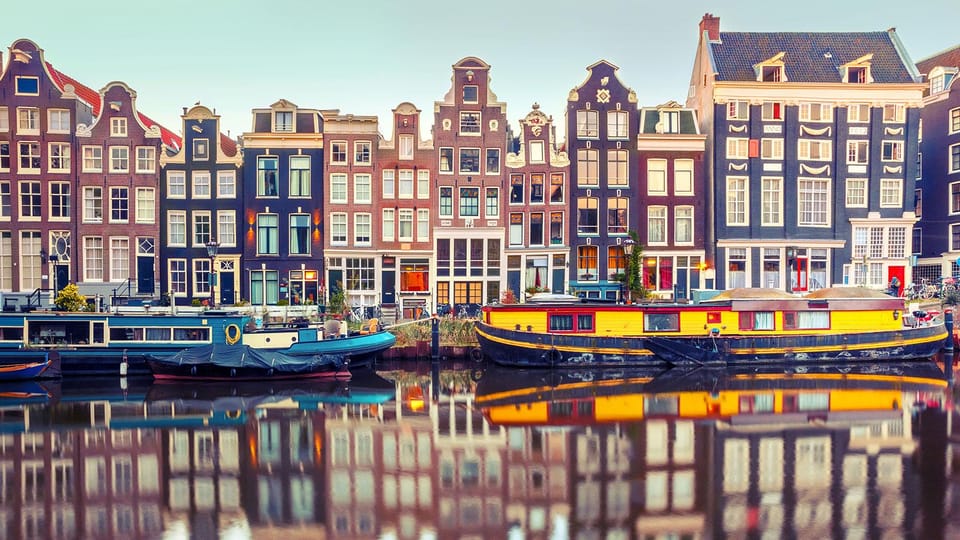
This is not a single long narration. You get 35 audio content pieces totaling 105 minutes. The way it feels in practice is more like grabbing a well-made mini story at each stop, instead of being locked into one route.
You can choose your listening style:
- Audio can be used online or offline
- You may read the text of the audio files inside the app
- There’s a quiz section with short questions that test what you just heard
The app is available in several languages—Italian, English, Spanish, French, Russian, Chinese, and German—so it’s a good option when you’re traveling with someone who doesn’t want the burden of translating on the spot.
And yes, you’ll want earphones. Not because the audio is hard to hear, but because you’ll get a cleaner experience and you won’t be sharing your soundtrack with everyone around you. (Also, using your own phone means no swapping devices with third parties, which is a surprisingly practical value-add.)
Amsterdam Introduction and Canals: getting oriented without slowing down
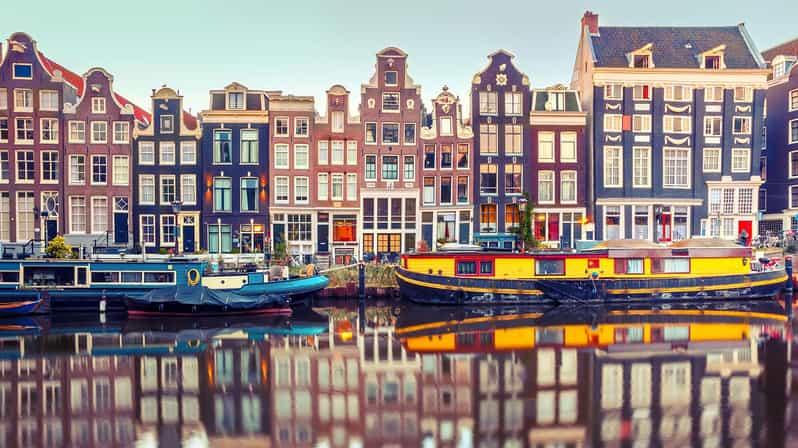
Your first listens cover an Amsterdam Introduction and the Canals, and that’s a smart starting combo. The introduction sets the tone, then you’re quickly guided toward the city’s most defining feature: the canal web.
When you’re self-guiding, orientation is everything. A live guide can point at the right thing at the right time; an audio guide has to be timed to your movement. The benefit of having audio built for “tourist sight lines” is that it helps you notice what you’d otherwise glide past—especially with canals, where a small shift in angle can change what you see.
For the Canals portion, I’d treat it like a framework. Walk slowly for a few minutes, then speed up. Stop at one spot long enough to listen once. Then, when you’re ready, use the replay value later on from a different canal bend. That’s one of the quiet advantages of a guide that stays available for 1095 days.
Anne Frank House: use the audio to understand context, not just the facts

The audio includes a stop for the Anne Frank House. Even if you know the basics, this is the kind of place where context makes the experience land harder. The app approach can be helpful because you can control pace: you can listen in shorter chunks as you approach, then focus on silence and observation when you need it.
One practical caution: audio guides don’t replace the need to follow any site rules or flow. If you’re waiting in a line or moving through an area, keep your listening respectful—lower volume when needed and avoid trying to read long text on your screen while you’re blocking foot traffic.
If you’re the type who likes to arrive with a bit of context (without cramming), the audio’s “guided history + curiosities” style can work well here. And because it’s replayable, you can come back later in your trip and listen again with a fresher mindset.
Red Light District and the Port: stories that help you look, not judge
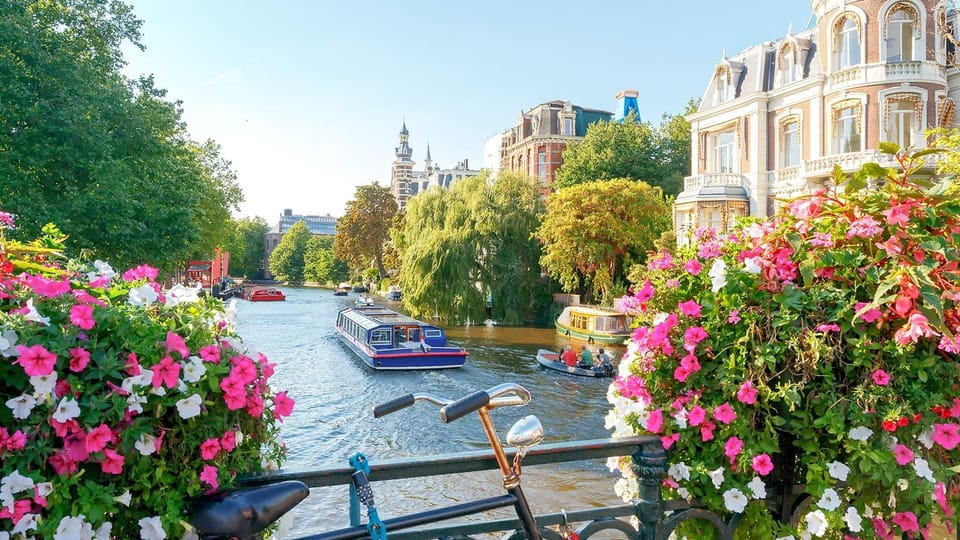
The guide includes the Red Light District and also a Port stop. Those two don’t belong together on a postcard, but they make sense as paired listening moments because they push you to think about Amsterdam’s layers: commerce, law, livelihoods, and how a city markets itself while still living its daily life.
For the Red Light District, the audio format is useful because it can explain what you’re seeing and why it exists, without turning your walk into an awkward Q&A session. Use the audio to understand the city’s history and curiosities, then keep your behavior consistent with the place. No matter what your views are, your tone should be calm and respectful.
For the Port, I’d listen while you’re in a mood for “how the city worked.” Amsterdam grew from trade and water routes; even if your walk is just a short stretch, audio can connect the dots so you’re not only seeing scenery—you’re building a mental map of Amsterdam’s past and present.





Basilicas and Royal power: Basilica of the Friars, Royal Palace, and Doge’s Palace

The list includes Basilica of the Friars, the Royal Palace, and Doge’s Palace. These are the kinds of stops that benefit from audio because they shift you from “I see a building” to “I understand what to look for.”
Here’s the key: these sites reward attention. If you walk past while scrolling, you’ll miss what the audio is trying to point out. Instead, give each stop a short, focused window:
- Stand still for the audio segment
- Look up and notice facades or details while you listen
- Then move on before your brain overloads
One note: some landmark names can be confusing across languages and references, so rely on what you see around you rather than trying to force a perfect match in your head. The app is there to guide your interpretation, not to demand that you memorize a name beforehand.
If you like historical power centers and religious or civic architecture, these stops will feel like the “why this city shaped itself this way” portion of the guide.
Museums that art lovers plan around: Museumplein, Rijksmuseum, Stedelijk, and Van Gogh

This is where your listening can turn into a smart museum strategy. The audioguide includes Museumplein, Rijksmuseum, Stedelijk Museum, and Van Gogh Museum. Even without a rigid timed itinerary, audio helps you decide where to spend your energy.
At Museumplein, I’d use the audio as a warm-up. You’re not just passing a square—you’re stepping into a cluster of major institutions. If you listen here first, the later museum visits make more sense, because you’re carrying a framework.
For the museums themselves, treat the audio like a pre-reading. Listen once before you go into a museum space if you can. Then revisit the same audio later in your visit, especially if you find yourself getting distracted. The fact that the guide doesn’t expire for 1095 days means you can refine your route on later days without buying another guide.
For Rijksmuseum, Stedelijk, and Van Gogh Museum, your best value comes from listening to the part that matches your mood:
- If you want famous highlights, focus your listening on the big names tied to the institution.
- If you prefer quieter appreciation, let the audio slow you down instead of rushing through.
If you’re traveling with someone who wants to bounce between museums quickly, the shared trick is to agree on a listening segment length—then meet back up.
Heineken Experience and local cuisine: make room for flavors, not just photos

The audioguide includes Wonders of local cuisine and also the Heineken Experience. This is a good pairing because it covers two ways people enjoy Amsterdam: what they eat and what they drink, plus the culture around both.
For local cuisine, the value is less about memorizing dishes and more about teaching you what to look for when you’re hungry. Audio can nudge you toward thinking in categories—street-level bites, market food, and classic comfort—so your meals feel more intentional.
For the Heineken Experience, the benefit of audio is that it can turn a ticketed or attraction-style stop into a story you can follow. Even if you don’t care about beer history deeply, it often helps to have a short background segment to give meaning to what you’re seeing.
My practical advice: plan these stops after you’ve done some walking. Audio can make food and drink experiences more enjoyable, but only if you’re not exhausted. Use the app at the right pace, not as a replacement for time to taste and breathe.
How to pace yourself so you feel in control all day

The strongest praise for this experience is about autonomy: being able to do everything at your own pace. That’s real value, especially in Amsterdam, where the best moments often appear outside the “must-see” list.
A simple way to pace with a 105-minute library:
- Do one listening segment per major area (canals, one museum cluster, one neighborhood)
- Leave breaks where you’re not listening, so your brain can digest
- Reuse the guide later on days when you want a second pass with better energy
If you plan to cover a lot, don’t try to listen to everything in one long stretch. Your eyes will start to glaze over, and the audio will become background noise. Instead, treat audio like a guided spotlight: listen, look, then walk.
Also, since there’s a quiz section, use it as a reset. After one neighborhood, play a few questions. It’s the kind of “small win” that makes the city feel sticky, not like random sights stacked together.
And because the validity is 1095 days from first activation, you don’t have to squeeze everything into one trip window. If your schedule changes, the guide still has your back.
Price and value: why $4.54 can make sense for Amsterdam
At $4.54 per person, this audioguide is priced like an add-on, not a big ticket attraction. The question is whether it’s worth your time.
Here’s why it can be a great value:
- You get 35 pieces across 105 minutes, so it’s more than a single “orientation” track
- The content is repeatable for a long time (1095 days)
- You can listen online or offline, which is practical on the ground
- It covers both classic sights (museums) and higher-interest neighborhoods (like the Red Light District)
The potential trade-off is that it won’t replace guided logistics or live interpretation. If you’re the type who wants a human to answer questions and handle route decisions, you might still want a walking tour on top. But as an independent companion, this is one of the cheapest ways to make Amsterdam feel less like a checklist.
Who this audio guide suits best
This works best if you like self-guided travel and want structure without a strict schedule. It’s also a strong fit if you’re traveling in a small group where everyone wants some freedom.
You’ll also appreciate it if:
- You want to avoid paper tickets and check-in hassle
- You like reading a bit alongside audio
- You want offline backup
- You value repeat visits (museums and neighborhoods where you’ll want a second look)
Wheelchair accessibility is noted as available, which is good to know, though how you experience each physical site will still depend on where you go and the route you choose.
Should you book the Amsterdam TravelMate audioguide?
Book it if you want a low-cost way to add real meaning to the sights, especially if you care about pacing and repeat listening. For $4.54, getting 35 professionally made audio segments across major Amsterdam themes is hard to beat, and the offline option makes it practical.
Skip it if you expect a live guide, timed entry help, or a hands-on navigation service. This is you + your phone + audio. If that sounds like your style, it’s a smart buy.
FAQ
What is the Amsterdam Audioguide TravelMate app?
It’s a smartphone audio guide for Amsterdam with 35 audio contents totaling 105 minutes, available in multiple languages. You listen at your own pace and you can also read the text of the audio files in the app.
Is there a meeting point?
No. There is no meeting point listed. You download the app and start your experience wherever you prefer.
How much does it cost?
The price is listed as $4.54 per person.
How long is the guide valid?
It is valid for 1095 days from your first activation.
Can I listen offline?
Yes. You can listen online or offline.
What languages are included?
The guide is available in Italian, English, Spanish, French, Russian, Chinese, and German.
What does the audio include?
It covers Amsterdam with audio contents for stops such as Anne Frank House, Canals, Basilica of the Friars, Heineken Experience, Museumplein, Red Light District, Doge’s Palace, Rijksmuseum, Royal Palace, Stedelijk Museum, and Van Gogh Museum, plus an introduction and a local cuisine section. There is also a quiz section.
Do I need paper tickets?
No. The experience is organized through the TravelMate app on your phone, and you don’t collect paper tickets.
Where do I find the activation code?
You’ll find it in your email under activity details/tickets by showing the activity barcode, or you can access it via the GetYourGuide app by viewing the ticket barcode. The activation code is the 10-digit number just under the barcode.
Is it wheelchair accessible?
Wheelchair accessibility is noted as available.