REVIEW · CANAL CRUISES
Amsterdam: Canal Cruise with Live Commentary & Audio Guide
Book on GetYourGuide →Operated by Holland Ticket Services · Bookable on GetYourGuide
Amsterdam from the water hits different. This 75-minute canal cruise is built around a 100% electric boat, with live commentary plus an audio guide, so you get context fast and keep moving at a relaxed pace. You’ll glide past canal houses, churches, and bridges, with a real photo moment by the Anne Frank House.
Two things I really like: the boat feels modern and comfortable (covered, with heating when needed and open roof when the weather cooperates), and the narration is layered—captain talk on board and an audio app for extra details in multiple languages. One possible drawback: finding the departure dock takes a little navigation (it’s reachable from Central Station, but you cross by ferry first, and the jetty is easy to miss if you arrive without checking your route).
In This Review
- Key highlights worth planning for
- A 100% electric canal cruise on a covered-but-flexible boat
- Getting to Badhuiskade 1: ferry directions that avoid guesswork
- What you actually see in 75 minutes: IJ River, Prinsengracht, and Amstel
- Stop-by-stop: what the 75 minutes feel like on the water
- Starting point: Badhuiskade 1
- Stop 2: IJ River (about 10 minutes)
- Stop 3: Prinsengracht (about 30 minutes)
- Stop 4: Anne Frank House area (about 5 minutes, photo stop)
- Stop 5: The Amstel (about 10 minutes, photo stop)
- Stop 6: Binnenstad (about 10 minutes)
- Stop 7: IJ River on the return (about 10 minutes)
- End: Arrive back at Badhuiskade 1
- Live captain commentary plus multilingual audio: the best way to listen
- Comfort and onboard extras: tables, heat, and the drink stop
- Does the itinerary hit the big Amsterdam moments?
- Who should book this electric canal cruise?
- Book it if…
- Consider alternatives if…
- Should you book this $14 electric canal cruise?
- FAQ
- How long is the Amsterdam canal cruise?
- Where does the cruise depart from?
- Can I find the meeting point easily from Amsterdam Central Station?
- Is there live commentary on board?
- Are drinks included in the price?
- Is the boat really electric?
- Is an audio guide included, and what languages are available?
Key highlights worth planning for
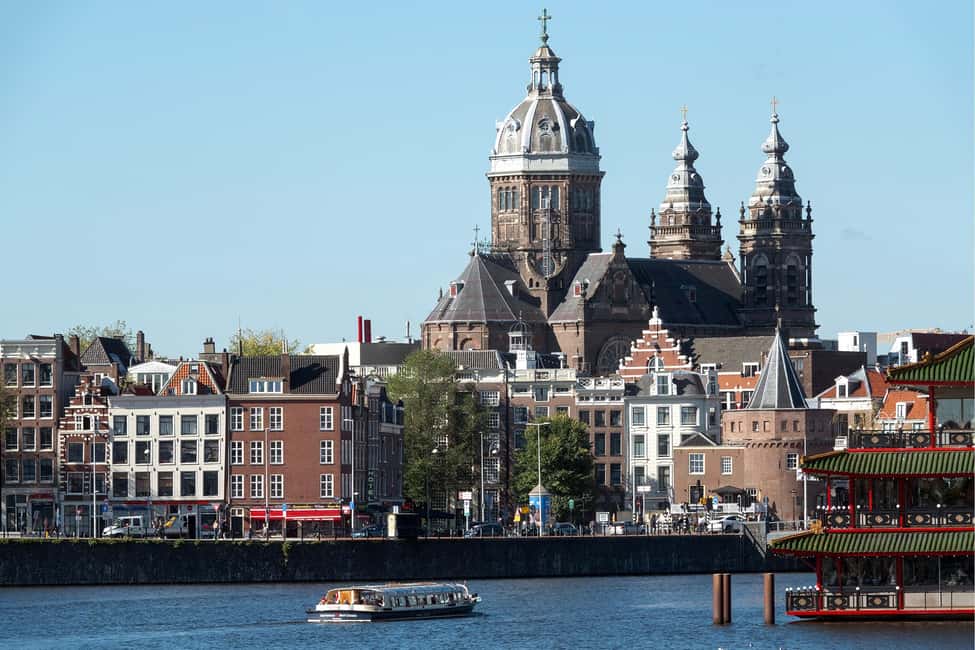
- 100% electric cruise on a covered boat with the roof open on sunny days
- Live commentary from the skipper in English (plus Dutch) during the ride
- Audio guide in multiple languages (Dutch, English, French, German, Italian, Spanish)
- A full circuit of big sights on a tight 75-minute schedule, including a photo stop by the Anne Frank House
- Indoors and outdoors seating, plus an onboard toilet (not something every canal boat offers)
A 100% electric canal cruise on a covered-but-flexible boat
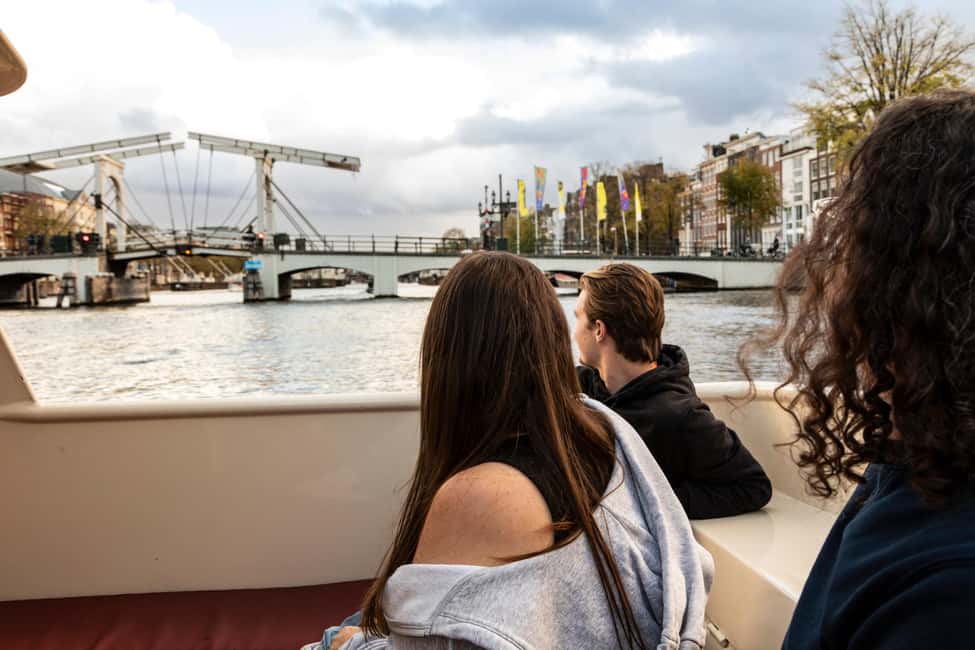
If you care about comfort as much as views, this style of canal boat matters. The ride is on a brand-new 100% electric vessel, and it’s covered—so wind and light rain are less of a problem. On warmer days, you get the option of an open roof, which is great because it lets you feel like you’re outside while still having shelter.
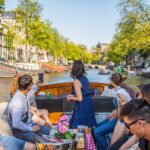
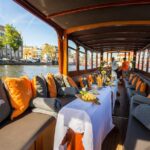
Inside, you’re not stuck on a hard bench. You get individual seats and tables, plus heating when necessary and ample space to settle in. That matters because the cruise is 75 minutes—long enough to enjoy, short enough to not feel trapped. The onboard toilet is another practical win, especially if you’re traveling with kids or you hate rushing to find bathrooms between stops.
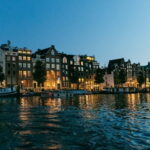
The boat also has that “Amsterdam all at once” feeling. You’re moving through tight canal geometry, but you’re not squeezed like cattle. You can keep one eye on the water-level details—houseboats moored along the edges, church silhouettes, and bridges—and the other on the narration.
One small sightline note to keep in mind: the covered roof is designed for protection, but you might occasionally notice structural beams that break the view upward, especially if the weather is cooler and they keep more of the cover in place.
You can also read our reviews of more boat tours in Amsterdam

Getting to Badhuiskade 1: ferry directions that avoid guesswork
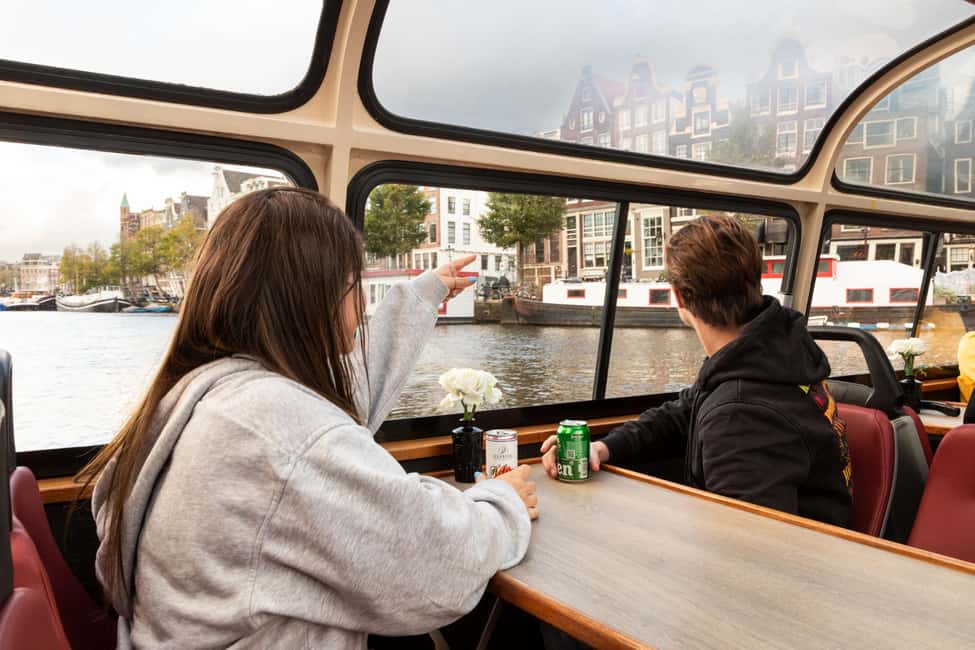
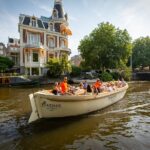
Amsterdam canal boats can be weirdly hard to find. This one is anchored near Central Station, but the easiest route includes a short ferry hop.
Here’s the simple way to think about it: from Central Station, take the ferry F3 Buiksloterweg (you’ll find it behind Central Station). From there, you walk left toward the A’dam Tower, the tall landmark with the swing-style feature on the roof. After about 250 meters, look to the right after the bridge—you should spot the departure jetty for Amsterdam Boat Cruises.
Why I like this advice: it’s specific. If you follow it, you’re not wandering around the waterfront like a lost tourist with a map app and a deadline.
Also, you get to skip the line using a separate entrance. That won’t help if you arrive late, but it can save real time on crowded days.
If you’re tight on time, give yourself buffer. Even with good directions, ferry schedules and the “where exactly is the dock” effect can eat minutes.
What you actually see in 75 minutes: IJ River, Prinsengracht, and Amstel
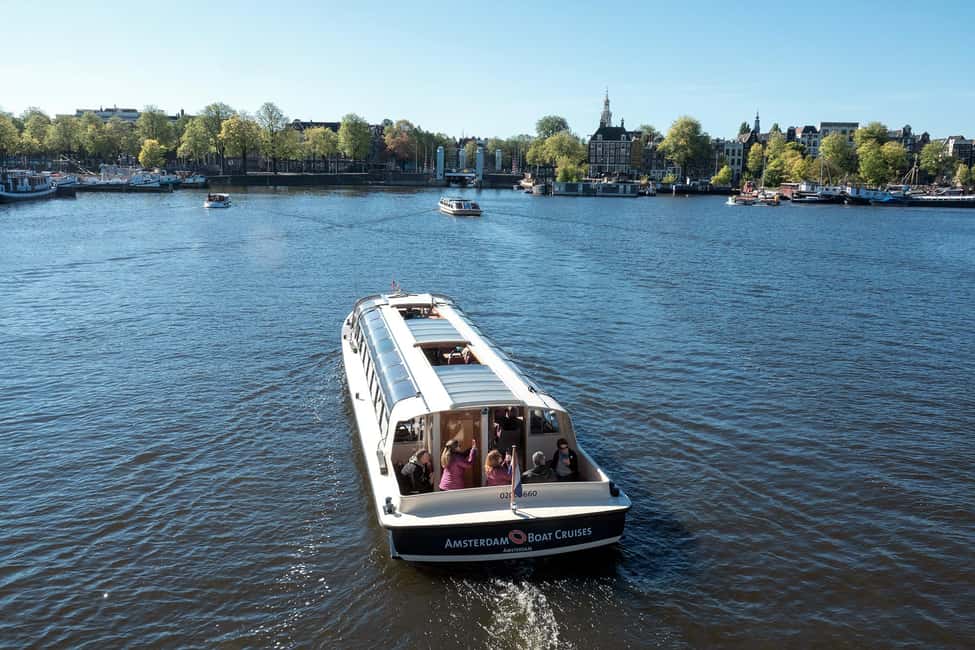
This tour is timed like a best-of sampler. It’s designed so you leave with a mental map of Amsterdam’s canal system—without spending half a day on a boat.
The ride starts at Badhuiskade 1 and quickly gets into the action with a run along the IJ River. You then move into the heart of the classic canal experience with Prinsengracht for about 30 minutes. That longer stretch is key. It gives you time to rotate your gaze: rooftops, canal façades, and the repeating rhythm of bridges and canal angles.
After that, you hit a short but meaningful photo stop by the Anne Frank House. Then the route shifts to the Amstel, including another photo moment and scenic passes through Binnenstad (Amsterdam’s central area).
The IJ River segment on the way back helps you feel the route as a loop, not a one-way sightseeing stroll. You end back at Badhuiskade 1, so you don’t have to think about transfers after you’re done.
A tour like this is especially useful if it’s your first time in Amsterdam, because it turns the city into a set of identifiable landmarks you can later connect on land.
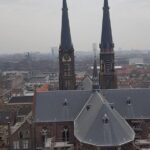
And yes—you’ll also get a look at the famous bridges (the highlights mention 7 bridges), along with famous styles like the wooden skinny bridge and major landmarks such as the Western Church.
Stop-by-stop: what the 75 minutes feel like on the water
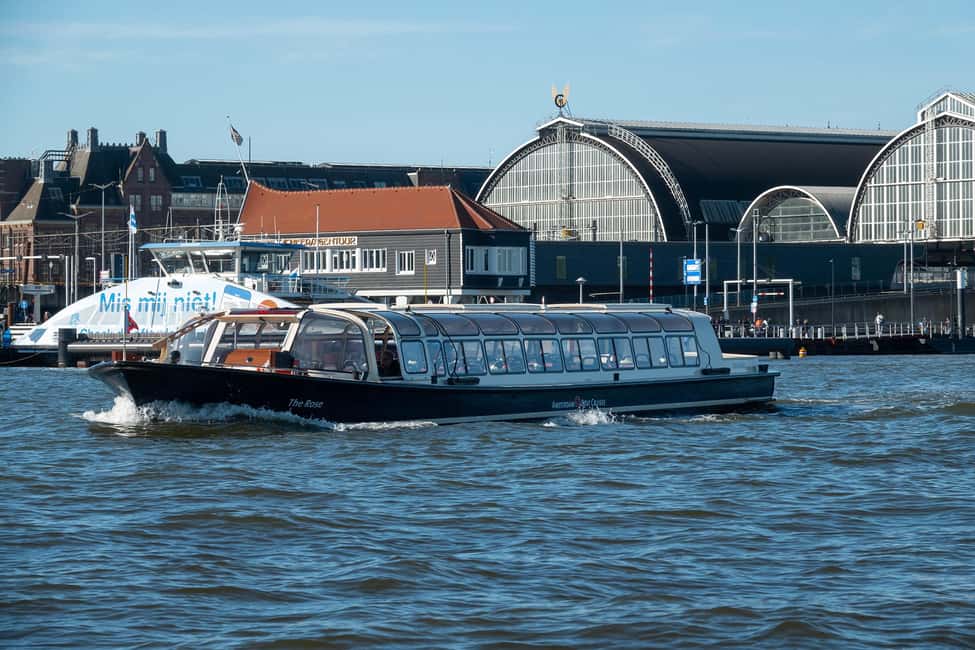
Let’s walk through the route like you’re already onboard, because the differences between segments are what make the tour worth it.
Starting point: Badhuiskade 1
You board at Badhuiskade 1. Think of this as your warm-up: the boat gets settled, and you start picking out what kind of viewpoint you prefer—toward the front for broader angles, or more mid-boat for steadier viewing along the waterline.
You can also read our reviews of more guided tours in Amsterdam


Stop 2: IJ River (about 10 minutes)
You’ll pass by the IJ River. This segment is good for orientation. The river gives you a wider sense of Amsterdam’s waterfront layout—then you’ll funnel back into the tighter canal lanes. If you’re the type who likes context before details, this works.
Stop 3: Prinsengracht (about 30 minutes)
This is the main viewing stretch. Prinsengracht is where the canal-house look is most concentrated, and it’s also where you’ll notice the way Amsterdam’s architecture lines up with the water.
This longer section also helps photo timing. You’ll see bridges and classic façades roll by long enough that you can pause, frame, and refocus without feeling rushed.
Stop 4: Anne Frank House area (about 5 minutes, photo stop)
You get a photo stop by the Anne Frank House. The boat slows/positions for you to take pictures, then moves on quickly—so treat it as a snapshot moment, not a visit.
If this landmark is on your “must see” list, this stop gives you water-level perspective and helps you place it within the canal neighborhood instead of seeing it only from street-level.
Stop 5: The Amstel (about 10 minutes, photo stop)
On the Amstel, you’ll get another photo moment. This stretch is where the scenery shifts again—more river energy, more open angles, and a different feel than the inner canals.
It’s also a nice breather in the pacing. After the Anne Frank stop, the Amstel segment helps reset your attention.
Stop 6: Binnenstad (about 10 minutes)
Binnenstad is your central-area pass. Expect more views of churches and canal-side buildings, plus that classic sense of a city built around waterways.
Stop 7: IJ River on the return (about 10 minutes)
Heading back along the IJ River, you’ll get a second look at the waterfront—helpful if you missed a detail on the way out or you want to reframe a photo now that you understand the flow of the route.
End: Arrive back at Badhuiskade 1
You return to Badhuiskade 1, so the trip ends where it started. That’s one less thing to manage after your cruise, especially if you’re lining up the next activity.
Live captain commentary plus multilingual audio: the best way to listen
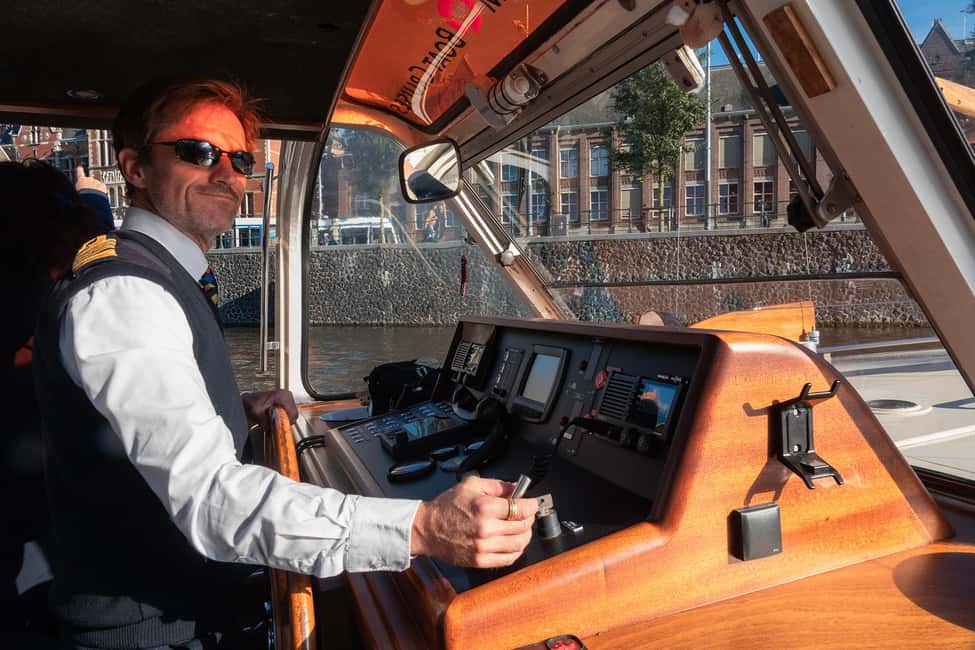
This cruise doesn’t rely on one narration track. You get live commentary by the captain in English (and Dutch), and there’s also a multilingual audio guide through speakers and an audio app.
That dual system is smart for two reasons. First, live talk gives you the human parts—jokes, timing, and “look left, not right” guidance as you pass a bridge or a church. Second, the audio guide lets you catch details at your own pace if you want to focus on the history or terminology.
The audio guide supports Dutch, English, French, German, Italian, Spanish. So if you’re traveling as a group with mixed languages, this helps everyone feel included.
One practical tip: if you’re using the app, keep your expectations flexible. The overall experience is anchored by the captain’s live narration, and that will usually be the easiest way to stay synced with what you’re seeing right now. In at least one case, app translations were noted as not perfectly aligned to the immediate area you’re passing, so don’t let the app become your only source of info.
Also, on this kind of boat, narration speed matters. If the captain talks quickly, you’ll want to hold your camera for the right beats. I recommend you pick one “camera moment” and one “listening moment” so you don’t end up doing both poorly.
Comfort and onboard extras: tables, heat, and the drink stop
This is where the small things earn points.
You sit in individual seats with tables, so it feels more like a relaxed lounge than a noisy ride where everyone’s standing. There’s an onboard toilet, and there’s heating when necessary—useful in shoulder season or on cooler days.
On sunny and warm days, the boat can open up with a less enclosed feel thanks to the open roof. That’s one of those features you only truly appreciate once you’re out in Amsterdam weather, because conditions change fast.
Then there’s the host. Drinks are available for purchase, and the onboard host serves ice-cold drinks during the journey. I like this model because it keeps the cruise from feeling like a sales event, but you still have an easy option if you’re thirsty.
One thing to keep in mind: drinks aren’t included. If you’re used to package deals that bundle everything, plan on spending a little extra for the convenience.
Does the itinerary hit the big Amsterdam moments?
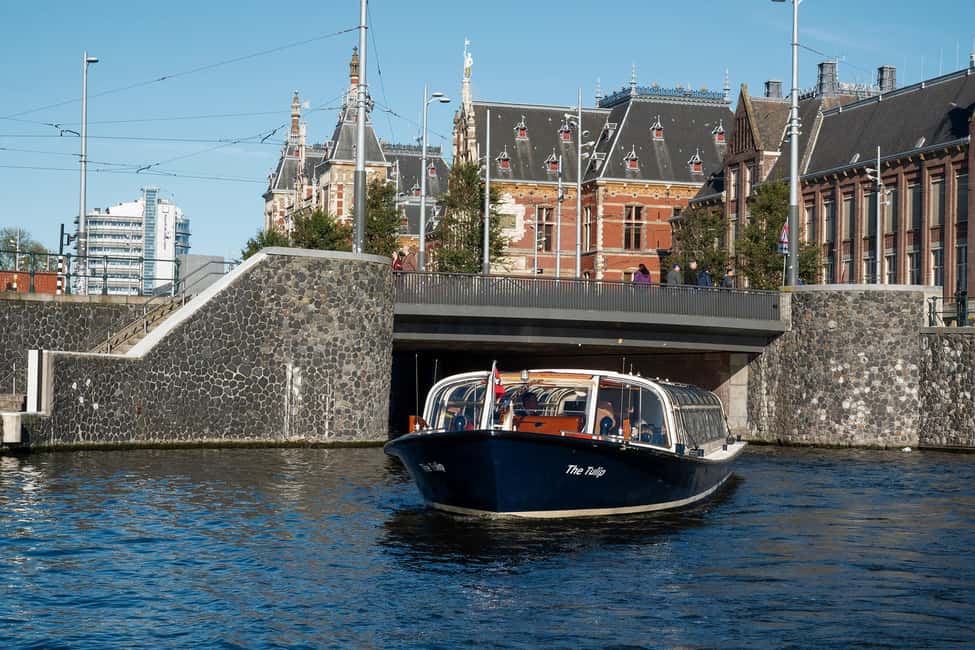
Yes, and it does it in a way that’s easy to manage.
You get the classic canal view time on Prinsengracht, plus a landmark-specific moment with the Anne Frank House photo stop. You also pass major church scenery like the Western Church and see famous bridge types, including mentions of 7 bridges and the wooden skinny bridge.
The tour also frames the canals as more than pretty scenery. You’ll hear how canals were essential to Amsterdam’s success in the 17th century, which gives the sightseeing a reason to exist. Even if you’ve read about Amsterdam before, hearing it from the water helps connect the story to the geography.
In other words: it’s not just a sightseeing loop. It’s a quick way to understand why the city’s waterways are the backbone of the city’s look and growth.
Who should book this electric canal cruise?
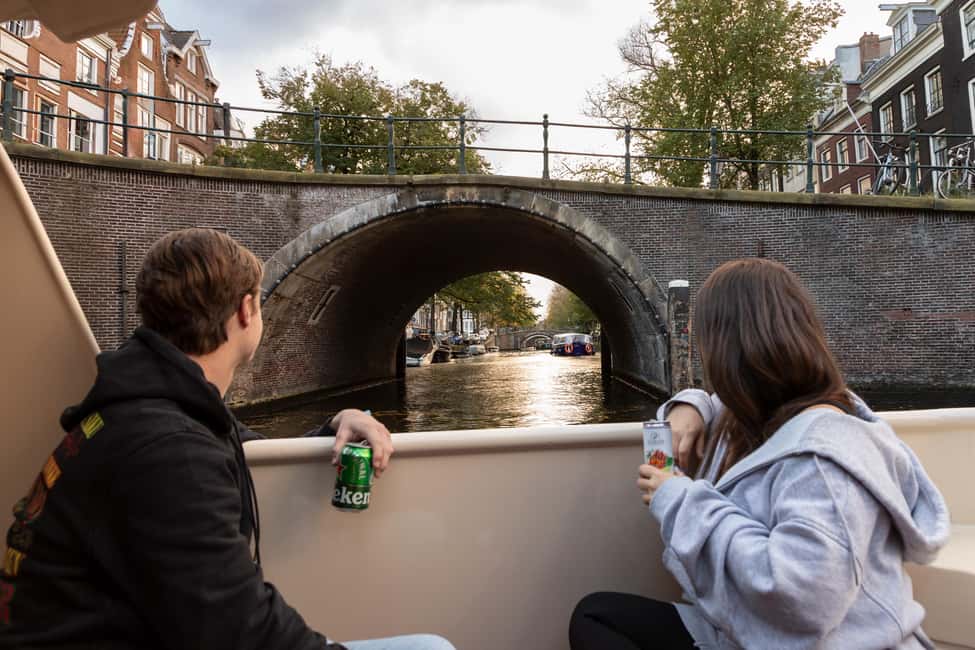
This one fits a lot of trip styles.
Book it if…
You want a first-pass orientation of Amsterdam without a long day. You like narration that blends live stories with a multilingual audio option. You value comfort—tables, heating, covered shelter, and that onboard toilet.
It’s also a good choice for families. The ride length is manageable, and the practical setup keeps it from feeling like you’re stuck with no breaks.
Consider alternatives if…
You hate the idea of navigating to a less obvious dock. Meeting at Badhuiskade 1 is doable, but it’s not as simple as walking out of Central Station and following a single street.
Also, if your top goal is maximum open-air views all the way through, note the boat is covered, with open roof depending on weather. And if it’s overcast, your view can be slightly limited by roof structure.
Should you book this $14 electric canal cruise?
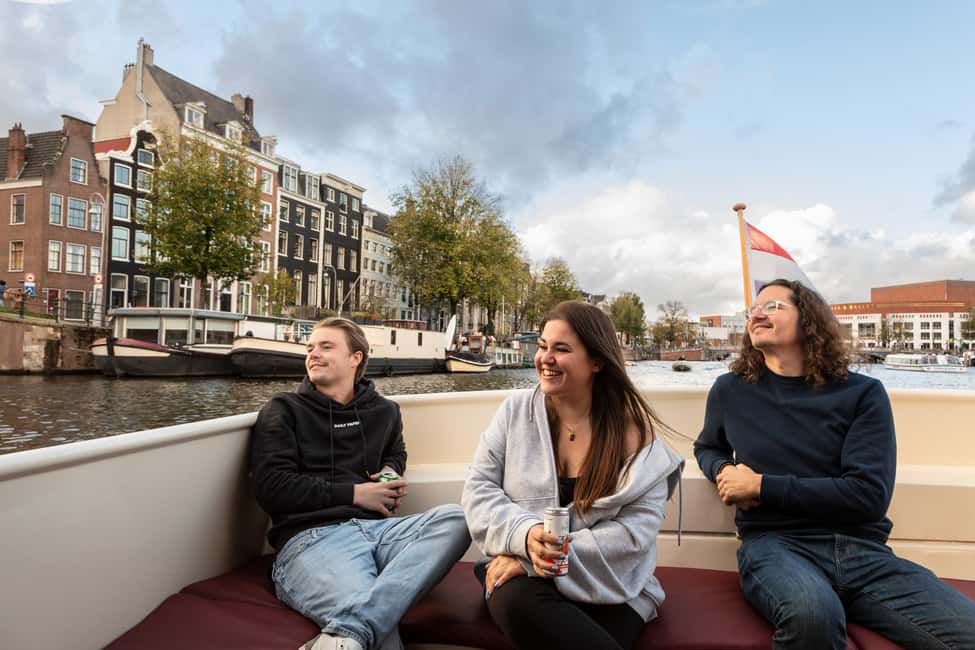
For most people, yes—this is a smart buy.
At about $14 for a 75-minute cruise, you’re paying for a lot: an electric boat, live captain commentary, a multilingual audio guide, and real comfort basics like seating tables, heat, and an onboard toilet. It’s also timed so you see multiple “must-see” areas in one loop, including a photo stop near the Anne Frank House.
I’d book it if you want an easy way to get your bearings and learn as you go, without turning the day into a logistics puzzle.
FAQ
How long is the Amsterdam canal cruise?
The cruise lasts 75 minutes.
Where does the cruise depart from?
It departs from Badhuiskade 1 and returns there at the end.
Can I find the meeting point easily from Amsterdam Central Station?
Yes, but plan on a short ferry ride. Take ferry F3 Buiksloterweg behind Central Station, walk left toward A’dam Tower, then walk about 250 meters and look for the departure jetty on the right after the bridge.
Is there live commentary on board?
Yes. There is live commentary by the captain in English (and Dutch).
Are drinks included in the price?
No. Drinks are available for purchase on board.
Is the boat really electric?
Yes. It’s a 100% electric canal boat.
Is an audio guide included, and what languages are available?
Yes. A multilingual audio guide is included, with languages listed as Dutch, English, French, German, Italian, and Spanish.