REVIEW · CANAL CRUISES
Amsterdam Sightseeing Canal Cruise with Audio Guide
Book on Viator →Operated by Tours & Tickets · Bookable on Viator
Amsterdam from the water feels different. This 1-hour ride glides along UNESCO-listed canals with a glass-roof boat and an English audio guide, making it an easy way to get oriented fast. I love that you cover big-name sights without the walking grind, and I also like the cozy, enclosed feel on cooler days; the main downside is that the window frames can limit your photo angles.
You choose your start point from Central Station, Anne Frank House, Rijksmuseum, or Leidse Square, then hop aboard at Lovers about 10 minutes before your reserved time. It’s priced at $16.74 per person, which is a fair “cheap and cheerful overview” cost if you treat it like a first-look tour, not a museum substitute.
In This Review
- Key points at a glance
- Choosing Your Departure: Central Station, Anne Frank House, Rijksmuseum, Leidse Square
- On Board the Glass-Topped Boat: Cozy Weather, Compromised Views
- The Audio Guide Experience: Clear Narration, But Watch the Headphones
- One Hour, Big Coverage: What “Amsterdam Overview” Really Means
- The Canal Belt Highlights: Keizersgracht, Herengracht, Prinsengracht
- Amsterdam’s Most Famous Water Views: Magere Brug and the Amstel
- Anne Frank Huis, Westerkerk, and De Wallen: Cultural Landmarks From the Water
- De 9 Straatjes: Canal-Belt Streets You Can Spot Instantly
- Museum and Market Zones: Rijksmuseum, NEMO, Scheepvaartmuseum, Bloemenmarkt
- Het IJ and the Wider Water System: Why Amsterdam Is a Water City
- Price and Value: Is $16.74 Worth It?
- Practical Tips That Make the Cruise Feel Better
- Should You Book This Amsterdam Canal Cruise?
- FAQ
- How long is the Amsterdam Sightseeing Canal Cruise?
- What languages are available for the audio guide?
- Where can I start the cruise?
- What is included in the ticket price?
- Do I get hotel pickup or drop-off?
- What time should I check in, and do I need a mobile ticket?
Key points at a glance
- Glass-roof boat comfort helps in rain and winter, but views can be boxed in by overhead panels
- Audio guide in multiple languages (including English) keeps the sightseeing running smoothly
- Four departure points let you match the cruise to your day without backtracking
- Iconic canals and bridges show up repeatedly, including Magere Brug and the canal belt names you’ve probably seen on postcards
- Noise and headphone issues can happen on crowded departures, so pick your seat and keep expectations realistic
- Small-ish group size (max 60) makes it feel less like a cattle car than some big-city tours
Choosing Your Departure: Central Station, Anne Frank House, Rijksmuseum, Leidse Square
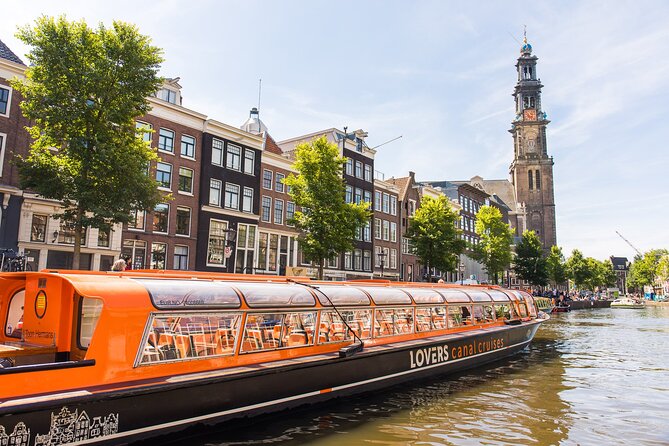
One of the smartest parts of this cruise is the flexibility. You don’t have to shove your schedule around a single meeting point. You can start where you already are: near Central Station, around Anne Frank Huis, close to Rijksmuseum, or from Leidse Square.
I like tours that respect your itinerary. If you’re already doing museums, starting by Rijksmuseum can save you a chunk of transit time. If your day is weighted toward the historic center, beginning near Anne Frank House or Leidse Square can keep everything walkable.
You can also read our reviews of more boat tours in Amsterdam

On Board the Glass-Topped Boat: Cozy Weather, Compromised Views
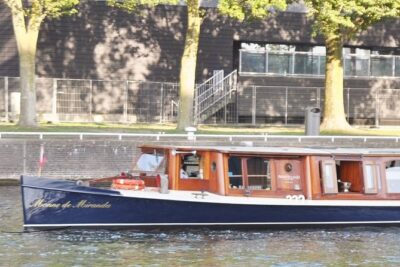
This cruise runs on glass-topped boats, which means you get protection from bad weather and a more comfortable ride through Dutch drizzle. In reviews, people called it warm and cozy—especially on Christmas Eve when lights reflect off the water. That makes sense: the enclosure helps, and you’re not stuck freezing in open-air wind.
Here’s the trade-off: the overhead structure and windows can restrict sightlines. If you care about photos, you’ll want to think about where you sit. The best strategy is simple: arrive early and aim for the best-looking angle, since getting good seats can make a noticeable difference.
Also, expect a more “view from inside” feel than a fully open canal boat. If your priority is skyline photos without obstruction, you might find the glass roof a compromise.
The Audio Guide Experience: Clear Narration, But Watch the Headphones
The cruise centers on an audio guide in several languages, and English is available. It’s designed to give you context as you pass landmarks—history, architecture, and what you’re looking at from the water.
In practice, your audio experience depends on two things:
- Headphones that work well (some departures have had headphone problems in reviews)
- Noise levels on board (a few cruisers reported that loud conversations and children made it hard to hear)
If you want to hear the narration clearly, do what you’d do on any tour with earbuds: get settled early, adjust volume, and double-check your audio before the boat starts moving. If you’re sensitive to noise, earplugs can be a smart backup even though the tour provides headphones.
One Hour, Big Coverage: What “Amsterdam Overview” Really Means
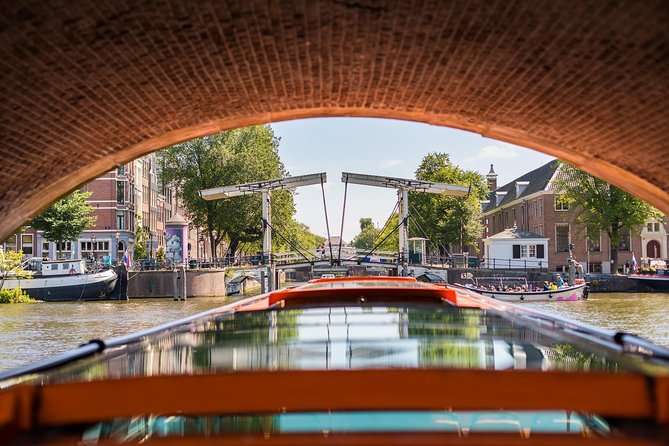
This is a classic quick-orientation cruise. In about an hour, you’ll glide past major canals and key landmarks—often the exact sights you’ve been seeing in photos, now at canal-water level.
You’ll pass:
- the main canal belt canals (Keizersgracht, Herengracht, Prinsengracht)
- major sights like Anne Frank Huis and Magere Brug
- cultural and landmark areas such as De 9 Straatjes and the Rijksmuseum zone
The value isn’t that you’ll learn every detail. The value is that you’ll come away with a map in your head. You’ll understand where neighborhoods sit, how the bridges connect streets, and why Amsterdam’s canal belt matters.
The Canal Belt Highlights: Keizersgracht, Herengracht, Prinsengracht
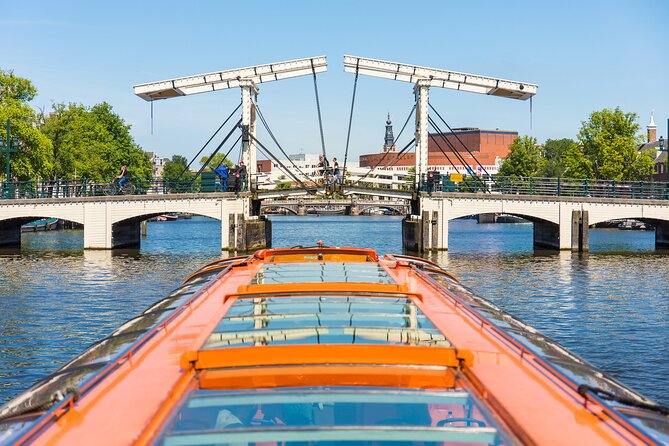
If you want to “get” Amsterdam, these three canal names do most of the work.
Keizersgracht
This canal was constructed in 1612 and named after Emperor Maximilian I. It’s described as the widest of the main canals in Amsterdam’s canal belt, and it’s lined with grand merchant houses—so from the water, you get a strong sense of the city’s wealth in the 1600s.
Herengracht
Also dug in 1612, Herengracht is often treated as the prestige canal. The idea of the “Golden Bend” is tied to its elite status, with stately mansions along the water. Cruising here feels like you’re traveling through a corridor of status buildings rather than a simple waterway.
Prinsengracht
Dug in the early 17th century during the city’s big canal expansion project, the Grachtengordel, Prinsengracht is named after the Prince of Orange. Along the canal belt, it’s known for elegant canal houses and cultural landmarks—so it hits both architecture and daily-city vibe.
Even when the boat feels crowded, these canal sections are where the cruise does its best job: you’re seeing the structure of Amsterdam, not just point landmarks.
You can also read our reviews of more guided tours in Amsterdam




Amsterdam’s Most Famous Water Views: Magere Brug and the Amstel
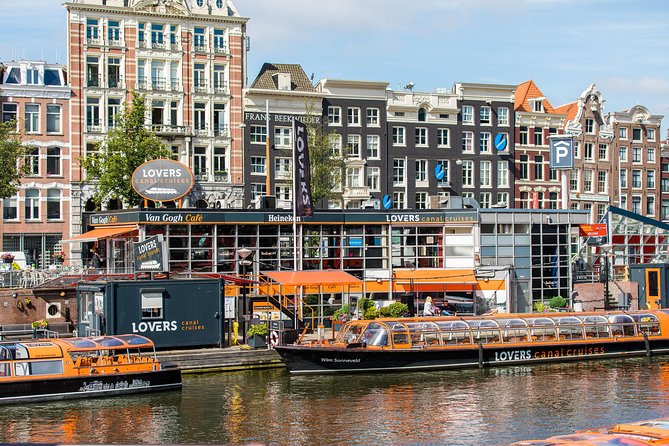
Two sights come up again and again for a reason.
Magere Brug (Skinny Bridge)
This wooden drawbridge dates to 1691 and was rebuilt in 1934 in a similar traditional style. It’s especially famous for its evening lighting, so timing matters. If you cruise at night, the bridge can look extra magical against the water.
The Amstel River
The Amstel runs through Amsterdam and helped shape the city’s founding and name. From the boat, you’ll get a sense of how the river connects neighborhoods and why the city grew where it did.
These are the kinds of stops that make the cruise feel less like “passing buildings” and more like sightseeing.
Anne Frank Huis, Westerkerk, and De Wallen: Cultural Landmarks From the Water
This part of Amsterdam is emotional and complicated, so it helps to know what you’re looking at.
Anne Frank Huis
The cruise is advertised to pass by Anne Frank Huis. Sightlines can vary based on seating and angle, so it’s smart to see this as a chance to locate the area from the water—not a replacement for visiting the house on land.
Westerkerk (Western Church)
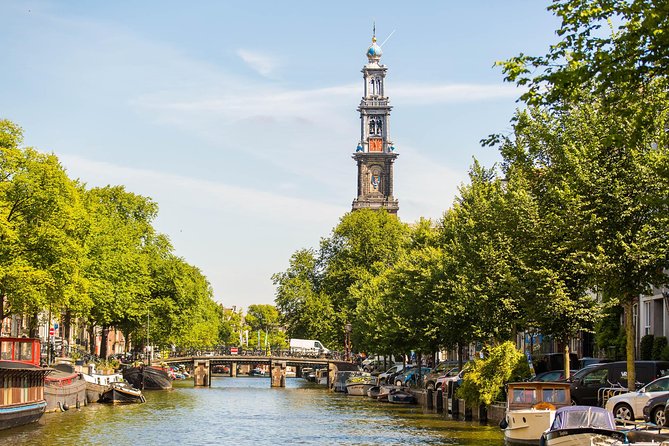
Completed in 1631, Westerkerk is known for its tall ornate tower, the Westertoren. It’s also famously near Anne Frank’s area, which makes the cruise feel like it connects key points of the historic center quickly.
De Wallen (Red Light District)
You may also cruise by Amsterdam’s Red Light District, locally called De Wallen. The key context to carry is that it’s the city’s oldest neighborhood (dating back to the 14th century as a harbor area) and today it’s a regulated zone combining historic buildings, legalized sex work, and a mix of tourism, nightlife, and cultural heritage.
This isn’t a “lecture tour,” so don’t expect deep discussion. Still, gliding past gives you immediate location awareness for what’s otherwise easy to lose in the street maze.
De 9 Straatjes: Canal-Belt Streets You Can Spot Instantly
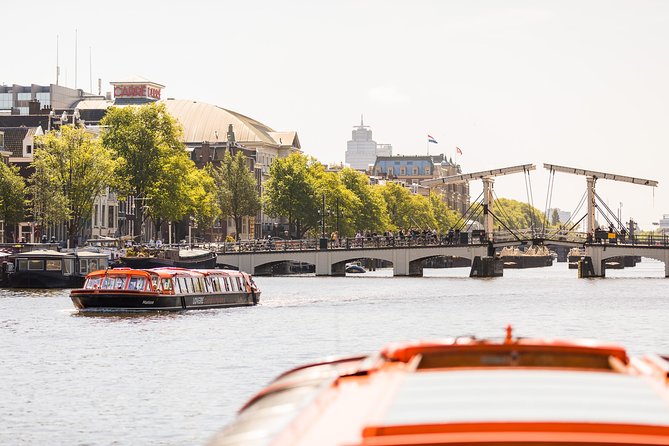
De 9 Straatjes are nine narrow streets tucked into the canal belt. From the water, you can sometimes pick up the shape of the area—the canal-side layout and the small street pattern that makes the neighborhood feel intimate.
It’s known for boutiques, vintage shops, and cozy cafés, plus the fact that the area traces back to the 17th century development. Even if you don’t stop here during the cruise, you’ll likely be able to find it again later because you’ll remember the canal shape and bridge lines.
Museum and Market Zones: Rijksmuseum, NEMO, Scheepvaartmuseum, Bloemenmarkt
This cruise doesn’t just do “old town.” You also get a feel for Amsterdam’s museum and waterfront identity.
Rijksmuseum
Designed by Pierre Cuypers and opened in 1885, the Rijksmuseum blends Gothic and Renaissance elements. It houses major Dutch masters like Rembrandt and Vermeer, plus a national art and history collection. Seeing it from the water can help you understand the museum district’s place in the broader city plan.
Scheepvaartmuseum
Housed in a historic 17th-century warehouse, the Scheepvaartmuseum focuses on maritime history—ships, maps, and nautical artifacts. It was renovated in 2011, and it connects Amsterdam to the sea trade story that shaped Dutch prosperity.
NEMO Science Museum
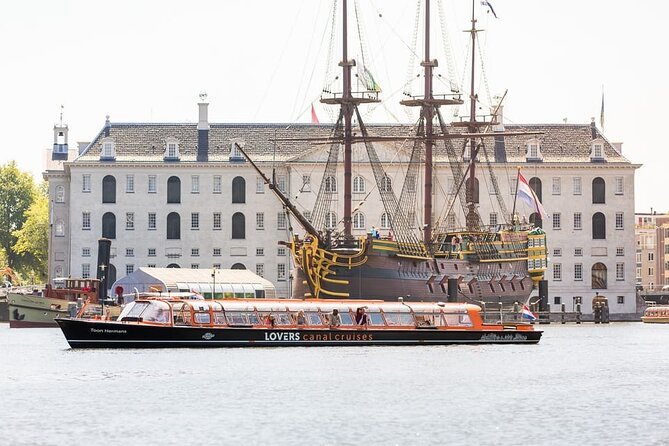
NEMO is a modern counterpoint: designed by Renzo Piano, opened in 1997, and recognizable as a green ship-like structure above the Oosterdok. It’s interactive and geared toward kids and families, which makes it a nice reminder that Amsterdam isn’t only about historic facades and canal houses.
Bloemenmarkt (Floating Flower Market)
If you’ve seen photos of flower stalls on boats, you’ve seen Bloemenmarkt. Established in 1862, it’s the world’s only floating flower market, with houseboat stalls along the Singel canal selling bulbs, souvenirs, and plants. You get a quick sense of how daily commerce rides right alongside the city’s historic waterways.
Het IJ and the Wider Water System: Why Amsterdam Is a Water City
Amsterdam’s canals can feel like a closed loop until you notice the larger water system.
Het IJ is a bay area and former inlet that historically connected the city to the North Sea, playing a role in trade and maritime development. Today, it’s a waterfront area with ferries, cultural venues, and recreational activities. Watching the boat pass through that broader “water-to-water” feeling helps explain why Amsterdam keeps expanding around waterways instead of away from them.
Price and Value: Is $16.74 Worth It?
For about $16.74 per person and roughly 1 hour onboard, this is a budget-friendly way to do a lot at once. You’re paying mostly for:
- the boat ride along the canal belt
- the audio guidance that turns “pretty views” into something you can remember
- the fact that you don’t need to plan a loop of walking distances
It’s especially good if you’re on a tight schedule, arriving for the first time, or you need a low-effort activity that still feels like real Amsterdam. But it’s not the best choice if you want high-resolution photo opportunities or a hands-on, guided explanation with stops to get out and explore.
Think of it as an orientation tool. Then use that knowledge to pick the best walking routes and deeper museum visits.
Practical Tips That Make the Cruise Feel Better
A few small choices can dramatically improve your experience:
- Arrive early for seating. Some boats feel packed, and the “best view” spot can be gone quickly.
- Plan for window limits. Overhead glass and window frames can block angles, so be ready to shoot around them or accept fewer skyline-style photos.
- Keep your ear on the audio. If you hear lots of announcements or crowd noise, it can overlap with headphones. Pick a calmer seat when you can.
- Use it as a first-stop guide. Cruise first, explore second. You’ll know what to prioritize after seeing the canals from water level.
- Expect a relaxed pace, not a deep lecture. The audio guide supports you, but this remains a one-hour overview.
Also, this experience requires good weather. If the day turns rainy enough to cause issues, you may be offered a different date or a full refund.
Should You Book This Amsterdam Canal Cruise?
Book it if you want a comfortable, quick, and budget-friendly way to see the canal belt and key landmarks in one shot—especially if it’s your first time in Amsterdam or you’re trying to reduce walking time.
Skip or downgrade expectations if photos are your main goal. The glass roof and windows can limit sightlines, and crowded or noisy departures can make it harder to hear the audio clearly. For the best results, treat this as a first orientation lap—then follow up with land visits where you want close-up details, like Anne Frank Huis and major museums.
If your schedule fits and weather looks decent, this cruise is an easy yes. It’s one of the simplest ways to make Amsterdam’s canals click in your mind.
FAQ
How long is the Amsterdam Sightseeing Canal Cruise?
The cruise is about 1 hour.
What languages are available for the audio guide?
The audio guide is offered in several languages, including English.
Where can I start the cruise?
You can make your own way to one of four departure points: Central Station, Anne Frank House, Rijksmuseum, or Leidse Square.
What is included in the ticket price?
Your ticket includes the 1-hour Amsterdam canal cruise and an audio guide.
Do I get hotel pickup or drop-off?
No, hotel pickup and drop-off are not included.
What time should I check in, and do I need a mobile ticket?
You should check in at Lovers about 10 minutes before your reserved time, and you’ll use a mobile ticket.