REVIEW · AMSTERDAM
Private WW II Tour: Nazi Camp, WW2 battle grounds and cemetery
Book on Viator →Operated by Dutch Tours · Bookable on Viator
Camp Vught and Arnhem in one tough day. This private WWII tour strings together Kamp Vught and the Arnhem bridge sites so the war feels real, not just dates on a page. I love how you see the camp remnants up close, from watchtowers to the crematorium area and even an original train, and I love how the Hartenstein Airborne Museum uses personal stories and period objects to explain what happened during the Battle of Arnhem.
The topic is heavy, and the schedule is packed, so you’ll want comfortable shoes and the right mood for serious places.
In This Review
- Key things I’d circle before you go
- A one-day WWII route that connects concentration camps to battlefield decisions
- Kamp Vught: watchtowers, barracks, crematorium, and the execution site in the woods
- John Frost Bridge: the last bridge that could open the road to Germany
- Hartenstein Airborne Museum: the British HQ at the Battle of Arnhem
- Arnhem Oosterbeek War Cemetery: resting place for the September landings
- Price and value: what $450.59 buys for a 10-hour private day
- How the day flows: timing, pacing, and what to wear
- Should you book this private WWII tour from Amsterdam?
- FAQ
- What is the duration of the tour?
- Where does the tour start?
- Is pickup included?
- Is the tour private?
- What language is the tour in?
- Which stops include admission tickets?
- Are there any stops with free admission?
- What food and drinks are included?
- Is lunch included?
- What is the cancellation policy?
Key things I’d circle before you go
- Camp Vught is detailed: watchtowers, barracks, crematorium, an original train, and a children’s memorial in one visit
- You’ll cover the Arnhem “bridge moment”: John Frost Bridge and the endgame of Operation Market Garden
- Hartenstein explains the battle from inside: the villa served as the British Airborne HQ during fierce fighting
- Objects + personal accounts: the museum tells stories from British, Polish, and German soldiers plus civilians
- You end at a real resting place: Arnhem Oosterbeek War Cemetery with most of the September landings’ fallen
A one-day WWII route that connects concentration camps to battlefield decisions
This is the kind of day where you stop thinking in terms of “attractions” and start thinking in terms of choices, consequences, and human cost. You start early from Amsterdam (pickup is offered from your hotel or cruise ship), and you get an English-speaking guide who keeps the day moving while still giving context.
The route also has a smart arc. You begin with Kamp Vught, a major Nazi camp site in South Holland, then shift to the airborne battle geography around Arnhem. That contrast helps you understand WWII in a fuller way: mass persecution and imprisonment on one side, and desperate military operations on the other. You don’t bounce around randomly; the day is built around key places that shaped what happened next.
Because it’s private, it’s only your group. That matters if you want to ask follow-ups, go at a steady pace, or pause when a stop lands emotionally. The trade-off is simple: it’s still a 10-hour stretch, and both the camp and the cemetery involve walking and standing for periods.
You can also read our reviews of more private tours in Amsterdam

Kamp Vught: watchtowers, barracks, crematorium, and the execution site in the woods
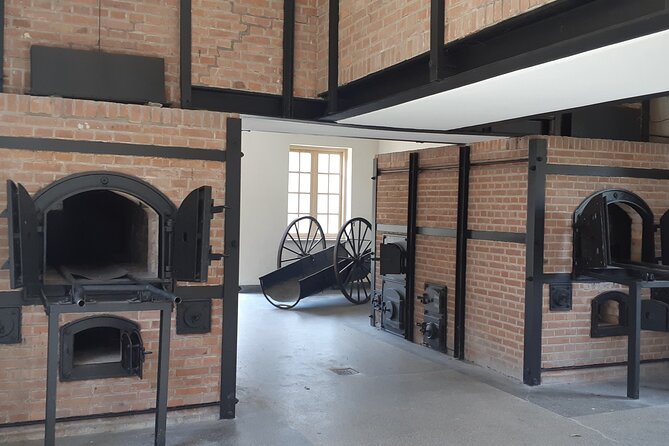
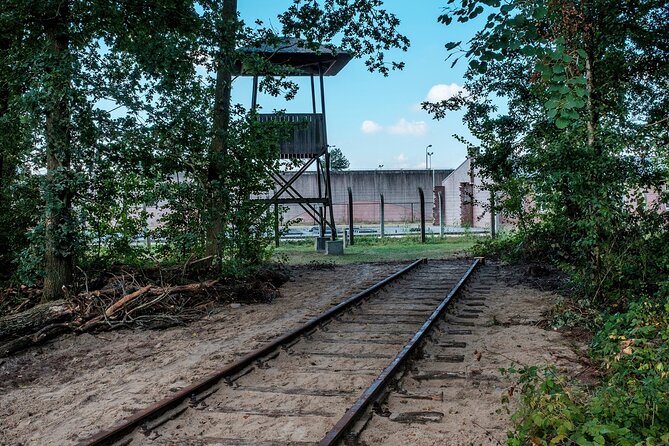
Stop 1 is Nationaal Monument Kamp Vught, and it’s the anchor of the whole tour. The camp first opened in 1942 and held about 31,000 Jewish and political prisoners. Your visit focuses on the remaining structures and key memorial elements, including watchtowers, barracks, the crematorium, and an original train. There’s also a children’s memorial, which is one of those details that forces you to slow down and think beyond the military facts.
One reason I like this stop is that it doesn’t rely only on what’s missing. You still get a physical sense of how the camp worked: where people were held, how the site was monitored, and how the machinery of imprisonment and violence operated. If you prefer learning in layers, Kamp Vught also has a bookstore, a good audio tour, and a small cafeteria on-site. That gives you options: you can listen as you walk, or you can focus on your guide’s spoken explanation.
The stop also includes the execution site in the woods, where more than 300 resistance members were executed. That piece is often what turns a “camp visit” into a “timeline you can feel.” It’s not just one location; it’s a sequence that connects the camp to what happened to people who fought back.
Practical note: this is the most emotionally demanding part of the day. If you know you’re sensitive to this subject, it helps to go in prepared for a serious, reflective visit rather than expecting a quick, factual walkthrough. Bring your questions. Then take breaks when you need them.
John Frost Bridge: the last bridge that could open the road to Germany
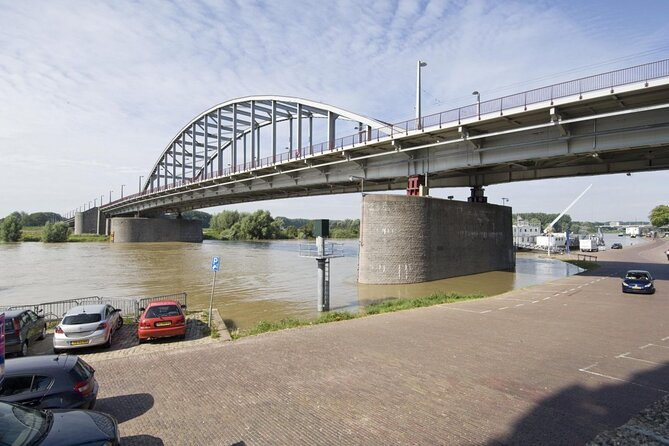
After the concentration camp site, you shift to a very different kind of WWII landmark: John Frost Bridge (John Frostbrug) over the Rhine at Arnhem.
This bridge was the last one needed for the Allies during Operation Market Garden. The idea was straightforward and high-stakes: if the Allies could secure this bridge, the road to Germany could open. The bridge’s role is so famous that it’s also referenced in the movie A Bridge Too Far, which you may recognize if you’ve seen it.
Your time here is shorter—about 45 minutes—and the visit is more about understanding the operational stakes than lingering over details. It’s a classic “make sense of the map” moment. When you look out at the river crossing area, the battle story becomes easier to picture: you’re not just hearing strategy; you’re standing at a choke point that mattered.
The good part about this stop is contrast. After heavy concentration-camp material, the bridge helps you reorient to the battlefield geography. The caution is that if you’re expecting deep museum-style interpretation, you’ll likely want to rely on your guide’s explanation more than on signage alone. Still, it’s a valuable piece of the larger story.
Hartenstein Airborne Museum: the British HQ at the Battle of Arnhem
Stop 3 is the Airborne Museum at Villa Hartenstein (about 3 hours), and it’s one of the best ways to understand the Battle of Arnhem without getting lost in pure military detail.
During the Battle of Arnhem in September 1944 (part of Operation Market Garden), Hartenstein became the headquarters of the British Airborne Division during heavy fighting. The mission was daring: a push through German lines to quickly capture the Ruhr area and end the war faster. It didn’t work, and your visit ties that failure to the bridge situation—specifically that Arnhem ended up being a bridge too far.
What I especially like here is how the museum tells the story. It includes personal stories from British, Polish, and German soldiers, plus civilians, and it uses historical objects to connect those accounts to real lives. That approach matters. Instead of treating the battle like an abstract map problem, the museum anchors it to people who had names, jobs, families, and fears.
This is also a great place to let the day “click.” You’ve seen the broader Arnhem bridge moment already, and now you’re inside the headquarters site that shaped what those troops experienced. If you want the day to feel coherent, this stop is where it comes together.
Arnhem Oosterbeek War Cemetery: resting place for the September landings
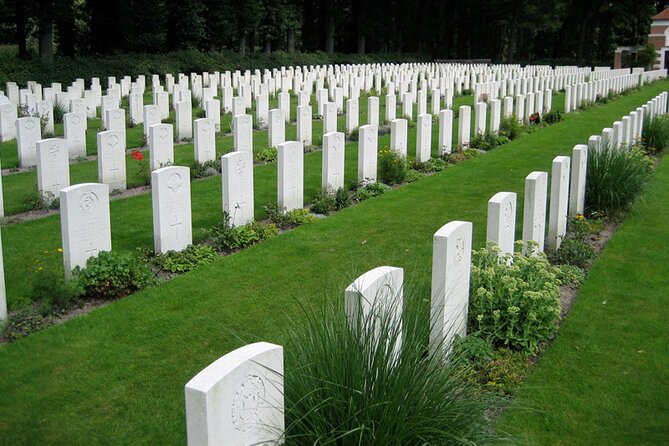
You finish with Arnhem Oosterbeek War Cemetery (about 1 hour). Here, most of the 1,684 fallen soldiers from the September landings are laid to rest.
This kind of ending hits differently than the other stops. Earlier on, you’re learning and observing sites tied to events. At the cemetery, your role shifts. You’re there to acknowledge loss. It’s quiet work, even if your guide still shares context.
One practical reason I like closing with a cemetery is pacing. After museums and sites with heavy explanations, you need a calmer stretch. The cemetery gives you that. You can also reflect on how the earlier parts of the day link to the human outcome: operations, resistance, imprisonment, and survival all fold into one thing—people who didn’t make it home.
If you’re the type who gets emotionally overwhelmed, this is still manageable time-wise, but it’s worth going into it with a steady mindset. You’ll likely want a moment at the end to sit and take it in.

Price and value: what $450.59 buys for a 10-hour private day
At $450.59 per person for about 10 hours, this isn’t a “quick bus tour.” You’re paying for a private, English-language format that also handles transportation timing through pickup, plus key guided stops with admissions included.
Here’s where the value adds up:
- Admissions are included at two major stops: Kamp Vught and the Airborne Museum at Hartenstein both include admission tickets.
- Other sites are free: John Frost Bridge and the Arnhem Oosterbeek War Cemetery have free admission.
- Food support is included: bottled water, soft drinks/water, stroopwafels, and snacks are available during the day.
- Lunch is not included: but the total duration includes travel time and lunch time, so you’ll have time to deal with it.
That last point is important. Since lunch isn’t included, plan to either grab something on your own or use on-site options. Kamp Vught has a small cafeteria, which you may find useful if you want to keep things simple and stay close to the visit flow.
Also, don’t ignore the practical bonus items: a mobile ticket is provided, and your guide will meet you in a blue shirt or coat with the Dutch Tours logo. Those details sound small, but they reduce friction when you’re starting your day in a new place and moving between sites.
If you’re comparing options, this tour tends to make sense when you want one guided day that covers multiple high-impact WWII locations without you stitching together trains, taxis, and a self-made itinerary.
How the day flows: timing, pacing, and what to wear
The day begins at 8:00 am, with pickup from your hotel or cruise ship. You’ll be guided in English, and since it’s private, you won’t be sharing the experience with random strangers who might move at a different pace.
In terms of structure, you’re looking at:
- 3 hours at Kamp Vught
- 45 minutes at John Frost Bridge
- 3 hours at Hartenstein
- 1 hour at the Arnhem Oosterbeek War Cemetery
That totals about 7 hours on-site, with the rest of the day used for travel and lunch time.
So yes, it’s a long day. I’d treat it like one long guided lecture with breaks built in by the schedule. Wear comfortable shoes and dress for real walking time, because both camp and memorial sites involve getting around on foot. You won’t need fancy gear, but you do need comfort. The subject matter asks you to focus, and good comfort helps you do that.
The included drinks and snacks are more than a perk. When you’re dealing with heavy material, being hungry makes it harder to process. Having water and small fuel (like stroopwafels) helps you stay steady and present.
Finally, this is a tour where your guide’s style matters. The strongest feedback for this experience is how the guide shares personal stories with the right level of brevity—enough human detail to make it real, without turning the day into a marathon of facts. That balance is a big reason the tour works well.
Should you book this private WWII tour from Amsterdam?
If you want one day that links Kamp Vught to the Arnhem battle geography—and you’d rather have a guide explain the connections than piece it together yourself—this is a solid booking. It’s also a good fit if you appreciate sites that combine physical remnants, memorial elements, and museum storytelling that includes multiple perspectives (including British, Polish, German, and civilians at Hartenstein).
I’d think twice only if you’re not ready for heavy content. This route includes a concentration camp site and an execution site, and it ends at a cemetery. Even with a well-run tour, the day is emotionally serious.
If you’re the kind of person who values clear structure, comfortable pace (within the limits of a 10-hour day), and meaningful context, you’ll probably feel glad you chose this rather than trying to do it all alone.
FAQ
What is the duration of the tour?
The tour lasts about 10 hours.
Where does the tour start?
It starts at 8:00 am from your pickup location in Amsterdam (hotel or cruise ship).
Is pickup included?
Yes. Pickup is offered at your hotel or cruise ship.
Is the tour private?
Yes. It’s a private tour/activity, and only your group participates.
What language is the tour in?
The tour is offered in English.
Which stops include admission tickets?
Admission tickets are included for Nationaal Monument Kamp Vught and the Airborne Museum at Hartenstein.
Are there any stops with free admission?
John Frost Bridge and the Arnhem Oosterbeek War Cemetery have free admission.
What food and drinks are included?
Bottled water and soft drinks/water are included, along with stroopwafels and snacks.
Is lunch included?
No, lunch is not included.
What is the cancellation policy?
You can cancel for a full refund up to 24 hours in advance.