REVIEW · RED LIGHT DISTRICT TOURS
MUST DO: Amsterdam’s Red Light District tour with a local
Book on Viator →Operated by Trigger Tours · Bookable on Viator
Neon and history share the same streets. Walking Amsterdam’s Red Light District after dark with a local guide is one of those rare tours that turns a name you’ve heard into a place with context. I love the way the guide connects what you see right now to how the area became what it is. One consideration: the subject matter is adult-focused, so it can feel awkward if you prefer lighter topics.
It’s also not only about the red lights. I especially liked the mix of stop-and-stare landmarks—places like Waag and Pub The Ape—paired with practical city facts that explain why Amsterdam looks the way it does. Expect a real walking feel and a lot of talking, not museum-style pacing.
The logistics are simple and smooth. With a mobile ticket, a set start point at Geldersekade 2, and a small group cap (up to 20), you can focus on the streets instead of spreadsheets. Still, in bad weather, be ready for the group to move promptly—there are occasional start-time frustrations reported when conditions get icy or slippery.
In This Review
- Key highlights worth your attention
- What You’ll Get From This Amsterdam Red Light District Night Tour
- Meeting At Geldersekade 2 And What The 2-Hour Walk Feels Like
- Red Light District On Foot: History, Rules, And Nighttime Reality
- The Dam And Amsterdam’s “City Built on Trees” Foundation Lesson
- Pub The Ape (Int Aepjen): A Wooden Landmark That Outlived a Fire
- Waag: The Second-Oldest Building Role in Defense and Crafts
- Smallest House of Amsterdam: VOC Storage to Long-Term Living
- World’s First Condom Shop Since 1987: What This Stop Adds
- Guides, Group Size, And The Adult-Focused Comfort Level
- Price and Value: Does $31.32 Make Sense?
- Who This Tour Is Best For (And Who Should Skip It)
- Should You Book This Amsterdam Red Light District Tour?
- FAQ
- How long is the Red Light District tour?
- What does it cost?
- What language is the tour offered in?
- Where do I meet the guide?
- Is the ticket mobile-friendly?
- Is food or drinks included?
- Can I cancel for a full refund?
- Is this tour suitable for limited mobility?
Key highlights worth your attention
- Small-group pacing (up to 20) keeps the walk personal enough to ask questions.
- After-dark focus helps you see how the district actually functions at night.
- Old Amsterdam landmarks like Waag and Pub The Ape add depth beyond the headlines.
- City-built-on-timber facts (including the ~11-meter sandy layer detail) make the geography click.
- Condom shop stop since 1987 gives a grounded look at modern sex-industry culture.
What You’ll Get From This Amsterdam Red Light District Night Tour
This is a guided, on-foot Amsterdam experience built around two ideas: how the Red Light District operates today, and how the surrounding old city formed over centuries. The guide’s job is to turn signage, storefront patterns, and street-level rules into a story you can follow without getting lost—or making assumptions.
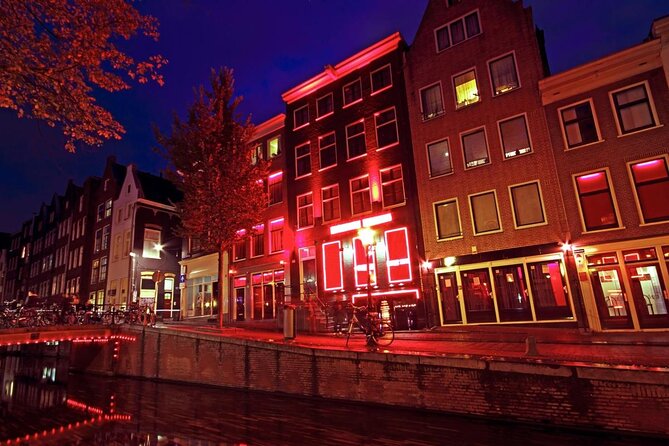
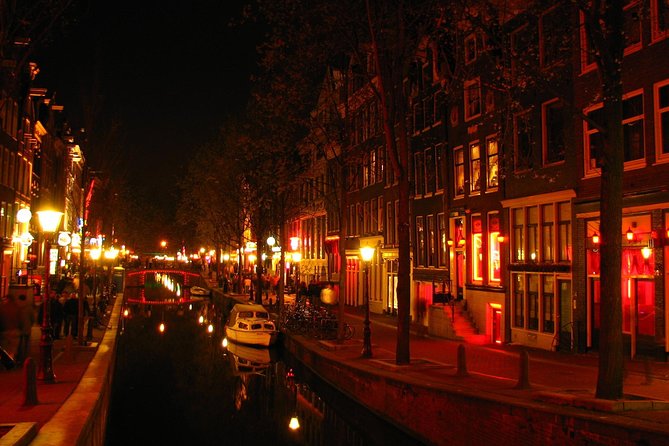
You’ll be walking in the evening, which changes the tone. The streets feel more alive, and you notice the little contrasts: quiet canalside stretches, louder commercial pockets, and side streets where history shows up in brick, wood, and building shapes. The whole point is that you don’t just “see” the district. You understand it.
And yes, this includes frank adult-industry context. One reason it earns strong marks is that the tone stays informational rather than sensational. Guides like Ben, Robin, Sander, and Max have been praised for making the stories clear, fun, and easy to follow, with lots of local tips mixed in.
If you’re coming for a quick look at neon, you might find it too talk-heavy. If you’re curious about how Amsterdam balances commerce, public space, and centuries of urban planning, you’ll probably enjoy the way it clicks together.
You can also read our reviews of more tours and experiences in Amsterdam.



Meeting At Geldersekade 2 And What The 2-Hour Walk Feels Like
The meet-up is at Geldersekade 2 (1012 BH). The tour ends back at the same location, which helps you plan the rest of your night without a complicated transfer.
It runs about 2 hours (some departures clock in around an hour and a half), and that time matters. A short walking tour means the guide has to choose priorities fast. In this case, you get a focused mix: Red Light District streets plus several old-town stops tied to how Amsterdam was built and governed.
Group size is capped at 20, so the experience stays manageable in narrow spaces. The tour is also offered in English, and you’ll have a mobile ticket—handy if your phone already holds your plans.
One practical note: the pace is set for the group. There’s at least one unhappy report about a tight departure window in icy weather. I can’t promise what your guide will do, but I’d treat the start time as real. Arrive a few minutes early so you’re not negotiating timing with cold hands and wet streets.
Finally, food and drinks aren’t included. Bring water if you get thirsty, and consider a light snack before you go, especially if you’re pairing this with dinner afterward.
Red Light District On Foot: History, Rules, And Nighttime Reality
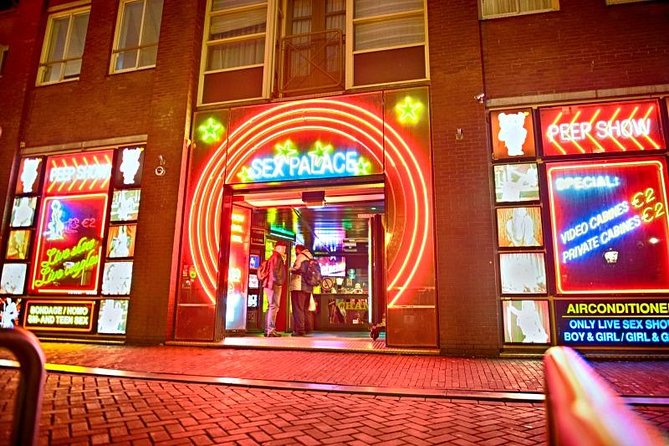
The core experience is a walk through the narrow streets of Amsterdam’s Red Light District, guided with a focus on history and the current situation. You’ll learn what makes the area distinct, how it evolved over time, and what people should understand when they’re viewing it after dark.
On the street, it can be easy to reduce everything to the obvious visuals. A good guide prevents that. The value here is that you’re not left to stitch the facts together yourself. You get context—why these buildings are here, how the old city structure shapes what you see, and how Amsterdam’s approach to urban life shows up in this particular pocket.
Also, this tour tends to include adult-industry culture in a straightforward way. A few people point out it’s a later tour better suited for adults, while another variant (a earlier, more family-friendly option) was mentioned as more comfortable for a teen. So think of this as an adult-oriented history walk, even if it’s still handled in an educational tone.
If you’re sensitive to explicit topics or prefer family-safe sightseeing only, you may want to choose a different Amsterdam walking tour. If you’re comfortable with adult themes and want to learn why the district is structured the way it is, this hits the mark.
The Dam And Amsterdam’s “City Built on Trees” Foundation Lesson
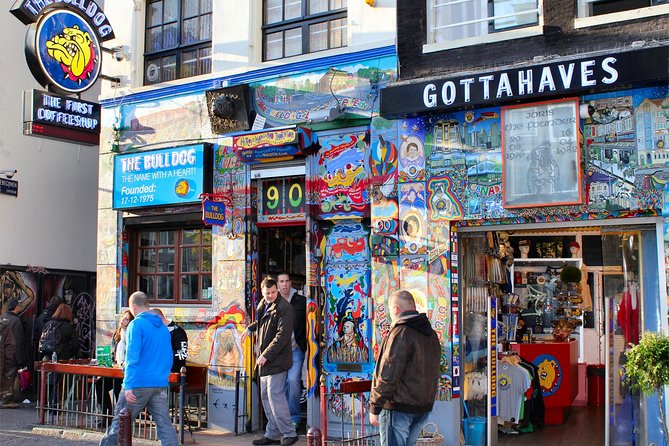
One of the smartest parts of this route is that it doesn’t treat the district as an isolated oddity. You get a deeper Amsterdam lesson: the city was built on wooden piles because the ground is tricky.
The guide explains the geology behind the look of Amsterdam. The soil includes a thick layer of fen and clay, and buildings often rely on wooden foundation piles driven deep until they reach a more stable sandy layer. The supplied detail you’ll hear is that this sand layer sits about 11 meters below.
This matters because Amsterdam is famous for canals and boats—but the city’s stability is also a construction story. When you understand the piles and waterlogged ground, the urban design makes more sense. You stop treating the city as “just pretty” and start seeing it as engineered.
It’s also a good mental reset from the heavy street visuals. The walk shifts into a city-planning explanation, which is a big reason the tour can feel balanced rather than one-note.
Pub The Ape (Int Aepjen): A Wooden Landmark That Outlived a Fire
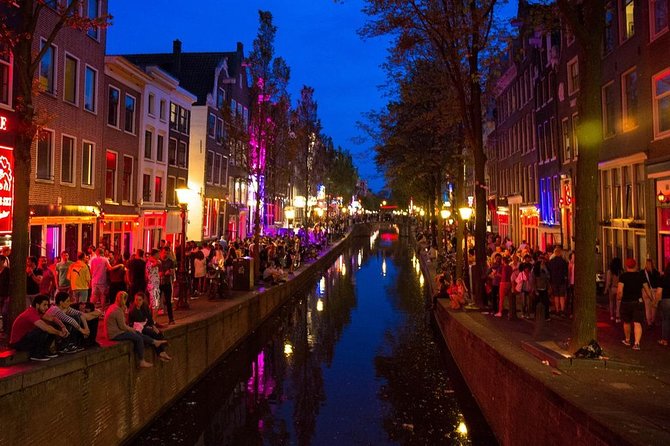
Next comes a stop that makes history concrete. Pub The Ape—Int Aepjen in Dutch—is said to date to around 1540 and is one of only two remaining wooden buildings in Amsterdam.
That detail is the hook, because it connects to a major turning point: a big fire in 1452. After that, the government pushed for brick facades rather than timber-heavy construction. Seeing a surviving wooden structure becomes a reminder that Amsterdam’s look is also the result of disasters, rules, and rebuilding.
This stop is useful even if you’re not a pub person. It’s a human-scale way to picture how long the city has been trading, meeting, eating, and drinking—just with the architecture surviving in only a few corners.
If your guide is Ben or Robin, both names have shown up in positive comments for clear storytelling, humor, and helpful local tips. Either way, this is a stop where you’ll likely look up and around more than you expect.




Waag: The Second-Oldest Building Role in Defense and Crafts
Another major landmark in the walk is Waag, built around the 1400s. It used to be one of Amsterdam’s city gates and formed part of the defensive wall system.
What makes Waag worth your time on a Red Light District tour is the contrast. You start in a district known for today’s adult storefronts, then you step into a building tied to defense and the city gate rhythm. The guide ties it together so the city feels like one place, not separate eras stacked in different neighborhoods.
Later, Waag became a site where guilds and craftspeople’s organizations set up within and around the square. In other words: it wasn’t only about protection. It was also about trade, skills, and who had the right to operate in the old city.
If you like city history that’s explained in plain language—how a wall and gate supported everyday life—this stop tends to land well.
Smallest House of Amsterdam: VOC Storage to Long-Term Living
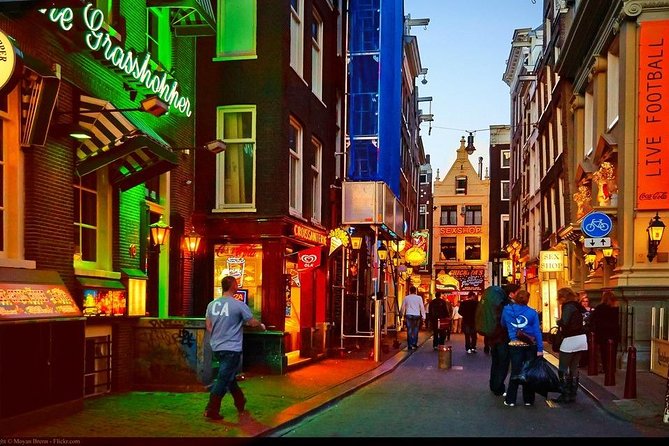
The tour also includes a stop at the smallest house of Amsterdam, built around the 1700s. The story here is practical and a little surprising: it was first used as storage connected to the VOC trading company.
Then, over time, people started living in the house for a long period. That move—storage to residence—helps you understand how space worked in Amsterdam’s economy. Trade created demand for storage and housing, and the city’s density shaped who lived where.
This isn’t a “wow, what a tiny doorway” photo stop only. It’s another piece of the bigger puzzle: why old Amsterdam contains small spaces packed with big economic stories.
If you’re walking through the Red Light District and wondering how Amsterdam got so packed, this kind of stop answers that question without needing a lecture.
World’s First Condom Shop Since 1987: What This Stop Adds
By far, the most direct “today” stop is the condom shop. The information given is that it’s the world’s first condom shop dedicated to condoms, operating since 1987.
This isn’t included just for shock value. The value is in the cultural framing. When a guide explains the context of the sex industry alongside a real commercial business, you start seeing how Amsterdam handles adult commerce through established street-level rules and norms.
You may also hear about practical customization—like getting a size customized condom and special types. That detail turns a headline topic into something specific and grounded.
One review note also suggests at least one version of the walk can include a cannabis shop stop. I can’t promise that every departure includes it, but it supports the idea that the route sometimes adds adjacent adult-friendly and culture-linked storefront context, depending on the guide’s approach.
If you prefer tours that treat sensitive subjects with respect and clear explanations, this shop stop can feel like a reality check—in a good way.
Guides, Group Size, And The Adult-Focused Comfort Level
The most praised part of the experience is consistently the guide. Multiple guides were singled out by name, including Ben, Robin, Sander, and Max. The common thread: they make history feel alive with stories and local perspective, and they keep the walk fun without turning it into a lecture.
Still, adult-focused tours need the right match. One negative note described an uncomfortable experience due to rude behavior, and another mentioned difficulty hearing the guide in a very small group. Those are reminders that guide style varies, and your comfort matters.
Here’s how to set yourself up for a good outcome:
- Go in ready to learn, not to judge.
- If you feel uncomfortable, say something to the guide right away while you can still correct course.
- Choose this tour if you’re okay with candid adult-industry context.
Also note the tour isn’t recommended for limited mobility. The route is described as exploring narrow streets on foot at night. If walking is hard for you, you might want a different Amsterdam experience that avoids tight, uneven conditions.
Price and Value: Does $31.32 Make Sense?
At $31.32 per person for about 2 hours walking with a local guide, this is priced like a serious city-history experience rather than a quick gimmick. You’re paying for:
- a guided explanation of how the Red Light District developed,
- multiple stops tied to old-town infrastructure,
- and a direct connection to modern adult commerce through the condom shop.
It also helps that the group cap is 20. Smaller groups usually mean less waiting and more chance to ask questions—especially on a topic where you’ll likely have lots of “how did this happen?” moments.
One more value angle: some people noticed it isn’t 100% Red Light District. They described it as more like 15% Red Light District with more time spent on other old-city stops and broader Amsterdam context. If that’s your preference—adult-topic context plus real city sightseeing—this tour can feel like a better deal than a strictly neon-only walk.
The tour also uses a mobile ticket system, which is low-friction. You spend less time sorting paperwork and more time on the street.
Who This Tour Is Best For (And Who Should Skip It)
This is a good fit if you:
- want an after-dark Amsterdam walk that explains what you’re seeing,
- like old-town landmarks tied to real city history (not just photos),
- and feel comfortable with adult-industry culture and candid discussion.
It’s likely not your best match if you:
- need a strictly family-friendly tour,
- have limited mobility and want a low-effort route,
- or strongly prefer neutral sightseeing without adult topics.
If you’re a first-time visitor to Amsterdam, this kind of guided context can save you from confusion. You’ll understand the area’s history and present-day situation faster than you would wandering alone with mixed online info.
Should You Book This Amsterdam Red Light District Tour?
Yes, you should book it if your idea of a great Amsterdam tour includes street-level reality plus honest history, and you’re comfortable with adult themes. The best reason to do it is the guide-driven storytelling: you leave with a clearer picture of how Amsterdam’s old city foundation, defenses, guild life, surviving wooden architecture, and modern adult commerce all connect.
I’d book it with a simple mindset: come curious, dress for night walking, and be ready for a guided, adult-focused explanation rather than a casual stroll.
If adult topics make you tense, look for an earlier or more family-leaning alternative. If you’re okay with frank history and you want a local’s way of seeing Amsterdam at night, this one is a strong choice.
FAQ
How long is the Red Light District tour?
It lasts about 2 hours.
What does it cost?
The price is $31.32 per person.
What language is the tour offered in?
The tour is offered in English.
Where do I meet the guide?
You start at Geldersekade 2, 1012 BH Amsterdam, Netherlands.
Is the ticket mobile-friendly?
Yes, you receive a mobile ticket.
Is food or drinks included?
No. Food and drinks are not included.
Can I cancel for a full refund?
You can cancel up to 24 hours in advance for a full refund.
Is this tour suitable for limited mobility?
It is not recommended for travelers with limited mobility. Service animals are allowed.