REVIEW · LUNCH EXPERIENCES
Amsterdam Walking Tour with Dutch Pancake Lunch
Book on Viator →Operated by EuroQuest Travel · Bookable on Viator
If you only have a short visit, this will help you find your footing fast. You’ll cover landmark stops like Dam Square and the begijnhof, then you cap it with an included Dutch pancake lunch. Two things I really like: the small group size (so you can actually ask questions) and the fact that lunch is part of the price, not an add-on. One thing to consider: several big sights here are mostly exterior viewing, since the tour does not include entry tickets at those stops.
This is the kind of tour that feels relaxed but still gives you a real structure for understanding Amsterdam. You start near the city center, move through a mix of classic civic spaces and quieter corners, and end by circling back to where the tour begins. And yes, English is offered, so you can keep up without switching languages mid-stroll.
In This Review
- Key Highlights You’ll Actually Feel During the Walk
- Getting Your Bearings Around Dam Square and the Royal Center
- The Begijnhof: Quiet Courtyard, Big Human Stories
- Royal Palace and Nieuwe Kerk: What You See (and What You Don’t)
- Oude Kerk, Red Light District Edge, and the Oldest Building Feel
- Leaning Buildings and Gable Stones: Learn What You’re Looking At
- Spui and the Floating Flower Market: A Pretty Break With Place Meaning
- The Dutch East India Company: Why Amsterdam Became a Trading Machine
- Jewish Quarter and Chinese Quarter: The Ending That Adds Perspective
- World’s First Stock Exchange: Trading History, Connected to Everyday Streets
- The Included Dutch Pancake Lunch: The Part You’ll Want to Think About Later
- Value: Is $84.65 a Smart Deal?
- Who This Tour Fits Best
- My Booking Advice: Should You Book This One?
- FAQ
- How long is the Amsterdam Walking Tour with Dutch Pancake Lunch?
- What does the lunch include?
- Is the tour offered in English?
- How big is the group?
- Where do I meet the guide?
- Are admissions included for the stops?
- Is pick-up service included?
- Is the experience refundable or changeable?
- Is a mobile ticket provided?
Key Highlights You’ll Actually Feel During the Walk
- Small group attention: up to 15 people, which makes Q&A easy and the pacing friendly.
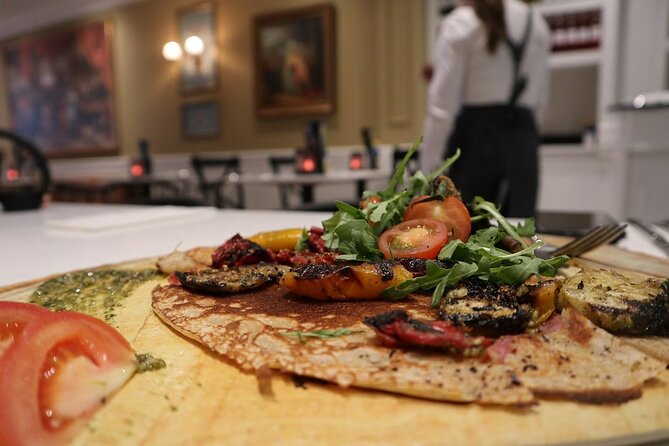
- Pancake lunch included: starter + main + dessert (or coffee) so you’re not hunting for food afterward.
- Dam Square to canal-city context: you get civic history and city bearings early, not at the very end.
- Architectural details you can spot on the spot: leaning buildings and gable stones become real learning, not just photos.
- World trade stories in everyday places: the Dutch East India Company and the first stock exchange connect modern Amsterdam to its trading past.
- A finish that changes mood: the Jewish Quarter and Chinese Quarter bring a thoughtful multicultural ending.
Getting Your Bearings Around Dam Square and the Royal Center
The tour starts at Beursplein 1-3, a convenient central meeting point that puts you close to the heart of Amsterdam. From there, you begin at Dam Square, one of those spaces that can look like just a busy intersection until someone frames it for you. Here, the guide brings you up to speed on why it matters historically, points out the Royal Palace from the square, and shares stories about events that shaped the city.
Why I like this opening: it gives you a mental map fast. If Amsterdam feels like a blur of canals and facades, this is a useful first layer. You’ll also get a feel for how Amsterdam’s power and governance shaped the city’s layout around this core.
A small consideration: Dam Square is busy, and your time here is short (about 15 minutes). That’s still enough to orient yourself, but don’t expect a deep, slow museum-style stop.
You can also read our reviews of more walking tours in Amsterdam



The Begijnhof: Quiet Courtyard, Big Human Stories
Next is Begijnhof, which is one of those places that feels like you walked into a different world. You step into a hidden courtyard and slow down naturally—partly because the space does that, and partly because the guide fills it with context.
You’ll learn about the Beguines, a Catholic sisterhood, and why this kind of community mattered in Amsterdam. What makes the stop work is the contrast: the city center is loud and open, then you’re in a calm courtyard where people lived and gathered. That contrast is a big part of understanding Amsterdam beyond the obvious sights.
Practical tip: this is a short visit, so come in with curiosity and be ready to listen. If you linger, you might cut into the next stops.
Royal Palace and Nieuwe Kerk: What You See (and What You Don’t)
After Begijnhof, the tour shifts to the Royal Palace Amsterdam and the nearby Nieuwe Kerk. You’ll admire the Royal Palace’s exterior—an impressive building with civic roots—and learn what it was used for before it became the royal residence. Right beside it, the Nieuwe Kerk is tied into royal ceremonies and exhibitions.
Now for the “read this before you go” part. Both stops are structured as seeing the buildings in context rather than entering them. The itinerary specifically notes admission tickets are not included at these points. If your travel style is inside-the-ticket-line sightseeing only, you might want to plan extra time separately for palace or church interior visits.
That said, you’ll still get a lot out of these exterior-focused stops. The value is in how the guide connects architecture to power, and power to street-level life in older Amsterdam.
Oude Kerk, Red Light District Edge, and the Oldest Building Feel
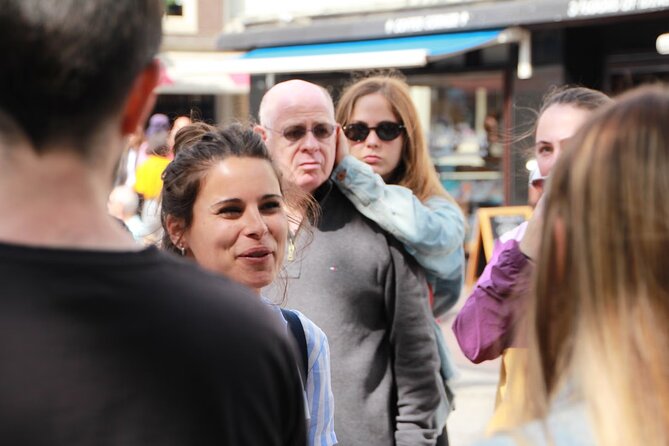
The next architectural and historical bridge is the Oude Kerk, the oldest building in Amsterdam, and you’ll encounter it in the setting of the Red Light District. The tour doesn’t try to sensationalize the area; instead, it uses the location to tell you how long this city has been changing while still keeping layers of the past visible.
You’ll walk past and hear the story behind the building’s significance. Even if you’re not there for nightlife, this stop helps you understand how Amsterdam stacks eras on top of each other.
One consideration: time is tight here too (about 15 minutes), so if you want more time at the Oude Kerk or you want to look closely at details around the area, you’ll likely want a follow-up walk on your own.
Leaning Buildings and Gable Stones: Learn What You’re Looking At

Then you get one of the most fun parts for people who like noticing details: leaning buildings and gable stones. Amsterdam has a reputation for quirky architecture, but this stop turns the “wow” into something more specific. You’ll be guided to observe the leaning structures and the gable stones that help tell stories about the city’s architecture and historical identity.
This is where a tour with a strong guide earns its keep. Without a narrative, you’d probably just snap photos and move on. With context, you start seeing how the city’s design reflects its past, including how buildings developed over time and how symbolism was built into everyday street fronts.
Tip: bring a mental checklist. If you spot a gable stone, pause and read the area the guide points to. Even a minute of close looking makes the whole stop stick.
You can also read our reviews of more tours and experiences in Amsterdam





Spui and the Floating Flower Market: A Pretty Break With Place Meaning
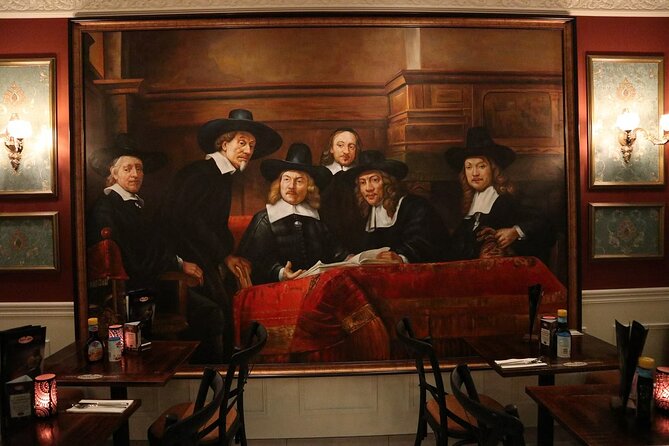
At Spui, you’ll pass through a square with local charm, and then you’ll head toward the Flower Market. This is described as the world’s only floating flower market, and it’s exactly the kind of Amsterdam scene that photographs well because it’s also lively in person.
I like this part because it’s not only about pretty flowers. It’s a change in tempo after all the civic, religious, and trading stories. You get fresh air and color, and you also get a sense of how today’s Amsterdam still runs on daily local rhythms.
Potential drawback: because this area is active and popular, you’ll want to stay close to the group. Don’t wander too far if you want to keep the timing clean and avoid missing the guide’s points.
The Dutch East India Company: Why Amsterdam Became a Trading Machine
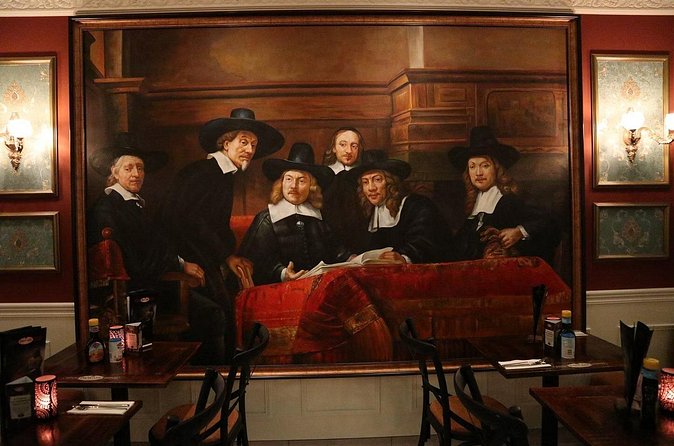
After the flower stop, the tour moves into Amsterdam’s business story with the Dutch East India Company. This is one of the tour’s best “why Amsterdam matters” segments because it connects the city’s wealth to actual global networks. You’ll learn how the company rose and how it helped make Amsterdam one of the world’s most powerful trading cities.
This is the kind of topic that can turn abstract fast. But what I like about how this tour places it in your walk is that it stops being a textbook paragraph. Instead, you start to see why certain parts of the city feel designed for commerce and power, even when you’re just standing on a street corner.
If you’ve ever wondered why Amsterdam feels different from other European capitals, this is one piece of the puzzle.
Jewish Quarter and Chinese Quarter: The Ending That Adds Perspective
The tour ends with Jewish Quarter and Chinese Quarter. The emphasis here is on the impact of World War II in the Jewish Quarter, followed by the Chinese Quarter as a sign of Amsterdam’s multicultural community.
This is also where the mood shifts again—away from architecture and into lived history and identity. It’s not presented as a dramatic story for shock value; it’s presented as context. That matters, because Amsterdam can sometimes feel like a postcard city if you only focus on canals and buildings. Ending here helps you remember that a city is made of communities, not just landmarks.
Practical thought: this is the last part of your 2.5 hours, so it’s a good time to keep your questions ready. If something resonates, ask. The guide’s ability to answer in the moment is one of the main reasons a small group matters.
World’s First Stock Exchange: Trading History, Connected to Everyday Streets
Finally, you’ll cover the world’s first stock exchange, tied to the Dutch East India Company and the company’s influence on global trade. This closing stop is designed to land the story with a clear cause-and-effect: Amsterdam didn’t just get rich; it helped shape how global trading worked.
Even if you’re not a finance person, you’ll likely find this useful because it gives a concrete historical anchor. It also helps explain why Amsterdam has a strong commercial identity that still shows up today.
One consideration: since you’re finishing near the end of the tour, you may feel slightly rushed. If you want to linger around the area afterward, that’s an easy add-on, since the tour ends back at the meeting point.
The Included Dutch Pancake Lunch: The Part You’ll Want to Think About Later
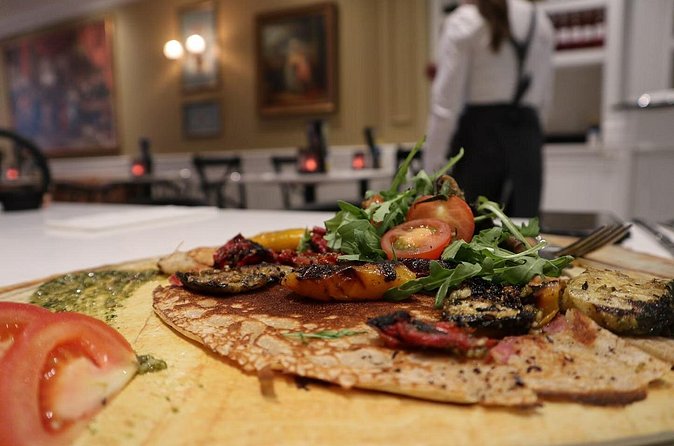
The lunch is a major selling point, and it’s not a small side perk. You get a Dutch pancake lunch with a starter, a main dish, and dessert or coffee. It’s included with the tour price, so you’re not scrambling for food while everyone else is fueled up.
I love included meals on walking tours because they change how you experience the day. You can concentrate on the stories without worrying about where you’ll eat next. And in the feedback, the pancake lunch is consistently treated as the highlight—people describe it as tasty and genuinely memorable after time on the streets.
This meal also matches the tone of the tour: relaxed, friendly, and meant for real enjoyment, not just ticking off photos. If you’re traveling with picky eaters, you’ll still want to check what’s offered, but the structure (starter + main + dessert/coffee) is set up to satisfy most appetites.
Value: Is $84.65 a Smart Deal?
For $84.65 per person (about 2 hours 30 minutes), you’re paying for three big things at once: a guided walk through key areas, a small group format (max 15), and an included meal.
If you tried to do this on your own, you’d spend time planning routes and figuring out what each stop means. You’d likely pay separately for lunch. The value here comes from bundling: you buy context at street level plus food at the end.
Is it the cheapest option in town? No. But it’s a strong choice when you want a structured overview without spending your whole day on research.
Who This Tour Fits Best
This experience is a great match if:
- You have limited time and want a smart route that touches multiple classic Amsterdam areas.
- You like learning while walking, and you want room to ask questions.
- You want an easy plan that includes food without extra steps.
- You enjoy a mix of architecture, city power stories, and cultural perspective.
It may be less ideal if:
- You strongly prefer entrances and museum-style visits, since some of the major stops are set up for exterior viewing.
- You want long stays in one neighborhood rather than a fast, guided sweep.
My Booking Advice: Should You Book This One?
If you want an efficient Amsterdam primer with a real payoff at lunch, I’d book it. This tour’s strength is the balance: major landmarks early, quieter corners in the middle, then trade and community stories to finish with meaning. The included Dutch pancake lunch is the kind of simple win that makes the whole experience feel worth it, even if you’re not in the mood for a full day of sightseeing.
If you’re the type who loves going inside buildings, plan a little extra time separately for places you particularly care about. Do that, and you’ll get the best of both worlds: guided context plus your own pace.
FAQ
How long is the Amsterdam Walking Tour with Dutch Pancake Lunch?
It lasts about 2 hours 30 minutes.
What does the lunch include?
The tour includes a Dutch pancake lunch with a starter, main dish, and dessert or coffee.
Is the tour offered in English?
Yes. The tour is offered in English (and Spanish is also mentioned).
How big is the group?
The group size has a maximum of 15 travelers.
Where do I meet the guide?
The meeting point is Beursplein 1-3, 1012 JW Amsterdam. The tour ends back at the meeting point.
Are admissions included for the stops?
The itinerary notes that admission tickets are not included for several stops (including Dam Square, Begijnhof, Royal Palace, and Nieuwe Kerk). Some specific items are marked as free (like passing the Oude Kerk and certain architecture-related viewing).
Is pick-up service included?
No. Pick-up service is not included.
Is the experience refundable or changeable?
No. The experience is non-refundable and cannot be changed for any reason.
Is a mobile ticket provided?
Yes. The tour includes a mobile ticket.