REVIEW · CHEESE
Amsterdam Walking Tour and Cruise with Drinks and Cheese Tasting
Book on Viator →Operated by Amsterdam Guías & Tours · Bookable on Viator
A walk and a cruise, tightly linked. I like this combo for street-level landmarks and then the same sights from the canals. In a small group (max 10), you get real story time from guides such as Miguel, Claire, Laura, and Ilya, not a rushed lecture.
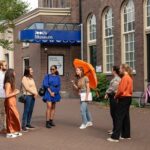
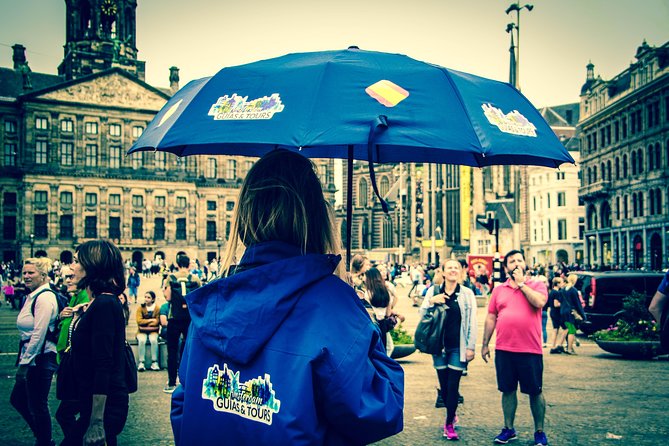
One big thing to watch: the meeting point can be confusing, so show up early and look for the guide with the right cue (often a blue umbrella or company logo).
You are looking at about 3 to 4 hours total: a guided walk, then a 1-hour open-boat canal cruise from Central Station with live English narration and unlimited drinks plus cheese tasting. Begijnhof’s gardens are included, which adds a calm pause in the middle of the city’s motion.
In This Review
- Why This Amsterdam Walk + Canal Cruise Works
- Beursplein to Amsterdam Centraal: the power-start you can orient from
- Chinese Quarter to Nieuwmarkt: temples, gates, and a busy change of pace
- Jodenbuurt and Zuiderkerk: neighborhoods with Jewish memory and WWII context
- Muntplein to Begijnhof gardens: flower market energy, then a quiet pocket
- Dam Square to Central Station: the heart of Amsterdam, then the canal ring
- The open-boat canal cruise with drinks and cheese: the fun part
- Guide style, pacing, and small-group reality (good and not-so-good)
- Practical tips for timing, weather, and staying together
- Value at $71.97: what you are really paying for
- Should you book this Amsterdam walk and canal cruise?
- FAQ
- What is the duration of the Amsterdam walking tour and canal cruise?
- Where do I meet the guide for the walking tour?
- Where does the canal cruise depart from?
- What language is the tour offered in?
- How many people are in the group?
- What’s included with the ticket?
- Are there any requirements for children?
- Can I get a refund if I need to cancel?
Why This Amsterdam Walk + Canal Cruise Works
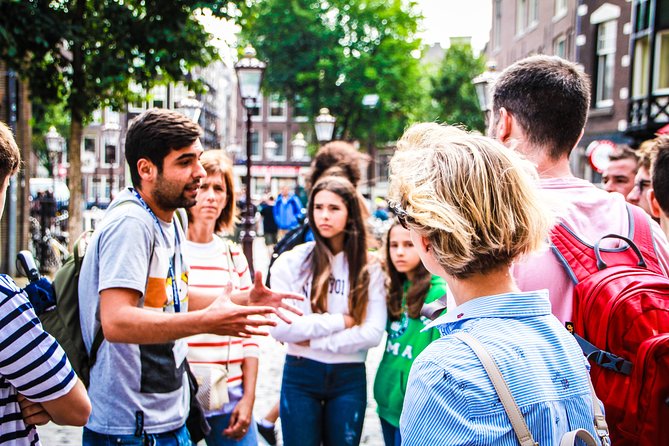
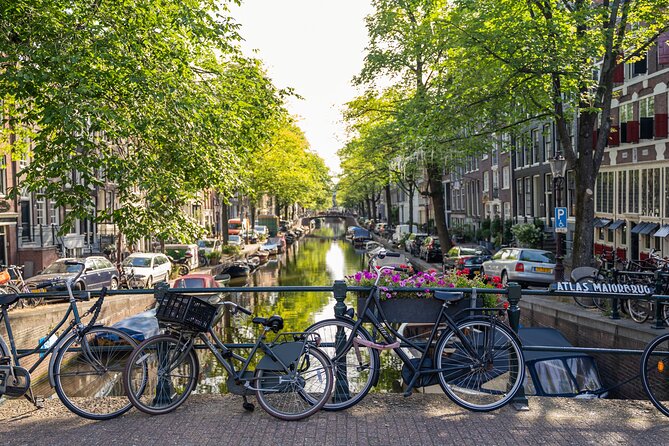
This tour is built around a smart idea: Amsterdam makes more sense when you see it twice—once on foot, and again from the water. The walking portion helps you understand how the city formed and why certain neighborhoods feel the way they do. Then the canal cruise gives you that classic canal-ring perspective, with houses, bridges, and canal edges you simply cannot spot from the sidewalks.
The other reason it feels like good value is what’s bundled in. You do not just pay for “being on a boat.” You get a guide on both parts, plus snacks with unlimited drinks and cheese tasting on board. If you were trying to piece this together on your own, you would spend time coordinating and still might end up with less story and more waiting.
Beursplein to Amsterdam Centraal: the power-start you can orient from
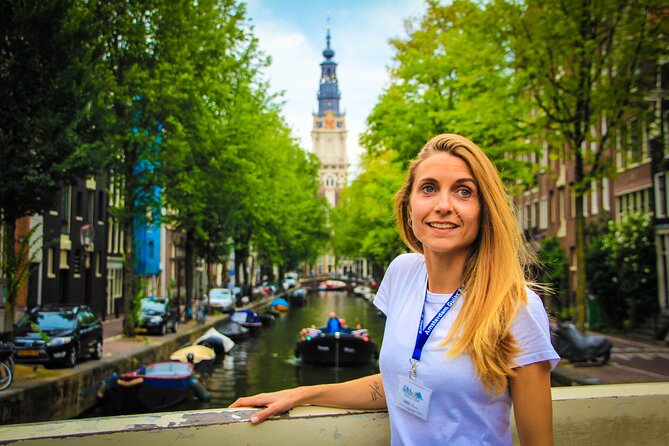
You begin at Beursplein, a square right by the stock exchange area, with the guide waiting outside near a Café Bistro reference point (and a bull figure cue). It is a strong way to start because it drops you right into Amsterdam’s finance-and-trade vibe before you even head toward the older neighborhoods.
From there, you hit Amsterdam Centraal Station. This is not just a transit stop. The building design is tied to Dutch architect Pierre Cuypers, and it opened in 1889. Seeing it as a landmark makes the rest of the city feel more connected—modern travel routes sit right next to centuries-old streets and canals.
Practical note: this start is also where timing matters. One late arrival story in the feedback was a reminder that the group leaves at the scheduled time, and missing the guide can mean losing the walking portion.
You can also read our reviews of more walking tours in Amsterdam

Chinese Quarter to Nieuwmarkt: temples, gates, and a busy change of pace
After the station area, you walk through Amsterdam’s Chinese Quarter. The highlight here is the Buddhist Temple of Amsterdam, a very different mood from the classic canal-postcard scenery. You also get a sense of how immigrant communities shaped the city’s daily life beyond the “famous sights only” path.
Next up is Nieuwmarkt, often linked with the San Anton Gate nearby (a name that sounds like a relic, but it anchors the area in older urban structure). Nieuwmarkt is also a place where the street scene stays active, so it feels less like sightseeing and more like you are dropping into how people actually move through the city.
If you like history that explains the present, this stretch usually lands well. You get architectural markers plus neighborhood context, which makes your later stops make more emotional sense.
Jodenbuurt and Zuiderkerk: neighborhoods with Jewish memory and WWII context
One of the most important parts of Amsterdam is not just what looks old, but what remembers hard times. This walk routes you through Jodenbuurt, described as a must-see area for anyone who wants the city’s social history, not only its canal views.
Then you reach Zuiderkerk, where the conversation turns toward Jewish history in Amsterdam and World War II. This is the kind of stop that can feel heavy if you are not in the mood, but it is also exactly what makes Amsterdam more real. You understand that the canals and brick buildings are not just scenery—they are settings for lives, communities, and disruption.
The tour’s strongest versions of this section are guided storytelling, not a facts-only list. In the feedback, people highlighted guides who could connect neighborhoods to events and explain how Amsterdam’s identity formed over time.
Muntplein to Begijnhof gardens: flower market energy, then a quiet pocket
From Zuiderkerk you move toward Muntplein, one of the city’s best-known squares. It is popular thanks to the flower market located nearby. Even if you do not plan to buy anything, it helps you “read” the city’s rhythm—Amsterdam is famous for canals, but daily life happens in squares and at markets.
Then you visit Spui Square and head to the Begijnhof gardens. This is a real break from street noise. Begijnhof is included, so you are not paying extra to step into a quieter, enclosed space that feels worlds away from the surrounding center.
What I like about including a garden is simple: it balances the rest of the tour. After you spend time on busy streets and dense history, you get a moment to breathe, look around, and absorb details at a slower pace.
Dam Square to Central Station: the heart of Amsterdam, then the canal ring
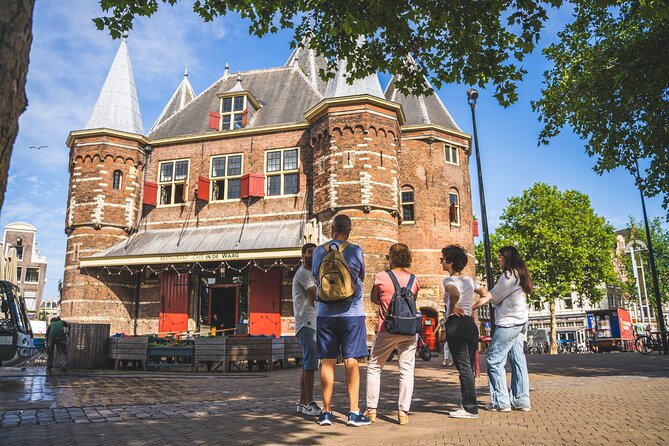
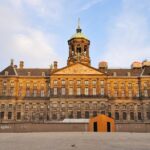
You finish the walk at Dam Square, the heart of the city. Here you see major landmarks clustered together: the Royal Palace, the New Church, and the National Monument. Even if you already know these names, seeing them in a guided route helps because you understand what they represent and how they anchor power and public memory in the city.
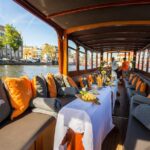
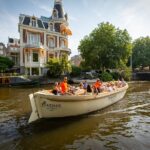
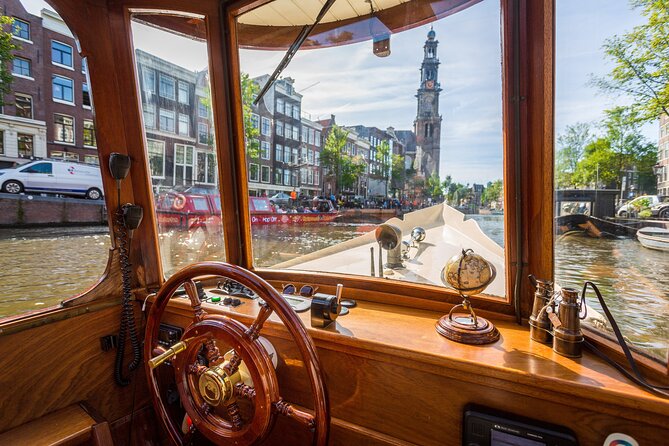
From there, the canal cruise picks up from Central Station, about a short walk from where the walking tour ends. The cruise is 1 hour on a luxury open boat, with an English live guide. This is your payoff: you get the canal-ring perspective while your guide’s earlier context makes the city feel less like a postcard set.
You can also read our reviews of more food & drink experiences in Amsterdam





The open-boat canal cruise with drinks and cheese: the fun part

This portion is built for enjoyment as much as sightseeing. You get unlimited drinks and cheese tasting during the cruise. Several feedback comments praised the onboard crew and described the hour as more fun than expected—often pointing to the combination of the route views plus the social vibe on board.
That said, there are a few practical considerations based on what happened for some people:
- Cheese and drinks service can be uneven. One note mentioned tables being served too often while others were missed and had to ask.
- Cruise details can get confusing if the wrong option is involved. One feedback comment said wine and cheese were not provided, even though the tour name suggested otherwise, and the situation was linked to boarding a different boat/option.
- Onboard information may be lighter than on the walk. A comment described the boat part as fun but with limited narration.
My advice: treat the cruise as a “good time with snacks” rather than a second full lecture. And when you board, confirm you are on the correct boat for your package.
Guide style, pacing, and small-group reality (good and not-so-good)
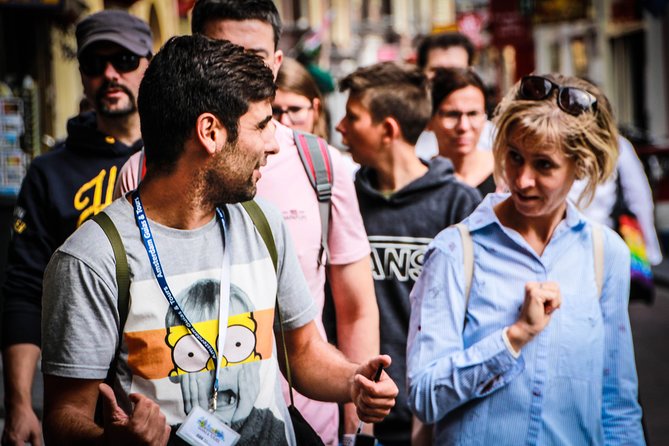
A max group size of 10 is a big deal on this type of tour. With fewer people, it is easier to ask questions, hear the guide clearly, and keep the walking pace comfortable.
When the guide is in top form, this tour really shines. Feedback included praise for guides like Miguel (felt kind and patient), Claire (charming), Laura (brought neighborhoods to life), and Louisa (fun storyteller). Those names show the variety of styles you might get, but the common thread was strong storytelling and clear explanations.
Still, not every version matches what everyone wants. One comment said the walk felt more like walking and chatting than deep information. Another said a shopping-district stretch felt unnecessary, especially for people not interested in buying things.
So I would frame it like this: if you want a mix of landmarks plus context plus some neighborhood wandering, you will probably have a good time. If you want only the “must-see stops, minimal walking, maximum history,” you might feel the shopping streets drag a bit.
Practical tips for timing, weather, and staying together
This is the part most likely to make or break your day. The feedback contains enough meeting-point confusion to take it seriously.
Here’s what helps:
Arrive early. One person missed the walking portion after being late and could not catch up. If you are traveling with kids, build in extra time even if you think you know the route.
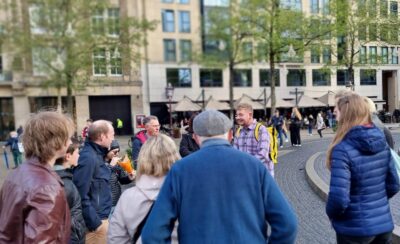
Use the meetup cue, not just the address. The guide is described as waiting near a bull figure cue at Café Bistro with a blue umbrella or a logo tag. If you arrive and do not see it right away, scan the nearby area rather than walking off toward the station.
Plan for rain and wind. The cruise is on an open boat, and one feedback note described sitting in cold rain because the cruise ran late. Even if the weather looks fine, bring a light rain layer.
Keep your walking shoes solid. You are moving through central Amsterdam streets and squares. It is not a hike, but uneven pavement plus crowds adds up.
Service animals are allowed, children must be accompanied by an adult, and the tour is near public transportation, which is useful if you need backup options.
Value at $71.97: what you are really paying for
At $71.97 per person, you are paying for three things in one ticket: a professional guide on the walk, a guided 1-hour open-boat cruise, and onboard snacks with unlimited drinks and cheese tasting.
You also get one paid entry-style experience built in: Begijnhof’s gardens are included. Most other stops are outside and free to view, which keeps the tour from feeling like you are constantly paying small extra fees.
Is it worth it? For many people, yes, because you are buying convenience. You do not have to coordinate two separate activities, and you get the context that makes the sights stick longer. The average booking pattern also hints at popularity—this gets booked well in advance (about 50 days on average), so if you want a specific day, lock it earlier rather than gambling.
Should you book this Amsterdam walk and canal cruise?
Book it if you want:
- a guided route that connects Amsterdam’s neighborhoods to real events
- a short canal cruise that includes food and drinks
- a small-group format where you can actually ask questions
Consider a different option if:
- you are strict about the walking portion being extremely informative with no wandering
- you hate any possibility of timing stress (this tour depends on meeting up correctly)
- you prefer a highly detailed narration all on the boat (some onboard info may feel lighter)
If you do book, do one thing that improves the odds fast: arrive early at Beursplein and locate the guide cue. Then you can relax and enjoy the best part—switching from street history to canal views while the snack table keeps things fun.
FAQ
What is the duration of the Amsterdam walking tour and canal cruise?
The full experience runs about 3 to 4 hours, with a 1-hour canal cruise included.
Where do I meet the guide for the walking tour?
You start at Beursplein, 1012 JW Amsterdam. The tour guide waits in front of the Café Bistro area near the bull figure, with a blue umbrella or an Amsterdam Guides & Tours logo tag.
Where does the canal cruise depart from?
The cruise departs from Central Station, about a 3-minute walk from where the walking tour ends.
What language is the tour offered in?
The walking portion is in English or Spanish depending on the option selected. The canal cruise includes an English live guide.
How many people are in the group?
This activity has a maximum of 10 travelers.
What’s included with the ticket?
You get a professional guide, the 1-hour luxury open boat canal cruise with an English live guide, and snacks plus unlimited drinks and cheese tasting onboard. The Begijnhof gardens stop is included as well.
Are there any requirements for children?
Children must be accompanied by an adult.
Can I get a refund if I need to cancel?
You can cancel up to 24 hours in advance for a full refund. If you cancel less than 24 hours before the start time, the amount paid is not refunded.