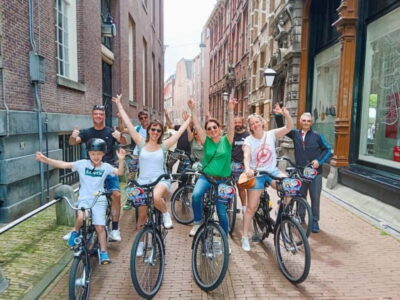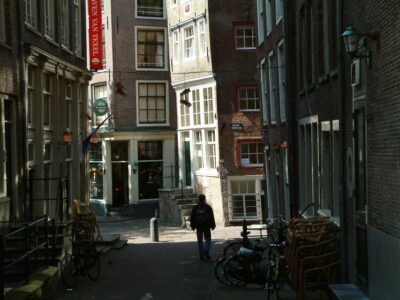
A quiet street can say more than a museum. This 2.5-hour walk helps you get your bearings fast with a local guide, mixing big-city anchors like Dam Square with calmer areas like the Jordaan. I especially like the way the guide connects places to real stories, including Amsterdam’s early finance roots and the city’s medieval expansion, without turning it into a lecture.
I also like the practical pace: you’ll cover about 2.5 miles (4 km) on foot in a manageable loop that makes room for questions and small detours into side streets. One possible drawback to know up front: it’s still a walking tour, so if you dislike long stretches on pavement, plan to wear comfy shoes and go steady.
In This Review
- Key highlights worth your time
- Amsterdam’s back streets are the real story
- The 2.5-hour route: Dam Square to the Jordaan
- Beursplein origins and Amsterdam’s first stock market story
- Dam Square: why the central square became so important
- Town hall building history and how power shows in stone
- Canal Ring crossing: the medieval city extension in real terms
- The Nine Streets: coziness away from mass tourism
- Jordaan: hidden streets, squares, and an authentic neighborhood feel
- Karthuizerhof courtyard: widows, 1650, and early social housing
- Passing Anne Frank House and seeing how the tour handles iconic sites
- Church for the poor and Westerkerk: architecture with names you know
- Guides make the difference: Michael and Christian’s conversational style
- Price and value: what $52.81 buys you
- Practical tips for a smooth 2.5-mile walk
- Should you book this hidden-streets walk?
- FAQ
- Where does the tour start and where does it end?
- How long is the walk?
- How far will I walk?
- What does it cost?
- What’s the maximum group size?
- Is the tour offered in English?
- Do any of the stops require paid admission?
- Are service animals allowed?
- FAQ
- Is free cancellation available?
Key highlights worth your time
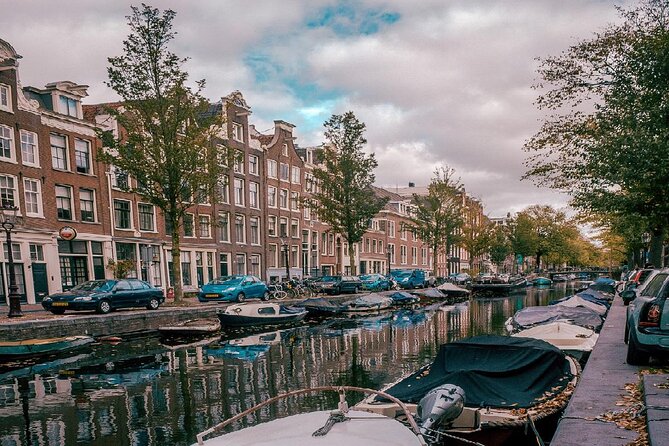
- Small group size (max 10) means you’re not swallowed by the crowd
- Dam Square to the Jordaan gives you a big-picture history arc plus quiet streets
- Courtyards and social housing at Karthuizerhof show Amsterdam beyond postcards
- Nine Streets shopping lanes help you see how locals shop and wander
- Canal Ring crossing is a clear snapshot of how the city extended in medieval times
- Westerkerk and Rembrandt’s burial connects architecture to names you already know
Amsterdam’s back streets are the real story
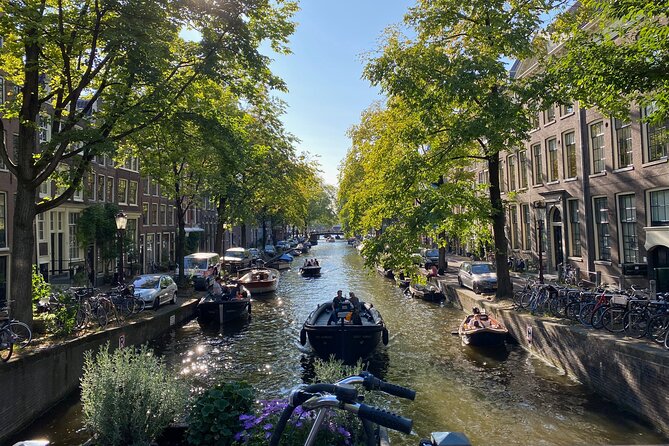
Amsterdam can feel like two cities at once. There’s the place most people rush through, then there’s the Amsterdam you notice when you slow down: narrow lanes, tucked courtyards, and neighborhoods that still feel like they belong to residents.
That’s exactly what this tour is built for. You start with the city’s origin story and key landmarks, then the route gently peels away from the busiest zones so you can see how the city works on a human scale. You’re not just collecting sights. You’re learning why certain squares existed, how merchants shaped major buildings, and why some homes were designed for people with fewer options.
You can also read our reviews of more tours and experiences in Amsterdam.



The 2.5-hour route: Dam Square to the Jordaan
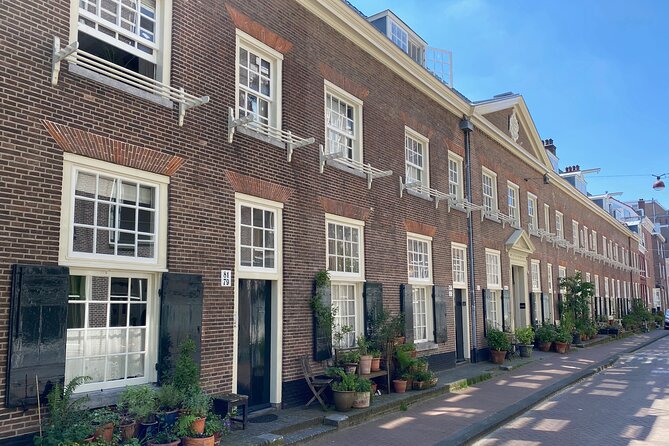
Expect a walk of about 2.5 hours over roughly 2.5 miles (4 km). The layout is a classic Amsterdam “walk-and-talk” format: a few major stops to frame context, then more time in calmer lanes where the details matter.
The flow goes like this in plain terms: you begin around Beursplein, move through central landmarks (including the area around Dam Square), cross into the canal-ring area, then settle into the Jordaan—where you’ll follow hidden streets and small squares. The tour ends around Elandsgracht, so you finish in a lively canal-side area that’s easy to keep exploring on your own.
A nice touch: several stops have free entry listed, so you’re not constantly stopping for tickets or scrambling to understand which places require paid admission.
Beursplein origins and Amsterdam’s first stock market story
The tour starts at Beursplein 1-3, right where Amsterdam’s commercial side gets a lot of attention. Here, you get the origins of the city and learn about the world’s first stock market.
This matters because Amsterdam isn’t only famous for canals and bikes. It’s famous for how trade and finance helped shape the city itself. When you hear the stock-market story early, later landmarks click into place. You’ll start noticing how commerce isn’t an abstract theme—it’s built into street layout, architecture choices, and the power of certain neighborhoods.
Even if you’re not a history person, this opening works because it’s framed like a guided walk-through: why the system existed, why it mattered, and what kind of city it created.
Dam Square: why the central square became so important
From there, you focus on the central square and learn why it became a key piece of Amsterdam life. This isn’t just trivia. A central square in a trading city often becomes a stage for announcements, power, and public identity.
You’ll also get context for how Amsterdam’s center pulled people in—then how that same gravity created the crowds you’re trying to step away from later. The tour uses Dam Square as a baseline. After that, you’re not lost—you have a reference point.
Town hall building history and how power shows in stone
Next comes a building tied to Amsterdam’s town hall role. The point here isn’t only the fact of its civic function; it’s what the building represents: who had influence, what leaders needed, and how architecture broadcast authority.
This kind of stop is great because it ties the big picture to something you can actually see. Instead of reading about a government building, you’re standing in the environment where that authority played out.




Canal Ring crossing: the medieval city extension in real terms
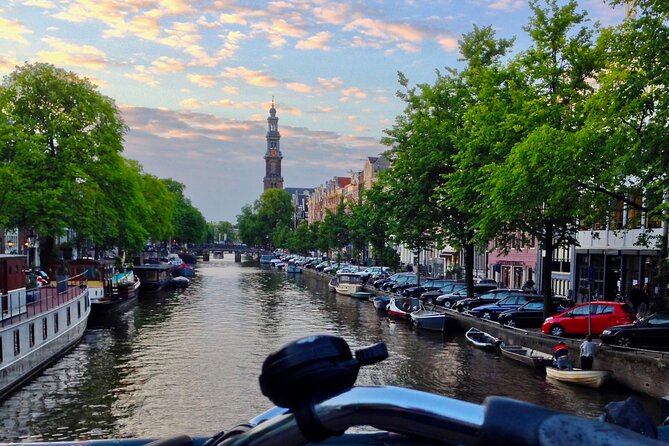
One hour in, you cross the Canal Ring of Amsterdam and learn how the city extended during medieval times. The canal ring can look like just “pretty waterways” if you don’t have context. With this guide, you start seeing the practical reasons canals exist and what growth looked like when Amsterdam expanded.
You’ll come away with a clearer sense of how the city’s geography is tied to its history of trade, land use, and neighborhood development. And because the tour’s pace keeps moving, it doesn’t feel like you’re stuck staring at water for an hour.
The Nine Streets: coziness away from mass tourism
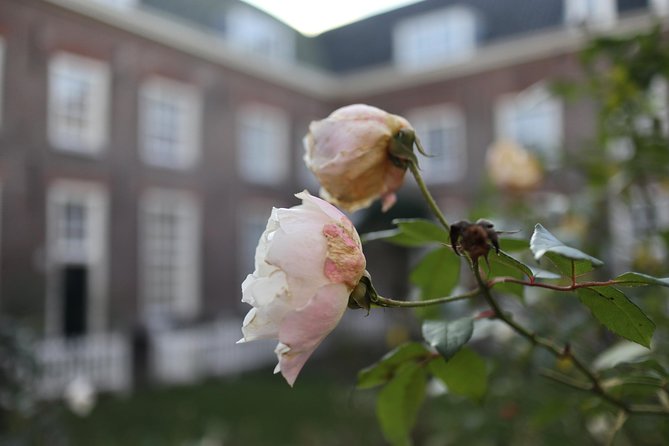
After the canal-ring framing, you head into what the route calls nine streets—a cozy shopping area that sits outside the main tourist churn.
This is a smart pivot. The Nine Streets give you a middle zone: you’re still in a walkable, lively area, but it’s quieter than the hotspots where every camera points in the same direction. You’ll also get a sense of how locals experience shopping here—little storefront rhythms, narrow passages, and the kind of street life that looks ordinary until you notice it.
For me, this part is about balance. You don’t swing from “main landmark” to “tiny alley with no context.” You get a gradual shift, so you feel oriented as the tour gets more tucked-away.
Jordaan: hidden streets, squares, and an authentic neighborhood feel
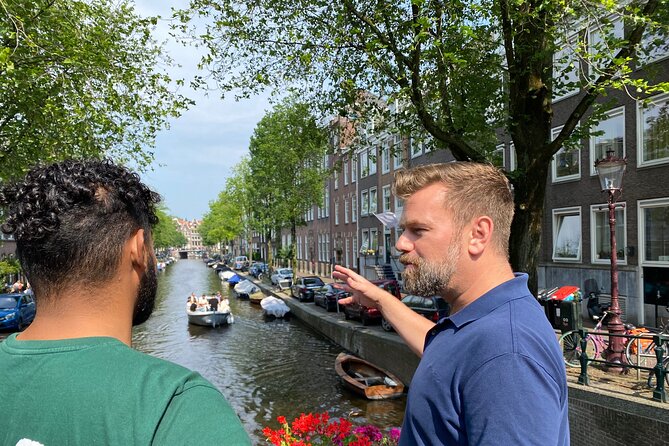
Then comes the heart of the experience: the Jordaan. You spend about 1 hour 20 minutes here, discovering hidden streets and squares and learning why the Jordaan is seen as one of the remaining authentic neighborhood areas.
What you’re looking for in the Jordaan is the feeling of lived-in Amsterdam. The lanes are narrower, the corners turn more often, and courtyards show up like little pockets of quiet. This is where the tour earns its title, because you’re actually shown places you would likely miss if you wandered on your own—especially when you’re trying to look for “must-sees” instead of the smaller patterns locals care about.
Also, the guide doesn’t just point. They explain. You learn what makes the neighborhood worth protecting and how the layout supports community life.
Karthuizerhof courtyard: widows, 1650, and early social housing
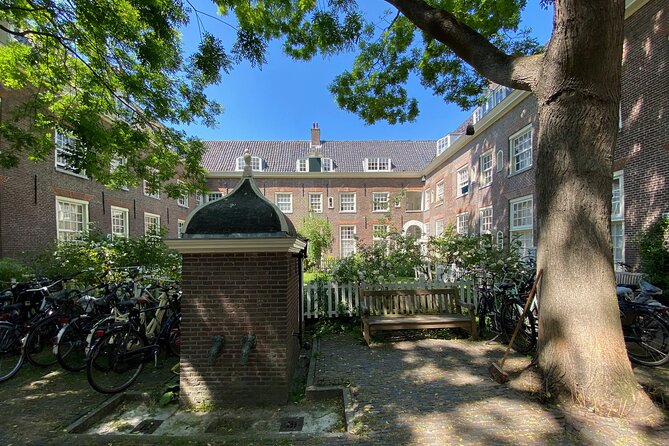
One of the most moving stops is Karthuizerhof, a courtyard constructed in 1650 for widows. The tour also notes that it’s one of the first social housing projects in the world.
Courtyards like this are easy to underestimate. They look like calm places to pause, but the context changes everything. Suddenly you’re not just seeing stone and greenery—you’re seeing how Amsterdam tried to provide stability for people in need, using space and design as a practical tool.
The stop is short (about 10 minutes), but it’s the kind of moment that stays with you because it connects architecture to real social history.
Passing Anne Frank House and seeing how the tour handles iconic sites
While walking through the Jordaan, the route passes by the Anne Frank House. This kind of pass-by is useful because it lets you acknowledge a major place without turning your entire walk into one long waiting-line day.
You’ll get the surrounding neighborhood context, not just the famous address. That makes the pass feel less like a checklist item and more like part of the fabric of the area.
If you want to spend more time on that specific site afterward, you’ll be better oriented—because you’ve walked through the neighborhood that frames it.
Church for the poor and Westerkerk: architecture with names you know
The tour includes stops that highlight how religious buildings were tied to social groups and merchant power.
First, there’s the church for the poor, including why it was constructed exactly where it is. Then you reach the Westerkerk. The guide frames it as a marvel of a church built by the rich merchants of Amsterdam, and you’ll also hear that Rembrandt was buried there.
This pairing works well because it shows two ends of society in Amsterdam architecture: institutions tied to helping the poor, and grand buildings funded by wealth. When you see them in sequence, you start noticing how the city’s social structure shows up in the streets.
Guides make the difference: Michael and Christian’s conversational style
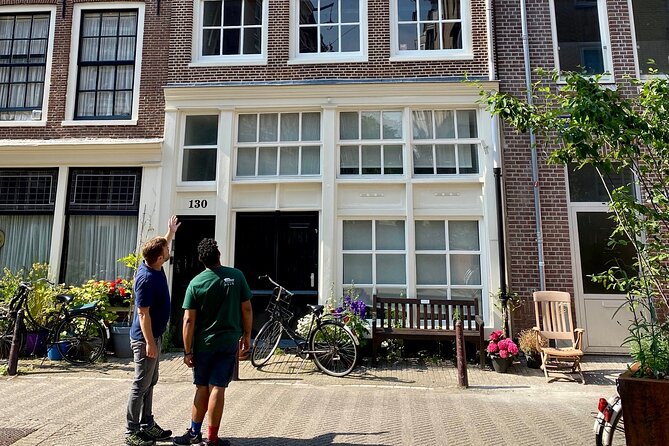
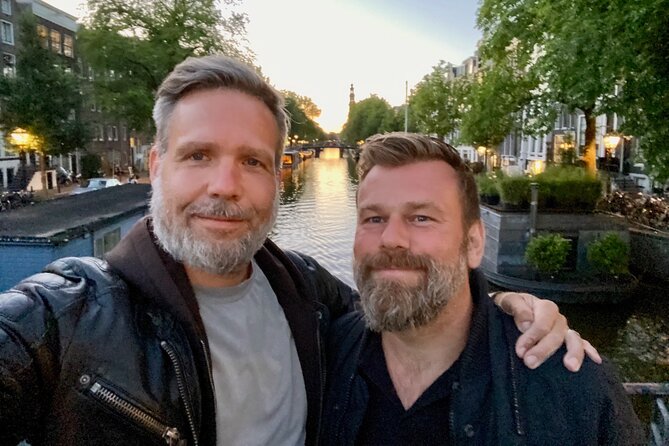
Two guide names show up in the experience: Michael and Christian. Both are praised for being informal, conversational, and genuinely willing to answer questions—even when the group wanders slightly off-topic.
I think that’s the secret sauce of this tour. Small-group walking tours can turn either into a tight script or into random chatter. Here, the storytelling stays focused, but it doesn’t feel rigid. You also get personal touches like the guide sharing what daily life can feel like in Amsterdam, not only what happened centuries ago.
And there’s a consistent theme in the tour style: you’re not rushed. That matters in Amsterdam, where a “quick look” can turn into missing half the details.
Price and value: what $52.81 buys you
At $52.81 per person, this isn’t the cheapest walk in Amsterdam. But it can be good value if you care about context and want a small group.
Here’s what you’re paying for that you can’t easily DIY:
- A guided route that connects central origins (like the first stock market story) to quieter neighborhoods (Jordaan side streets).
- A max of 10 travelers, which makes it easier to ask questions and actually hear answers.
- Courtyards and architectural stops that are explained, not just photographed.
- Multiple stops listed as free-entry, so your time on site stays efficient.
If you like hopping between paid attractions and ticking boxes, you might feel this is too “guide-led.” But if you want a high-quality overview that also teaches you how to notice the city on your own, the price makes sense.
Practical tips for a smooth 2.5-mile walk
This tour works for most travelers, and the expectation is you can walk about 2.5 hours over 2.5 miles (4 km). That’s not extreme, but Amsterdam sidewalks aren’t always perfectly even.
My quick advice:
- Wear comfortable shoes. You’ll be on foot the whole time.
- Bring a light layer. The weather can shift, and long stretches outside feel longer.
- If you want to ask lots of questions, this tour format suits you. The guide is set up for conversation.
- Since you end around Elandsgracht, plan for an easy follow-on stroll or a meal nearby.
One more detail worth noting: the tour is offered in English, and service animals are allowed. It’s near public transportation, which makes it easier to get to the start around Beursplein.
Should you book this hidden-streets walk?
Book it if you want Amsterdam with fewer crowds and more context. This tour is especially strong for people who like history when it’s tied to real places you can see, not just dates. The Jordaan portion, the courtyard stop at Karthuizerhof, and the mix of architecture stories (church for the poor and Westerkerk/Rembrandt) are the kind of combo that adds depth fast.
Skip it if you’re chasing only famous sights and you hate walking. This walk is designed to help you notice the city’s quieter side—so you’ll get the most out of it when you’re ready to slow down and pay attention.
If you’re traveling with friends and want a single guided morning or afternoon that still leaves room to explore afterward, this is a solid choice.
FAQ
Where does the tour start and where does it end?
The tour starts at Beursplein 1-3, 1012 JW Amsterdam, Netherlands. It ends at Elandsgracht, Amsterdam.
How long is the walk?
It runs for about 2 hours 30 minutes.
How far will I walk?
You should be able to walk about 2.5 miles (4 km) during the experience.
What does it cost?
The price is $52.81 per person.
What’s the maximum group size?
The tour has a maximum of 10 travelers.
Is the tour offered in English?
Yes, it’s offered in English.
Do any of the stops require paid admission?
Several stops are marked as admission ticket free in the tour details.
Are service animals allowed?
Yes, service animals are allowed.
FAQ
Is free cancellation available?
Free cancellation is available, and you can cancel up to 24 hours in advance for a full refund.