REVIEW · WALKING TOURS
Amsterdam: Small-group Guided Walking Tour (French/English)
Book on GetYourGuide →Operated by Voyage & Souvenir Amsterdam Tours · Bookable on GetYourGuide
Two hours of Amsterdam in fast-forward. I like how this small-group walk strings together the big sights (Dam Square, the canal belt, the Jordaan) with the stories that make them click. I’m also a fan of how Chris keeps it interactive, then sends you practical follow-up ideas so you can keep exploring without guessing. One catch: the route packs in a lot of stops, so some places are brief photo moments rather than long, inside visits.
You’ll cover the Historical City Center, the UNESCO-listed canal belt, and the city’s evolution from a small fishing village on the Amstel to a trading powerhouse. Expect Dutch daily-life fun facts too—plus stories tied to Anne Frank and even tulip mania—so Amsterdam feels less like a list of landmarks and more like a place with a personality.
In This Review
- 5 things I’d plan around before your walk
- A smart way to get oriented in Amsterdam’s center
- Who this suits best
- Where the tour starts: Pancakes Amsterdam at the IJ (and how to spot your guide)
- The guide matters: Chris keeps it lively in English or French
- The walk, stop by stop: from Centraal to the Jordaan
- 1) Pancakes Amsterdam at the IJ: start with the waterline
- 2) Amsterdam Centraal Station: the photo pause that sets the tone
- 3) Dancing Houses: the city’s oddball architecture
- 4) Basilica of Saint Nicholas: religion and old-school Amsterdam
- 5) Zeedijk Street: trading corridors in the street-level story
- 6) Major Alida Bosshardt Statue: history you don’t expect to notice
- 7) Ons’ Lieve Heer op Solder: an attic church story
- 8) Oude Kerk: early Amsterdam anchored in stone
- 9) Burgwallen Oude Zijde: old-side streets and canal-edge scenes
- 10) Amsterdam Chinatown: the city’s modern multicultural layer
- 11) De Waag Restaurant: a historical landmark with a public purpose
- 12) VOC (Dutch East India Company): trade history you can feel
- 13) Narrowest House in Europe: a practical architectural lesson
- 14) Dam Square + Royal Palace: power in the open
- 15) Magna Plaza: the modern shopping layer
- 16) Torensluis Bridge: canal views with a story behind the water
- 17) Grachtengordel: the UNESCO canal belt moment
- 18) Anne Frank House (photo stop): the story enters the street
- 19) Westerkerk: a landmark that frames the walk
- 20) The Jordaan: where Amsterdam feels human-scale
- What makes the tour worth $33: value you can feel the same day
- The one possible drawback: short stops mean you won’t linger
- Timing and route flexibility: how to plan your day around it
- Extra perks you’ll use after the walk
- Should you book this Amsterdam walking tour?
- My take
- FAQ
- What languages are available on this walking tour?
- How long is the walking tour?
- Where do I meet the guide?
- Is this tour wheelchair accessible?
- What should I bring for the walk?
- What’s included in the price?
5 things I’d plan around before your walk
Start at IJ waters (Pancakes Amsterdam) so the city’s geography makes sense fast
UNESCO canal belt context so you know what you’re actually looking at
Chris answers real questions and keeps the pace comfortable for 2–3 hours
Anne Frank and trading-era stops are quick, but the meaning lands with the stories
You leave with a usable plan from the dining, shopping, and sightseeing links
A smart way to get oriented in Amsterdam’s center
Amsterdam is beautiful, but it can also feel like you’re constantly asking: Where do I go next? This tour is built for that first-day problem. In a short window, you see the major “I’ve got to photograph that” spots and then get the background that helps you recognize what matters—why certain buildings are where they are, what different neighborhoods were built around, and how the city’s trade and culture shaped daily life.
The best part is that the tour isn’t only scenery. Chris connects landmarks to stories you can remember later when you’re wandering on your own. That’s the difference between seeing Amsterdam and understanding it.
You can also read our reviews of more walking tours in Amsterdam

Who this suits best
If you’ve got limited time, want an efficient overview, or prefer asking questions while walking instead of reading a guidebook, you’ll likely love this format. It’s also a good fit if you like getting practical recommendations (food, drinks, shopping, boats) from someone who lives the place, not just someone reciting facts.
If you’re the type who wants long museum time or slow, single-neighborhood roaming, you might find the short stops a bit brisk. Think of it as orientation plus highlights, not a full-day deep dive into any one site.
Where the tour starts: Pancakes Amsterdam at the IJ (and how to spot your guide)
Meeting point is behind Central Station, by the white and blue ferries for Amsterdam North, next to Pancakes Amsterdam at the IJ. Look for the big “D” ferry halte sign by the bike lane.
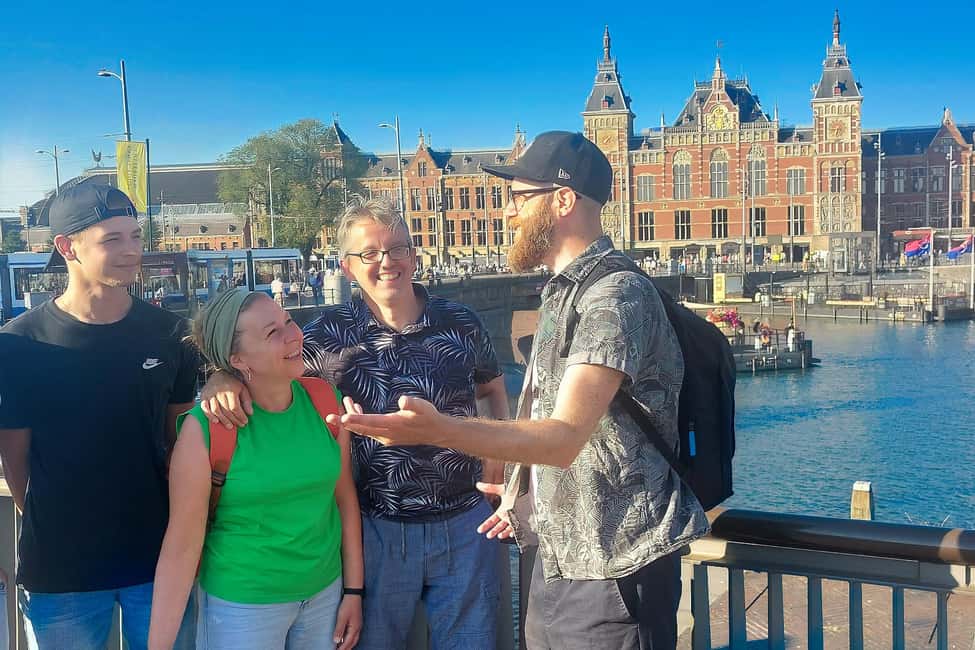
You’ll know Chris by the outfit: glasses, a beard, and a baseball hat. That sounds like a tiny detail, but in a busy transit area it matters. Amsterdam’s Central Station area is full of signs and people trying to find the right platform, so having a very specific starting landmark makes the start painless.
What to bring
- Comfortable shoes (you’ll be on your feet)
- Umbrella
- Water
- Weather-appropriate clothing
A walking tour lives or dies by weather comfort. Even if the sun is out, bring layers. You’ll thank yourself later when the wind off the water decides to join the party.
The guide matters: Chris keeps it lively in English or French
This is a live-guided experience in English or French, and the vibe is interactive. In the way Chris explains Amsterdam, you can tell he enjoys conversation. People ask questions mid-walk, and you don’t get the silent-eye-roll treatment. You also get follow-through after the route: recommendations delivered as helpful links.
Several recent tour experiences highlight the same pattern: Chris is friendly, funny, and ready to answer questions. One standout detail from past guests is that he supports explanations with visuals, not just verbal storytelling. That makes the Golden Age canal houses, trading history, and neighborhood evolution easier to hold onto while you’re walking.
And yes, the humor shows up. It keeps the facts from feeling like homework.
The walk, stop by stop: from Centraal to the Jordaan
The tour runs about 2 to 3 hours, with short guided segments and photo moments at each major spot. The quick timing is intentional: you get a wide view of Amsterdam’s center without spending the whole day in lines, ticket counters, or one museum corridor.
Here’s how the route plays out and what each stop adds to the bigger picture.
You can also read our reviews of more guided tours in Amsterdam




1) Pancakes Amsterdam at the IJ: start with the waterline
You begin at Pancakes Amsterdam at the IJ, which is a smart choice. It immediately grounds you in Amsterdam’s relationship with water—ports, trade, and movement. Even before the first landmark, you’re in the “Amsterdam is built on canals and crossings” mindset.
2) Amsterdam Centraal Station: the photo pause that sets the tone
Next comes Amsterdam Centraal Station. You’ll get a quick orientation photo stop and a guided explanation that helps connect the station area to the city’s movement and history. It’s not just a pretty façade. It’s a hub that shaped how people arrived and how goods moved.
A practical note: Centraal is busy. Use the photo minute well—then keep moving so you don’t lose the group.
3) Dancing Houses: the city’s oddball architecture
Then you hit Dancing Houses for another short stop. This is one of those Amsterdam details you might otherwise overlook because it looks like a fun design trick. In the story, you understand how the city grew, shifted, and filled spaces with creativity—even when the result seems a bit playful.
4) Basilica of Saint Nicholas: religion and old-school Amsterdam
You’ll stop at the Basilica of Saint Nicholas. The value here is context: Chris ties it to older layers of the city, so it doesn’t feel like just another building on a photo route.
Short stop or not, this moment helps you “zoom out” from canal scenery back to Amsterdam’s institutional past.
5) Zeedijk Street: trading corridors in the street-level story
Zeedijk Street brings you into a more everyday Amsterdam rhythm. It’s a place where you feel history as a street pattern—where commerce and movement would have mattered.
The drawback with stops like this is that you only get a slice. The upside is that you learn what to watch for later when you walk these streets again.
6) Major Alida Bosshardt Statue: history you don’t expect to notice
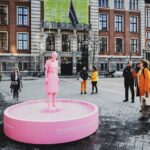
You’ll also see the Major Alida Bosshardt Statue. This kind of stop is exactly why a guide helps: you don’t just see a statue; you learn the reason it’s there and what it represents in Dutch history.
7) Ons’ Lieve Heer op Solder: an attic church story
Next is Ons’ Lieve Heer op Solder (Our Lord in the Attic Museum). Even from the outside, it signals something unusual about Amsterdam’s past—how people found ways to keep faith and community alive through complicated times.
This stop is a good reminder that Amsterdam’s history isn’t only in grand squares. Sometimes it lives in smaller, stranger spaces.
8) Oude Kerk: early Amsterdam anchored in stone
Then comes Oude Kerk. Chris uses it to bridge toward the older core of the city. You leave this stop with a clearer sense of how Amsterdam’s center formed and why these places cluster where they do.
9) Burgwallen Oude Zijde: old-side streets and canal-edge scenes
You’ll walk near Burgwallen Oude Zijde. The point isn’t to memorize street names. It’s to recognize the pattern: old canal-edge areas where residences and trade life mixed.
10) Amsterdam Chinatown: the city’s modern multicultural layer
A stop at Amsterdam Chinatown shifts the mood. Amsterdam isn’t stuck in “Golden Age postcard mode.” You’ll see how immigration and community growth shape what “local culture” means now.
This is one of those quick changes that feels useful: you don’t only learn Amsterdam’s past; you see it as a current, moving city.
11) De Waag Restaurant: a historical landmark with a public purpose
You’ll pause at De Waag Restaurant. This stop is about the public life of the city—markets, business, and where rules or commerce intersected with everyday streets.
12) VOC (Dutch East India Company): trade history you can feel
The VOC / Dutch East India Company stop is where the trading story starts to feel real. Amsterdam’s wealth didn’t appear from nowhere. It grew through routes, shipping, and a system that shaped everything from architecture to street life.
If you’re the type who loves cause-and-effect, this section rewards you.
13) Narrowest House in Europe: a practical architectural lesson
You’ll see the Narrowest House in Europe. The value isn’t only the fun “wow, that’s thin” factor. It’s the lesson about how cities taxed, measured, and built within rules—so the architecture ends up telling you economic stories.
14) Dam Square + Royal Palace: power in the open
Then you reach Dam Square, followed by the Royal Palace. These are the classic Amsterdam icons, but with a guide you don’t just see the surface. You understand the political and social center role Dam has played.
Photo stop is fast here, but it’s a strong anchor. Dam Square is the kind of place you’ll keep walking past later, so knowing what it represents helps.
15) Magna Plaza: the modern shopping layer
A stop at Magna Plaza gives you the present-day view. Amsterdam doesn’t freeze old grandeur in amber. It keeps using prime locations, and shopping and city life now share space with the past.
16) Torensluis Bridge: canal views with a story behind the water
You’ll cross by Torensluis Bridge for a scenic pause. This is where the canals start to feel less like scenery and more like infrastructure—routes, borders, and reflections of urban planning.
17) Grachtengordel: the UNESCO canal belt moment
You’ll hit Grachtengordel, Amsterdam’s UNESCO canal belt. This is one of the tour’s big payoffs. Even if you’ve seen canal photos before, the explanation helps you recognize the design logic behind the 400-year-old system and why UNESCO cares.
This is also where you might slow down mentally. The UNESCO label can sound official and distant, but on the street it becomes human-scale: homes, streets, bridges, and daily movement arranged with intention.
18) Anne Frank House (photo stop): the story enters the street
You’ll stop near the Anne Frank House for a photo moment and a story connection. This part matters because it shifts the mood from architecture and planning to lived experience.
Important practical note: this is described as a stop, not a ticketed museum visit. If you want to go inside, plan for separate access and time on your own schedule.
19) Westerkerk: a landmark that frames the walk
Next is Westerkerk. Even in a short stop, the guide uses it to tie back to the city’s older identity and how major churches and civic space shape neighborhood geography.
20) The Jordaan: where Amsterdam feels human-scale
Finally, you reach the Jordaan neighborhood. This is the right ending area because it often feels more “wanderable” than the heavy central monuments. After learning the big story of Amsterdam, you end where you can actually enjoy the small streets, courtyards, and daily rhythms.
And because the tour includes time for little side stories—like hidden courtyards or secret-garden style glimpses (depending on the route day)—the Jordaan landing feels earned.
What makes the tour worth $33: value you can feel the same day
At $33 per person for 2–3 hours, this price makes sense when you think about what you’re buying.
You’re not paying for a long museum entry or a guided boat ride. You’re paying for:
- Efficient coverage of major landmarks and neighborhood transitions
- Context that turns photos into memories with meaning
- A local Q-and-A channel while you walk
- After-tour links that help you choose food and next stops
In other words, you’re buying back time and confusion. Amsterdam is full of great options, but picking the right ones can waste hours. A good orientation walk acts like a shortcut.
The one possible drawback: short stops mean you won’t linger
This tour’s format is designed around momentum. Many stops are brief guided moments, often framed as photo stops. That’s ideal for an overview. It’s not ideal if your dream day is spending 45 minutes inside one building.
So if you’re the kind of person who wants to go deeper at a single stop, use the tour to learn what to prioritize. Then plan your follow-up visit on your own.
Timing and route flexibility: how to plan your day around it
You can expect a 2–3 hour walking experience, and the route may adjust if needed for construction work or to match interests. That flexibility is actually a plus. Amsterdam changes often—streets get closed, scaffolding shows up, and routes that were easy last month might not be easy this week.
To keep things smooth:
- Start with some free time after the walk so you can follow guide suggestions
- Bring water and an umbrella
- Wear shoes you can walk in even if your feet start judging you
Extra perks you’ll use after the walk
This tour includes recommendations for dining, shopping, food and drinks, boats, and sightseeing, plus helpful links after the tour. That matters because it turns the guide from a storyteller into a trip planner for your specific day.
From the way Chris’s recommendations show up in past experiences, you’ll often get suggestions for specific local treats too. One example that keeps popping up is his nudge toward bitterballen, a classic Dutch snack.
If you like being told where to go next (and not only what you saw), this is a real advantage.
Should you book this Amsterdam walking tour?
Book it if:
- You want a smart first move in the city center
- You like small-group walking with a guide you can ask questions to
- You want quick context for Dam Square, the canal belt (UNESCO), and the Jordaan
- You value practical dining and sightseeing links right after your walk
Skip it (or pair it carefully) if:
- You want long museum time or extended inside access at major sites
- You prefer a very slow wander where one street gets your full attention for hours
My take
If you’re trying to make Amsterdam feel coherent on day one, this tour does that job. The combination of iconic stops, neighborhood contrasts, and Chris’s follow-up tips makes the $33 feel like a bargain, not a souvenir.
FAQ
What languages are available on this walking tour?
The tour is offered in English or French, led by a local guide.
How long is the walking tour?
The duration is 2 to 3 hours, depending on the schedule and route.
Where do I meet the guide?
Meet behind Amsterdam Centraal Station, near the white and blue ferries for Amsterdam North, by Pancakes Amsterdam at the IJ next to the big D ferry halte sign.
Is this tour wheelchair accessible?
Yes, it is listed as wheelchair accessible.
What should I bring for the walk?
Bring comfortable shoes, an umbrella, water, and wear weather-appropriate clothing.
What’s included in the price?
You get a walking tour with a local English or French-speaking guide, plus recommendations and helpful links for what to eat, shop, and see after the tour. Food and drinks are not included.