REVIEW · MUSEUMS
Amsterdam: National Holocaust Museum Entry Ticket
Book on GetYourGuide →Operated by Jewish Cultural Quarter Amsterdam · Bookable on GetYourGuide
A sobering building, a clear story, and enough details to keep you thinking for days. I especially like the interactive hologram moments and the fact that the museum lives inside the historically charged Hervormde Kweekschool. The main catch is that the information can feel like a firehose, so you’ll want to pace yourself.
You’re walking through the persecution of Jews in the Netherlands during World War II, with attention to daily life before the war and the Holocaust’s impact on Dutch memory. If you give it time—and don’t rush—you’ll come away with a stronger sense of how this history was documented, remembered, and taught.
In This Review
- Key highlights to look for
- Value check: what your $24 Amsterdam ticket really buys
- Entering the Hervormde Kweekschool: where children were gathered
- Before the war: what life looked like in the Netherlands
- The Holocaust on display: numbers, systems, and faces
- How the museum creates memory: why the national story matters
- Hollandsche Schouwburg memorial: a second key location
- Pacing that works: audio, holograms, and a half-day mindset
- Practicalities: photography, signage, and using the cafe break
- Should you book the Amsterdam National Holocaust Museum entry ticket?
- FAQ
- Where is the meeting point for this ticket?
- How much does the entry ticket cost?
- What’s included with admission?
- How long is the ticket valid?
- Can I take photos inside the museum?
- Is the museum wheelchair accessible?
- Is there an audio guide?
- Will the audio guide always stay in English?
- How long should I plan to spend inside?
- Is free cancellation available?
Key highlights to look for
- Interactive holograms that let you ask questions and get answers on the spot
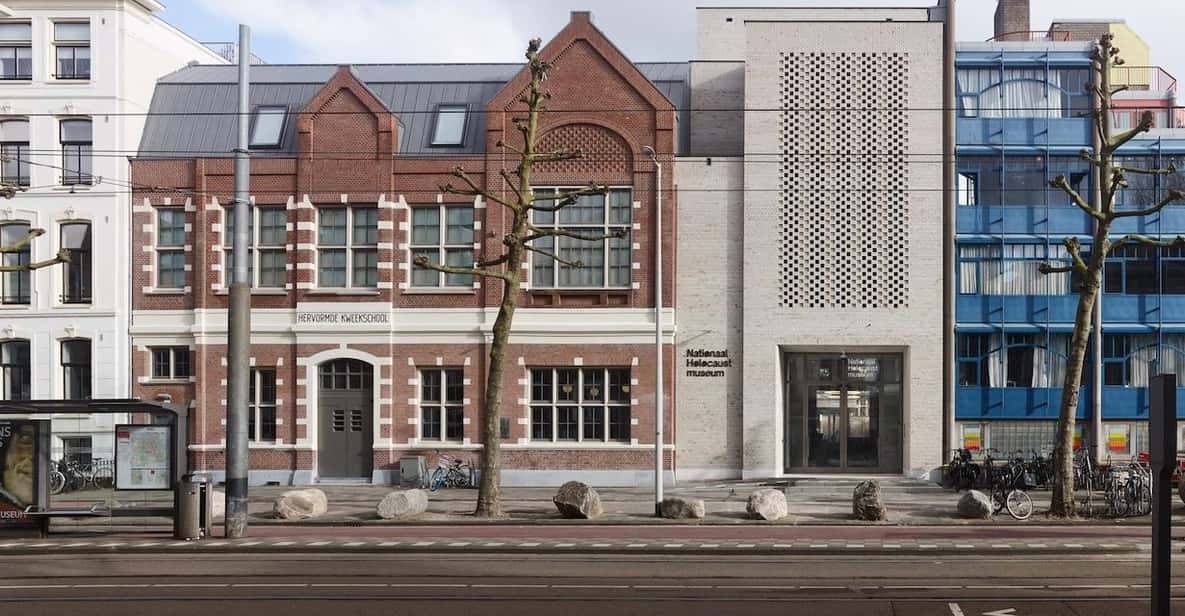
- Hervormde Kweekschool setting tied to the deportation of Jewish children
- Henriëtte Pimentel’s story of rescue efforts connected to the Kweekschool
- Unflinching presentation that keeps victims’ faces and names human
- Hollandsche Schouwburg memorial ticket to connect the dots across Amsterdam
Value check: what your $24 Amsterdam ticket really buys
For $24 per person, you’re not just buying entry to a room of artifacts. You’re buying a structured path through a specific and local history—how Jews in the Netherlands lived, how Nazi persecution unfolded, and how Dutch society later handled Holocaust memory. That focus matters, because it turns a huge European tragedy into something you can actually follow.
The ticket also includes admission to the Hollandsche Schouwburg National Holocaust Memorial, which is a big part of why this experience feels complete. In plain terms: one visit isn’t only about what happened in general—it’s also about where Amsterdam’s story shows up in physical places.
One more practical point: your ticket is valid for 7 days from first activation. That gives you a huge advantage if you find yourself overwhelmed. You can split your museum time instead of forcing it all into one heavy sitting.
You can also read our reviews of more tours and experiences in Amsterdam


Entering the Hervormde Kweekschool: where children were gathered
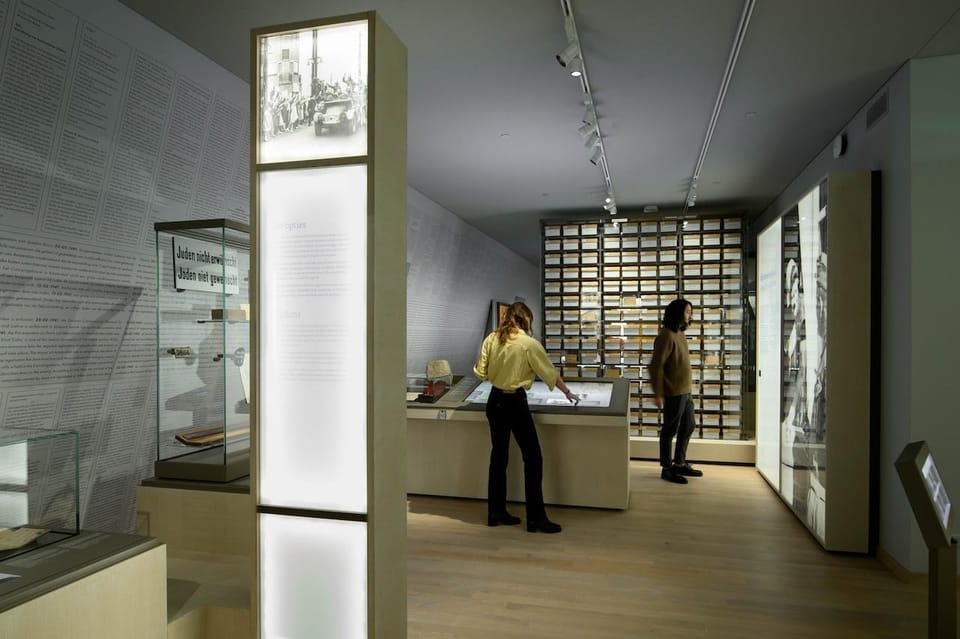
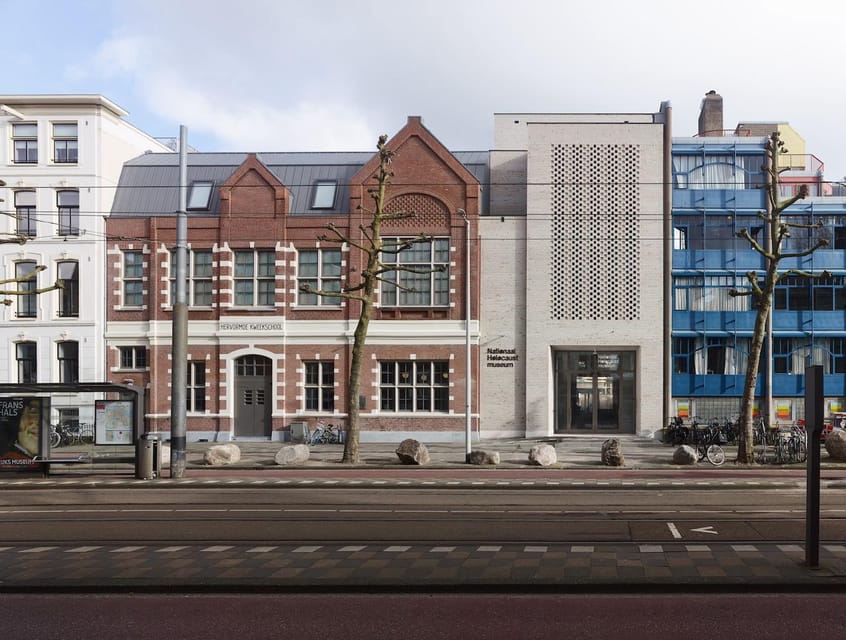
The museum is housed in the former Hervormde Kweekschool, and that choice isn’t decorative. The building’s past connects directly to what happened during the occupation: Nazis used the adjacent daycare as a gathering and deportation point for Jewish children.
When a museum is set in a location with that kind of historical weight, the story lands differently. You’re not learning only through text; you’re also processing the irony of the setting—a school space turned into a mechanism of persecution.
A name you’ll want to keep close as you walk: Henriëtte Pimentel, director connected to the Kweekschool, who helped hundreds of children escape. The fact that the museum includes this kind of rescue story matters for balance. It reminds you that victims weren’t just acted upon; people tried to protect children and push back, even under impossible conditions.
If you’re sensitive to difficult material, plan for it. This is presented with recognizable faces and without softening the brutality. That’s not light reading, and the museum doesn’t pretend it should be.
Before the war: what life looked like in the Netherlands
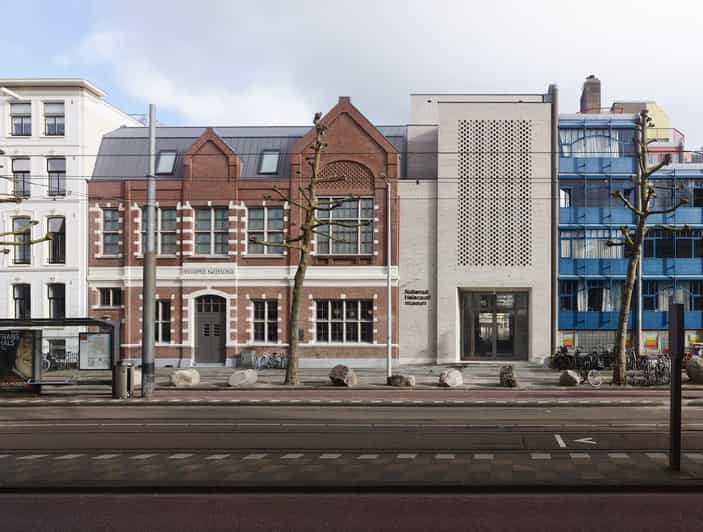
A strong part of the experience is the museum’s attention to the period before World War II—how Jews and non-Jews lived alongside each other with the same rights. That detail is important, because it counters the idea that persecution suddenly appeared out of nowhere.
As you move through the exhibition, you’ll encounter how everyday life functioned: routines, community presence, and the kind of normal you can’t fully appreciate until it’s gone. This helps you understand the scale of rupture. The Holocaust wasn’t only a wartime event; it was a systematic destruction of established lives.
I also like that the museum doesn’t just stop at despair. It includes the liberation experience for Jews. That creates a moral contrast that’s easy to miss in museums that only linger on the worst moments.
The Holocaust on display: numbers, systems, and faces
You’ll see how the museum tackles the Holocaust as both a human tragedy and a methodical system of atrocity. In Europe, the Nazis murdered about six million Jews, and in the Netherlands the museum highlights that three-quarters of the Jewish population were killed. Those numbers are staggering, but the exhibition approach matters: it keeps victims recognizable through portraits and personal items.
That’s where the museum’s layout earns its keep. Several displays use artifacts—like suitcases and other personal effects—to make the history feel specific, not abstract. When you connect an object to a person, the moral weight becomes harder to shrug off.
One practical issue you might run into: some exhibits sit behind glass that can reflect light, making certain views harder. If you’re planning to take photos, expect glare. It’s not a dealbreaker—just something to know so you don’t waste time trying to capture a perfect image and miss the bigger picture.
Also, the exhibition can be informationally dense. One of the smartest ways to handle this is to treat the museum like two visits, not one marathon. If you’re going to feel overwhelmed, it’s better to break the day than to force it.
How the museum creates memory: why the national story matters
The museum doesn’t just present events; it explains how Holocaust history is handled in Dutch national memory culture. That’s a big deal, because memory isn’t neutral. It shapes what gets taught, what gets questioned, and what gets forgotten—or repeated.
You’ll also notice the exhibition’s restraint in some places and its emotional clarity in others. The goal isn’t to shock for shock’s sake. It’s to show how persecution was built through policies and steps, and how those steps led to mass murder.
And yes, the emotional effect can be strong. People describe feeling the frustration and pain that comes from seeing the process laid out clearly, rather than only hearing a summary version. If that’s your concern, plan small breaks: step out, walk a bit, and let your mind catch up.
You can also read our reviews of more museum experiences in Amsterdam





Hollandsche Schouwburg memorial: a second key location
Included with your ticket, the Hollandsche Schouwburg National Holocaust Memorial helps connect Amsterdam’s story to the broader narrative. Even if you already understand the Holocaust timeline, memorial sites grounded in specific places give you a spatial sense of where people were held, moved, and targeted.
This is also where the value of the package shows. One museum helps you understand the how and why. The memorial helps you understand the where—especially within Amsterdam itself. That combination can make your visit feel more “complete” rather than like you only saw one chapter.
If you have limited time, you can prioritize, but don’t treat the memorial as optional. It’s included for a reason, and it strengthens the overall context.
Pacing that works: audio, holograms, and a half-day mindset
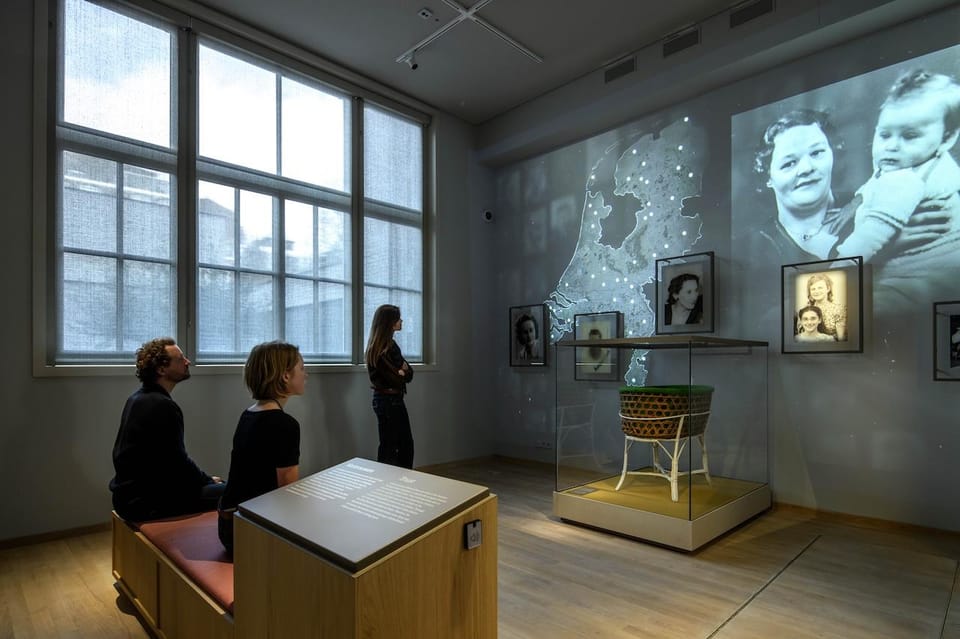
Plan for time. Many people end up spending hours in the museum, and a common recommendation is to set aside about half a day at minimum. This is the kind of museum where rushing changes what you take in.
I also think the museum rewards curiosity. The interactive holograms are a major highlight—people can ask questions and receive answers. That can make the history feel more responsive, but it can also add to the density of what you’re processing in one sitting. If you start feeling overloaded, don’t blame yourself. Just slow down and pick sections to revisit on another day.
The museum experience also seems to use an audio guide approach. One key note: some audio guide parts may switch to Dutch, so if you’re relying on English, be ready for moments where the language changes. It doesn’t ruin the visit, but it’s worth knowing so you don’t assume everything will stay in one language the entire time.
One final timing tip: museums like this often manage closing carefully, and you might be asked to wrap up near the end of the day. If you can, arrive earlier than you think you need. It saves you from the stress of trying to “finish” while the museum is moving on to closing.
Practicalities: photography, signage, and using the cafe break
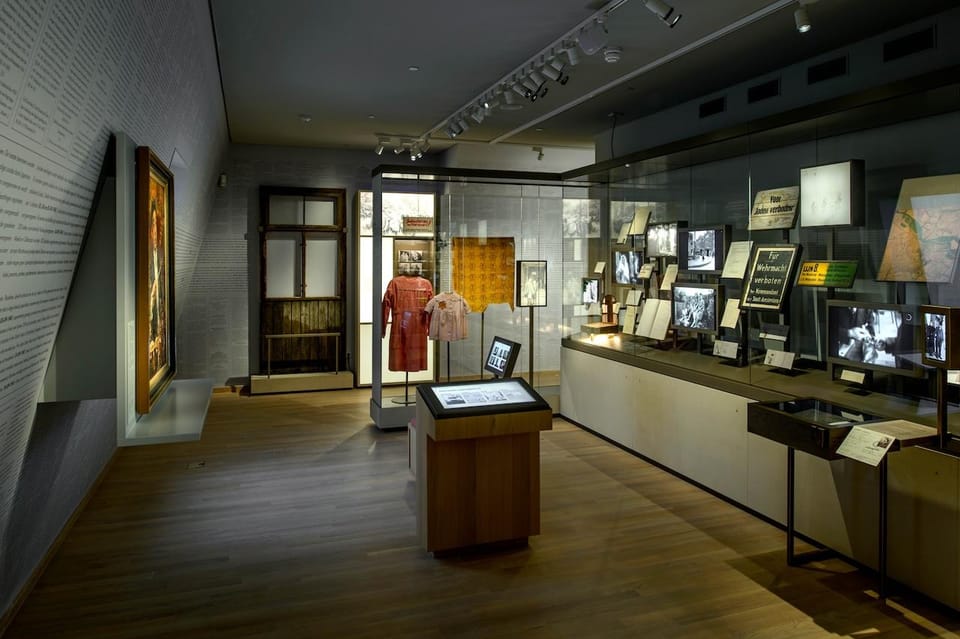
Photography is allowed, but you’re expected to be respectful. That usually means: no flash where it would disturb others, and don’t let camera time replace reading time. If you’re unsure, follow what others are doing and keep it quiet.
You might also notice some wayfinding quirks. A few visitors flagged signage challenges, which can make it easier to lose time looking for the next section. The fix is simple: give yourself margin and don’t treat the layout like an IKEA warehouse. If you’re already tired, ask staff for guidance rather than hunting.
A small heads-up: some exhibits may be viewable only from very specific spots, which can create brief bottlenecks. If you run into that, don’t stand there fighting it. Rotate to another area and come back when the flow moves on.
And yes, there’s a museum cafe. Even in serious places, food can reset your brain. Take advantage of that. A short break doesn’t make you less respectful—it helps you stay able to process what you’ve been reading.
Should you book the Amsterdam National Holocaust Museum entry ticket?
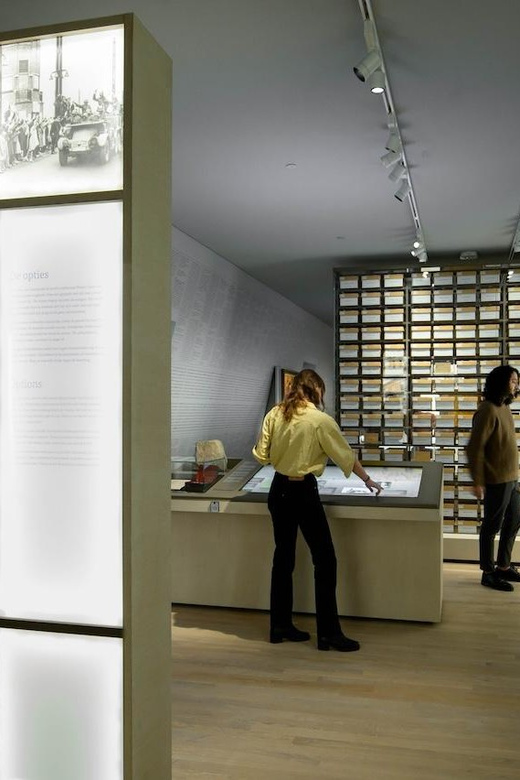
Book it if you want a place-based, clearly structured Holocaust experience focused on the Netherlands. This isn’t a quick history stop. It’s a museum visit built to be taken slowly, with interactive moments and strong use of faces and personal items.
Skip—or at least rethink the timing—if you know you can’t handle heavy, detailed subject matter without a lot of pacing. The museum is powerful, and the amount of information can feel overwhelming if you try to do it in one go.
If you can, treat it as a two-part visit thanks to the 7-day validity. That flexibility is a real advantage: you can absorb one section, step away, and return with a steadier head.
FAQ
Where is the meeting point for this ticket?
The meeting point is the National Holocaustmuseum.
How much does the entry ticket cost?
The price is listed as $24 per person.
What’s included with admission?
Your ticket includes entry to the National Holocaust Museum and entry to the Hollandsche Schouwburg National Holocaust Memorial.
How long is the ticket valid?
The ticket is valid for 7 days from the first activation.
Can I take photos inside the museum?
Yes, photography is allowed, but you should be respectful.
Is the museum wheelchair accessible?
Yes, the experience is wheelchair accessible.
Is there an audio guide?
An audio guide is mentioned in visitor feedback as being informative throughout the museum.
Will the audio guide always stay in English?
Not always. Some visitors reported that parts of the electronic guide switched to Dutch instead of staying in English.
How long should I plan to spend inside?
A common recommendation is to dedicate about half the day, since there is a lot to see and hear.
Is free cancellation available?
Yes. Free cancellation is available up to 24 hours in advance for a full refund.