REVIEW · CITY TOURS
Amsterdam City Center & History – Exclusive Guided Walking Tour
Book on Viator →Operated by Babylon Tours Amsterdam · Bookable on Viator
Amsterdam can feel like a maze on day one.
This walking tour gives you a guided path through the city center’s stories, from old Catholic churches to Dutch trade power, with rain-or-shine pacing and real-world context. I especially like two things: you get to hear how the places connect (not just what they are), and you finish with practical ideas for what to hit next, based on what you’re into. One consideration: it’s a walking route with moderate fitness needs, and several stops are outside or have extra-ticket options if you want to go in.
The guides seem to be a big reason this tour scores a perfect 5/5. People mention Anita’s calm, clear explanations, Diana’s strong history answering questions, and Pedro’s ability to keep the group moving even when wind and rain hit. If you’re expecting a lot of inside visits at every stop, keep your expectations flexible, since some entries are not included.
In This Review
- Key things that make this tour worth your time
- A 2.5-hour walk that helps you read Amsterdam fast
- How the route connects: faith, trade, and canal power
- From St. Nicholas Basilica to Schreierstoren: religious change and maritime goodbyes
- Zeedijk and Nieuwmarkt: old sea walls, lock bridges, and the market square beat
- Dutch East India Company HQ vibes: courtyards, mansions, and narrow-house land taxes
- Stopera, Dam Square, and the canal junction magic: civic pride and landmark geometry
- Begijnhof calm, Anne Frank area pause, and hofje life at Karthuizerhof
- Noorderkerk and Papeneiland: the route ends on a canal-corner note
- Price and value: why $62.48 can work if you use it right
- Who should book this tour (and who might want to skip)
- Should you book this Amsterdam City Center & History tour?
- FAQ
- How long is the tour?
- Where do I meet, and where does it end?
- Is the tour private for my group?
- Does it run in bad weather?
- Are admission tickets included for every stop?
- What fitness level is required?
- Is there any luggage restriction?
- Is there free cancellation?
Key things that make this tour worth your time
- A tight 2.5-hour route that links churches, canals, and civic sites into one understandable story
- Guide-led context that helps you read Amsterdam streets like a local (not just take photos)
- Rain-and-wind friendly execution, with the group staying on track even in bad weather
- Major “anchor” sights like Dam Square, Herengracht, and the Anne Frank House area without the overwhelm
- A thoughtful finish at Papeneiland, where you can reward your feet with an apple pie stop
A 2.5-hour walk that helps you read Amsterdam fast
This tour is built for the first few days in town. You cover key parts of the center without turning your morning into a scavenger hunt. The guide’s job is to give you the “why” behind what you’re seeing, so when you return on your own later, you’re not just staring at buildings. You’re noticing details.
The pace is also part of the value. Reviews highlight guides keeping the group moving even when weather turned nasty. That matters in Amsterdam, where schedules can get slippery once rain starts and crowds shift.
And because it runs rain or shine, you can plan with less stress. Dress for the weather, bring water, and wear shoes you trust. You’ll get more out of the stories when you’re not thinking about sore feet.
You can also read our reviews of more walking tours in Amsterdam



How the route connects: faith, trade, and canal power
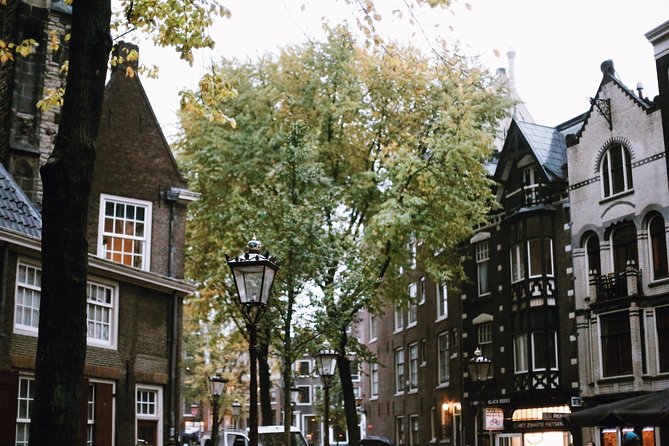
Amsterdam’s center looks romantic on the surface. Underneath, it’s organized around three big forces: religion, commerce, and the waterways that made commerce possible. This tour keeps circling those themes, so the city makes sense as you go.
You’ll start with a major church connected to Amsterdam’s changing religious landscape. Then you move to maritime farewell lore at a tower by the IJ side. After that, the route leans hard into old streets and market life, followed by the architecture tied to the Dutch East India Company. Later, the walk shifts again toward Protestant landmarks, hofjes (courtyard homes for older or vulnerable residents), and the city’s civic heart.
If you like history but hate long lectures, this format is practical. You get short stops, clear points, and a guided thread you can carry all day.
From St. Nicholas Basilica to Schreierstoren: religious change and maritime goodbyes
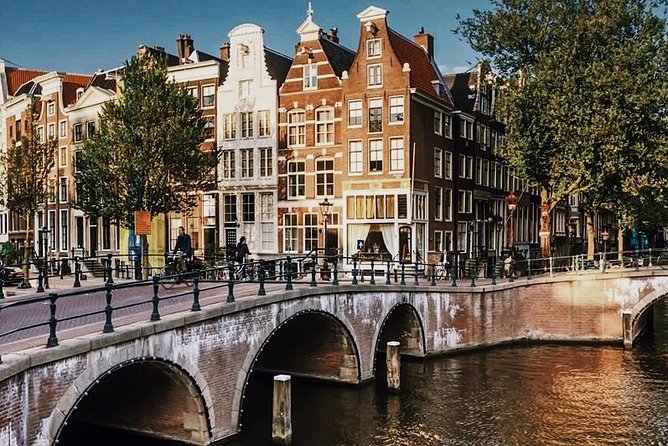
Stop 1: St. Nicholas Basilica
You begin at Amsterdam’s primary Roman Catholic church, built in the late 19th century. The timing is the story here. It came after centuries of prohibition, so the building reflects a city that was changing what it allowed, worship-wise. The good news: the admission ticket here is marked free, so you can treat it as an easy early win.
Stop 2: Schreierstoren (Weeping Tower)
Next up is the Schreierstoren, the Tower of Tears, where women would bid farewell to loved ones departing by ship. It’s a medieval structure, but the emotional hook is what sticks. You’re not just looking at stone; you’re hearing how Amsterdam’s shipping life shaped everyday moments. Admission here is not included, so if you want to go inside, plan for extra ticketing.
Why this section works: it sets the contrast. You’re moving from a large Catholic landmark to a smaller, more intimate kind of memory tied to departures. That makes the later “big power” buildings feel earned, not random.
Zeedijk and Nieuwmarkt: old sea walls, lock bridges, and the market square beat
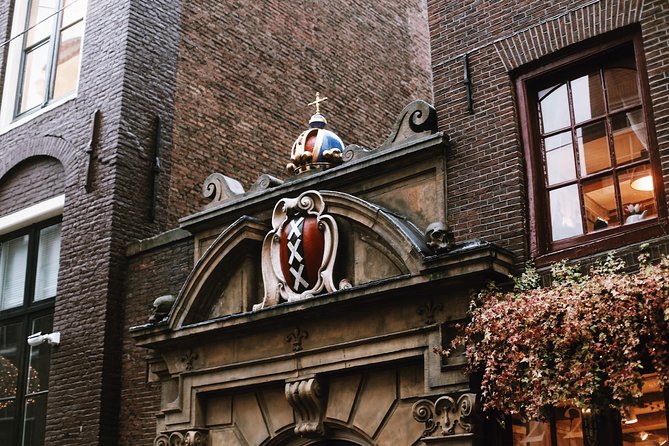
Stop 3: Zeedijk
Zeedijk is one of Amsterdam’s oldest streets and once functioned as a sea dike that held back water. That’s a wild concept until you realize Amsterdam is geography first and postcard second. Along the way you’ll see the Kolksluis and a picturesque lock bridge. It’s the kind of view that helps you understand why this city had to be engineered to survive.
Stop 4: Nieuwmarkt
Then you hit Nieuwmarkt, the old city center square that has been a commerce and socializing hub since the 17th century. The location mattered: it was just inside the old city gate, making it convenient for traders and shoppers, especially for fresh produce. This isn’t a “walk past it and forget it” stop; it gives you a sense of how daily life worked.
Stop 5: De Waag
At Nieuwmarkt, you also see De Waag, a 15th-century non-religious building that was originally a city gate and part of the walls. Over time it served as a guild hall, museum, and even a fire station. Admission is free for this stop, which makes it a helpful place to ask the guide questions about how city functions moved around.
If you’re traveling with food curiosity, this part sets you up well. Market squares and weighing houses are where you start understanding why Amsterdam became a trading powerhouse.
Dutch East India Company HQ vibes: courtyards, mansions, and narrow-house land taxes

This is where the tour turns from “how people lived” to “how power worked.”
Stop 6: Trippenhuis
You’ll see the grand Trip family mansion, a standout 17th-century statement piece. It’s paired in your route with the idea of how wealth and land pressure shaped architecture. Admission isn’t included here, so you’re mainly taking it in from the outside unless the guide indicates an option to enter.
Stop 7: Oost-Indisch Huis (Dutch East India Company)
Next, step into the courtyard of the Dutch East India Company’s headquarters. This is described as the birthplace of the world’s first multinational corporation. That’s a big claim, and the reason it matters is simple: trade structures didn’t just bring money. They shaped streets, buildings, and even what kind of city Amsterdam could become. Admission is free for this courtyard stop, which helps keep the tour feeling efficient.
Stop 8: Kleine Trippenhuis
Then you’ll notice the “smallest house” theme again with the narrow Kleine Trippenhuis. The point isn’t just odd architecture. It’s a reminder that land taxes encouraged tall, skinny buildings. Amsterdam is full of examples of people bending rules into design, and this stop is a clean one to understand quickly.
Stop 9 and 10: Zuiderkerk and Rembrandt’s house area
You’ll also see Zuiderkerk, Amsterdam’s first purpose-built Protestant church designed by Hendrick de Keyser, with a defining elegant tower. After that, you’ll get your Rembrandt moment at Museum Het Rembrandthuis, the former home and studio where he lived and worked for nearly 20 years. Admission isn’t included at these stops, so treat them as sight points unless you want to pay extra to go inside.
Balanced take: this stretch is excellent for architecture fans and anyone who wants a reason behind the city’s looks. It can be a little less satisfying if your priority is museum time, because the stops that involve paid entry are not guaranteed.
You can also read our reviews of more guided tours in Amsterdam





Stopera, Dam Square, and the canal junction magic: civic pride and landmark geometry
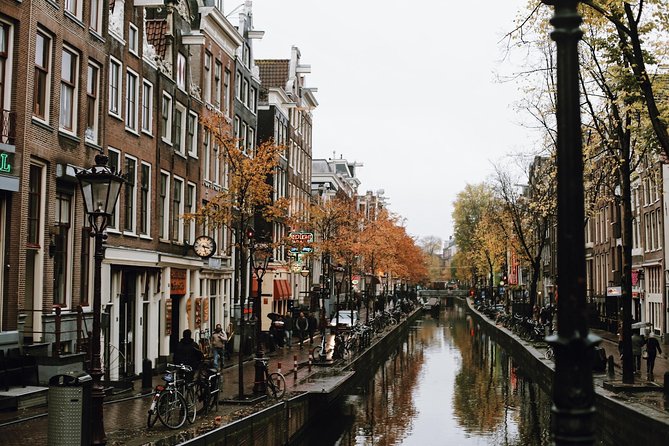
Stop 11: Stopera (National Opera & Ballet complex)
The route moves to the Stopera, a complex that houses the city hall plus the Dutch National Opera and Ballet. The construction took at least 60 years, and the long timeline explains the place’s scale and ambition. Admission isn’t included, so expect an exterior-focused visit, with the guide focusing on why the building matters.
Stop 12: Huis Aan De Drie Grachten
Then you’ll see Huis Aan De Drie Grachten, a rare 17th-century canal house positioned at a junction of three canals, with façades facing three directions. This is one of those “look up” stops. The architecture makes more sense when you can see how it sits in the water web.
Stop 14: Dam Square
You’ll hit Dam Square, framed by the Royal Palace, the 15th-century New Church, and the National Monument to WWII victims. This is the city’s historic heart in practical terms: you’ll always pass through it during a first visit, so getting the background from your guide saves you time later.
Stop 15: Herengracht and the Golden Bend
From there, you’ll admire Herengracht and the “Golden Bend,” lined with ornate canal mansions from the Dutch Golden Age. Admission is free here, and it’s a great photo zone that also teaches you how wealth expressed itself in canal frontage.
This section helps you connect civic power to private wealth. Dam Square feels official and heavy. Herengracht feels controlled and elegant. Together, they show you two sides of the same system.
Begijnhof calm, Anne Frank area pause, and hofje life at Karthuizerhof
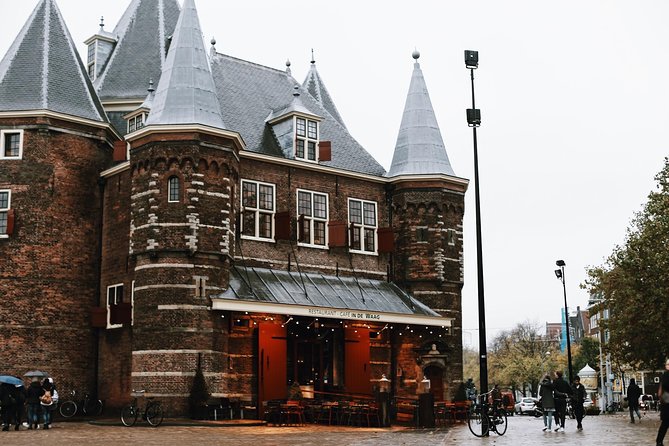
Stop 13: Begijnhof
The Begijnhof is where the tour slows down. You step into a peaceful medieval courtyard once home to the Beguines, a community of devout women. There’s also one of Amsterdam’s oldest wooden houses here. Admission isn’t included, so you’ll enjoy the space through the visit the tour provides rather than expecting a ticketed museum experience.
Stop 16: Anne Frank House area and the Westerkerk view
Then there’s a pause outside the Anne Frank House, where the young diarist hid during WWII. Next door rises the Westerkerk, noted here for being the tallest church tower in Amsterdam. Admission isn’t included, so this works best as a respectful, guided orientation point.
Stop 17: De Drie Hendricken (Bloemgracht)
You’ll also look up at the gable stones on buildings at Bloemgracht 87–91, known as De Drie Hendricken. The carvings have allegories and trade emblems, which makes this a clever way to talk about commerce without repeating the East India Company theme.
Stop 18: Karthuizerhof (largest hofje)
At Coöperatieve Vereniging Karthuizerhof BA, you’ll see the largest hofje in Amsterdam, built as almshouses around a tranquil courtyard for the city’s poor and elderly. Admission is free. This is one of those stops that changes how you think about “historic Amsterdam.” It’s not only mansions and towers. It’s also care systems, built into the city.
If you’re the kind of traveler who likes a mix of big landmarks and quieter corners, this is the sweet spot of the route.
Noorderkerk and Papeneiland: the route ends on a canal-corner note
Stop 19: Noorderkerk
The Noorderkerk is a 17th-century Protestant church built for the Jordaan district. Its cross-shaped floor plan reflects new Reformation worship ideas. Admission is free here, so you can enjoy the setting without extra ticket costs.
Stop 20: Papeneiland and Het Papeneiland café
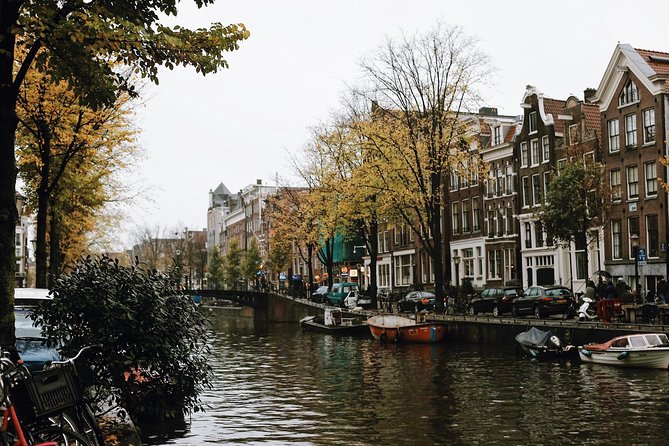
Your walk ends at the prettiest canal corner: Papeneiland and Het Papeneiland. This brown café dates to 1642, and it’s noted for apple pie. Admission is free, and honestly, it’s a perfect landing spot for the end of a long day on your feet.
This finish matters because a good tour doesn’t just stop. It hands you an easy next move. If you want dessert, you’ve earned it. If you want a calm canal stroll, you’re already in the right place.
Price and value: why $62.48 can work if you use it right
At $62.48 per person for about 2 hours 30 minutes, this tour’s value comes from the guide time and the “you’ll know what to do next” factor. You’re paying for a structured path through the center plus the interpretation that turns architecture into meaning.
A key point: some stops have admission included (like St. Nicholas Basilica and Oost-Indisch Huis courtyard), while others don’t include entry tickets. That means the tour is designed more for sightseeing and guided context than for a stack of paid museum hours. If that’s your style—brief stops, clear stories, and time to explore on your own afterward—you’ll feel like you got your money’s worth.
Also, Amsterdam tours sell out if you wait. The tour is commonly booked about 63 days in advance, so booking earlier is a smart move if your dates are fixed.
Who should book this tour (and who might want to skip)
This is a strong fit if:
- you’re on your first trip and want a working mental map fast
- you like architecture, civic places, and religion as it evolved
- you enjoy asking questions and getting straight answers (a theme in the best reviews)
- you prefer guided pacing over wandering without direction
It might feel less ideal if:
- you want mostly inside museum time with included tickets
- you hate walking in crowds or need fully step-by-step downtime built in
- you’re traveling with large bags, since large luggage isn’t allowed
Should you book this Amsterdam City Center & History tour?
If you want Amsterdam to make sense quickly, I’d book it. The route hits big landmarks like Dam Square and Herengracht, but it also threads in details that usually get missed: the “Tower of Tears” departure story, the Dutch East India Company courtyard setting, the Begijnhof calm, and the hofje life at Karthuizerhof. That mix is exactly what helps you plan the rest of your trip with confidence.
Also, the guide experience seems to be the standout. People call out guides like Anita, Diana, and Pedro for clear explanations and for keeping the group moving through weather. That’s not a small thing in Amsterdam.
FAQ
How long is the tour?
It runs for about 2.5 hours.
Where do I meet, and where does it end?
You meet at Prins Hendrikkade 73, 1012 AD Amsterdam, and the tour ends at Het Papeneiland, Prinsengracht 2, 1015 DV Amsterdam.
Is the tour private for my group?
Yes. This is described as a private tour/activity where only your group participates. There’s also mention of a semi-private option where the guide exclusivity does not apply.
Does it run in bad weather?
Yes, it runs rain or shine, and you should dress appropriately.
Are admission tickets included for every stop?
No. Some stops list free admission tickets, while others state admission is not included.
What fitness level is required?
A moderate physical fitness level is recommended since it’s a walking tour.
Is there any luggage restriction?
Yes. No large bags or suitcases are allowed during this tour.
Is there free cancellation?
Yes. Free cancellation is available, and you can cancel up to 24 hours in advance for a full refund.