REVIEW · WALKING TOURS
Amsterdam Central Walking Tour
Book on GetYourGuide →Operated by Yellow Bike Tours & Rental · Bookable on GetYourGuide
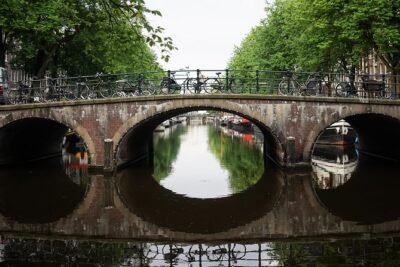
Amsterdam’s stories start on a canal bridge. This Amsterdam Central Walking Tour by Yellow Bike pairs charming canals and cobblestones with social history you can actually see. I like how it mixes postcard stops like crooked, tilted houses with places tied to protest, trade, and World War II.
Two things I really like: the small-group feel (capped at 12, often smaller) and the way guides bring Amsterdam into focus. On the kind of departures that end up smaller, I can see why names like Sid, Willem, and Willen stick with people, especially when English stays clear even in lousy weather.
One drawback to plan around: it runs rain or shine, and you’ll be walking in winter clothes for the full 2 hours. Also, in the Red Light District stretch there are strict no-photo and no-lingering expectations, so you have to keep your camera away and your attention moving.
In This Review
- Key highlights that make this tour worth it
- Starting at Nieuwezijds Kolk: your 2-hour Amsterdam reset
- Yellow Bike’s small-group pace and guides like Willem
- Crooked Houses and wooden poles: why Amsterdam looks like it’s leaning
- Water, bridges, towers: the engineering story you can walk through
- Trade clues on Brouwersgracht, plus herring and the city’s food past
- Westerlijke Wallen in the plan: respect, no photos, no lingering
- Spuistraat and Spui: squatting history and the Provo statue
- Anne Frank House area: quiet remembrance in the middle of the city
- Jordaan energy and Bartolotti House’s mansion-level elegance
- Negen Straatjes and Kalverstraat: shopping streets with a story behind them
- Brown Café Pitstop and where the warm break fits
- Price and value: why $26 can make sense for a 2-hour loop
- Winter-ready reality check: what to wear so you enjoy it
- Should you book this Amsterdam Central Walking Tour?
- FAQ
- How long is the Amsterdam Central Walking Tour?
- What is the meeting point for Yellow Bike?
- Where does the tour end?
- How much does it cost?
- Is the tour indoors, or does it run in bad weather?
- Are drinks included in the café stop?
- What’s included in the ticket price besides the guide?
- What languages are the live guides?
- Is it wheelchair accessible?
- Can I get a refund if my plans change?
Key highlights that make this tour worth it
- Small group size (max 12, often smaller): more chance for questions and a smoother walk.
- Real local guide energy: guides like Sid, Willem, and Willen are known for strong storytelling and clear English.
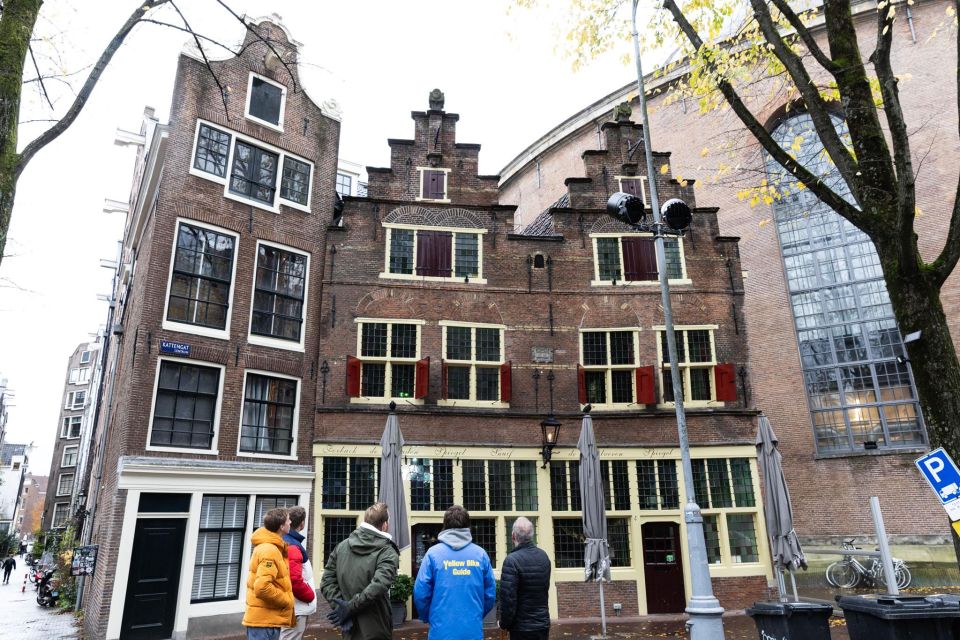
- Tilted houses and wooden-pole foundations: you learn the practical reason Amsterdam leans the way it does.
- Red Light District etiquette included: you get the respect rules upfront so you don’t feel awkward.
- Two-hour winter rhythm: a tight route with a warm café-style break, with drinks extra.
Starting at Nieuwezijds Kolk: your 2-hour Amsterdam reset
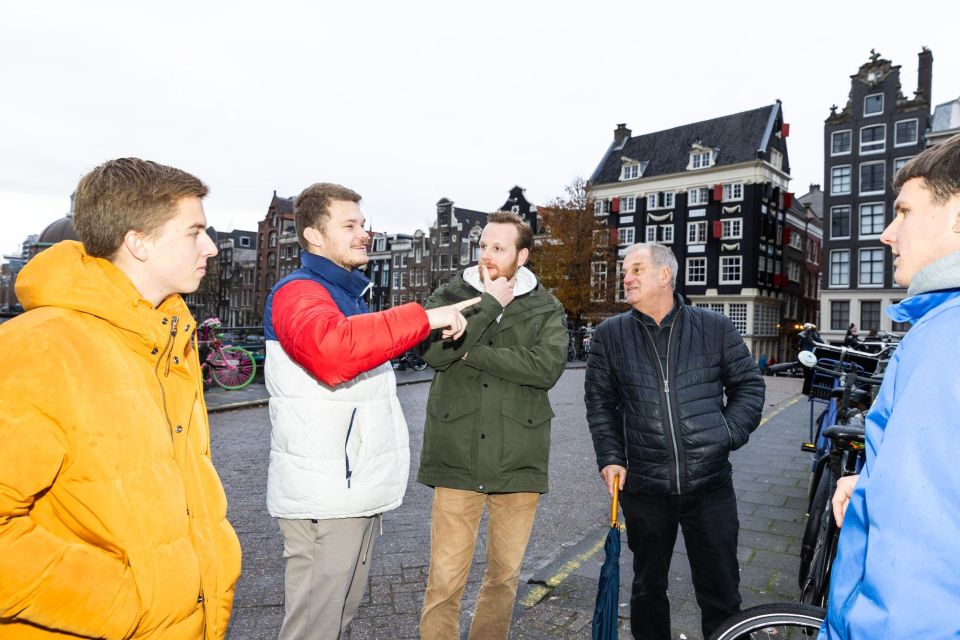
The tour starts at Nieuwezijds Kolk 29, and you check in by looking for Yellow Bike at the counter. It’s a compact, central route, which is ideal when you want orientation fast without committing to a full-day plan.
You’ll cover a lot of the city’s core on foot in 2 hours, then finish around Dam Square. From there, you walk back to Yellow Bike at Nieuwezijds Kolk, which keeps the logistics simple after your last stop.
Because it’s a winter walk tour, the timing matters. Think of it as a guided “how Amsterdam works” loop, not a slow sightseeing stroll.
You can also read our reviews of more walking tours in Amsterdam


Yellow Bike’s small-group pace and guides like Willem
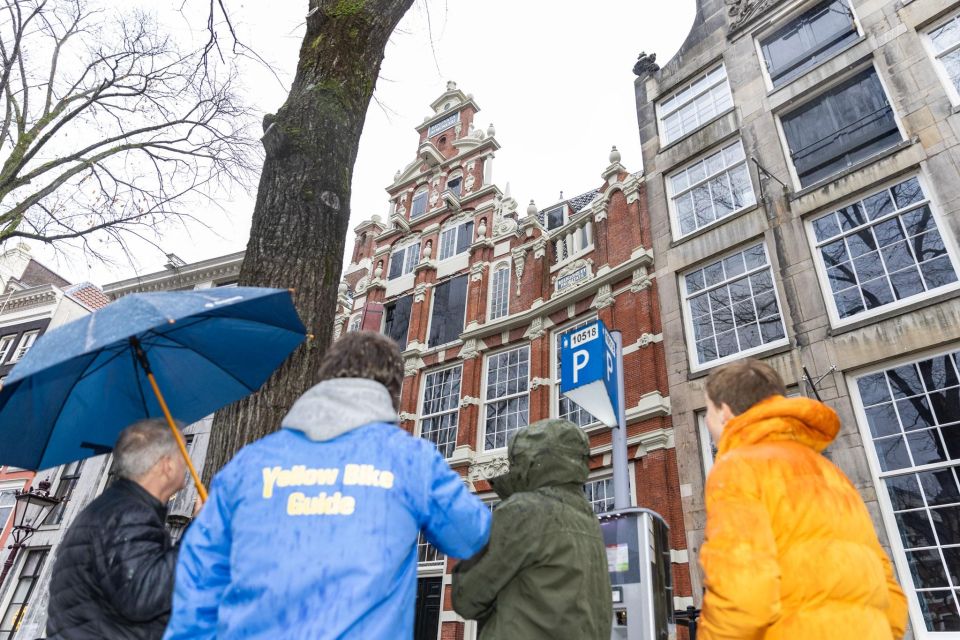
Yellow Bike Tours & Rental is one of the original tour operators in Amsterdam, and this matters because the company knows where the walking bottlenecks tend to be. With a maximum of 12 participants, the group size stays manageable, so the guide can talk without competing with a crowd.
In practice, smaller groups also mean you’ll spend less time waiting and more time listening. People have even had departures turn private, which is exactly what you want if you prefer real back-and-forth instead of just hearing a script.
Language is Dutch and English, and the guide experience here is a big part of the value. The best part is how Amsterdam’s past and present get tied together so the stops feel like connected chapters rather than random points on a map.
Crooked Houses and wooden poles: why Amsterdam looks like it’s leaning
One of the signature moments on this route is seeing the iconic tilted houses and learning the reason behind them. You don’t just admire the curves; you learn why Amsterdam, built on waterlogged ground, relies on wooden poles to support weight.
This is the kind of detail that makes the rest of the trip click. After you understand the foundations, the city’s “imperfect” look starts to feel logical instead of quirky.
In winter, these exterior viewpoints are convenient because you’re not waiting for indoor ticket lines. Just keep your footing on the cobbles and watch for slick patches after rain.
Water, bridges, towers: the engineering story you can walk through
Amsterdam’s canal-side infrastructure is a hidden teacher, and this tour uses it well. You’ll pass Torensluis, described as the oldest bridge in Amsterdam and once part of the defensive wall. It’s a small stretch, but it gives you perspective on how this city used water as both protection and transport.
Next come landmarks that connect faith, survival, and design. Koepelkerk is noted for the story behind the copper-clad Lutheran church, with a reminder of Amsterdam’s resilience after a massive fire. It’s a good stop for understanding how the city rebuilt itself instead of stopping after disasters.
For a sharper tone shift into institutions, you’ll also get Jan Roodenpoortstoren, tied to secrets hidden beneath the bridge, including historic prison cells. Even if you don’t stay long in one spot, it adds weight to the walk: the city isn’t only romantic bridges and cafes.
And for height and visibility, you’ll see Westertoren, Amsterdam’s tallest church tower, and learn why it matters. When the tower pulls your eye upward, it helps you reorient the whole city in your mind.
Trade clues on Brouwersgracht, plus herring and the city’s food past
This isn’t a food tour, but the guide uses food and trade history to explain how Amsterdam grew. Herring trade shows up as a key part of the city’s past, reminding you that the canal economy wasn’t only about art and architecture.
Then comes Brouwersgracht, where you’ll trace the supply chain for grain that fed breweries. You also learn how Amsterdam earned the nickname Booze Capital, which helps you connect canals to everyday industry rather than treating them like decoration.
If you enjoy “how things worked” history, this section is where the walk gets extra satisfying. You’ll start seeing the canals as logistics routes instead of just scenery.
The one practical caution: because this is 2 hours total, the trade stories are tight and focused. If you want long, museum-style explanation, you’ll still come away with enough to guide your next self-guided stop.




Westerlijke Wallen in the plan: respect, no photos, no lingering
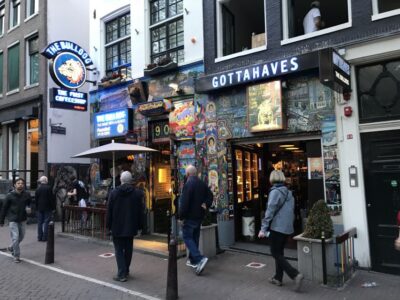
The tour includes the Westerlijke Wallen, Amsterdam’s Red Light District area. The key expectation is respect: the rules include no photos and no lingering.
That matters because this section is the most likely to make first-timers uncomfortable if they show up without guidance. With the etiquette spelled out, you can look, listen, and move on without feeling like you’re breaking a local social boundary.
You’ll also learn about the culture of this area in a way that frames it as something Amsterdam handles with strict norms. That gives the whole district a more grounded feeling than the typical stereotypes people carry.
Just remember: you’ll be outdoors and you’ll be moving. If you’re sensitive to crowding or the mood shifts of busy streets, keep expectations realistic for a short guided walk.
Spuistraat and Spui: squatting history and the Provo statue
This is one of the most interesting parts of the tour because it links streets to activism. You’ll hear about squatting history along Spuistraat, and then you’ll reach Spui, where a Provo statue ties into narratives of student protests and civil resistance.
The Provos are discussed in the context of events advocating resistance, which turns the walk into more than sightseeing. Streets here become a record of argument, protest, and social change.
For me, this section is where the tour earns its value: it shows Amsterdam as a city that argues in public, not only one that decorates its canals. Even if you don’t agree with every historical angle, you leave with a sharper sense of how dissent shaped the urban culture.
If you’re the type who likes politics and social history, this is a highlight. If not, don’t panic; the guide keeps it street-level and human-scale.
Anne Frank House area: quiet remembrance in the middle of the city
The itinerary includes the Anne Frank House area, which is always emotionally intense for visitors. Even when you’re just passing through the perimeter, the setting pushes the stories deeper than typical stop-and-go sightseeing.
This part of the walk is most useful if you treat it as a moment of reflection rather than a check-the-box photo stop. You’re learning about the World War II context and the courageous, world-famous story connected to her diary.
Because the tour is only 2 hours, you won’t have time for a full museum experience. Still, the guided framing helps you understand why people slow down here.
If you already have a timed entry planned separately, consider this walk as your warm-up that sets the emotional and historical context.
Jordaan energy and Bartolotti House’s mansion-level elegance
You’ll also get a sense of Jordaan, described as an old working-class enclave. That’s important because Jordaan helps explain why Amsterdam feels layered: wealthy canal viewpoints sit near neighborhoods shaped by everyday labor.
The walk highlights Bartolotti House, a mansion tied to Amsterdam’s grand residential story. Stops like this help you understand the difference between the city’s public face and what the architecture reveals about power and status.
In winter, I like that this isn’t only grand buildings. The route connects big-name landmarks with more ordinary streets, so the city doesn’t feel like a museum exhibit.
If you enjoy comparing neighborhoods through architecture, this section will feel satisfying without demanding extra time.
Negen Straatjes and Kalverstraat: shopping streets with a story behind them
After the heavier historical stops, the tour shifts to the neighborhoods you can explore next on your own. Negen Straatjes is described as a mix of old artisans’ areas and today’s trendy boutiques and cafes, and it’s exactly the kind of place where you’ll want extra wandering afterward.
Then there’s Kalverstraat, noted as the Netherlands’ renowned shopping street with upscale stores. This part gives you a quick read on Amsterdam as a modern European city where commerce is part of daily rhythm.
Because this is still a guided walk, you won’t browse for long. But you’ll finish with enough context to choose where to spend an hour after the tour ends.
For winter stamina, shopping streets also help: you can duck into doorways, warm up with a hot drink, and keep exploring without committing to museum time.
Brown Café Pitstop and where the warm break fits
The tour includes a stop at a traditional Dutch pub, Brown Café Pitstop, as a break. Drinks are not included, so you should budget for a hot beverage if you want the full winter-comfort effect.
I like that the café break is built in rather than left to luck. In cold weather, a planned pause changes the whole experience from “walk as endurance” to “walk as learning with breaks.”
This is also a good moment to re-check your route for the rest of your day. If you’re planning museum visits, neighborhood wandering, or dinner reservations, the guide’s earlier context makes it easier to choose where to go next.
Price and value: why $26 can make sense for a 2-hour loop
At $26 per person for 2 hours, this tour is priced for orientation and context, not for deep museum content. You pay for a local guide, a structured route through major streets and landmarks, and included benefits like free luggage storage.
That luggage storage can be a quiet money-saver. If you’re arriving early or you’re moving between neighborhoods, it can be a hassle to lug bags around, and that’s where included storage helps.
Drinks at the café are not included, so you should expect to spend a little extra if you want that warm break. Still, the overall price-to-time ratio is strong for people who want a guided sweep of central Amsterdam without buying multiple tickets.
Winter-ready reality check: what to wear so you enjoy it
This tour runs rain or shine, so plan like the weather will not cooperate. You’ll walk through winter streets, which means your clothing choices matter.
Bring comfortable shoes and warm clothing, plus a hat, gloves, and scarf. That gear isn’t optional in spirit; it’s the difference between enjoying stories and constantly thinking about cold hands.
Because the guide keeps moving, you’ll also want to accept a brisk pace. This is a walk-and-learn format, not a stop-and-stare format.
One more note: the activity is listed as wheelchair accessible, but it’s also marked as not suitable for people with mobility impairments. If this affects you, I’d check details directly before booking so you’re not surprised by the walking demands.
Should you book this Amsterdam Central Walking Tour?
Book it if you want a smart, time-efficient way to connect Amsterdam’s postcard sights with real stories. The small-group size, the guide focus, and the mix of landmarks like Westertoren, Anne Frank House area, Negen Straatjes, and Spui make this a good first or second day plan.
Pass on it if you’re looking for long museum time or slow neighborhood wandering. At 2 hours, everything is designed to move, including the Red Light District stretch with no photos and no lingering rules.
Also consider your winter comfort. If cold and wet streets wear you down quickly, you’ll need to dress for it, not hope for better weather.
If you match those conditions, this is one of the most practical ways to get your bearings and understand the city’s contradictions in one guided loop.
FAQ
How long is the Amsterdam Central Walking Tour?
The tour lasts 2 hours.
What is the meeting point for Yellow Bike?
Meet at Nieuwezijds Kolk 29 and look for Yellow Bike at the counter to check in.
Where does the tour end?
It ends at Dam Square, and you then walk back to Yellow Bike at Nieuwezijds Kolk.
How much does it cost?
The price is $26 per person.
Is the tour indoors, or does it run in bad weather?
It takes place rain or shine, so plan to be outdoors.
Are drinks included in the café stop?
No. The café break is included, but drinks are not included.
What’s included in the ticket price besides the guide?
You get a friendly local guide and free luggage storage.
What languages are the live guides?
The tour guide speaks Dutch and English.
Is it wheelchair accessible?
It is listed as wheelchair accessible, but it is also marked not suitable for people with mobility impairments, so it’s worth confirming details before booking.
Can I get a refund if my plans change?
Free cancellation is available up to 24 hours in advance for a full refund.