REVIEW · CANAL CRUISES
Private Canal Cruise in Amsterdam
Book on Viator →Operated by Amsterdam Boat Tour · Bookable on Viator
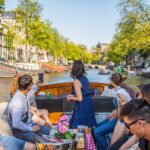
A private boat ride in Amsterdam changes how fast you get your bearings. You glide through the UNESCO-listed Canal Ring with your own guide, so you can ask questions as you go instead of shouting over crowds on land.
I really like the crowd-free pace. You travel by boat, which means you cover a lot of iconic places in about 1 hour 30 minutes, and you’re not stuck weaving through bottlenecks at street level. The other thing I love: the cruise feels genuinely interactive, with unlimited questions and one-to-one attention for your route and interests.
One drawback to consider: it’s short. You’ll see and learn about major sights from the water, but this is not a museum-entry tour, so plan to add tickets later if you want to go inside.
In This Review
- Key things you should know before you go
- A 90-Minute Private Canal Cruise That Feels Like Your Own Route
- Museumbrug 1 Start Point: Where the Cruise Actually Begins
- From the Rijksmuseum Area to Westerkerk: Big Architecture, Clear Explanations
- Carré, the Amstel Side, and Hermitage Amsterdam: Theatre and Museums Without the Lines
- Artis and Noordermarkt: Quieter Amsterdam Energy From the Water
- Gouden Bocht, Amsterdam Centraal, and Anne Frank House: The Places You’ll Recognize
- Magere Brug and the Art of the Short Route
- Price, Group Size, and When It’s a Smart Buy
- Should You Book This Private Canal Cruise?
- FAQ
- How long is the private canal cruise?
- How much is the tour?
- Where do we meet, and where does it end?
- What ticket format do I need?
- Is it a private tour for just my group?
- What’s the cancellation window?
Key things you should know before you go
- Private group experience with only your group onboard, so your questions stay on your schedule
- Hourly start times make it easier to fit into a tight day
- Mobile ticket keeps things simple at check-in
- You’ll pass major landmarks around the Canal Ring and Amstel area in one loop
- The route mixes big sights and local neighborhoods, so it’s not all tourist-only scenery
A 90-Minute Private Canal Cruise That Feels Like Your Own Route
This is the kind of Amsterdam tour you choose when you want variety without time-sinking. In roughly 90 minutes, you’ll float past world-famous sights and recognizable local spots, all while your guide keeps the story moving. The big advantage of private here is focus: you’re not waiting for a “group moment,” and you can steer the conversation toward what matters most to you.
Think of it like a moving orientation tour. If it’s your first visit, it helps you understand how the canals connect, where the major neighborhoods sit, and why some stretches of water feel more prestigious than others. If you’re returning, it still works because the boat viewpoint makes familiar places feel new—especially when you’re looking at facades and canal houses from the waterline instead of from a sidewalk.
If weather turns (and it often does in Amsterdam), this format also helps. One review I saw specifically called out a rainy evening, and the point was clear: you can keep going and still enjoy the sights. You’re not trying to “power through” a long walking day in wet clothes.
Value check: you’re paying for privacy and time efficiency. At $422.37 per group (up to 15), the math often works best for families or small groups who want one guide for their own schedule, rather than splitting into separate tours.
You can also read our reviews of more boat tours in Amsterdam

Museumbrug 1 Start Point: Where the Cruise Actually Begins
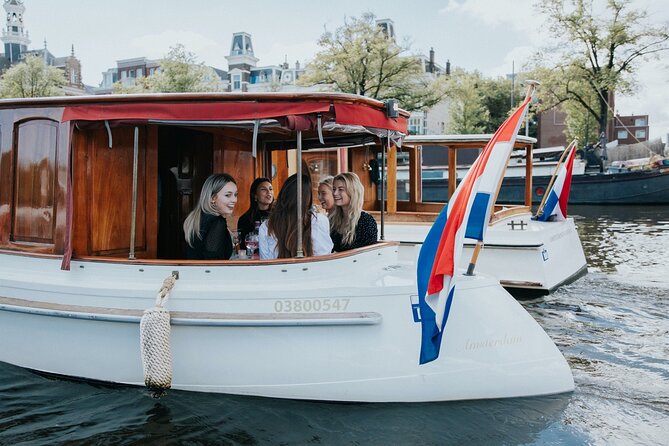
You meet at Museumbrug 1 (1017 SG, near the Rijksmuseum area), and the activity ends right back there. That matters more than you might think. Central Amsterdam days are full of “one wrong turn” moments—so starting and finishing at the same spot makes the planning cleaner, especially if you have museum plans later.
Also, it’s a location with public transit nearby, which gives you flexibility. If you’re coming from a train connection or another neighborhood, you don’t need to guess how to park, and you’re not dependent on one single ride option.
For the practical side of your day: you’ll use a mobile ticket. That’s handy when you’re juggling multiple timed entries (or you’re simply trying to travel light). Just keep the ticket accessible on your phone, because that’s what you’ll rely on at the start.
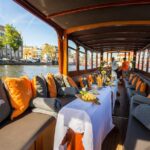
Finally, since this is a private tour, you’ll only be with your group. That’s a real quality-of-life detail in Amsterdam. Less waiting, fewer awkward “excuse me” moments, and more room for the guide to answer your questions without racing the clock.
From the Rijksmuseum Area to Westerkerk: Big Architecture, Clear Explanations
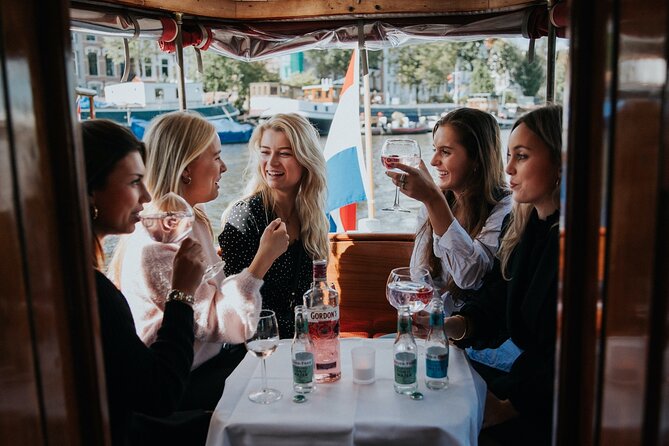
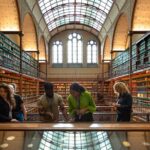
The route kicks off in the Rijksmuseum neighborhood and quickly sets a “culture first” tone. You’ll pass the Rijksmuseum, the national museum of the Netherlands. What makes it especially worth seeing from the canal is scale—you get a good sense of how prominent the complex is in the city’s museum quarter. The museum’s renovation and its sweep of Dutch life—from the Middle Ages into the 20th century—are part of why it’s such a landmark, even if you don’t plan to go inside.
Next comes the Westerkerk, a Reformed church in the Dutch Protestant Calvinist tradition. From the water, you’ll notice how its setting locks into the canal grid. It sits in the western part of the Grachtengordel, near the Jordaan, between Prinsengracht and Keizersgracht. Passing it by boat is a quick way to understand Amsterdam’s layout: churches and other major buildings are not random; they anchor the neighborhoods and water routes around them.
This part of the cruise is ideal if you like “read the city” experiences. You can ask your guide what to look for—facade styles, canal-side building patterns, and how the canals shape the flow of daily life.
Small consideration: since the boat route is time-limited, you’ll be viewing from the outside. If your goal is close-up museum time, this cruise works best as a planning tool before your museum visits (or as a complement afterward).
Carré, the Amstel Side, and Hermitage Amsterdam: Theatre and Museums Without the Lines
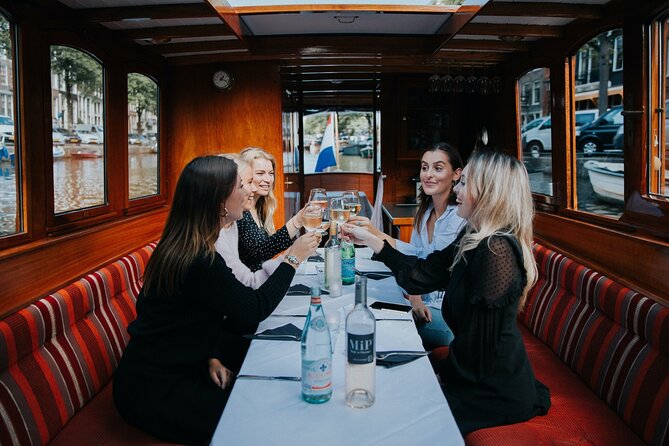
As you move toward the Amstel river corridor, you’ll pass the Royal Theater Carré. It’s a Neo-Renaissance theatre, and it has that extra layer of interest: when it opened in 1887, it was originally intended as a permanent circus building. Today it’s known mainly for musicals, cabaret, and pop concerts. Watching it from the water helps you appreciate the building as a landmark, not just a ticket you might someday buy.
Then you’ll glide past Hermitage Amsterdam, a branch museum of the Hermitage in Saint Petersburg. It sits on the banks of the Amstel in a former Amstelhof building, described as classical style and dating back to the 1680s era. Even if you skip the museum entry, it’s a worthwhile sight because it shows how Amsterdam repurposes grand structures while keeping the streetscape feeling historic.
This is where a private guide really pays off. If you’re curious about what you’re seeing—why the building matters, what kind of exhibits the Hermitage is known for, how theatres fit into the city—you can ask and get an answer right then, rather than later.
If you’re traveling with people who don’t all want the same thing (say, one person wants art and another wants scenery), this section keeps the variety high: theatre, museum, river, and canal architecture all in one loop.
Artis and Noordermarkt: Quieter Amsterdam Energy From the Water
A lot of canal cruises stick to only the postcard streets. This route also takes you through areas where daily life is visible. You’ll pass Artis, Amsterdam’s zoo and the oldest zoo in the Netherlands, and among the oldest on mainland Europe. One reason I like this stop-by-water approach: Artis isn’t just animals. It also includes an aquarium, a planetarium, an arboretum, and a sizable art and sculpture collection. You even get a connection point between art and the aquarium setting.
Then you’ll head toward the Noordermarkt in the Jordaan. This square is lined with cafés and restaurants, and it hosts markets. Monday markets are a regular draw, and Saturdays bring an organic farmer’s market. From the canal viewpoint, the Jordaan feels less like a checklist and more like a living neighborhood. It’s a nice reminder that Amsterdam isn’t only museums and canals—it’s also where people eat, shop, and hang out.
If you’re short on time, this is smart. A 90-minute cruise doesn’t have time to “become local” in a deep way, but it can show you the texture. Noordermarkt adds that human scale, especially compared to the bigger landmarks earlier in the ride.
Who this suits: families, couples on a mixed-pace itinerary, and first-timers who want a sense of both the famous and the everyday.
You can also read our reviews of more private tours in Amsterdam



Gouden Bocht, Amsterdam Centraal, and Anne Frank House: The Places You’ll Recognize
Some parts of Amsterdam feel instantly familiar to anyone who’s studied photos. On this cruise, you’ll pass Gouden Bocht, the Golden Bend on the Herengracht between Leidsestraat and Vijzelstraat. This is the kind of canal stretch people talk about because it’s visually distinctive and connected to how prestige developed along certain canal segments. Seeing it from the water is the right way to understand why that bend earned its name.
You’ll also pass Amsterdam Centraal Station, one of the city’s biggest icons. It’s the largest railway station in Amsterdam and a major international hub. The numbers matter: it’s used by about 192,000 passengers a day and is noted as the second busiest station in the country after Utrecht Centraal.
After that, you’ll glide near the Anne Frank House, a writer’s house and biographical museum dedicated to Anne Frank. The building sits on the Prinsengracht close to the Westerkerk. Even from the water, it’s clear why this spot holds such weight. It’s not just a sight—it’s a place connected to real events, and the canal viewpoint keeps the scene grounded in the city where the story unfolded.
This whole section is where you’ll get the most “pause and look” moments. If you like history, you can ask your guide how the canal ring and these neighborhoods relate to each other. If you’re more into architecture or city design, you can focus your questions on building form and how the canal edges shape street life.
Magere Brug and the Art of the Short Route
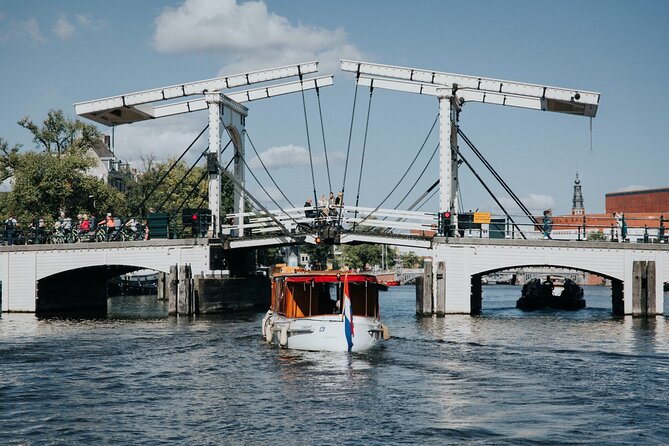
Near the end, you’ll pass Magere Brug (the Skinny Bridge), a bridge over the Amstel that connects the banks at Kerkstraat between Keizersgracht and Prinsengracht. It’s one of those Amsterdam landmarks that looks elegant from almost every angle, but the canal viewpoint gives it extra charm. You can usually spot it quickly on photos, but seeing it in context helps you understand why it’s so often photographed.
This is also a good point to reflect on why this cruise works for so many itineraries. A 90-minute private canal cruise is long enough to feel satisfying, but short enough to keep your day flexible. You can do it early to orient, mid-day to rest from walking, or late afternoon/early evening when you want the city to feel calmer.
If you’re trying to cover a lot without stacking ticket lines, this is the smoother approach. You won’t get the full museum experience from the water, but you will get the city’s big visual logic fast—and that makes every later stop easier.
And if you’re worried about the guide component: one standout comment I saw was about the captain, Peter, being friendly and good at explaining what you were seeing. That’s the heart of why private matters. The boat is the vehicle, but the guide is what turns it into a story you can remember.
Price, Group Size, and When It’s a Smart Buy
At $422.37 per group up to 15, this is priced like a true private experience, not a bargain canal boat. So when is it a good value?
- When your group is large enough to share the cost. A group of 6-10 can make this feel very reasonable compared to splitting into separate tours.
- When you care about flexibility (hourly start times) and want the cruise to match your day.
- When you want better conversation. Unlimited questions and one guide for your group are what you’re actually paying for.
If you’re traveling solo or as a couple and you’re purely budget-driven, a shared cruise might look cheaper on paper. But if your priority is comfort, pace, and getting clear explanations without crowd pressure, this private format can be the better match.
Also note that it’s commonly booked about 49 days in advance. That doesn’t mean you can’t find space later, but if you’re traveling in a peak season or you have a tight schedule, booking earlier tends to give you more choice on hourly start times.
Should You Book This Private Canal Cruise?
Yes, if you want an efficient, high-attention way to see Amsterdam’s Canal Ring and key landmarks without spending your whole day on foot. It’s especially worth it when you’re short on time but still want more than a basic pass-by tour.
Book it if:
- you’re traveling with others and want one private group experience
- you like asking questions and getting direct answers
- you want a weather-proof plan that still feels like a highlight
Skip it (or add a separate museum day) if:
- you’re expecting to enter museums or spend long hours at any one attraction
- your main goal is deep, inside-the-building time rather than city views and context
If you fall into the first group, this cruise is one of those practical “do it early” choices. You’ll leave with a clearer sense of where things are and why they matter—so the rest of your Amsterdam day feels less chaotic and more fun.
FAQ
How long is the private canal cruise?
It runs about 1 hour 30 minutes.
How much is the tour?
The price is $422.37 per group, up to 15 people.
Where do we meet, and where does it end?
You meet at Museumbrug 1, 1017 SG Amsterdam and the activity ends back at the same meeting point.
What ticket format do I need?
You’ll receive a mobile ticket.
Is it a private tour for just my group?
Yes. It’s private, and only your group participates.
What’s the cancellation window?
You can cancel for a full refund if you cancel at least 24 hours before the experience start time.