REVIEW · HISTORICAL TOURS
Historical tour of Amsterdam with Italian guide
Book on Viator →Operated by AmsterdamViaggi · Bookable on Viator
Three hours, and Amsterdam starts making sense. This historical walk with an Italian mother-tongue guide ties canals to major moments like the wars of religion and the story behind Anne Frank, while also showing you how an Amsterdammer moves through the city. I love the clear, well-paced storytelling and the Italian-language guidance that keeps things friendly and easy to follow. One thing to consider: museum entries are not included, so you’ll need to plan any inside visits separately.
You’ll finish at Museumplein around 1:30 pm, which is smart if you want to keep going to the Van Gogh Museum or the Rijksmuseum afterward. The route is built for getting your bearings fast, with plenty of short stops for photos, street-level context, and quick curiosities.
In This Review
- Key highlights to expect
- Getting oriented from Damrak to Park Plaza Victoria
- Singel, canals, and the spice trade behind Amsterdam’s power
- The Spice Customs House and King’s Warehouses: money with a purpose
- Dam Square and the street-level pace of major Amsterdam centers
- The first Red Light area: history, power, and modern rules
- The Joordan: where stories feel close to the streets
- Passing Anne Frank House: important context without the line
- Flower Market and the residence flower stop
- Vondelpark and Museumplein: the city’s calm break
- Van Gogh Museum option: entrances excluded, but timing is the win
- Price and value: $28.81 for 3.5 hours of orientation
- Who should book this historical Amsterdam walk
- Should you book? My decision rule for this tour
- FAQ
- FAQ
- How long is the tour?
- What does the tour cost?
- Is Anne Frank House entrance included?
- Are museum entrances included (like Van Gogh or the Rijksmuseum)?
- Where does the tour start and end?
- What language are the guides?
Key highlights to expect
- Italian mother-tongue guide: history explained in a way that’s truly accessible.
- Street-level history: big events mapped onto the neighborhoods you see every day.
- Anne Frank House, outside only: you’ll learn the meaning and context without entering.
- Flower Market and Leidseplein area time: classic central Amsterdam energy, on foot.
- Ends at Museumplein: a convenient launch point for museums after the walk.
Getting oriented from Damrak to Park Plaza Victoria
Most first-time Amsterdam plans feel chaotic. This tour fixes that by starting you in a practical place: Park Plaza Victoria Amsterdam, Damrak 1-5. From there, you walk into the city’s core like you’re learning a route, not just collecting sights.
The tour runs about 3 hours 30 minutes, and it’s timed so you’re back out in the city by early afternoon. That matters because Amsterdam is all about sequencing: if you start in the wrong place or too late in the day, you miss how the neighborhoods connect.
You also get a small-group experience (up to 50 people), which helps with questions and with hearing the guide. And because it’s a mobile ticket, you’re less likely to stress about paper tickets or finding the right line.
You can also read our reviews of more guided tours in Amsterdam



Singel, canals, and the spice trade behind Amsterdam’s power
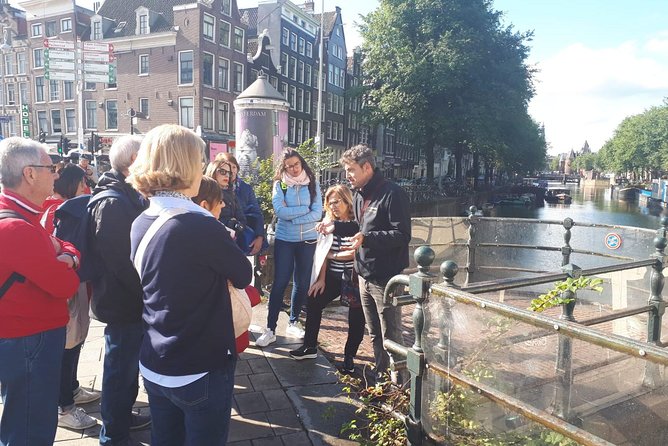
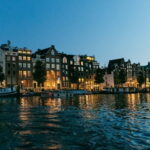
Early on, the walk heads through the central canal area—places like Singel—where you’ll start to see Amsterdam not as a pretty postcard, but as a trading machine. Your guide connects the city’s canal geometry and wealth-building to overseas commerce, including the world of the Indies.
One of the tour’s strengths is how it uses quick stops to give you a reason to look harder. Instead of only pointing at buildings, the guide frames what you’re seeing: where money flowed, what kinds of power grew here, and why certain areas became influential.
This is the part that’s especially valuable if you like history but don’t want a lecture. You’ll be walking, turning corners, and suddenly the names and streets start to click. It’s a great way to understand why Amsterdam looks the way it does, not just what it looks like.
The Spice Customs House and King’s Warehouses: money with a purpose
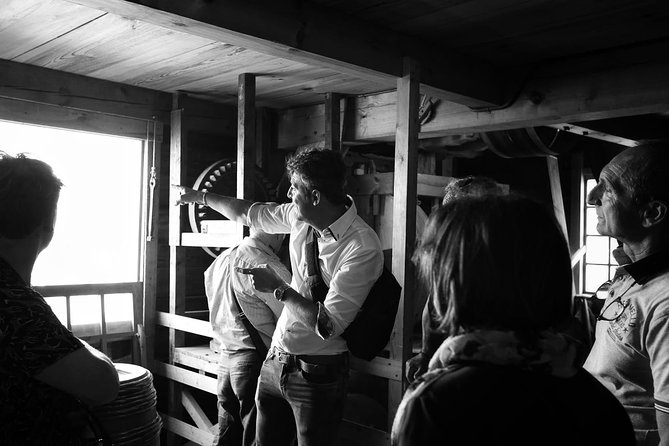
A standout section of the route includes the spice customs house and the king’s warehouses. These stops are more than a scenic break. They let you connect trade to everyday life and city layout.
Why it matters: Amsterdam’s identity is tied to commerce, and commerce leaves traces—architectural style, street patterns, and even the social balance of neighborhoods. When your guide explains this along the way, you start noticing details you’d otherwise skip.
There’s also a practical benefit. If you later visit museums or historic districts, you’ll have context ready in your head. The tour essentially gives you an easy mental map: commerce → wealth → political control → neighborhood changes.
Dam Square and the street-level pace of major Amsterdam centers
You’ll pass through Dam Square and other big central anchors like Rembrandtplein and Leidseplein. These are high-energy areas, but the tour keeps them manageable by moving at walking speed, with short moments to absorb the scene.
Dam Square is where you notice Amsterdam’s public-life vibe—people crossing, tourists gathering, and the city feeling like a meeting point. On a normal day you can get overwhelmed. On this tour, you’re guided through it with just enough background so you don’t feel lost.
Leidseplein and the university square area bring a different texture. You get the feel of Amsterdam as a student and nightlife city, with music, cafés, and a steady flow of people. If you’re traveling solo or you like to watch how locals move, this walking rhythm helps you feel the city’s pulse without getting stuck in the middle of it.
The first Red Light area: history, power, and modern rules
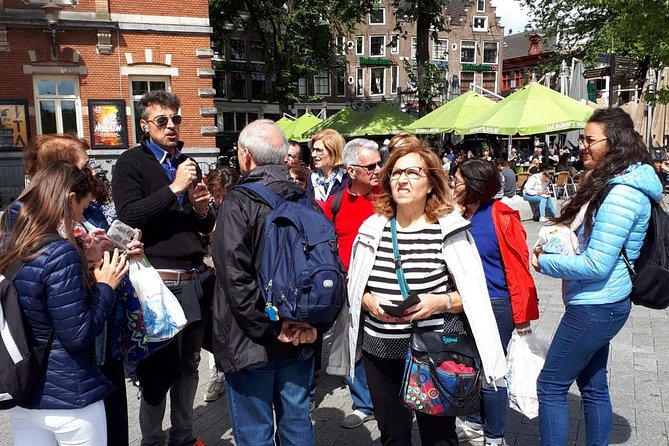
The route includes the first red light district. You don’t need to be looking for scandal to learn something here. The guide’s angle is about how Amsterdam managed difficult parts of society across time—how laws, commerce, and civic control shaped what people saw and how the city responded.
The key is the tone: you’re not being pushed into shock value. Instead, you get context for why this corner of Amsterdam became part of the city’s identity, and how that identity has changed.
If you’re sensitive to the topic, keep your expectations realistic. This is still a walking tour in a real city. You’ll see the area from the street, and your guide will frame it historically so it feels like information, not just observation.
You can also read our reviews of more historical tours in Amsterdam





The Joordan: where stories feel close to the streets
The Joordan section adds atmosphere and texture. This neighborhood is famous for its canals and historic vibe, but the tour uses it as a bridge between the city’s past and its everyday feel.
This is where you’ll start thinking like an Amsterdammer: not in museum rooms, but in routes, viewpoints, and street corners. The guide’s “day-in-the-life” approach is useful here. You’ll learn how to orient yourself using landmarks and how to recognize the logic of the streets.
Even if you don’t remember every date, you’ll remember the connections. That’s what makes this tour stick. Amsterdam gets easier when you can link what you see to what you were told only moments earlier.
Passing Anne Frank House: important context without the line
You’ll spend a short block of time in front of Anne Frank’s house. The tour is very clear about the format: you get a passage in front of the house, with the history and the importance of the site, plus WWII memories, but entrance is excluded.
This approach can be smart for planning. Many visitors arrive with tight schedules and long ticket lines. By focusing on meaning and context outside, you still come away with understanding, even if you don’t have entry tickets.
Also, the guide’s job here isn’t only to tell the story. It’s to place it into a larger narrative: how the city lived through occupation and persecution, and how Amsterdam has carried those memories forward.
If you do want to go inside later, the tour sets you up to make that visit richer. Without inside time, you still get the human and historical reasons the house matters.
Flower Market and the residence flower stop
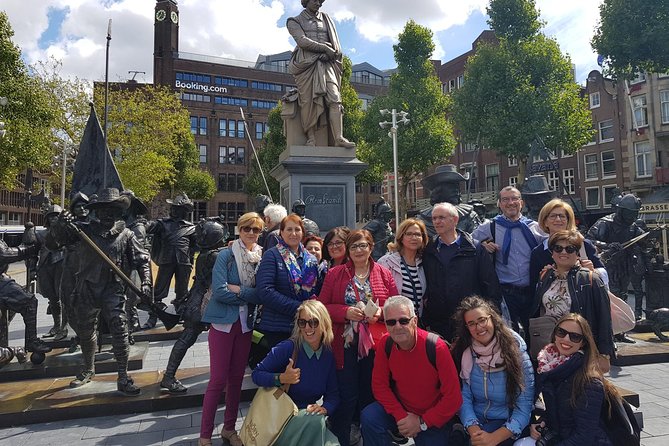
Central Amsterdam’s Flower Market is the kind of place you think you already know—until you see it through a guide’s lens. You’ll also have a residence flower market stop along the way for about 20 minutes, with admission ticket free.
This is one of those stops that feels light but useful. It breaks up the heavier history with something immediate and local: color, daily commerce, and the city’s shopping culture.
Practical tip: keep your time here realistic. The stalls are photogenic, and you’ll want to wander, but don’t lose the tour’s rhythm. This stop works best when you treat it as a reset before you head back into the next set of neighborhoods.
Vondelpark and Museumplein: the city’s calm break
The route brings you through Vondelpark and onward toward Museumplein, including classic viewpoints around HardRockcafé and the wider museum area. This is where the tour shifts from dense center streets into a more open, airy mood.
Vondelpark is a relief from the tight canal bustle. Even when you only pass through, you feel how Amsterdam breathes. It’s also a strong moment for photos and for regrouping before museum decisions.
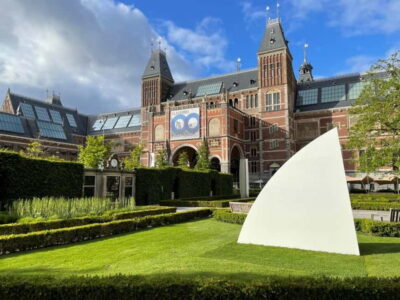
Museumplein is where the tour cleverly ends. Around 1:30 pm, you’re placed right by major institutions. That means you can turn the walking tour into a longer cultural day without backtracking across town.
If you’re the type who likes to plan your afternoon before you start walking, you’ll appreciate this. You exit the tour with a clear next step.
Van Gogh Museum option: entrances excluded, but timing is the win
The tour route includes Van Gogh Museum as a sight, but entrance is excluded. The good news is the timing. Since you finish at Museumplein, you can decide on the spot whether you want to go in, buy tickets, or adjust your schedule for other museums like the Rijksmuseum.
This is a key point for value. You’re not paying for museum entry that you might not use. You’re paying for a guided framework—street-level context that makes museums more meaningful once you do enter.
If museum visiting is a big goal for you, pair this walk with at least one inside stop after. The tour is designed to set you up for that kind of follow-through.
Price and value: $28.81 for 3.5 hours of orientation
At $28.81 per person, this tour is priced for getting real value out of your limited time. You’re paying for an Italian guide, a structured route, and historical interpretation across multiple central neighborhoods.
What makes the cost feel fair is the way the stops are used. The tour doesn’t try to squeeze in long museum visits; instead, it gives you strong orientation—trade, religion, and WWII context—while keeping the day flexible.
It also helps that the tour is short enough to fit into almost any Amsterdam itinerary. With a 3 hours 30 minutes duration, you can still do dinner plans, a canal cruise later, or a second neighborhood walk in the afternoon or evening.
If you’re visiting for the first time, this is the kind of spending that often saves money later. You’ll know where you want to return, and why.
Who should book this historical Amsterdam walk
This is a good fit if you:
- are visiting Amsterdam for the first time and want your bearings fast
- like history but want it tied to what you can actually see on the street
- prefer an Italian mother-tongue guide for maximum clarity
- want a walking route that ends near major museums without locking you into entrance fees
It’s less ideal if you want a heavy museum day with lots of inside time. Because museum entrances are excluded, you’ll need extra tickets and time for that.
Also, if you need guaranteed quiet moments or very long pauses at each stop, this walk won’t be built for that. The tour is moving and structured for coverage.
Should you book? My decision rule for this tour
If you want Amsterdam to make sense quickly, I’d book it. This tour is built like a good city orientation: trade and power, religion and conflict, modern city identity, and then a finish at Museumplein so you can keep going without wasting time crossing town.
I’d skip it only if your top priority is inside museum time from the start, because entrance fees are not included and Anne Frank House is outside-only here. In every other case, the walking format plus the Italian guiding style makes it a solid first-day choice.
FAQ
FAQ
How long is the tour?
The duration is approximately 3 hours 30 minutes.
What does the tour cost?
The price is $28.81 per person.
Is Anne Frank House entrance included?
No. The tour includes a passage in front of Anne Frank’s house with history and context, but entrance is not included.
Are museum entrances included (like Van Gogh or the Rijksmuseum)?
No. Entrance fees to museums are excluded. The tour ends near Museumplein so you can visit museums afterward.
Where does the tour start and end?
It starts at Park Plaza Victoria Amsterdam, Damrak 1-5, and ends at Museumplein, 1071 Amsterdam.
What language are the guides?
The tour is operated by an Italian mother-tongue guide.