REVIEW · FOOD
Guided Walking Street Food Tour of De Pijp & Beyond
Book on Viator →Operated by Hungry Birds Street Food Tours Amsterdam · Bookable on Viator
Street food in Amsterdam, with a local compass. This guided walk takes you through Albert Cuyp Market and the side streets of De Pijp, where you’ll taste Dutch classics and cross-cultural bites and learn how people actually eat here day to day.
Two things I really like: you get a real mix of foods (not just one theme snack), and the guide turns what you’re eating into plain talk about Amsterdam life. The only potential drawback: it’s a standing-and-walking format, so if you want lots of seated meal time, this will feel more like smart snacking on the move than a sit-down dinner.
In This Review
- Key points at a glance
- Albert Cuyp Market: the 11:00 start that gets you oriented fast
- De Pijp on foot: Toko culture plus Dutch street classics
- The guide’s role: banter, pacing, and food stories that make sense
- What you actually get for $155.68 in 4 to 5 hours
- Avoiding tourist traps by walking where people actually shop
- Who should book this De Pijp street food walk
- Should you book this guided street food tour?
- FAQ
- How long is the Guided Walking Street Food Tour of De Pijp & Beyond?
- What is the price per person?
- What’s included in the food experience?
- Where does the tour start?
- What time does the tour start?
- Where does the tour end?
- What are the main stops on the tour?
- Is the tour offered in English?
- How large is the group?
- What is the cancellation policy?
Key points at a glance
- Small group (max 8) keeps the pace friendly and questions easy
- 7+ street foods plus a few drinks gives you a full tasting arc
- Albert Cuyp Market focus on family-run stalls and newer food makers
- De Pijp neighborhood route with Dutch bites and Toko stops
- Guides with banter and group-reading (Sharmain and Sara are specifically mentioned)
- English-friendly for visitors who want clarity without muddling menus
Albert Cuyp Market: the 11:00 start that gets you oriented fast
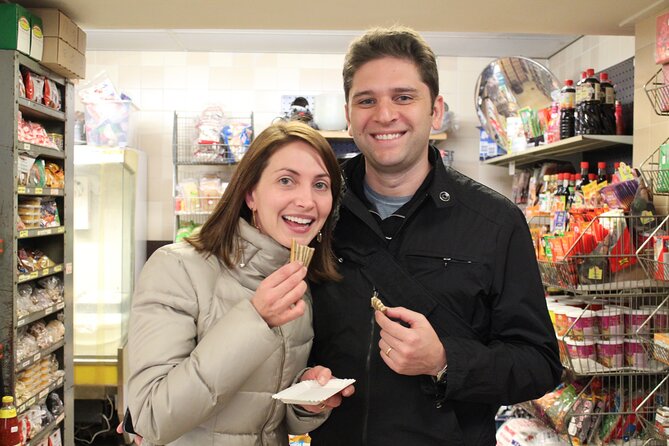
The tour kicks off at 11:00 am at Albert Cuypstraat 75, a practical meeting point if you’re coming in by tram or metro. From there, you head straight into the heart of Albert Cuyp Market, with about 45 minutes at this first stop.
What makes this start work is that the market isn’t treated like a theme park. You’ll be guided through stalls and small businesses that are described as long-loved by Amsterdammers, including mom-and-pop places, vendors, and newer food entrepreneurs. That mix matters because it shows the real rhythm of the city: tradition keeps going, and fresh ideas keep arriving.
Expect a tasting lineup built around Dutch favorites and a broader street-food map. You’ll run into classics like herring, broodje pom, kroket, and stroopwafels. There’s also room for international flavors you might not hunt down on your own, such as Indonesian, Surinamese, and Japanese influences. The tour’s goal here isn’t just to hand you food—it’s to help you recognize what’s typical, what’s local, and what’s become part of Amsterdam’s everyday eating.
One small consideration: markets are lively and food is best enjoyed up close. Even if you’re not a crowds person, the time slice is short enough that you’re not stuck there forever. Still, come ready for sights, smells, and a bit of jostling.
You can also read our reviews of more food & drink experiences in Amsterdam


De Pijp on foot: Toko culture plus Dutch street classics
After the market, the tour shifts into De Pijp, lasting about three hours. This is where the walking pays off. De Pijp is made of small, narrow streets, and the tour uses that layout to show you how food fits into a neighborhood—not just into a tourist itinerary.
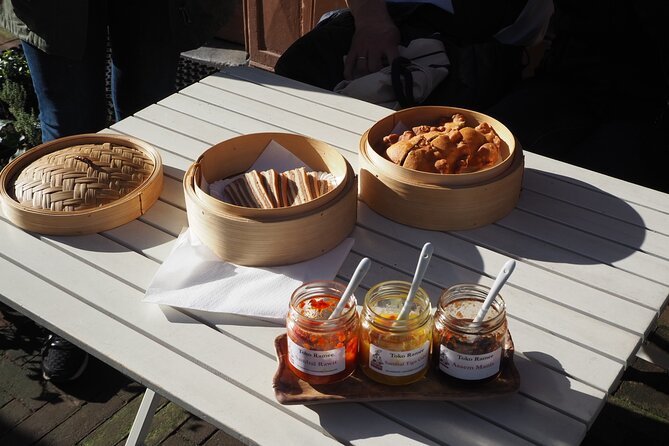
This part of the route leans into what you’ll see in Amsterdam living rooms and lunch breaks: Toko spots—small grocery stores and eateries with Indonesian or Surinamese foods, plus lots of Asian pantry products. These stores can be hard to notice if you’re only focused on canals and big-name museums. On this walk, they’re center stage.
You’ll also hit Dutch street-food stands and familiar favorites. Think herring, fries, kroket, poffertjes, and stroopwafels—foods that act like language in snack form. And you may even find more modern international additions, like Japanese sandos at newer eateries.
Here’s why I think this neighborhood section is the real value: you’re not just eating. You’re learning the pattern. In De Pijp, you can usually tell where locals shop and snack by how ordinary the streets feel. The tour helps you pick up that signal quickly, so you don’t have to guess later.
Possible snag: food variety can include flavors that some people don’t love on first bite—especially if you’re sensitive to fish, strong spices, or rich fried items. This tour is designed for broad appeal, but if you have preferences, you’ll be happiest if you flag them early with your guide before the first big tasting.
The guide’s role: banter, pacing, and food stories that make sense
A street-food tour lives or dies on the guide, and the feedback is strong here. The reviews highlight great banter and guides who can read the group as they walk. Names that come up in the feedback include Sharmain and Sara, both praised for being fun and for staying tuned to the group’s mood and interests.
What I like about this approach is simple: the food isn’t delivered like a checklist. Instead, the guide connects what you’re tasting to how people live in Amsterdam—how food shows up in markets, in daily stops, and in neighborhood culture. One review specifically calls out learning the food in the context of history, which is what turns a bite into something you can remember.
Also, the pacing matters. With a maximum of 8 travelers, you’re less likely to get stuck waiting behind a huge crowd. That keeps the tour from becoming a slow line shuffle. In practice, a small group means more time to ask questions like what’s worth ordering, what locals get without thinking, and how to spot quality without chasing a brand name.
The main drawback to watch for is personality mismatch. If you want a quiet, minimalist food crawl with almost no talking, this format may feel too conversational. But if you enjoy a guide who brings humor and keeps the group moving, it’s a major plus.
What you actually get for $155.68 in 4 to 5 hours
At $155.68 per person for about 4 to 5 hours, you’re paying for guided walking, a tight route, and multiple tastings—not just one market sample plus a walk-through photo stop.
The food commitment is clear: you should expect to try at least seven local street foods, plus a few drinks. That’s a meaningful amount for a half-day experience. It’s also the kind of structure that prevents the common street-food problem: you spend the first hour eating, then you’re suddenly hungry again because the tour ends too early. Here, the arc is built to keep you fed while you’re also learning where to go next.
The small-group cap helps the value in a quieter way. With fewer people, you’re more likely to get quicker service at stalls and spend more time eating instead of waiting. That’s a big deal in markets and narrow neighborhood streets where crowds can slow everything down.
Practical advice: go with a light appetite. If you show up stuffed from a big brunch, you’ll still get through the tastings, but the experience won’t feel as generous. If you’re the kind of eater who wants to graze, this is a great fit. After the tour, you’ll probably be able to switch to a lighter dinner plan.
Avoiding tourist traps by walking where people actually shop
This is one of those tours that’s explicitly designed to support small businesses and help you avoid the obvious tourist traps. That goal shows up in the type of stops: family-run stalls at Albert Cuyp Market and local iconic businesses in De Pijp, not just the same handful of global chains.
It also matters that the route includes both Dutch favorites and neighborhood food shops that serve Indonesian and Surinamese influences, plus international newer options like Japanese sandos. That mix is a snapshot of how Amsterdam works: neighborhoods carry their own identity, and food is a big part of that.
For you, the payoff isn’t only ethical (though that’s nice). It’s practical. If you learn what locals buy and how they order, you can recreate that experience later. You’ll get a sense of what’s normal here—so you can eat well even when you’re not on a guided outing.
And because the tour is a walking experience (4 to 5 hours, not a bus), you also leave with a better mental map. You’ll know where De Pijp sits and what streets look like when you’re not in a museum zone.
You can also read our reviews of more tours and experiences in Amsterdam




Who should book this De Pijp street food walk
This tour is a strong match if you want:
- A guided walking intro to Amsterdam’s food culture beyond the canals
- Street foods you can actually name and order later (herring, kroket, stroopwafels, and more)
- A small-group vibe where the guide can talk and still keep everyone moving
- An English-speaking experience with a guide known for humor and group-friendly energy
It also works well for first-timers because you get an orientation walk and a feel for daily neighborhood life. If you’re with friends, couples, or traveling solo, the max 8 travelers keeps it from feeling chaotic.
If you’re the type who wants everything to be seated, or you hate standing around while you eat, consider that the format is inherently hands-on and outdoors. You’ll still taste a lot, but you’ll do it in motion.
Good to know: the tour is offered in English, and it notes that it’s near public transportation. Service animals are allowed, and most travelers can participate.
Should you book this guided street food tour?
I’d book it if you’re excited by the idea of learning Amsterdam through street-level snacks and neighborhood stops, and if you like the idea of a guide who brings energy (Sharmain and Sara are specifically praised for banter and fun). The route makes sense: market first to anchor your taste buds, then De Pijp to show how local food culture lives on narrow streets.
I’d hesitate if you want a sit-down meal experience, or if you prefer a slow pace with lots of breaks. This is built around walking and tasting, and that’s the whole point.
If you like your travel experiences practical—helping you eat well now and later—this is a great use of a half day in Amsterdam.
FAQ
How long is the Guided Walking Street Food Tour of De Pijp & Beyond?
It lasts about 4 to 5 hours.
What is the price per person?
The price is $155.68 per person.
What’s included in the food experience?
You’ll try at least seven local street foods and a few drinks.
Where does the tour start?
The meeting point is Albert Cuypstraat 75, 1072 CN Amsterdam, Netherlands.
What time does the tour start?
The start time is 11:00 am.
Where does the tour end?
The tour ends in a different location. The end details are provided separately.
What are the main stops on the tour?
You’ll visit Albert Cuyp Market and then walk through De Pijp.
Is the tour offered in English?
Yes, the tour is offered in English.
How large is the group?
The tour has a maximum of 8 travelers.
What is the cancellation policy?
You can cancel for a full refund up to 24 hours before the experience’s start time. Cancellation within 24 hours of the start is not refundable.