REVIEW · CITY TOURS
Amsterdam: Red Light District & City Tour (Private tour)
Book on Viator →Operated by Amsterdamliebe · Bookable on Viator
The Red Light District has real answers. I like how this private Amsterdamliebe tour starts at Dam Square with the National Monument and Royal Palace, then keeps moving so you build a timeline of the city fast. I also love the sex-work Q&A stop around Damrak, where your guide addresses the key questions about legality, pricing, and how the window system is regulated. The only drawback: this is a short 2-hour walk, so you will have to choose what to linger on, and the content may feel too direct for some people.
Because it’s a private group (up to four) in English, you can ask questions without feeling rushed or sandwiched between strangers. You also get a mobile ticket, and every listed sight is free to enter, which helps you keep the budget focused on meals, transit, and whatever you decide to do after the walk. Expect a mix of history, modern culture, and a clear look at the darker side of sex work in Amsterdam.
After the walk, you continue at your own pace in the area, including a 70s peep show option near Nieuwmarkt. I recommend comfortable shoes and a charged phone, because you’ll want to grab a few photos around places like Amsterdam Centraal while still keeping your eyes open for what’s going on around you.
In This Review
- Key things I’d circle on your planning map
- How this 2-hour private tour actually feels on your feet
- Price and value: $264.35 per group with free entry stops
- Starting on Dam Square: National Monument and the story of Amsterdam’s beginning
- Royal Palace Amsterdam: the monarchy angle you might not expect
- Oude Kerk: connecting Amsterdam’s oldest church to the Red Light story
- Warmoesstraat: LGBTQ+ nightlife and how the neighborhood identity shifts
- Beurs van Berlage: trade history behind Amsterdam’s Golden Age
- Damrak: the sex-work Q&A stop you’ll remember
- Amsterdam Centraal: photo time plus a critical lens
- Chinatown walking streets: Amsterdam’s oldest Chinatown in Europe
- Jolly Joker: coffee-shop history and the politics behind mass tourism
- Nieuwmarkt and de Waag: insider tips and a 70s peep show
- Tips to get more from the route after you leave the guide
- Should you book this Amsterdamliebe private tour?
- FAQ
- How long is the Amsterdam Red Light District & City Tour?
- What is the group size for this private tour?
- What language is the tour offered in?
- Where does the tour start?
- Where does the tour end?
- Are admissions included for the stops?
- Is it possible to return to Dam Square at the end?
- Do I get a mobile ticket?
- Can I cancel for free, and until when?
- Is there any requirement for the minimum number of travelers?
- Are service animals allowed?
Key things I’d circle on your planning map
- Dam Square foundations first: National Monument and the Royal Palace set the historical tone before you reach the Red Light streets.
- Sex-work questions answered on the walk: you get practical explanations about legality, costs, and how the window system is regulated.
- Church to street history connection: Oude Kerk is used to explain how the oldest church ties into the area’s early story.
- Beyond the windows: Warmoesstraat (LGBTQ+), Chinatown, and coffee shops (Jolly Joker) show how Amsterdam layers communities.
- A critical lens, not a thrill ride: you’ll also hear about the dark sides of sex work and the special situation in Amsterdam.
- Tight timing, flexible follow-up: stops are short, then you can extend your exploration after the tour ends near de Waag.
How this 2-hour private tour actually feels on your feet
This is a focused, walking-heavy plan. The whole experience runs about 2 hours, and the stops are timed in bite-size chunks (many are around 10–15 minutes). That structure matters, because it helps you cover key landmarks fast without turning the day into a long slog.
Since it’s private and limited to up to four people, the vibe is calmer. You’re not competing for the guide’s attention, and you can ask the exact questions you’re wondering about—especially around the subject matter that people often avoid talking about directly.
It’s also in English, and you use a mobile ticket. Those small details reduce friction. You show up, you scan, you go—no extra back-and-forth.
If you prefer guided pacing but also want control, this format hits a good balance. You get the framework and context, then you can choose your own pace for the next hour.
You can also read our reviews of more city tours in Amsterdam



Price and value: $264.35 per group with free entry stops
The price is $264.35 per group (up to four people). Do the math: if you fill the group, that can land around $66 per person. If you only have two people, it’s more like $132 per person. So value depends on whether you can travel with friends or family.
The tour also includes a 1.50€ tourist tax. That’s a small line item, but it helps avoid surprise costs later.
Most importantly, the stops listed are free to enter—National Monument, Royal Palace Amsterdam, Oude Kerk, and the other sights along the route are listed with free admission. You’re not paying a separate admission fee for each building you see. That makes the guide’s time and context the main expense, which is usually where your money should go on a short tour like this.
For me, the best value angle here is the Q&A element. If you’ve ever wondered how things work in Amsterdam—legality, pricing, regulation—having someone explain it on the street saves you time and confusion later.
Starting on Dam Square: National Monument and the story of Amsterdam’s beginning
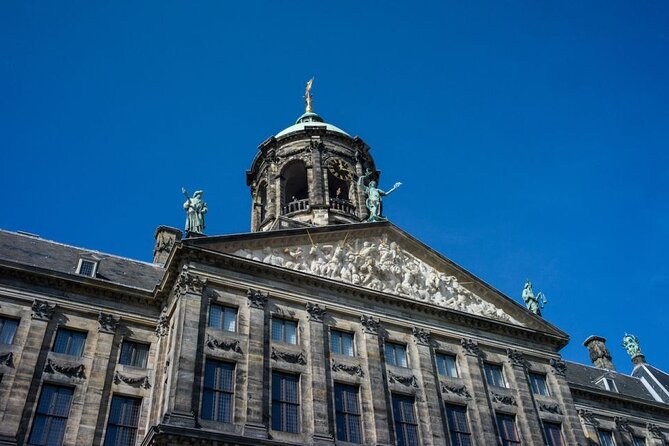
Your walk opens at the National Monument on Dam Square. Even if you’ve seen the square from photos, the guide’s framing changes how you read the place. Dam Square isn’t just a big public square; it’s treated as a launch point for Amsterdam’s origin story.
This stop works well for two reasons:
- You get a historical anchor early. Before you hit the sex-work streets, you understand what kind of city you’re actually walking through.
- It sets expectations. The tour doesn’t start with shock value. It starts with context.
You’ll spend about 10 minutes here, and the admission is free. With a short time limit, don’t expect deep museum-style detail. Instead, think of it as the moment where your brain files Amsterdam into categories: power, monarchy, civic identity, trade, and modern culture.
Royal Palace Amsterdam: the monarchy angle you might not expect
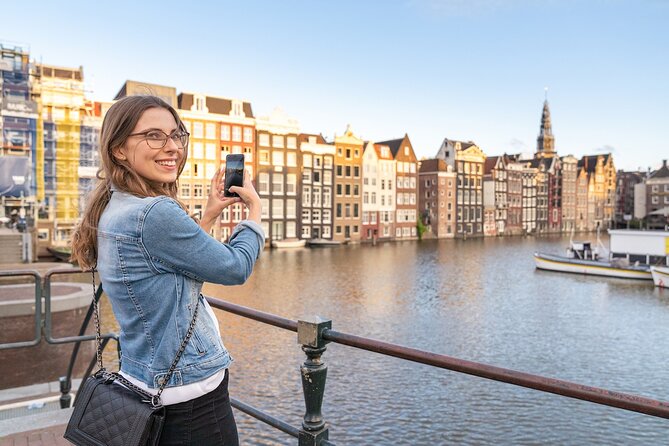
Next comes the Royal Palace Amsterdam, also listed as free to see on the tour. This stop is less about “look at a building” and more about understanding the role of monarchy today—especially how it fits into a city known for progressive policy and street-level freedom.
Why this matters for the rest of the walk: it helps you stop treating Amsterdam as one single personality. It’s not only bikes, coffee, and canals. You also have formal institutions shaping the rules of society.
This is another about 10 minutes kind of stop. You’ll leave with a clearer sense of how old-world authority and modern public life coexist in the same city blocks.
Oude Kerk: connecting Amsterdam’s oldest church to the Red Light story
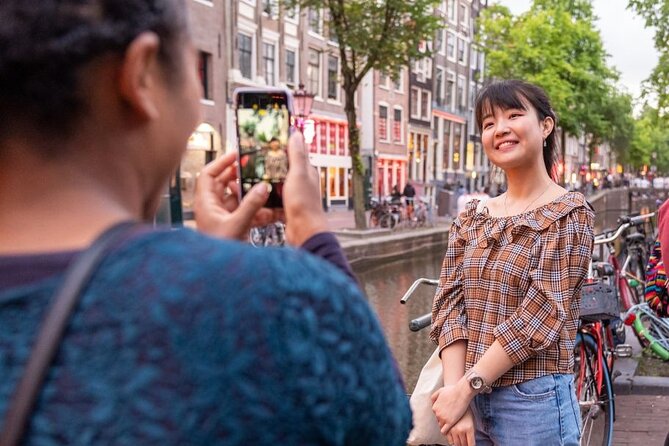
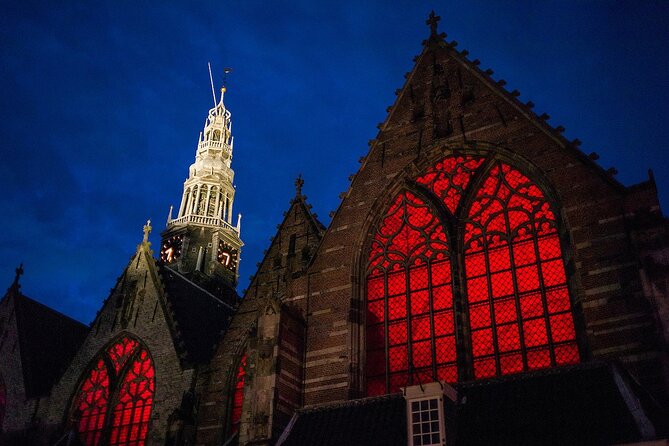
At Oude Kerk, you’re looking at the oldest church in the city while learning about how the establishment of the famous Red Light district connects to that early history. This is a clever stop, because it breaks the myth that this area started as an isolated phenomenon.
Instead, the guide links religious space and city development. You learn how the city’s earliest structures sit near the later social realities that people talk about now.
This part takes about 15 minutes, and it’s also free. The church setting can add a quiet seriousness to a subject that can otherwise turn into gossip. You get a more grounded way to think about why neighborhoods evolve the way they do.
One practical note: keep your voice low and your phone use respectful. Churches are still places of worship and history, even during a broader city tour.
You can also read our reviews of more private tours in Amsterdam



Warmoesstraat: LGBTQ+ nightlife and how the neighborhood identity shifts
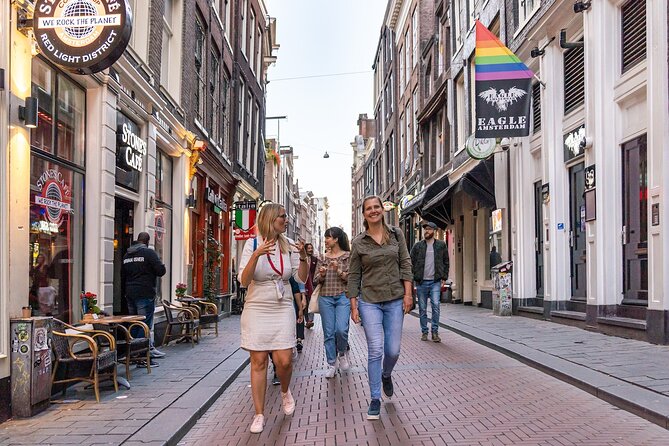
Then you step into Warmoesstraat, described as the LGBTQ+ part of the Red Light district, with sights of some of the infamous gay bars. This stop gives you a wider lens than most Red Light-focused tours.
Why I like this: it shows that the district isn’t only about one topic. It’s also about community and expression. When you walk through Warmoesstraat with context, you start noticing how the social scene is shaped by more than just tourism.
You’ll spend about 10 minutes here. The admission is listed as free, so the value is in what your guide points out—how the neighborhood’s identity shows up in venues and street energy.
If you’re sensitive to loud nightlife zones, keep in mind you may be walking through areas that feel more party-like than museum-like. That’s not a downside; it’s just the nature of the streets.
Beurs van Berlage: trade history behind Amsterdam’s Golden Age
Next up is Beurs van Berlage, where the tour focuses on Amsterdam’s trade history and how the city became one of the richest places in the world during the Golden Age. This is the “money and movement” stop.
It sounds distant from sex-work windows at first. But the connection is useful: cities don’t develop social realities in a vacuum. Trade wealth, migration, and dense urban life shape neighborhoods, economies, and who gets pulled into what industries.
This stop is about 15 minutes, and it’s free. You get enough time to understand the idea without turning it into an architecture lecture.
If you’re the type who enjoys understanding the city’s engine, this is one of the best balance points on the route.
Damrak: the sex-work Q&A stop you’ll remember
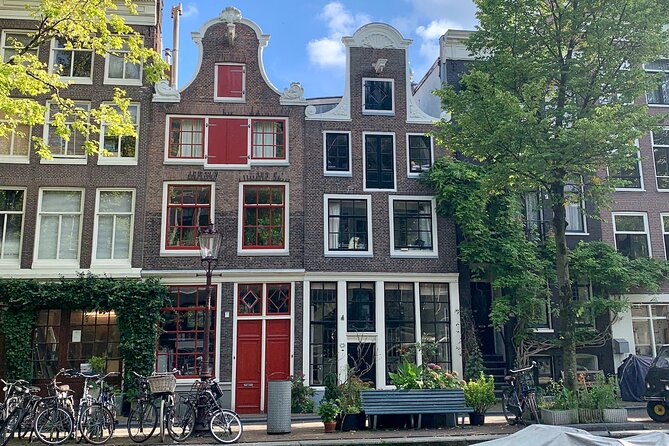
Damrak is the key problem-solving moment. It’s framed as an old harbor area, and your guide uses this stop to answer questions you likely have:
- Is sex work in the Red Light district legal?
- How do costs differ for different services?
- How is the window system regulated, and what do they cost?
And more questions you bring to the walk.
This is the stop where the tour earns its keep. Instead of you guessing from random online takes, you get explanations while you’re standing in the urban context where the system operates.
You’ll spend about 15 minutes here, with free admission. That’s short, so come prepared with at least one or two questions you truly want answered. Even basic questions can lead to useful clarifications when someone local explains them clearly.
This stop also helps you keep a balanced view. Amsterdam’s situation is explained with nuance, and you get space to hear about the dark sides of sex work rather than only the headlines.
Amsterdam Centraal: photo time plus a critical lens
At Amsterdam Centraal, the tour includes a photo moment at a picturesque spot, paired with a critical perspective on the Red Light district. This pairing is intentional: it stops you from treating the windows like a postcard.
You’ll also learn about the dark sides of sex work and the special situation in Amsterdam. That’s a big deal, because a lot of casual sightseeing turns into aesthetic consumption. Here, you’re nudged back toward human reality and social impact.
This stop is about 10 minutes, free to see. Keep it quick, keep your respect level high, and don’t assume that looking is the same as understanding.
If you like your tours with context more than spectacle, this is one of the better placements on the route.
Chinatown walking streets: Amsterdam’s oldest Chinatown in Europe
Then you shift gears to Chinatown, described as the oldest Chinatown of Europe. This stop broadens your sense of Amsterdam’s mix of communities.
What you gain here is breathing room from the heavy subject matter earlier. You also see how Amsterdam’s identity isn’t one-dimensional. It’s layered. You can feel that layering without needing a long detour into a separate neighborhood day.
This part takes about 10 minutes, and it’s free. The guide helps you connect the dots so you don’t only see storefronts—you understand how immigrant and cultural communities shape streets and daily life.
Jolly Joker: coffee-shop history and the politics behind mass tourism
Next comes Jolly Joker, where you learn history and politics of coffee shops in Amsterdam. This is not just a “how to do it” stop. The tour includes an explanation of how coffee-shop culture evolved, plus a critical perspective on how mass tourism affects it.
That combination is important. Coffee-shop culture is often reduced to a single stereotype in travel talk. Here, you get the evolution angle and the social consequences angle in the same walk.
This stop is about 15 minutes, free to enter. It’s also a good place to ask questions about rules and why Amsterdam handles certain issues differently than many other European cities.
If your travel style includes comparing how different places regulate culture, you’ll enjoy this part.
Nieuwmarkt and de Waag: insider tips and a 70s peep show
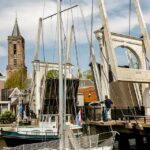
The final major stop is Nieuwmarkt, with a look at de Waag, one of the historic and important buildings in the area. This is a practical ending, because it’s also described as a moment for insider information and personal tips from your guide.
Then there’s a 70s peep show option, plus time to enjoy the district at your own pace after the tour. That matters because it gives you a controlled “taste” of what you came for without locking you into a one-size-fits-all experience.
You’ll spend about 10 minutes at this stop, free admission. The tour’s pacing means the guide can’t cover everything in detail, but the goal is to send you away with enough direction to make good choices on your own.
If you’re uncomfortable with adult entertainment formats, you can choose your own comfort level here. The best move is to treat it as optional, not mandatory.
Your tour ends at Restaurant-Café In de Waag (Nieuwmarkt 4). If you want to return to Dam square, the tour info says you can walk back with your guide afterward.
Tips to get more from the route after you leave the guide
This tour is short, so your strategy matters. Here are a few ways to turn those 2 hours into more than just a checklist.
First, plan your timing. One past highlight you can learn from is that going later can give you more to see if you want a fuller street feel. If your goal is atmosphere and activity, consider booking a later departure.
Second, treat the Q&A as your main homework. Before you meet your guide, jot down your questions about legality, costs, and regulation so you don’t forget them when the walk gets moving. You’ll get more out of the stop if you show up with real curiosity.
Third, keep your expectations balanced. You’re not there for a comedy tour. You’re there for context. Amsterdam has rules and contradictions, and the guide’s job is to connect them in a way you can actually use.
Finally, after the tour ends, don’t rush into the first thing that looks interesting. Use the guide’s tips to choose what fits your comfort level and interests, especially around adult entertainment.
Should you book this Amsterdamliebe private tour?
Book it if you want a guided, street-level orientation to Amsterdam’s Red Light District with context on history, culture, and the practical side of how sex work is discussed and regulated. The private size (up to four) makes it easier to ask questions, and the free-entry stops keep the financial load reasonable.
Think twice if you’re easily put off by adult themes or you dislike direct talk about sex work and coffee-shop politics. Also, if you love wandering with no structure, this one may feel too paced. The route is built to cover a lot in about 2 hours, not to linger.
If you want to see the city’s layers—Dam Square power, Royal Palace monarchy, Oude Kerk history, Warmoesstraat identity, harbor-era questions, Chinatown culture, and coffee-shop politics—this is a strong way to get oriented fast.
FAQ
How long is the Amsterdam Red Light District & City Tour?
It lasts about 2 hours.
What is the group size for this private tour?
It is private for your group, up to 4 people.
What language is the tour offered in?
The tour is offered in English.
Where does the tour start?
The meeting point is National Monument, Dam, 1012 JS Amsterdam, Netherlands.
Where does the tour end?
The tour ends at Restaurant-Café In de Waag, Nieuwmarkt 4, 1012 CR Amsterdam, Netherlands.
Are admissions included for the stops?
All listed stops are listed as free to enter, and there is a 1.50€ tourist tax included.
Is it possible to return to Dam Square at the end?
Yes. If you wish to end back at Dam Square, you can walk back with your tour guide.
Do I get a mobile ticket?
Yes, the tour includes a mobile ticket.
Can I cancel for free, and until when?
You can cancel for a full refund up to 24 hours in advance of the experience’s start time.
Is there any requirement for the minimum number of travelers?
Yes. The experience requires a minimum number of travelers, and if it is canceled for that reason you’ll be offered a different date or a full refund.
Are service animals allowed?
Yes, service animals are allowed.