REVIEW · ANNE FRANK & WWII HISTORY TOURS
Amsterdam: Guided Anne Frank Small-Group Walking Tour
Book on GetYourGuide →Operated by Empire Tours and Productions (Amsterdam) · Bookable on GetYourGuide
If you only know Anne Frank from a book, this walk changes the tone fast. You’ll connect her story to real places in Amsterdam’s Jewish Quarter, from landmark synagogues to stark Holocaust memorial design.
I love how the tour starts at Esnoga (Portuguese Synagogue) and builds outward, so you get context for Jewish life in Amsterdam—not just the tragedy. I also like the pacing: it’s a 2-hour walk with enough stops to ask questions and absorb what you’re seeing.
One thing to consider: this tour is not an Anne Frank House ticket. You’ll finish near the Anne Frank Statue, and you’ll need to buy Anne Frank House entry separately on the official site.
In This Review
- Key points before you go
- Two Hours in Amsterdam’s Jewish Quarter: what this walk really does
- Meeting at Jonas Daniël Meijerplein: find Esnoga first
- Esnoga outside: the Portuguese Synagogue details you’ll actually notice
- Libeskind’s Holocaust Memorial: architecture that forces you to slow down
- Wertheimpark’s Auschwitz Memorial: broken mirrors and a sky you can’t control
- Rembrandt House Museum stop: art, craft, and the neighborhood’s everyday pulse
- Zuiderkerk and its tower: a church that shows Amsterdam’s layers
- Anne Frank Statue near the house: the meaning of where you end
- Guide style: humor, sensitivity, and real responsiveness
- Price and value for $30: what you get in two hours
- Who should book this Anne Frank walking tour
- Bottom line: should you book?
- FAQ
- How long is the Anne Frank small-group walking tour?
- Where is the meeting point?
- Does the tour start at the Anne Frank House?
- Is Anne Frank House entry included?
- What languages are offered?
- What sites do you see on the route?
- Is the tour wheelchair accessible?
- What should I bring?
- Can I cancel for a full refund?
- Is there a reserve now, pay later option?
Key points before you go
- A clear 2-hour route linking Jewish life in Amsterdam to WWII remembrance sites
- Esnoga synagogue outside visit with details you can actually spot from street level
- Daniel Libeskind’s Holocaust Memorial presented with a thoughtful architectural lens
- Auschwitz Memorial broken-mirror installation at Wertheimpark that hits in a quiet, personal way
- Rembrandt House Museum stop that ties art history to the same historic neighborhood story
- A respectful ending at the Anne Frank Statue, just outside the area most people picture
Two Hours in Amsterdam’s Jewish Quarter: what this walk really does
This is one of those Anne Frank tours where the route matters as much as the narration. Instead of only focusing on the hiding place, you’re shown how Amsterdam’s Jewish community lived, worshipped, created art, and then faced persecution. The guide stitches those threads together as you walk.
Expect a small-group experience with an expert historian guide. It’s not a museum day, and it’s not meant to be. It’s a guided walk through key waypoints tied to WWII and Amsterdam’s Jewish history—plus a few stops that help you see the city’s layers, not just the memorials.
The emotional range is wide. You’ll get moments of heartbreak, but also moments that remind you real people had regular lives. That balance is part of the value: you don’t just see monuments. You learn why they’re placed where they are.
You can also read our reviews of more walking tours in Amsterdam


Meeting at Jonas Daniël Meijerplein: find Esnoga first

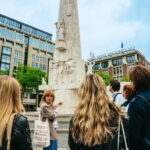
Your day begins at Jonas Daniël Meijerplein 21, 1011 RG Amsterdam. The instructions are simple but worth following closely: look for the large statue of a dockworker in the square, in front of the Portuguese Synagogue (Esnoga). Your guide will be waiting there.
Here’s the practical tip I’d give you: arrive a few minutes early and use the synagogue facade as your anchor. Amsterdam sidewalks can feel like a maze when you’re standing in the middle of a busy street and everything looks historic.
This also matters because the tour starts here, not at the Anne Frank House. If you’re picturing lining up at Anne Frank House first, adjust that expectation right away—your first major context stop is Esnoga, and then the walk moves through the WWII memorial trail from there.
Esnoga outside: the Portuguese Synagogue details you’ll actually notice
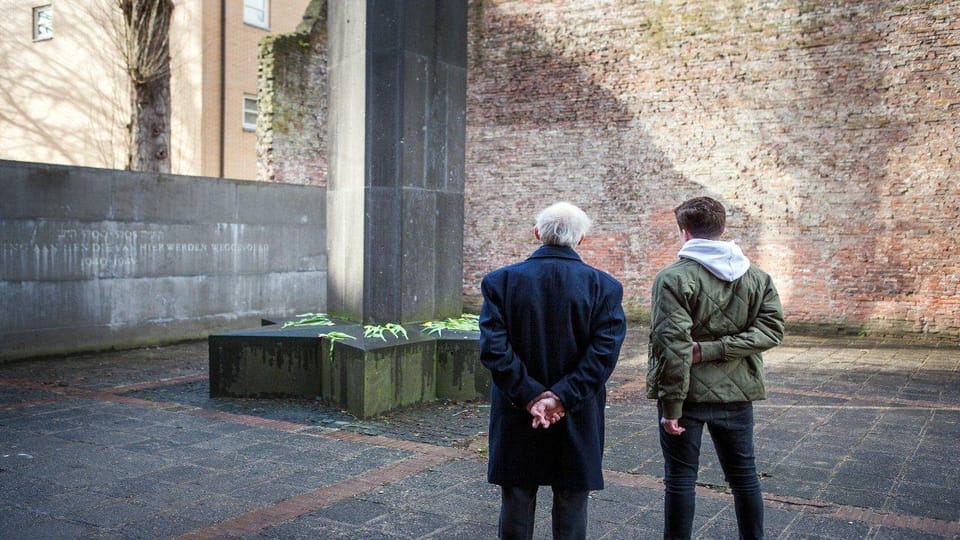
Most people think of the Anne Frank story as a single location. This tour starts by widening the frame, and the first stop sets the stage: the Portuguese Synagogue, a 17th-century Sephardic synagogue known for its grand wooden vaulted ceilings.
You won’t need a ticket to understand why this matters. Your guide points out what you can see from outside and street level—especially the sense of scale. The description for this synagogue highlights that the interior is preserved without modern lights or heating to keep authenticity. Even if you only see the exterior and the general layout, the key takeaway is this: Amsterdam wasn’t only a place where suffering happened. It was also a place where communities built cultural and religious life that lasted for generations.
I also like that starting with a place of worship changes how you process the memorial stops later. You’re not just walking from one somber site to another. You’re learning how persecution cut into something that was lived, not theoretical.
Libeskind’s Holocaust Memorial: architecture that forces you to slow down
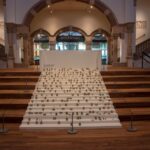
Next comes Daniel Libeskind’s Holocaust Memorial. The guide explains it through meaning, not just design. The memorial is described as a pointed architectural homage to Dutch victims of the Holocaust, and the impact here is in the way the work makes you feel your own smallness and silence.
Memorials can sometimes feel like background decoration if you race through them. The guide format helps you slow down. You’ll be encouraged to reflect as you view the memorial, and you’ll learn what the site is trying to communicate—especially that this remembrance is tied to the Dutch experience, not only a distant European story.
This is also where the tour earns its “expert historian” label. You’re not getting generic WWII facts. You’re getting place-based context: why this memorial belongs in Amsterdam’s story, and what it aims to hold in public memory.
Wertheimpark’s Auschwitz Memorial: broken mirrors and a sky you can’t control
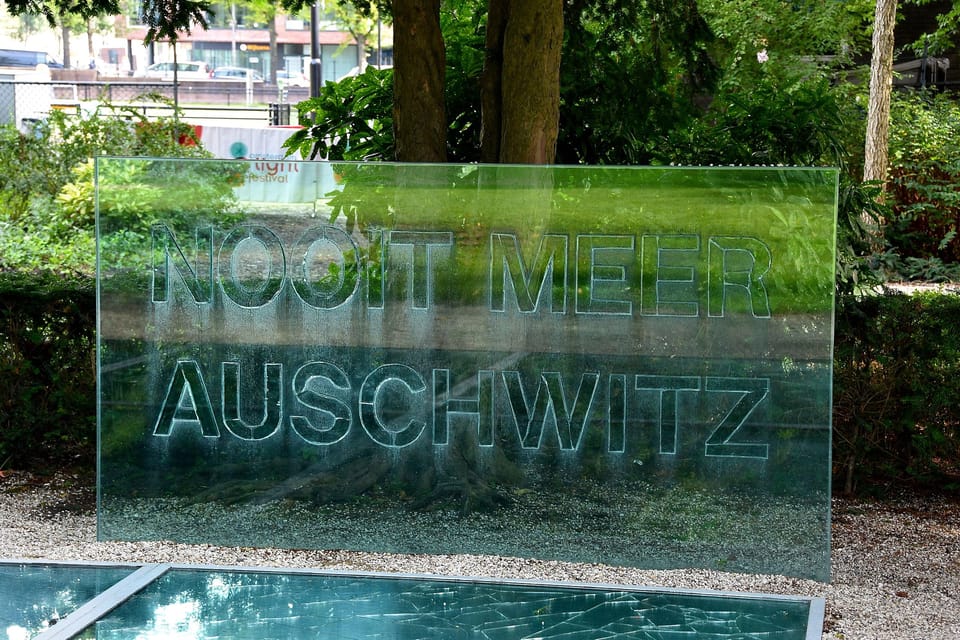
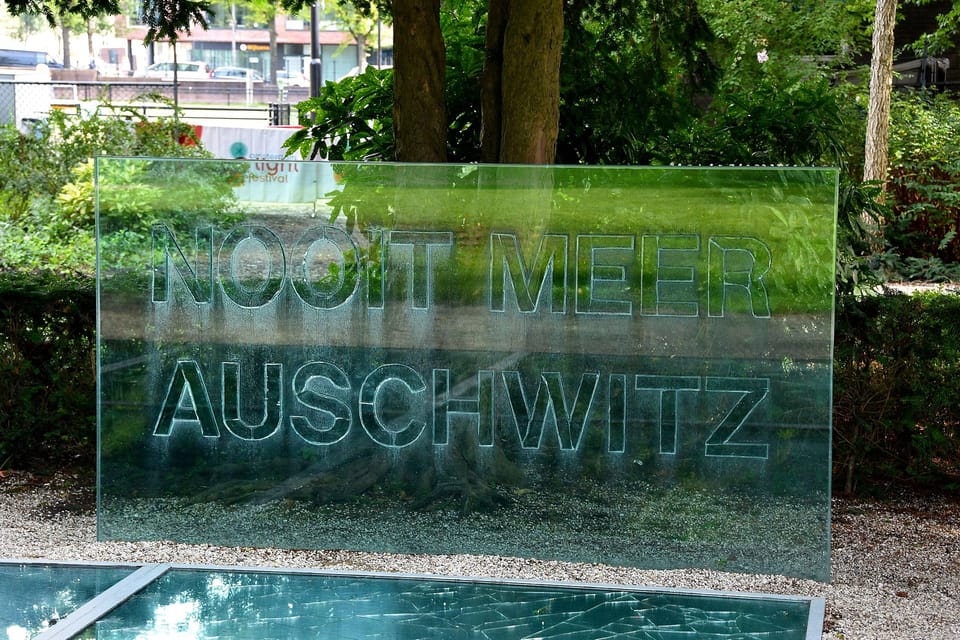
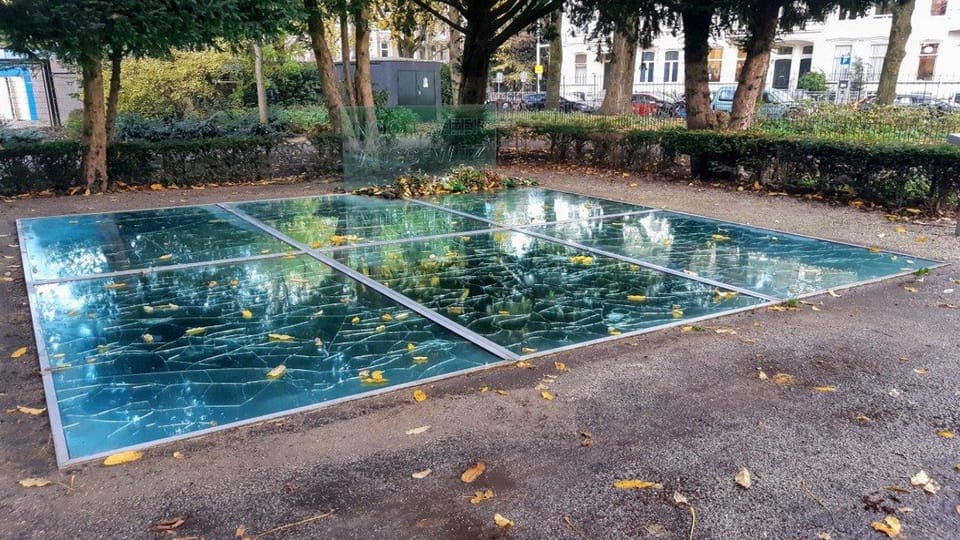
Then you get the installation that people remember: the Auschwitz Memorial in Wertheimpark, made by Jan Wolkers. The concept is simple and devastating—broken mirrors that reflect the sky in fragments.
This stop hits because you can’t manage what you see. In a normal reflection, you control the framing. Here, the reflection is broken. The memorial turns your movement into part of the message, symbolizing shattered lives through the broken geometry of reflected light.
If you’re traveling with kids or teens, this is also the stop where your tone and pacing matter. The guide handles heavy material carefully, with stories and explanation meant to be respectful. You’ll want comfortable listening time here—bring mental space, not just your walking shoes.
You can also read our reviews of more guided tours in Amsterdam




Rembrandt House Museum stop: art, craft, and the neighborhood’s everyday pulse
After the memorial sites, the walk shifts to Rembrandt’s preserved home museum. The idea isn’t to lighten the mood by ignoring the past. It’s to remind you that this same neighborhood produced art and everyday life before catastrophe swallowed normal routines.
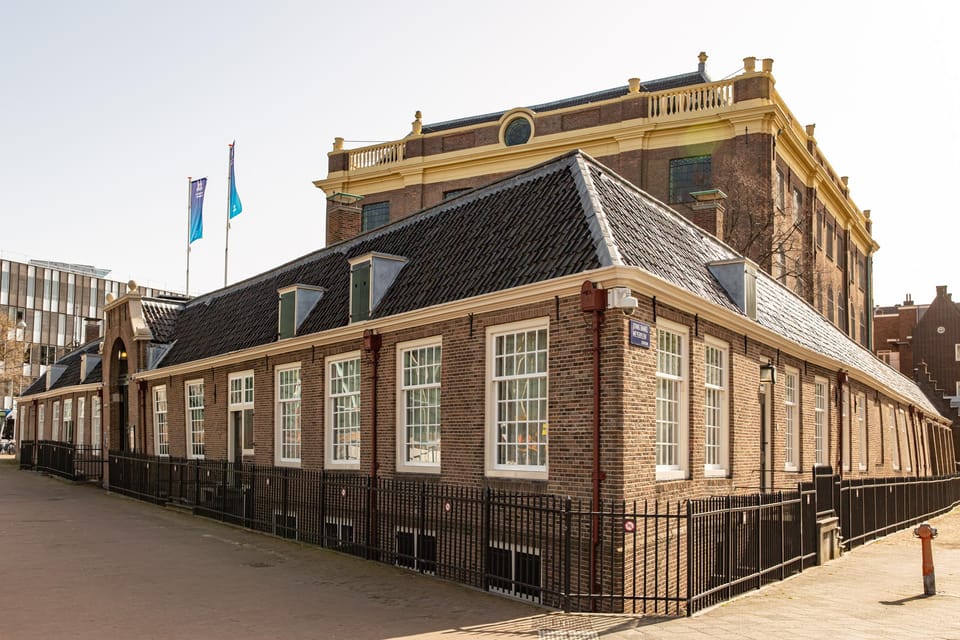
The tour description notes what the museum preserves: etchings, personal items, and painting techniques. Even without turning this into a full museum visit, the guide’s narration connects Rembrandt’s work and presence to the wider city story—how culture and identity formed in Amsterdam long before WWII.
This stop is valuable for a practical reason: it prevents the tour from becoming only a sequence of grief. You start to see how the Jewish Quarter functioned as a real place where people lived, created, and influenced the arts. That context makes the memorials feel sharper, not softer.
Zuiderkerk and its tower: a church that shows Amsterdam’s layers
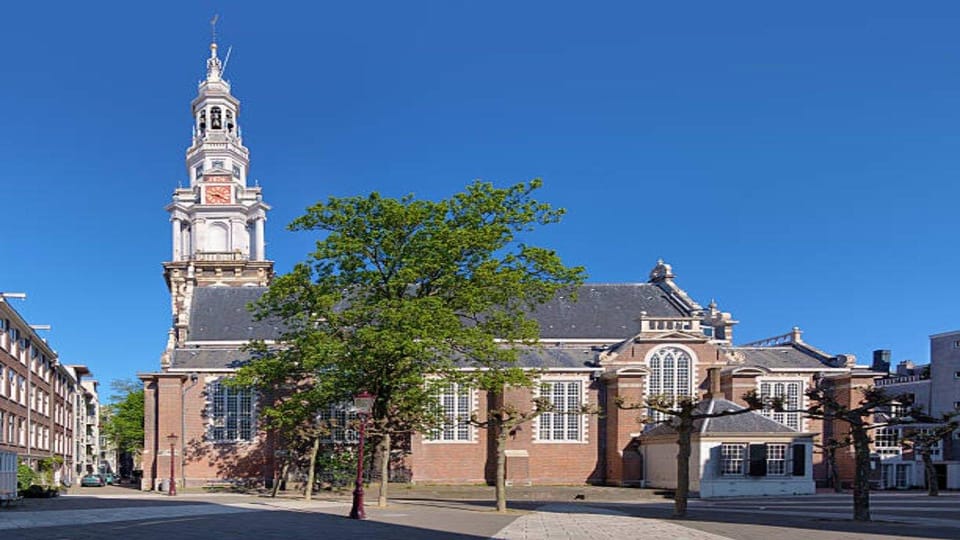
Next up is Zuiderkerk, Amsterdam’s first Protestant church. The tour frames it as part of the city’s architectural evolution—so you see Amsterdam as a changing set of eras, not a frozen postcard.
The church is also described as having an iconic tower that provides city views. Even if you don’t climb, the point is to recognize how towers helped define older city neighborhoods. Today it also functions as a municipal information center, which is a useful detail because it’s an example of how historic buildings keep moving into modern roles.
This stop offers a nice breather between WWII memorial heaviness and the final Anne Frank legacy marker. It also helps you understand that Amsterdam isn’t only one chapter. It has multiple chapters in the same streets.
Anne Frank Statue near the house: the meaning of where you end
The walk finishes with the Anne Frank Statue near the Anne Frank House. The guidance here is clear: it’s a tribute to her legacy and a reminder of what intolerance can do.
This ending matters because you’re not sent off after a memorial-only route. You end in a place that points toward the ongoing human impact of her story. And again, you’ll be mindful of the key logistics: this tour does not include entry to the Anne Frank House. If Anne Frank House is a must for your trip, plan for a separate ticket purchase on the official website.
My advice is to treat this ending like a transition. Take a moment here to settle your thoughts, then decide whether you want the full Anne Frank House experience next—because you’ll likely be emotionally ready for it, or at least more informed about what you’re about to see.
Guide style: humor, sensitivity, and real responsiveness
A huge part of why this tour tends to earn high marks is the guide approach. Names that show up in the tour experience include Duncan, Ana Perez, Sunil, Stefan, Julie, Martina, Lola Stamboulian, Martina, and Joshua. You’ll notice a pattern in how guides work: they keep the storytelling moving, but they also answer questions and adjust based on what your group wants to focus on.
You’ll also see that guides often handle weather with good energy. One account notes starting in terrible conditions and still bringing enthusiasm. Another points out it can get very hot. Translation for you: Amsterdam weather can be unpredictable, and your guide will keep things on track, but you’ll be happier if you show up in comfortable shoes and weather-appropriate layers.
If you’re traveling with friends or family, this tour format is good for mixed interests. You get WWII remembrance, yes. But you also get Amsterdam history, architecture touchpoints, and a Rembrandt connection, all in one continuous walk.
Price and value for $30: what you get in two hours
At $30 per person for 2 hours, the value comes from the concentration of stops. You’re spending paid time at several major points tied to Jewish history, Holocaust remembrance, and Amsterdam’s cultural story—without needing to pay separate tickets for everything in the route (the Anne Frank House itself is the notable exception).
Think of it like this: you’re paying for an expert guide to turn street corners into meaning. Without a guide, you could technically visit some of these places on your own, but you’d lose the “why this site matters” connections that turn a list of locations into a coherent experience.
This price also works well if you want a first pass through the Jewish Quarter before committing to any longer or ticketed museum time. Two hours is a manageable block for most itineraries, and it helps you plan the rest of your day with better context.
Who should book this Anne Frank walking tour
This tour is a strong fit if you:
- want a structured way to understand Anne Frank’s story in Amsterdam’s wider WWII context
- prefer walking over transit-heavy sightseeing
- like history that connects places to people, not just dates on a timeline
- want a small-group format with room for questions
It may be less ideal if you:
- only want Anne Frank House specifics and aren’t interested in the rest of the Jewish Quarter context
- need a completely non-emotional experience. This walk includes heavy themes and memorial reflection
If you’re the type who likes to see the city while learning, you’ll probably enjoy this. If you want purely practical sightseeing with minimal emotional weight, you might prefer something lighter and save this topic for a day when you have extra quiet time afterward.
Bottom line: should you book?
Yes—if your goal is to understand Anne Frank’s story through the streets and memorials around it, this is a solid booking. The route is tight, the stops are meaningful, and the guide-driven narration is built for respectful reflection.
Just go in with the right expectation: you’re not getting Anne Frank House entry here. You’re getting the context that makes that later ticket (if you choose it) land harder and make more sense.
If you want, tell me your travel dates and whether you also plan to visit Anne Frank House on the same trip. I can suggest a good order for your day so you don’t feel rushed.
FAQ
How long is the Anne Frank small-group walking tour?
It runs for 2 hours.
Where is the meeting point?
Meet at Jonas Daniël Meijerplein 21, 1011 RG Amsterdam, by the large dockworker statue in the square right in front of the Portuguese Synagogue (Esnoga).
Does the tour start at the Anne Frank House?
No. This tour does not start at the Anne Frank House, and it is not the same as an Anne Frank House admission ticket.
Is Anne Frank House entry included?
No. Anne Frank House entry is not included. Tickets must be purchased on the official website.
What languages are offered?
The tour is listed as English and Spanish. French is also mentioned in the tour description.
What sites do you see on the route?
You’ll explore the Portuguese Synagogue area outside, the Daniel Libeskind Holocaust Memorial, the Auschwitz Memorial at Wertheimpark with broken mirrors, the Rembrandt House Museum area, Zuiderkerk, and end near the Anne Frank Statue.
Is the tour wheelchair accessible?
Yes, the tour is listed as wheelchair accessible.
What should I bring?
Bring comfortable shoes and clothing suited to the weather.
Can I cancel for a full refund?
Yes. The tour offers free cancellation up to 24 hours before the start time for a full refund.
Is there a reserve now, pay later option?
Yes. You can reserve now & pay later, keeping travel plans flexible.