REVIEW · VAN GOGH MUSEUM TOURS
Van Gogh and Rembrandt Immersive Experience Entry Amsterdam
Book on Viator →Operated by Tours & Tickets · Bookable on Viator
Art meets church light shows in Amsterdam. That’s what makes this Van Gogh and Rembrandt experience in Amsterdam so different: it turns the Noorderkerk into a 360° moving canvas where Van Gogh’s fascination with Rembrandt plays out in light, sound, and artwork.
I especially love the storytelling through Van Gogh’s letters set against images of both artists. I also like that you’re not stuck in one rigid spot; you can sit, lie down on beanbags, or stroll around as the show unfolds.
My only real caution is visibility and comfort. Some parts of the lighting setup can block views, and a few seating spots (including beanbags) aren’t as comfortable for everyone, so plan your viewing spot with care.
In This Review
- Key things to know before you go
- Why the Noorderkerk is the perfect backdrop
- The story: Van Gogh’s Rembrandt obsession, told with letters and art
- Inside the show: what the 360° canvas actually feels like
- Plan your seat: beanbags are fun, but comfort varies
- Timing and pacing: about an hour, but it can feel shorter
- What you’ll see: sunflowers, angels, blossoms, and the Van Gogh vibe
- Price and value: $19.74 can be a bargain or a gamble
- Who should book this show?
- Practical Amsterdam tips before you go
- Should you book Van Gogh and Rembrandt in Amsterdam?
- FAQ
- How long is the Van Gogh and Rembrandt Immersive Experience?
- What ticket do I receive?
- Where does the experience take place?
- Is this the official Van Gogh Museum?
- How much does it cost?
- Do I get confirmation after booking?
- Is free cancellation available?
- Are service animals allowed?
- Is it near public transportation?
- Is the experience suitable for most travelers?
Key things to know before you go
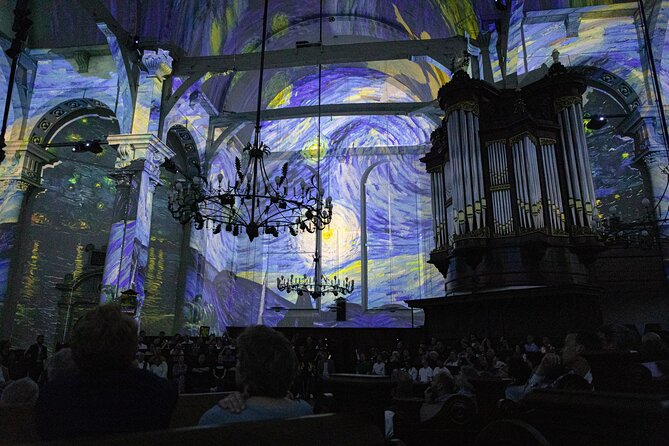
- 360° projections across the entire church interior (walls to ceiling)
- Van Gogh’s letters to his brother used to connect the two artists
- Beanbags and seating inside the church so you can choose your comfort level
- A national-monument setting that changes how the art feels
- Production style ranges from wow to just okay, depending on your expectations
- Check your entry time if your ticket platform shows a different slot than the venue’s actual schedule
Why the Noorderkerk is the perfect backdrop
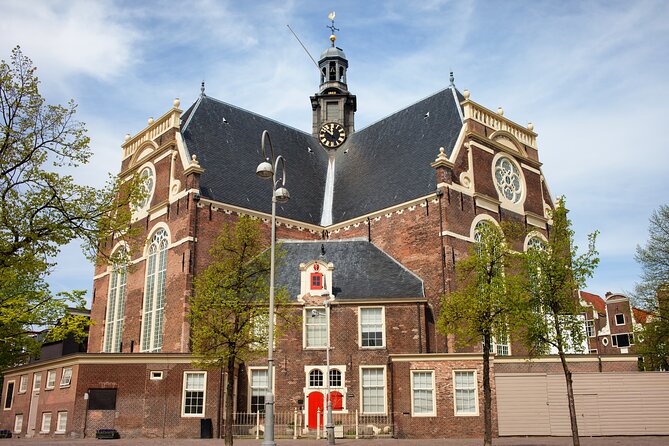
Amsterdam has plenty of museums, but this is different because the venue is the point. The show runs inside the Noorderkerk, a monumental church where the architecture gives you a ready-made “screen.” Instead of watching art from a distance, you’re placed in the middle of it—surrounded by the visuals.
That setting matters because it turns art history into something physical. When sunlight-like colors and shapes move across curved surfaces and high ceilings, the emotional impact lands faster than a standard gallery wall ever will. It’s not just about seeing images; it’s about how the space frames your attention.
The church also helps you understand why Van Gogh and Rembrandt feel connected. Even if you already know their names, the show nudges you to see their relationship as a chain of looking, copying, admiration, and inspiration—not as two separate museum stops.
You can also read our reviews of more tours and experiences in Amsterdam.

The story: Van Gogh’s Rembrandt obsession, told with letters and art
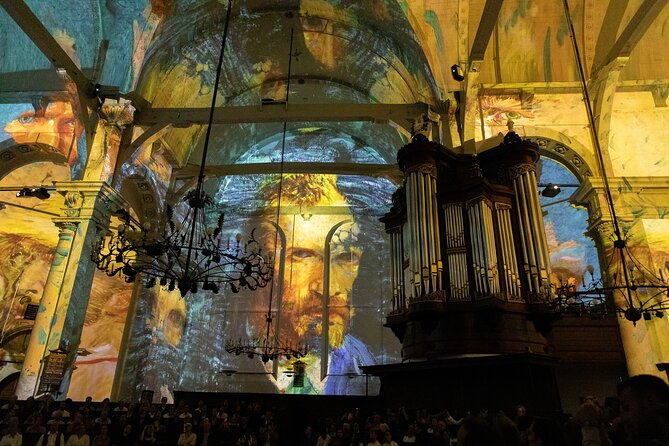
The experience follows how Van Gogh became captivated by Rembrandt van Rijn, and how that fascination shaped what Van Gogh made and how he thought about painting. The thread running through it all is communication—specifically Van Gogh’s letters to his brother—which gives the story a personal, human pace.
Then the show layers in the visual side using artwork connected to both painters. You don’t just get facts; you get a sense of what Van Gogh noticed. The idea is that Rembrandt wasn’t only someone Van Gogh admired from afar—Rembrandt became a model, a reference point, and even a kind of creative spark.
One detail I like is how the show leans into the sunflower-and-blossom symbolism often associated with Van Gogh’s world, while keeping Rembrandt’s influence as the anchor. You’ll feel the arc: admiration first, then learning, then transformation.
If you’re the type who enjoys art more when you understand the motivation behind it, this format works. If you only want a strict, chronological art-history lesson, you might find the pacing more emotional than academic.
Inside the show: what the 360° canvas actually feels like
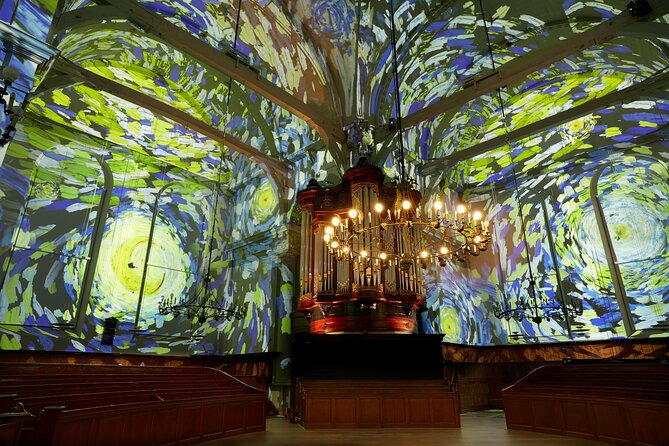
This presentation uses the entire interior of the church, from the walls up to the brim, creating a moving 360° canvas. That means you’re not watching projections in one direction only. The visuals shift around you, so your attention naturally moves too.
The show is built like a sound-and-light performance rather than a slideshow. Expect visuals paired with audio storytelling, and expect the church to act like part of the soundtrack. This is where the “church as theater” concept becomes real.
Some people will love that effect immediately. Others prefer clear sightlines and might get frustrated if parts of the lighting equipment get in the way. Either way, treat it like a theater production: your experience depends on where you sit or lie.
Plan your seat: beanbags are fun, but comfort varies
You’re given a choice: beanbags to lie down (for a couch-on-the-ceiling vibe) or seating options around the space. This is a great setup because it matches different viewing styles. If you want to look up a lot and relax your body, lying down can feel surprisingly immersive—like you’re inside the imagery.
If you’d rather keep your neck and back happy, go for a seat that gives you a stable viewing angle. In fact, this is where you can prevent most of the “I can’t really see it” problems. If lighting fixtures or overhead elements obscure part of your view, simply relocating within the available areas can help.
One practical tip: arrive with enough time to find a spot you like. Don’t assume the first open space will be ideal. A few people noted comfort issues and visibility problems, so your goal is to pick the best compromise between comfort and sight.
Timing and pacing: about an hour, but it can feel shorter
The experience runs for about 1 hour. Reviews also point out a shorter feel—around 45 minutes—which suggests the show may play at different lengths depending on the schedule and your entry slot.
Either way, it’s not a full-day commitment. That makes it a smart add-on when you already plan to visit museums or neighborhoods like the Jordaan or Museumplein area. You can fit it in as a focused “art night” without sacrificing an entire morning.
Pacing is also part of the result. Some viewers felt the production was beautiful but not overwhelming enough to justify rushing back. Others loved it because it’s an unusual way to experience Van Gogh’s words paired with images of Rembrandt’s influence. Your enjoyment will depend on whether you want a cinematic art mood or a bigger, more detailed production.




What you’ll see: sunflowers, angels, blossoms, and the Van Gogh vibe
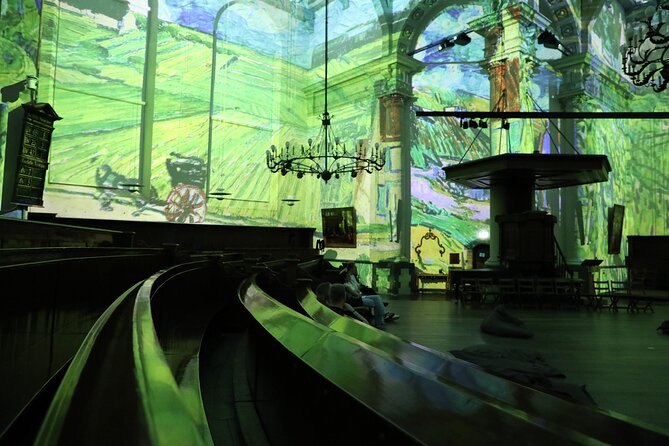
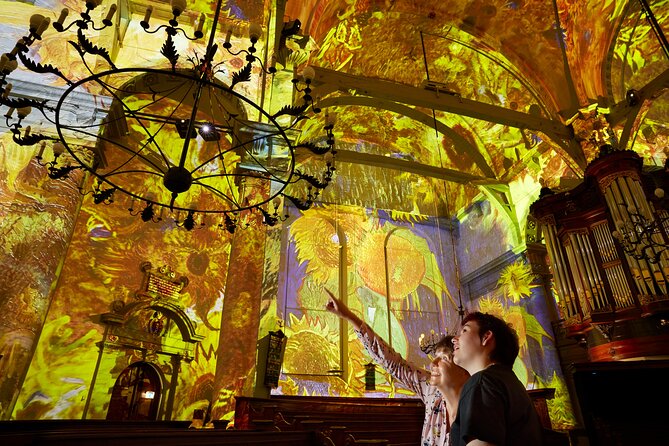
The show’s imagery includes sunflowers, angels, and blossoms—strong visual signals that connect to Van Gogh’s style and symbolism. That matters because it sets expectations. Even if the story is about Rembrandt’s influence, the emotional color comes from Van Gogh’s world.
At the same time, the production aims to connect those Van Gogh images to the Rembrandt thread, using both painters’ artwork. In other words, you’re not just looking at decorative projections; you’re watching the story try to build a bridge between the two.
If you’re familiar with the artists, you’ll likely enjoy spotting the emotional links. If you’re less familiar, the show is still designed to be accessible, using letters and clear thematic transitions rather than assuming deep prior knowledge.
One caution: the format relies heavily on projected graphics and audio. A few people felt the technology could be stronger, especially for graphics and video. So don’t expect it to behave like a top-tier cinema screen. Think “high-impact performance in a historic church,” not “museum-grade digital display.”
Price and value: $19.74 can be a bargain or a gamble
At $19.74 per person, this is priced like a short evening attraction rather than a major museum ticket. The value depends on what you want.
If you love art in unusual formats—letters plus projections plus a dramatic setting—this can feel like good value. You’re paying for a transformation: the Noorderkerk becomes part theater, part artwork, and part storytelling device. That kind of atmosphere is hard to find elsewhere.
If you want a deep, detailed explanation of art technique, you might feel underwhelmed. Some comments were blunt: not breathtaking, not a must-see, and not worth the money if you’ve seen similar shows elsewhere. That doesn’t mean it’s bad—it means your expectations matter.
My advice: treat it as an arts-and-performance experience, not as an official Van Gogh Museum alternative. (Important note: this is not the official Van Gogh Museum.) If you come for the theatrical connection between the painters, you’re more likely to feel satisfied.
Who should book this show?
This is a great fit for:
- People who like art stories told through emotion and context, not only chronology
- Travelers who enjoy performance-style museum alternatives
- Anyone who’s curious about the connection between Van Gogh and Rembrandt beyond surface facts
- Couples and solo travelers who like a short, concentrated activity
You might skip it if:
- You need perfect sightlines all the time
- You hate any situation where you might have to adjust your viewing spot during the show
- You prefer high-resolution, museum-style digital experiences
- You’re looking for a long, technical lecture on art history
Practical Amsterdam tips before you go
A few logistics points can make the difference between smooth and stressful.
You get a mobile ticket, which is convenient on a busy day. The venue is near public transportation, so you won’t be stuck planning an elaborate commute.
Also, plan for time accuracy. If you booked a specific slot through a third-party platform, double-check the opening/closing times for your entry window. In practice, venues sometimes operate with slot rules that don’t match what ticket pages imply.
For comfort, bring a flexible mindset. You’re not choosing a stadium seat; you’re choosing a viewing area inside a church. If you’re the kind of person who thinks beanbags sound great in theory but you need to sit comfortably for 45–60 minutes, pick your spot carefully.
Should you book Van Gogh and Rembrandt in Amsterdam?
Book it if you want an art-related night that feels unusual and cinematic, with Van Gogh’s letters as the narrative backbone and the Noorderkerk doing half the work for the mood. At $19.74, it’s also an easier sell for budget-conscious travelers who still want something memorable.
Skip or reconsider if you’re mainly chasing a highly detailed, museum-standard production or if you strongly prefer a guaranteed unobstructed view. Because the show runs around you and depends on where you place yourself, your personal sightline experience will shape your rating.
If you’re torn, here’s the simple decision rule: if the idea of combining sound, light, and story in a church sounds exciting to you, you’ll probably have a good time.
FAQ
How long is the Van Gogh and Rembrandt Immersive Experience?
It runs for about 1 hour. Some schedules and experiences may feel closer to around 45 minutes.
What ticket do I receive?
You’ll have a mobile ticket.
Where does the experience take place?
It takes place in Amsterdam at the Noorderkerk.
Is this the official Van Gogh Museum?
No. It’s not the official Van Gogh Museum.
How much does it cost?
The price is listed as $19.74 per person.
Do I get confirmation after booking?
Yes. Confirmation will be received at the time of booking.
Is free cancellation available?
Yes. You can cancel for a full refund up to 24 hours in advance.
Are service animals allowed?
Yes, service animals are allowed.
Is it near public transportation?
Yes, it’s near public transportation.
Is the experience suitable for most travelers?
Yes, most travelers can participate.