REVIEW · RIJKSMUSEUM TOURS
Skip-the-line Rijksmuseum & Rembrandt House Semi-Private 8ppl Max
Book on Viator →Operated by Babylon Tours Amsterdam · Bookable on Viator
A great day in Amsterdam starts with art. This semi-private route pairs skip-the-line access to the Rijksmuseum with a follow-up walk that leads straight into Rembrandt’s world. You’ll see major works, then get the street-level context—canals, neighborhoods, and landmarks—before stepping into Rembrandt House Museum.
What I like most is the combination: you’re not just looking at paintings, you’re learning how the city and the artist connect. Second, this runs as a small group up to 8, so your guide can actually answer questions and keep the pace from turning into a shuffle. One thing to consider: it’s a long, on-your-feet plan (about 5.5 hours, rain or shine) and it is not recommended for wheelchair users or those with walking disabilities.
In This Review
- Key Things This Tour Does Especially Well
- A 5½-Hour Art + Canals Plan That Actually Helps You See Amsterdam
- Skip-the-Line at the Rijksmuseum: What It Really Buys You
- Rijksmuseum Viewing Targets: The Works You’ll Want to Find Fast
- Museum Rules You Should Plan For (So You Don’t Get Stuck at Security)
- Spiegelgracht, Keizersgracht, and the Canal Walk That Sets the Scene
- Museum Van Loon: A Rembrandt Connection Without the Full Museum Commitment
- Bloemenmarkt and the Munttoren: Flower Market + Medieval Gate Remnant
- Rembrandtplein and the Night Watch Cast: Art Reappearing in Public Space
- The Amstel and the Skinny Bridge vs. the Blue Bridge
- Stopera: When City Hall and Opera Share the Same Building Complex
- Jodenbuurt and the Former Jewish Neighborhood: Walking Through Preserved Memory
- Museum Het Rembrandthuis: Where the Artist’s Life Becomes the Exhibit
- Price and Value: Is $287.18 a Fair Deal?
- Who This Tour Fits Best (And Who Might Prefer Something Else)
- Tips to Make Your Day Smoother
- Should You Book This Skip-the-Line Rijksmuseum + Rembrandt House Tour?
Key Things This Tour Does Especially Well
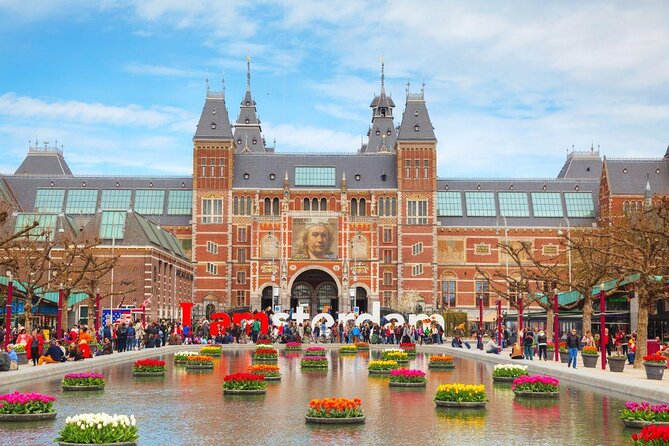
- Skip-the-line entry at the Rijksmuseum helps you start seeing art sooner
- Small group size (max 8) makes the guide easier to talk with
- Rembrandt House Museum is a focused, personal look at the artist’s life (not just another museum stop)
- A smart canal-and-neighborhood walk through areas like Spiegelkwartier and Jodenbuurt
- Your guide may tailor pacing, with note that some museum rooms can be quiet with speech restrictions
- You’ll get practical viewing targets like The Night Watch and Vermeer’s The Milkmaid
A 5½-Hour Art + Canals Plan That Actually Helps You See Amsterdam
This tour is built for people who want more than tick-the-box sightseeing. You start at Cobra Café and spend the morning rooted in the Rijksmuseum’s big-name Dutch masterpieces. Then you walk out into the city on canals and squares that connect the dots—how people lived, how neighborhoods evolved, and why certain locations matter for Rembrandt’s story.
The total time is about 5 hours 30 minutes, and it includes a lunch break. That matters because Amsterdam museums can eat your whole day. Here, you get enough time to enjoy the art without feeling like you’re rushing only to stand in another line.
You can also read our reviews of more private tours in Amsterdam


Skip-the-Line at the Rijksmuseum: What It Really Buys You
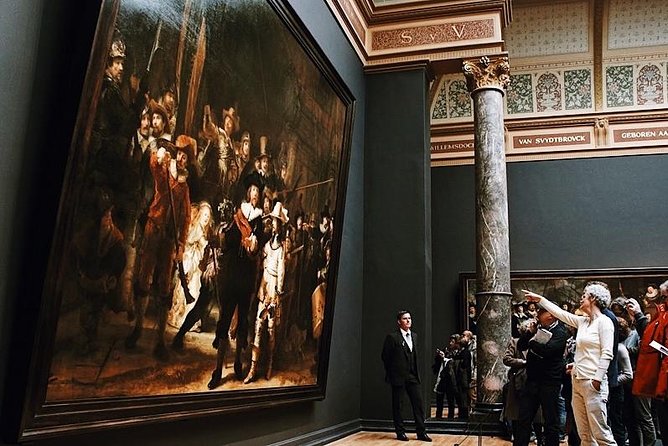
The headline is priority admission—so you avoid the most painful part of the visit: waiting. In practice, that means you spend more time in galleries and less time watching the clock. It also helps you get to the highlights while your energy is still high.
That said, don’t expect zero waiting in every situation. The tour notes that due to security measures at many attractions, some lines may still form even with skip-the-line or no-wait access. So your best move is simple: arrive a little early, keep your bag situation ready, and be prepared for security checks.
Rijksmuseum Viewing Targets: The Works You’ll Want to Find Fast
The Rijksmuseum is huge, so having a guided game plan makes all the difference. Your guide’s job is to help you see what matters and how to look at it. You’re guided through Dutch history using selected paintings and artifacts from around 8,000 objects on display.
Here are the specific highlight names you can expect to anchor your visit:
- Rembrandt masterworks
- The Night Watch
- The Jewish Bride
- The Syndics of the Drapers’ Guild
- Vermeer’s The Milkmaid
- A 19th-century library
- 17th-century dollhouses, along with globes, a ship replica, and Delft ceramics
If you’re a first-timer, I love that the tour doesn’t just throw fame at you. It adds texture—like 17th-century dollhouses that show domestic life in miniature, or the Delft ceramics that link art to trade and everyday objects. Even the 19th-century library is a reminder that museums aren’t only for paintings; they’re about how knowledge was stored and shared.
Practical note: there’s mention that some rooms are quiet or have restricted speaking rules. Your guide should flag those areas before you enter, so you can lower your voice and keep things smooth.
Museum Rules You Should Plan For (So You Don’t Get Stuck at Security)
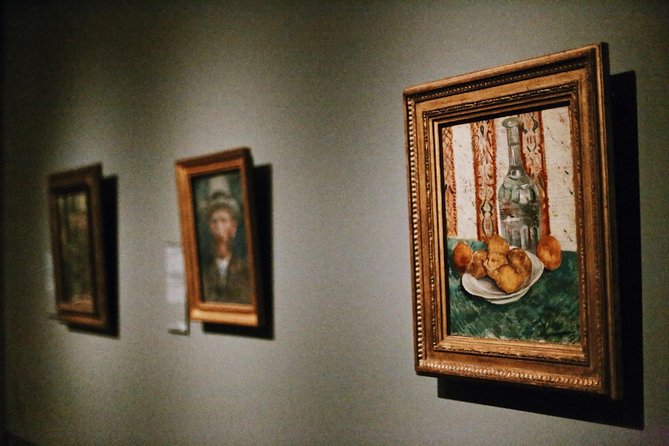
A few rules can make or break your day, especially in the Rijksmuseum. The tour states:
- No large bags or suitcases are allowed inside the museum
- Only handbags or small, thin bag packs are allowed through security
- Appropriate dress is required for entry into some sites on this route
That means you should pack light. If you arrive with a bulky bag, you may lose time sorting things out. Bring what you actually need for the day—water, a phone, a layer—then keep the rest minimal.
Spiegelgracht, Keizersgracht, and the Canal Walk That Sets the Scene

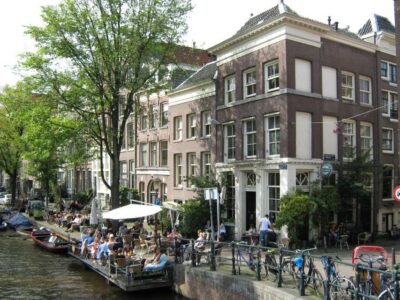
After the Rijksmuseum, you switch from galleries to streets. You’ll gather near Cobra Café and then head toward the Singelgracht canal and onward to the Spiegelgracht. This is one of those moments where the city starts explaining itself.
A few reasons this walking portion is worth your attention:
- Canal-side design and placement tells you how Amsterdam managed water and defense
- The Spiegelgracht is part of the UNESCO Canals of Amsterdam area
- You pass art galleries and antique spaces, so you’re not just walking past postcards—you’re seeing how the neighborhood functions today
Time-wise, these segments are short—around 10 minutes each for several stops. So don’t expect long photo breaks. Do expect quick course-corrections from your guide: why a canal is there, why it’s named, and how to recognize what you’re looking at.
You can also read our reviews of more tours and experiences in Amsterdam






Museum Van Loon: A Rembrandt Connection Without the Full Museum Commitment
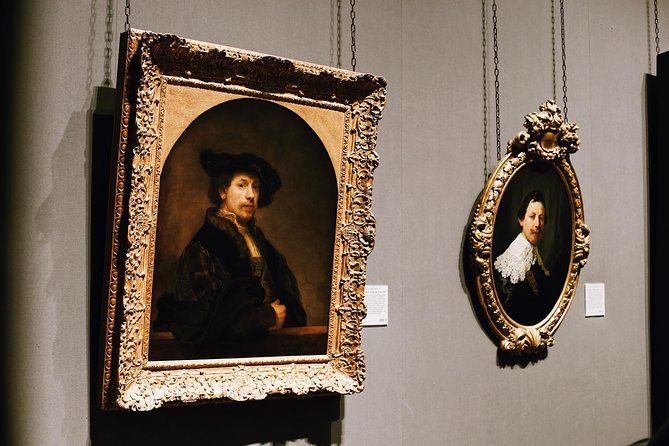
You’ll make a brief stop at Museum Van Loon, a canal-side house on the Keizersgracht. The tour frames it as the home of Ferdinand Bol, Rembrandt’s favorite pupil.
Even with only about a 10-minute stop, the value is context. Bol matters to Rembrandt because the story of Dutch art isn’t only about one famous face—it’s about students, workshops, and influence. If you like art that has family trees, this short moment fits nicely between major museum highlights.
Bloemenmarkt and the Munttoren: Flower Market + Medieval Gate Remnant
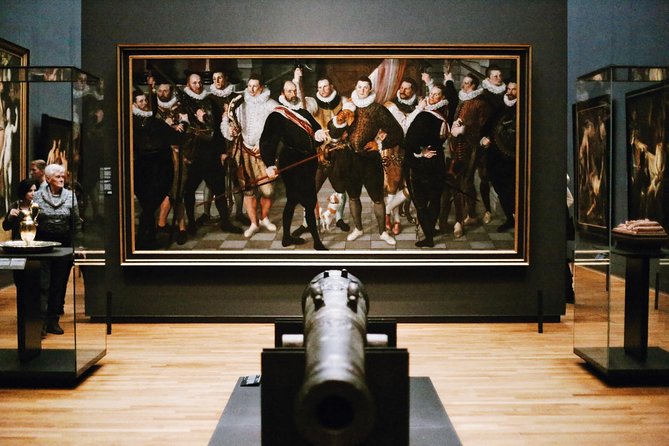
Next up is the Bloemenmarkt (flower market) where you’ll see the Munttoren, often called the Mind Tower. The tour notes it was originally part of one of the main gates in Amsterdam’s medieval city wall.
This is a quick sensory break. You’ll likely get a burst of color and activity at the market, then you pivot back to architecture and layers—what used to be defensive infrastructure becoming part of everyday city life.
The practical takeaway: wear comfortable shoes. Even if each stop is brief, Amsterdam sidewalks add up fast.
Rembrandtplein and the Night Watch Cast: Art Reappearing in Public Space
When you hit Rembrandtplein, you’re stepping into a square named for the painter. Here you’ll see a bronze-cast representation of The Night Watch that was used for Rembrandt’s 400th birthday celebrations in 2006.
I like this kind of stop because it changes your frame. In a museum, The Night Watch is a painting. Outside, it becomes a landmark—something the city keeps visible and turns into shared identity.
If you’re paying attention, it also helps you connect the museum stop to the walking stops. You’re not switching topics every 30 seconds; the story keeps flowing.
The Amstel and the Skinny Bridge vs. the Blue Bridge
You’ll also walk by the Amstel River and see:
- the Skinny Bridge, one of the most famous bridges in Amsterdam, built in 1934
- the Blue Bridge, which is named after a wooden blue bridge from the 17th century
This portion is short—about 10 minutes—but it’s useful. Names in Amsterdam are often time capsules. A bridge name can reveal what the area looked like centuries ago. Even if you only catch a partial view from the sidewalk, your guide’s explanations help you spot what matters.
Stopera: When City Hall and Opera Share the Same Building Complex
From there, you’ll pass the Dutch National Opera and Ballet area, known for the Stopera building complex that houses both the city hall and the opera and ballet. The tour notes its construction took at least 60 years.
This is another context stop rather than an entrance stop. It helps explain Amsterdam’s style: big public institutions built with the idea that civic life and culture belong side by side.
Jodenbuurt and the Former Jewish Neighborhood: Walking Through Preserved Memory
The tour then heads toward Jodenbuurt, the former Jewish neighborhood. The tour explains that the area contains historically important buildings that are preserved and managed by the Jewish Cultural Quarter.
This is one of the more meaningful stretches because it shifts the focus from art objects to people and place. Even with a brief 10-minute walk, your guide should help you frame what you’re seeing—how architecture and preservation tell a story, and why this neighborhood still matters.
Museum Het Rembrandthuis: Where the Artist’s Life Becomes the Exhibit
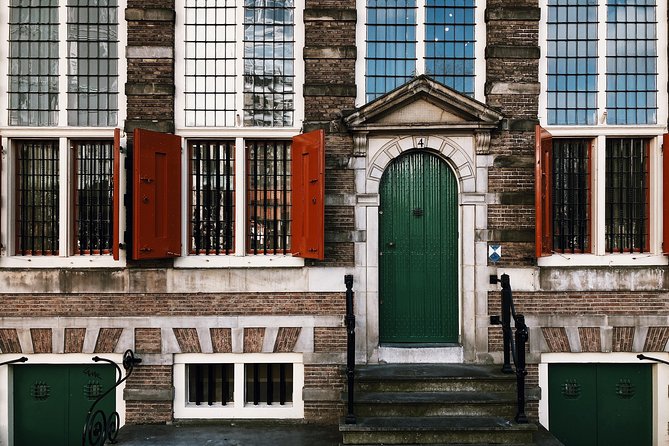
Finally, you end at Rembrandt House Museum (Het Rembrandthuis) in Jodenbreestraat. This is the heart of the Rembrandt connection: Rembrandt lived and worked there between 1639 and 1656.
You’ll tour the house and museum (about 1 hour), and the collection includes Rembrandt’s etchings and paintings of his contemporaries. What makes this stop so satisfying is the scale. A house museum naturally feels more human than a grand gallery hall. The art isn’t floating in a vacuum; it’s connected to rooms where work happened.
In the same day you’ve just seen The Night Watch and other masterpieces at the Rijksmuseum, so this ending feels like a follow-through: you go from the art to the life, from the public reputation to the working space.
Price and Value: Is $287.18 a Fair Deal?
At about $287.18 per person for roughly 5.5 hours, this isn’t a budget tour. But it does line up with what you’re getting.
Here’s the value case:
- All entrance fees are included, including the Rijksmuseum and Rembrandt House Museum
- You get an English-speaking professional guide
- The group cap of 8 people keeps it from feeling like a cattle line
- The route combines two major art institutions plus a guided city walk, so you’re not paying for just one museum
Where you should be honest with yourself is this: if you’re the kind of traveler who enjoys wandering alone and reading labels slowly, you might get less out of a guided format. But if you want structure—highlight lists, place-based context, and the ability to ask questions—this price starts to make sense fast.
Who This Tour Fits Best (And Who Might Prefer Something Else)
This tour is ideal if:
- you want a strong first visit to the Rijksmuseum without getting lost in the building’s size
- you care about Rembrandt beyond the famous works
- you like learning through walking, not only sitting in galleries
- you prefer a small group where your guide notices you
It’s less ideal if:
- you have limited mobility or rely on a wheelchair (the tour explicitly notes it’s not recommended)
- you struggle with steady walking for a half-day
- you want a fully flexible pace (the schedule includes multiple quick city stops)
Tips to Make Your Day Smoother
A few small actions help you get the most out of your morning:
- Bring only a small bag that fits museum security rules
- Wear comfortable shoes for canal sidewalks and square crossings
- Use your phone before you start—your booking requires a mobile phone number with country code
- If you’re sensitive to quiet rules in museums, remember some rooms may restrict speaking, and your guide should handle that
Also, keep in mind the Rijksmuseum can have occasional closures without warning. If the museum opening time is delayed more than 1 hour from the tour starting time, the tour notes you’ll be provided an appropriate alternative, but refunds or discounts aren’t offered in those cases.
Should You Book This Skip-the-Line Rijksmuseum + Rembrandt House Tour?
I’d book it if you want your Amsterdam art day to feel guided, efficient, and connected. The best part is the pairing: the Rijksmuseum gives you the big masterpieces like The Night Watch and The Milkmaid, and Rembrandt House brings the story back to a real working life. The small-group format also makes it easier to get answers and keep the pace comfortable.
If you hate walking, need wheelchair access, or prefer to explore completely on your own terms, you may want a different style of museum visit. But for most first-timers—and for Rembrandt fans—this is a smart way to see a lot without feeling like you’re doing it the hard way.