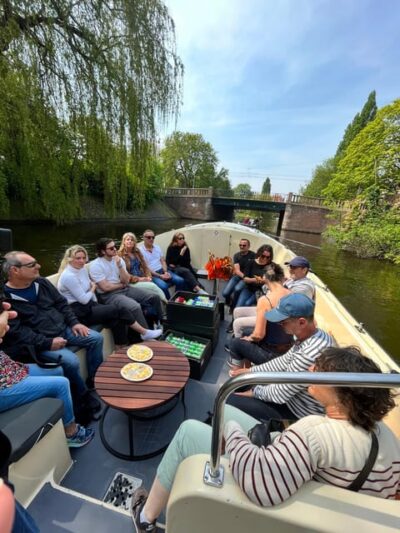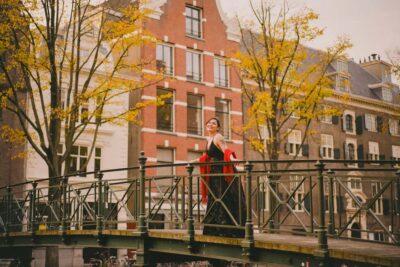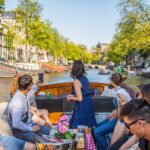
A canal cruise feels like the easy way to read Amsterdam. This private ride pairs a small historic boat with a guide who turns the waterways into a simple, story-driven tour of the city. You’ll move from the Prinsengracht toward the Amstel River, then slide through famous bridges and canals at a pace that stays comfortable.
What I like most is the intimate private format (up to 10 people), which makes it feel personal instead of herded. I also really value that the guide is a professional art historian, so you’re not just getting names—you’re getting context you can actually use.
One thing to consider: the route runs on canals and the boat experience depends on good weather, so if skies turn, you’ll likely need flexibility on timing.
In This Review
- Key things you’ll notice on this cruise
- Why a private historic canal boat still beats the crowds
- Meeting at H’ART Museum and getting on the water smoothly
- Spiegelgracht and Prinsengracht: the calm start that sets up the whole loop
- The Amstel River stretch: Skinny Bridge, locks, and Rembrandt corner
- Herengracht’s trader story and the feeling of 17th-century Amsterdam
- The Seven Bridges and Keizersgracht: from classic icons to the Jordaan’s softer pace
- How the guide, coffee, and questions make the two hours feel effortless
- Price and value: when $599.50 per group makes sense
- Who should book this Amsterdam canal cruise?
- Should you book? My practical take
- FAQ
- How long is the private canal cruise?
- Is the tour offered in English?
- How many people are in the group?
- What’s included during the cruise?
- Where do we meet, and when does it end?
- What if weather is bad or I need to cancel?
Key things you’ll notice on this cruise
- Art historian guide who explains what you’re seeing in plain language
- Historic small boat experience with coffee/tea and alcoholic beverages included
- A route that strings together big-name spots like the Skinny Bridge, Amstel locks, and the Seven Bridges
- A classic Amsterdam canal loop through Prinsengracht, Herengracht, Keizersgracht, and the Jordaan
- Plenty of time to ask questions, since the group is limited to your party only
Why a private historic canal boat still beats the crowds
Amsterdam is full of good views, but canals from street level can feel chaotic. From the water, the city lines up. Buildings, bridges, and canal corners make sense in one continuous sweep, and you don’t have to fight for a good angle every time the group moves.
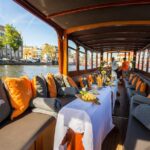
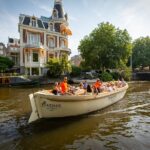
This tour uses a small historic boat, which matters more than people expect. Smaller boats generally mean less time waiting and more time actually looking—plus it feels more like a local outing than a timed attraction. The “historic” part also helps your brain do something useful: you’re not just riding along scenery, you’re experiencing the waterways as they’ve been used for centuries.
The big win, though, is the guide. A professional art historian approach changes the cruise from sightseeing to understanding. You get stories as you pass key places, so you can connect names like Prinsengracht or Herengracht to how Amsterdam worked. It’s also a nice reset from walking—after an hour, your feet stop arguing with you.
You can also read our reviews of more boat tours in Amsterdam

Meeting at H’ART Museum and getting on the water smoothly
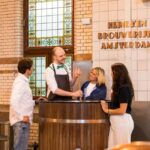
The meeting point is H’ART Museum (Hermitage Amsterdam), Amstel 51, 1018 EJ Amsterdam. You’ll start right there, and the experience ends back at the same meeting point.
You’ll get a mobile ticket, and the start area is near public transportation. That’s helpful because Amsterdam can be a patchwork of trams, bikes, and foot traffic. If you want to minimize stress, plan to arrive with a little buffer so you’re not sprinting through the streets trying to get to the dock.
A quick practical note: no baby strollers are allowed. If you’re traveling with someone who needs a stroller or similar gear, plan to use a different way to handle mobility needs.
The tour is designed so most people can participate, which is a good sign for a canal cruise—this is meant to be easy to join, not complicated to manage.
Spiegelgracht and Prinsengracht: the calm start that sets up the whole loop
After you leave the starting point, you head into Spiegelgracht and then Prinsengracht. This is a smart opening stretch because it’s an easy transition from “where am I?” to “oh, this is how the city’s stitched together.”
On Prinsengracht, you’ll pass Amstelveld and the houseboat area before heading down toward the river Amstel. This section helps you understand Amsterdam’s water lifestyle quickly: you see how the city edges into the canals and how daily life sits right next to the waterline. Even if you’ve seen photos, it hits differently when you’re moving slowly enough to notice details.
As you glide along, the guide’s storytelling matters here. The best part is how the cruise links canal names and corners to a single thread—rather than tossing facts at you. You’ll come away with a mental map that makes the rest of your time in Amsterdam easier.
The Amstel River stretch: Skinny Bridge, locks, and Rembrandt corner
Once you reach the river Amstel, you turn left and start hitting the headline sights. The first big stop on this stretch is the Skinny Bridge. It’s a “famous” spot for a reason: when you pass it from the boat, you get perspective you can’t get from a sidewalk photo.
From there, you’ll see the Amstel locks. Locks are one of those places that can sound technical, but on a canal cruise they become visual. You’re not stuck reading a sign—you’re watching the water system do its job while your guide explains what you’re seeing in context.
Then comes the Rembrandt corner, where the painter spent his first years of life in Amsterdam. This is one of those moments where the cruise stops being generic. Instead of seeing Rembrandt as an abstract “famous artist,” you’re connecting him to a specific Amsterdam corner you just traveled past.
After that, you’ll pass the dancing houses. The name alone draws attention, but the value here is timing: you’re right in the middle of the route, so the guide can keep your attention on why these buildings feel so unmistakably Amsterdam.
Herengracht’s trader story and the feeling of 17th-century Amsterdam
Next the route turns into Herengracht, sometimes described as the canal of the Lords, and you’ll learn how the rich traders of the 17th century lived there.
This is where the art historian angle pays off. Herengracht isn’t just a “pretty canal.” It’s a place that helps you understand how Amsterdam concentrated wealth and influence along the water. When your guide frames it this way, the canal stops being background and becomes part of a working social map.
As you move, you’ll notice how the canal sections change. Some parts feel grand and formal; other stretches feel more lived-in. Even without architecture trivia, you’ll sense the difference because you’re traveling straight through multiple “moods” of the city.
You can also read our reviews of more private tours in Amsterdam




The Seven Bridges and Keizersgracht: from classic icons to the Jordaan’s softer pace
After Herengracht, the route turns left toward the Seven Bridges in Reguliersgracht. This stop is a perfect mid-to-late cruise highlight because it’s visually satisfying. You see the bridges as part of one repeating canal rhythm instead of isolated photo points.
From there, you head down to Keizersgracht and toward the Jordaan neighborhood. Jordaan is the kind of area that can feel more human-scale than the flashier canal stretches. On the water, it’s easier to spot how the canals shape the neighborhood’s feel, and the guide can connect what you’re seeing to Amsterdam’s everyday rhythm.
The cruise also includes a pass by the Anne Frank House area. Since it’s on the route, you’ll see it from the water rather than as a standalone visit. If you’re planning a separate stop there later, this cruise can be a helpful way to orient yourself first.
How the guide, coffee, and questions make the two hours feel effortless
This tour isn’t just a route. The experience is the pacing—and that comes from the guide and the small-group setup.
You’ll have a professional art historian guide, and the tone you’ll get is part education, part conversation. In particular, you can expect a guide who’s comfortable mixing humor with candor, so you can ask questions and not feel like you’re holding up a formal lecture. If you like learning while moving, this style works.
Food and drink are included: coffee and/or tea, plus alcoholic beverages, along with bottled water. That’s not just a nice perk. It makes the experience feel like someone planned comfort, not just logistics. On a chilly morning or a warm afternoon, having something in hand lets you focus on what’s outside the boat, not what your body wants.
And because it’s a private experience for only your group, you can set the mood. If you want more explanation at certain stops, you can. If you’d rather look quietly, you can do that too.
Price and value: when $599.50 per group makes sense
The price is $599.50 per group (up to 10) for about 1 hour 30 minutes to 2 hours. That’s private-boat pricing, so it won’t feel “cheap” if you’re going solo.
The value equation is simple:
- If you’re traveling as a small group of 6–10, the per-person cost drops quickly, and you’re paying for convenience plus a guide’s attention.
- If you’re just two people, it still can be worth it if you want a calmer, more personal experience than a larger cruise—especially with the art historian guide and included drinks.
For me, the best part of this price isn’t the boat alone. It’s the combination: private setting + historian-guided route + refreshments for a fixed time window. If you want a “see a lot without wrangling a map and group” day, this fits.
Who should book this Amsterdam canal cruise?
Book this if:
- You want a private way to experience Amsterdam’s canals without spending your day in lines.
- You’d rather have a guide connect the dots (Prinsengracht to Herengracht to the Jordaan) instead of just snapping photos.
- You like learning that’s practical—focused on places you’ll actually remember later.
It may be less ideal if:
- You’re traveling with a stroller (not allowed).
- You hate being outdoors at all, since good weather is required for the cruise experience.
Should you book? My practical take
If you want the fastest path to understanding Amsterdam’s canal system and major landmarks from a comfortable vantage point, this is a strong choice. The route hits several headline sights—Skinny Bridge, Amstel locks, Rembrandt corner, the Seven Bridges, Keizersgracht, and the Jordaan—without feeling like a rushed checklist.
The private format is the real differentiator. You get a small boat, included drinks, and a guide with enough expertise to make the canal names matter. If you’re splitting the cost with friends or family, the value becomes especially attractive.
If you’re unsure, think about this: do you want Amsterdam as a story you can follow, or as a pile of pictures you hope to organize later? This cruise is built for story.
FAQ
How long is the private canal cruise?
It runs about 1 hour 30 minutes to 2 hours.
Is the tour offered in English?
Yes. The experience is offered in English.
How many people are in the group?
It’s a private tour for only your group, with pricing listed for up to 10 people.
What’s included during the cruise?
Included are a professional art historian guide, bottled water, coffee and/or tea, and alcoholic beverages.
Where do we meet, and when does it end?
You meet at H’ART Museum (Hermitage Amsterdam), Amstel 51, 1018 EJ Amsterdam, and the activity ends back at the meeting point.
What if weather is bad or I need to cancel?
The cruise requires good weather. If it’s canceled due to poor weather, you’ll be offered a different date or a full refund. You can cancel for a full refund up to 24 hours in advance; cancellations within 24 hours of the start time aren’t refunded.