REVIEW · ZAANSE SCHANS & WINDMILL TOURS
Half-Day Private Guided Sightseeing Tour of Zaanse Schans
Book on Viator →Operated by Snurk.Travel · Bookable on Viator
Few places mix fairytale scenery and real industry so well. This private half-day run from Amsterdam takes you straight into Dutch windmill culture at Zaanse Schans, with stops timed to keep you moving but not rushed, and a guide who can explain what you’re seeing as you go.
What I like most is the private format: it’s only your group, so you can ask questions and adjust pace. I also love the mix of hands-on and snack-time, especially the clog making demonstration plus cheese tastings that make the day feel more than photo stops.
The one thing to think about: some of the core windmill sights have extra entry costs (windmill tickets aren’t included), and the schedule is compact—so if you want long, slow hangs in shops, this may feel a little “stop, sample, move on.”
In This Review
- Key highlights worth planning for
- A private Zaanse Schans day starts fast from Amsterdam Central
- Getting from city to windmills: that 15-minute train matters
- Walking the Zaanse Schans windmills: more than just postcard blades
- Stops that add Dutch flavor: Albert Heijn, chocolate, and cheese
- Albert Heijn supermarket stop: a story in a simple place
- Chocolate workshop stop: chocolate beer and social initiatives
- Cheese store and a small farm moment
- Clog making demonstration: what you’ll notice after you see it
- Wandering green yards and cozy alleys: the slow part of the day
- Price and logistics: does the math work for your group?
- Who should book this Zaanse Schans private tour
- Should you book it or DIY Zaanse Schans?
- FAQ
- How long is the Half-Day Private Guided Sightseeing Tour of Zaanse Schans?
- Where do we meet for the tour?
- Is this tour private?
- What language is the tour offered in?
- What’s included in the price?
- What isn’t included?
- Do I need tickets for the windmills?
- Is there a cancellation window?
- Is the tour suitable for most travelers?
- A quick, honest final thought
Key highlights worth planning for
- Private group tour: only your party joins, with your guide steering the day.
- Clog-making demo: you see how wooden shoes go from block to finished clog.
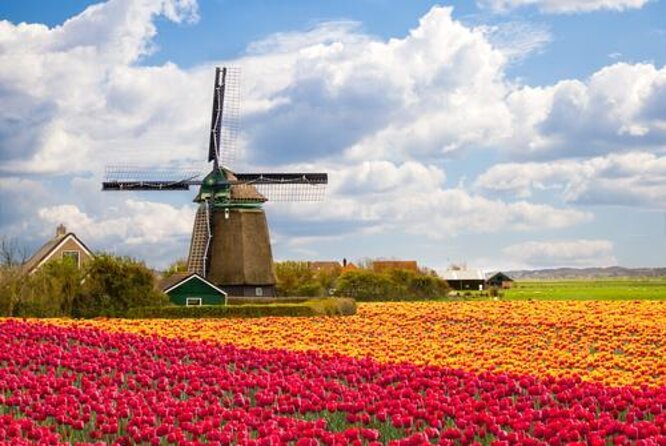
- Windmill variety: you pass by working sites like spicemill, oil mill, sawmill, and a dye mill.
- Food-and-crafts rhythm: cheese tastings, chocolate-related tasting, and quick shop visits.
- Snappy countryside timing: the trip out from Amsterdam is about 15 minutes by train.
A private Zaanse Schans day starts fast from Amsterdam Central
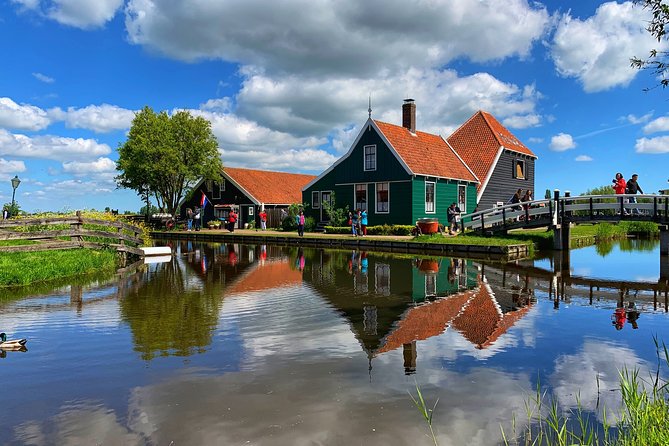
This tour is built for people who want countryside charm without giving up half a day to logistics. You meet at Amsterdam Centraal Railway Station (Stationsplein 13a), get brief orientation about what you’ll see, and then head out by train. The ride is short—about 15 minutes—so you’re not spending your best daylight commuting.
Once you arrive, the whole feel changes. Zaanse Schans is the kind of place where windmills don’t just sit there for views. You’re surrounded by old functions: milling, pressing, processing, and dyeing—industrial tasks the Netherlands used to run at scale. Even when you’re simply walking between sights, it helps to have someone translating what you’re looking at.
The private setup matters here. In a crowded group, you’d often lose time to waiting and trying to hear over footsteps and chatter. With your group only, you can slow down for details, ask about materials or tools, and still keep the day on track.
And yes, the guides can be flexible. One review specifically praised the guide, Sasha, for customizing the visit when part of the group had been before. That’s the kind of practical advantage you can’t really get from hopping around on your own.
You can also read our reviews of more guided tours in Amsterdam


Getting from city to windmills: that 15-minute train matters
A big part of the value of this half-day tour is the timing. Many excursions from Amsterdam eat up time before you even reach the first photo spot. Here, the train leg is quick enough that you still feel like you’re doing a real day-trip, not an airport-style sprint.
You’ll start at Amsterdam Centraal, which is a convenient hub if you’re already staying in Amsterdam. Then it’s off to the windmill village area—close enough that the day stays coherent. You’re not juggling long transfers, and you don’t have to commit to a full day just to justify the travel.
Also, because it’s private, you’re less likely to get stuck waiting at the wrong moment. When a group is small, it’s easier to match the pace of the village to your energy level—especially important because the schedule includes several brief stops.
One more thing: Zaanse Schans is very walkable, but the village has a lot of “micro-sights.” The tour’s short segments keep you from drifting into a fog of shops and windmills where you’re not sure what matters most. You get a framework, and then you can decide what you want to linger on (within the tour’s time plan).
Walking the Zaanse Schans windmills: more than just postcard blades
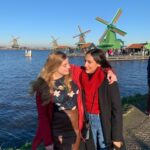
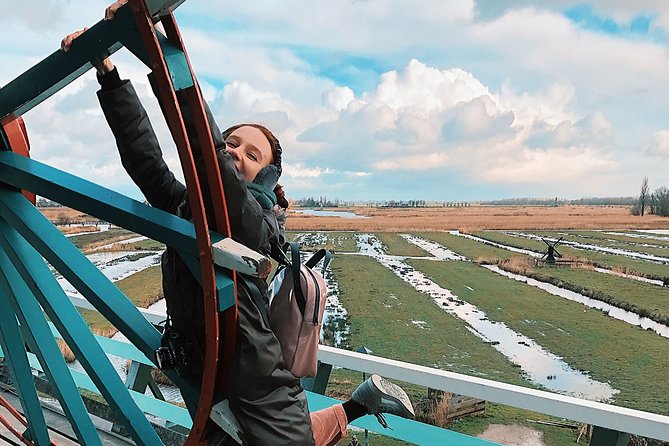
Zaanse Schans is famous for windmills, but the better part is how the windmills connect to specific products and old Dutch know-how. During the tour, you’ll see windmills linked to different processes—spicemill, oil mill, sawmill, and a dye mill. That matters because each mill has a different job, and each job tells you something about how the Netherlands worked.
Here’s what I’d watch for while you’re there:
- Wind power as a production tool, not a scenic background. Even if you can’t enter every site, the working concepts are visible in how the area is set up.
- How multiple mills supported different supply chains. It’s a whole system—spices processed, oils pressed, wood cut, materials dyed.
- Modern relevance, too. The tour framing includes how windmills are used in modern times, which helps you connect old technology to today.
Some windmill sites may require entry with a ticket, and those windmill tickets are listed as an extra cost. A review called out that the sawmill windmill was worth it, which tells me it’s one of those places where paid entry can pay off if you care about how the machinery works.
The best way to enjoy these stops is to treat them like a guided museum, not just a street stroll. Let the guide point you toward what to notice—gears, mill purpose, and the way the village is organized around the production areas.
Stops that add Dutch flavor: Albert Heijn, chocolate, and cheese
Not every stop will be equal in wow-factor, but the food-and-shopping rhythm is part of why this half-day works. You get several short visits that add taste and context—useful when you’re trying to understand Dutch daily life and craft culture quickly.
Albert Heijn supermarket stop: a story in a simple place
You’ll stop at Museumwinkel Albert Heijn, described as the oldest supermarket in the Netherlands. Even with just a short visit, it’s a chance to see how Dutch retail culture ties into family business success. Think of it as a “business history” pause rather than a typical shopping detour. If you like learning how products became everyday staples, you’ll probably enjoy this more than you expect.
You can also read our reviews of more private tours in Amsterdam



Chocolate workshop stop: chocolate beer and social initiatives
Next is a chocolate-related stop framed around tasting chocolate beer and learning about the product’s history and social initiatives. The time is short, so don’t expect a long production walkthrough. But it can be a fun tonal shift after windmills—sweet, surprising, and a reminder that Dutch food culture isn’t only about cheese and bread.
Cheese store and a small farm moment
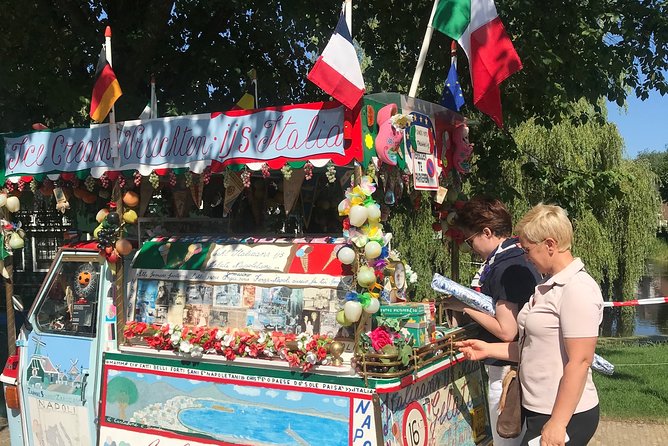
Then you’ll hit a cheese store where you can taste local cheese and mustard, plus a visit to a little farm with goats and hens. This is a great break if your group includes kids or if you just want something low-stakes and visual.
In general, these tasting stops do two things well:
1) They keep energy up without turning the day into a meal plan.
2) They give you a “taste memory” of what the tour is teaching—windmill industry → food production → regional products.
Clog making demonstration: what you’ll notice after you see it
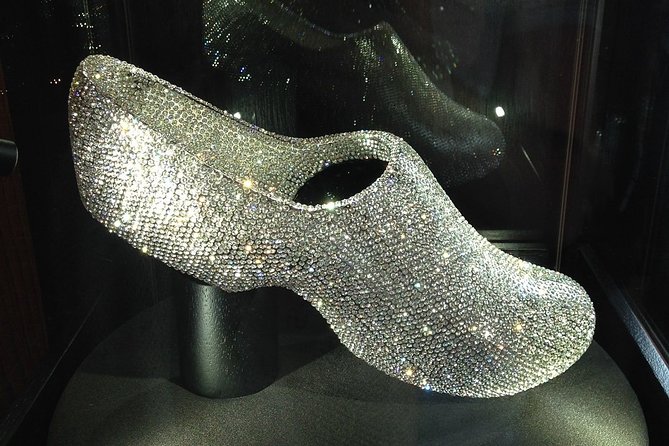
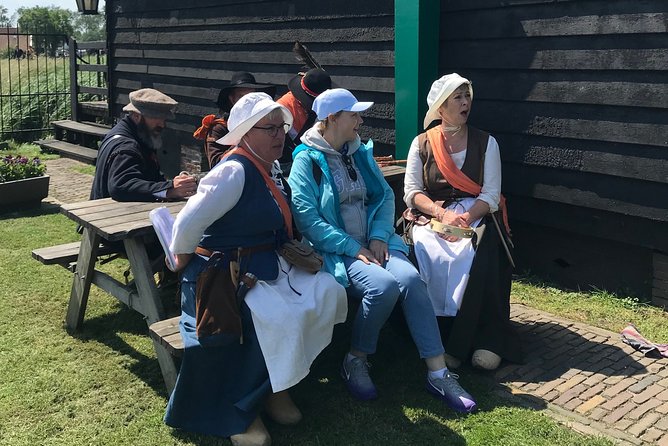
The clog workshop time is one of the most practical parts of the day. You’ll watch a demonstration of clogs being made, and the guide also connects it to national clothing of the region. That’s important because wooden shoes aren’t just souvenirs. They used to be functional footwear, tied to work and local style.
Here’s what tends to stick once you watch the demo:
- You understand that clogs come from simple blocks, not magic.
- You see how tools shape the wood into something wearable.
- You start noticing wooden shoe details in the shops afterward with more meaning.
In reviews, the clog experience gets strong praise, and one comment specifically highlighted the clog shoe mill as a key part of the tour. That matches what I’d recommend: if you only care about photos, you might skip demos later. But if you want something you can learn and carry with you, this is the segment that gives you a real skill-based view of Dutch craft.
If you have kids in your group, this is often the part that earns their attention. One review mentioned a grandkid-friendly experience, which makes sense here: watching a maker work is more engaging than listening to history alone.
Wandering green yards and cozy alleys: the slow part of the day
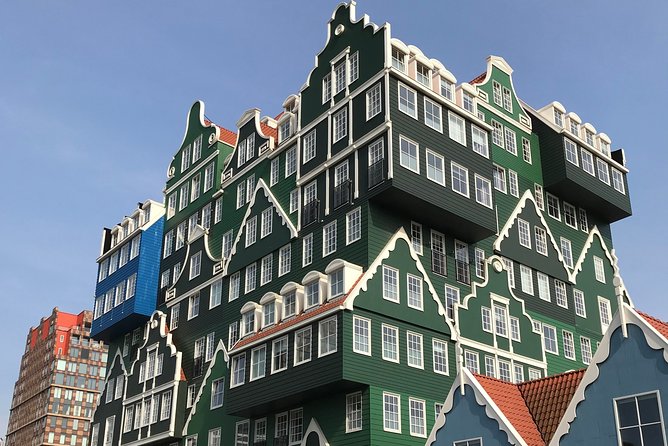
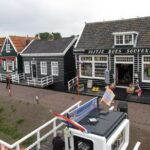
After the core production and tasting stops, the tour gives you time to walk around the village. This is where Zaanse Schans earns its fairytale reputation: green yards, cozy alleys, and older wooden houses.
This “wandering” block is worth using with intention. Don’t just drift. Look for the arrangement—where streets curve, how buildings sit close together, and how the village keeps a sense of period character. It’s also the moment you can double-back to the thing you liked most, within the tour’s time plan.
The tour also includes time for antiques, a pastry museum, and other local stores. That’s fun if you like browsing, but it’s also a reminder that some of the village charm comes from everyday browsing, not only from museums. If you’re the type who likes to pick up small edible gifts, this is where it often happens.
One practical tip: if you know you’ll want souvenirs, decide early what you’re actually buying—cheese-related items, sweets, or small crafts—so you don’t burn time comparing everything.
Price and logistics: does the math work for your group?
At $348.85 per person, this is not a budget stroll. The pricing makes sense only if you value a private guide and structured time. You’re paying for:
- A private experience limited to your group
- A guide to connect what you see to Dutch context
- Included clog making demonstration
- Included snacks cheese tastings
What’s not included is also clearly stated:
- Train tickets (about €12 per person)
- Windmill tickets (about €29.50 per person)
- Other tastings
So the real cost depends on how many paid windmill entries you want to include. If you’re genuinely interested in the machinery and processes, the windmill tickets can be part of what makes the trip feel worth it. One review said the sawmill windmill was worth paying for, which aligns with that idea.
Also consider how the short segments add up. This isn’t a long free-roam day where you can pop into every shop. It’s a curated half-day where you get to sample a lot—industry, food, and craft—with just enough time to enjoy without feeling like you’re stuck in a queue.
If you’re traveling as a couple or small family and you hate waiting in lines, the private nature can feel like a bargain. If you’re solo and mainly want photos, you might ask whether you’d do better with a self-guided plan plus only one or two paid entries. But if you enjoy learning as you walk, this tour is built for you.
Who should book this Zaanse Schans private tour
I think this tour fits best if you want three things at once: guidance, hands-on craft, and a taste-based tour structure. It’s especially good for:
- Families with kids who will enjoy demonstrations and small animal/farm moments
- Couples who like history but don’t want a full-day commitment
- Small groups who want to avoid tour crowds
- People who like food culture and want more than just windmill photos
The guide named Sasha comes up repeatedly in feedback for being serious about the experience while still keeping it fun and engaging. One review also praised the guide for laughter and entertainment, which matters because windmills can be fascinating but also quiet. A good guide turns that into an actual experience.
Also, weather tolerance is realistic. One review mentioned snow being a challenge and still rating the day as beautiful. That doesn’t mean it’s a “weather-proof” plan, but it does suggest the day can work even when conditions are less than perfect.
Should you book it or DIY Zaanse Schans?
If you like learning while you walk, this tour is a strong yes. The clog making demonstration and included cheese tastings give it more substance than a typical windmill photo trip. The private format means you spend more time enjoying and less time figuring out what matters.
That said, you should consider booking only if you’re okay with a compact schedule and extra paid windmill entry costs. If you want a slow, lingering village day where you can spend a full afternoon browsing without a time plan, you may prefer DIY.
My rule of thumb: if you’re paying attention to details—what each mill does, what Dutch products represent, how craft connects to everyday life—book this. If you just want a postcard and you don’t care about demonstrations or tastings, DIY could cost less.
FAQ
How long is the Half-Day Private Guided Sightseeing Tour of Zaanse Schans?
The tour is about 4 hours.
Where do we meet for the tour?
You meet at Amsterdam Centraal Railway Station, Stationsplein 13a, 1012 AB Amsterdam, Netherlands.
Is this tour private?
Yes. It’s a private tour/activity, and only your group participates.
What language is the tour offered in?
The tour is offered in English.
What’s included in the price?
Included items are the clog making demonstration and snacks with cheese tastings.
What isn’t included?
Train tickets (about €12 per person) and windmill tickets (about €29.50 per person) are not included, along with other tastings.
Do I need tickets for the windmills?
Windmill tickets are not included and are listed as an extra cost.
Is there a cancellation window?
Free cancellation is available if you cancel up to 24 hours in advance of the experience start time for a full refund.
Is the tour suitable for most travelers?
The information provided says most travelers can participate.
A quick, honest final thought
This is the kind of half-day that works when you want a guided countryside taste of Dutch craft and industry without losing hours in planning. If you’re excited by the idea of seeing clogs made and understanding how different mills relate to different products, the experience feels built for you.